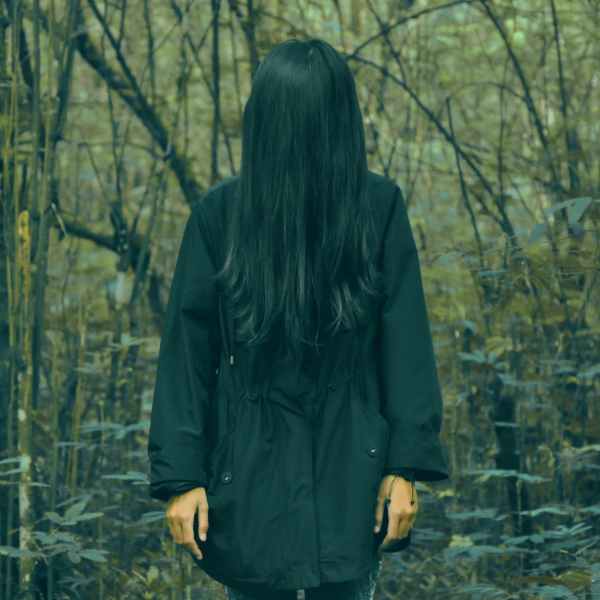
Photo by OVAN on Pexels.com
It seems my mother bore me for grief that grows of separation (from Hafez 352)
When I was a little girl in Iran I loved spinning around until my brain became fuzzy, I’d lose control and sometimes I’d fall. The roses in our garden swirled red, pink and white as I turned, and I’d smell their sweetness.
My husband has gone. There is a space where he used to be. That space loops brittle-boned into my body, across my apartment, out the window into the heavens. I water my plants on the window sill and I feed my canary, who sings yellow in his confinement. Little bird condemned to this boredom until you die. A huge bat hangs camouflaged black in the fig tree next door, across the broken concrete of the driveway. I walk fearful, careful like Mooch, my cat, soft on my toes. The moon, swollen with light, shudders as the bat takes off and I squeal. If I ran my fingers over those wings, they’d feel thin, stretched rubber or maybe silk. Shwoosh, shwoosh, stupid woman, it flies an elegant ellipse of protest high above our rows and rows of apartments to return and hang again black in the fig tree next door. My daughter weaves a life of her own in America with her husband. My grandchildren are far from me.
The evenings are cooling ever so slightly on my sadness as summer gives way to autumn. Lakemba days are shortening and people spend more time inside. Conversations in Arabic, Bengali, Mandarin drift with smoke from a wood fire, and smells of curry leaves and cumin frying. Death and rebirth, good and evil, the goldfish swims in its bowl ready for Norooz.
In Iran, I sat on my father’s lap enclosed like a Russian doll in our house, in the room with carpets, surrounded by the architecture of my father’s body, the warmth and murmured rumblings of his chest. His arms wrapped around me so I was almost in darkness. My father and his friends laughed and talked. The volume of their voices crescendoed and lulled in concentric circles. I peeked out to see my mother swinging a brass censer filled with coals. She seemed entranced by the swinging chain. The coals glowed in their cage. I broke from my father’s arms and ran to her. Pulling on the folds of her long robe, I wanted to feel the motion, the weight of the censer. I wanted to do as my mother did and make the coals breathe red. My brother followed me and my mother allowed us to swing the censer very gently before she took it to the brazier in the middle of the room. My father prepared two of his favourite vafoor. One pipe had a gold rim and paintings of blue birds with long tails on the bulb. It belonged to my grandfather who was growing smaller and smaller, sitting in the quieter shadows of the house, storm clouds under his eyes, and dark thin lips.
My uncle had returned from the edge of the desert where the air is crisp. He returned from Kerman with pistachios and the golden-brown tariaak they called senatori. The men joked about the senators smoking the highest quality opium. Now the ayatollahs have taken over from the senators. My father broke off a small piece of opium and put it in the pipe. My uncle held a burning coal in the tongs.
Grief has made its untidy nest in my apartment, in this body of mine. I try to sleep but the night is restless, the darkness is full of angst. I try to rest sitting on my couch reading but sentences scramble, scratching the paper like scuttling cockroaches. The words scream a cacophony of meaning at me and I feel their rage because I am porous. I have no boundaries.
In the morning, I leave my flat at 7am and walk to the train station. I walk tall, long feet and long fingers, wearing a dark suit. My hair long and black swings in time to my steps. Back and forth I walk every day, past discarded TVs and old mattresses. I walk past piles of clothes and curtains, and couches, broken tables and packaging that recently held a new refrigerator or television. Every day the train sways, stops and starts. People get on and people get off. Some play games on their phones. Some stare glassy-eyed into corners of their lives I cannot see. Belmore backyards flash by, we rattle through the inner west, Redfern platforms, sniffer dogs assiduous, salivating for a bust. I get off at Town Hall, moving at the same pace as everyone else, trotting up the escalator, across George Street, a fast-moving mass of people who seem to know their way, know what they want in life. Lines of square windows and grey concrete stretch to the sky but I rarely lift my head to look. I don’t stop in the city. In the city, I’m a lawyer. My work holds me tight like a corset. Keeps me going.
The lift zooms up to level thirty-two. I greet Helen, the receptionist. “How you doing today?”
She says, “My cat’s sick,”
“Sorry to hear that.” I commiserate.
“Yeah, she’s not eating. Just lies there. If she’s still like that after work, I’ll take her to the vet.”
The phone rings, she puts on head phones and her receptionist voice to answer. She winks at me and I continue to my office. Sexual harassment cases splayed across my desk, on chairs, clusters of papers, book upon book with fawn covers, gold titles on red binding. I click on my inbox. Emails like hordes of insects. I click, answer, click, answer. Read some specialist medical reports. So much reading. Reading consumes my day. Rowena’s complaint with the AHRC, the respondents denied the allegations. All attempts to bring the parties together have failed. Not the best-case scenario for Rowena. The alleged perpetrator relies on entitlement, on his positioning in the hierarchy of power. The offensive sexual jokes, suggestive and lurid remarks, sly rubbing of his cock against her body, always in tight spaces, in the kitchen, at the photocopier, fingers pinching her bottom, prodding. All that disappears with his denial and confident smirk. Rowena’s supporting evidence is weak. She’s depressed, experiencing reactive anxiety. She resigns from the job. Her marriage breaks apart. I’m not sure how she’s going to cope with the pain, the anger, shame, the humiliation of the public process. I’m a lawyer, a professional, but sometimes emotion and passion leak through my lawyer skin onto the desk, across the papers, like dark, golden sap escaping from the inside of a tree. When that happens, I am not useful to my client. When that happens, I want to cry.
On the train back home, the hurt under my breasts and the desire to cry are desperate, they rage against my false calm. The train doors whoosh shut, I climb the stairs, walk, unlock the front door, the cat rubs against my legs. Tip dry food into its bowl. Feed myself. White cheese, walnuts, dates, Persian cucumber, tomatoes, olives, nuts. I sip black tea from a glass and let lumps of sugar dissolve slowly in my mouth, longing for my mother’s sweets.
My mother put rose petals in with the tea leaves. She carried the teapot and glasses clinking on a tray. Her thick hair pinned up in a French roll. On one side of the manghal sat plates of honey crisps with almonds and the pistachios my Uncle brought us as a gift. Dates and figs, and small biscuits kept my father’s blood pressure from dropping too low. I sat on my father’s lap. My tooth ached. He inhaled, and the pipe whistled. He held his breath, his cheeks bulged, he blew smoke across the top of my head. Haalaa bekesh too. I inhaled and the woody perfume was purple or maybe turquoise, the most sensuous bitterness. I was transported away from pain.
Cat footprints mark the dust on my bookshelves like fallen blossoms, Mar Name leans neglected against a Farsi translation of Nietzsche. Deleuze and Guattari, Anti-Oedipus balances on Grammatology. In the Realm of Hungry Ghosts lies on the floor alongside classical music CDs I no longer play. I sit on the couch. My fingers habitually exploring the patch that covers a small hole burned by my cigarette into the fabric. Above me hang crooked on the wall, cheap copies from the seventies turning brown. I ran from Iran over twenty years ago, first to Pakistan, then here. I am forever a kharjee spirit, an outsider, an adventurer, maybe a heretic … at day and at night, branded by love, like Hafez, with nightingales of dawn, I cry songs, woes of separation.
Mooch stretches his tabby body across my thigh, heavy, snoring like the man of the house he is. He brings me lizards and mice and small birds. He lays them wet at my feet, sometimes moving, sometimes still.
I am still, here with my cat, and the canary asleep in its cage, and the fish.
The city on the edge of the desert, the ancient city called Kerman, where the air is crisp and very cold at night, is surrounded by fields of poppies but was once surrounded by fields of barley. I would lay on my stomach on our carpet from Kerman, rolling from one end to the other over the pastel shades, the blues and creams, back and forth until my brain was fuzzy. I imagined I was lying in fields of yellow barley ready for harvest, looking up at the sky so very blue. My father sat with his friends drinking tea, eating cakes and sweets. They laughed and they cried. They talked as if to stop talking would show weakness. They talked over the top of each other. Their conversation infinite, uninhibited…
Published 8th November 2019 in Prometheus Dreaming
 Gaele Sobott