“People are starting to think about their choices. They know that current systems and behaviours are not sustainable”
Kerrie Carroll is co-founder of the not-for-profit, Lucky Stars Sanctuary which is home to around three hundred animals in need. The twenty-four-acre property is in Bywong, New South Wales, 30-minutes’ drive from Canberra.
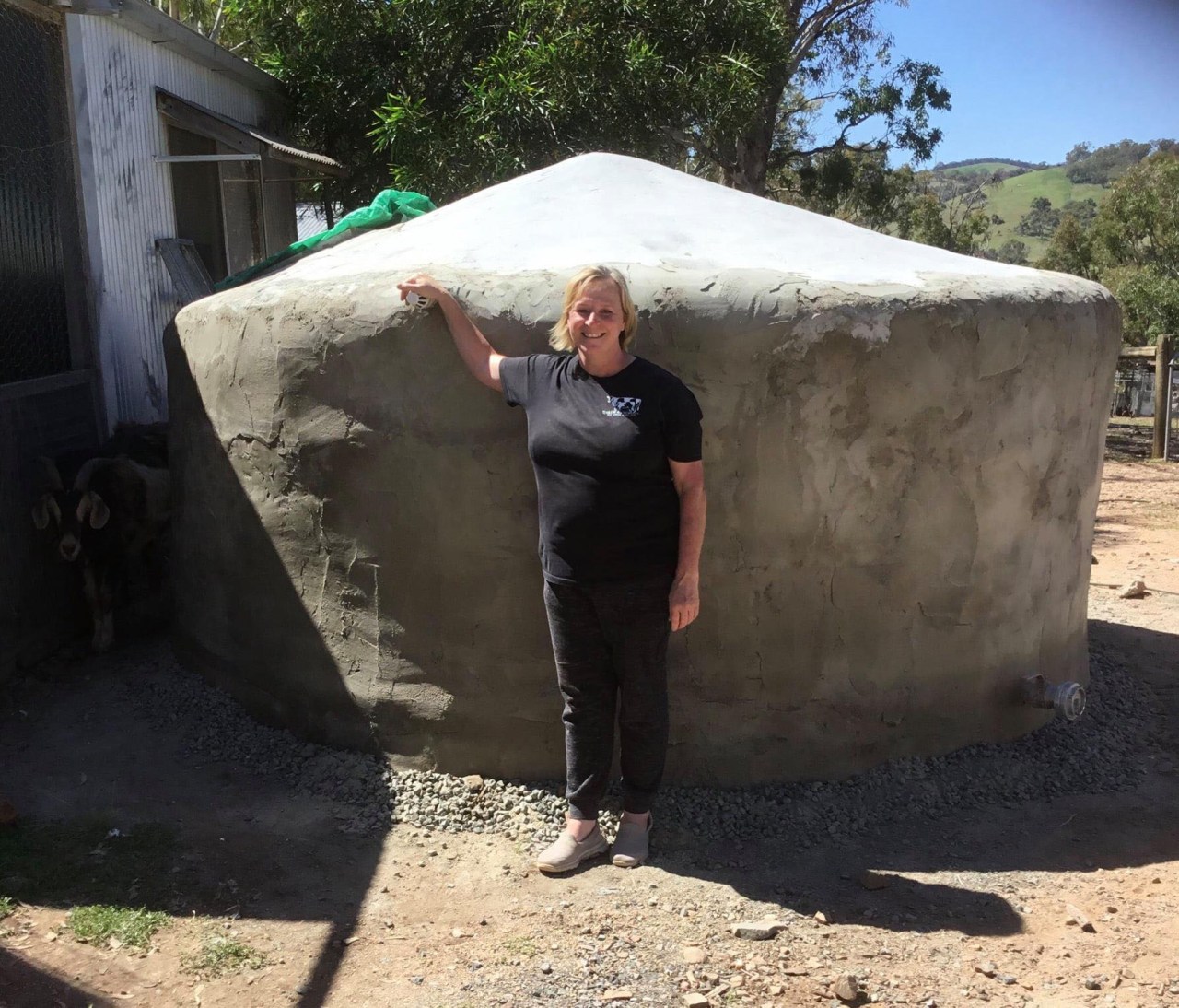
This interview is the first of four interviews with volunteers involved in the building of an earthbag water tank at Lucky Stars Sanctuary. Vanuatu Earthbag Building assisted in this project. They have provided free plans, support and the materials required to build water tanks for people in need in fire zones in NSW Australia, cyclone zones in Vanuatu and Pacifica.
Gaele Sobott: Why did you decide to build an earthbag water tank? How did you go about organising it?
Kerrie Carroll: Well, Helen Schloss had become quite concerned about drought and fires. She began to do the research. I had been into some of the fire-affected areas doing what we call black walks, where we look for injured and burnt animals. We determine whether they need to be euthanised or whether we are able to do a successful rescue. In those areas, I noticed as soon as embers fell on the plastic tanks, they burned. People had no water at all and lost their homes. We were on constant alert through the fires and the drought. We had six deliberately-lit fires near us and two major fires that could have easily turned this direction. It was an exhausting time.
Helen approached me with the idea and forwarded all the information. I thought it was amazing and we definitely needed another tank here at the sanctuary. I got in touch with Liz and Alex from Vanuatu Earthbag Building and we started putting everything into motion then COVID hit so they couldn’t travel from Sydney. We commenced work here as soon as we got the all-clear. Helen kindly did a call out to a range of different groups and we got this fabulous team of volunteers. Incredibly, it’s nearly finished. I love the look of it, smooth, simple, solid. It won’t burn down, which means we will be able to protect that little bit extra.
GS: You mentioned the black walks, can you talk a little about what you found on those walks?
KC: We found some animals and birds that were desperate for food and water. We did food drops, some native vegetation that we collected from other areas. Animals were injured and burnt. Thankfully they were on properties were people loved native wildlife and they allowed us access. We provided fruits and vegetables because it was a source of water for those animals. We had echidnas, wombats, birds. We were hanging the bird feeders with seed on all the burnt-out trees and that was quite eerie because there weren’t many birds left in the area. The one’s that we did come across we made sure they were okay.
GS: Some birds may fly away from approaching fire. I imagine some are also caught in the smoke, if not the fire.
KC: Yes, so here at the sanctuary, we were surrounded by fires. Birds were flying away from those fires and we ended up with more here. We’ve never had this many cockatoos. Butcherbirds have come in and yellow-tailed black cockatoos, even ibis. We actually had a fire-fighting group that came here from France during that period who put up all bird-nesting boxes throughout the property. That way, we were able to help the birds coming in.
GS: How big is this property?
KC: It’s only twenty-four acres. That’s enough for us to manage at our age.
GS: There appears to be a huge amount of work in terms of day-to-day chores.
KC: There was quite a bit to do here back then. There was no fencing, no shelters for the animals and a lot of rubbish left around. We basically cleared the land of all the rubbish, erected fences and established all the shelters. During the fires, there were a few goats that came into the sanctuary. The third one passed away from smoke inhalation and stress. It was quite sad but the other two are still here and going well. We had sheep that were brought to our front gate. They had suffered burns and people brought them here in the hope they would be treated but sadly that was not the case. Their hooves were literally burned off. That would mean a lifetime of misery for them. They couldn’t be salvaged. It was a sad time because they were on people’s properties and they didn’t go and look for them. We buried them here.
GS: Why do you bury animals that die here?
KC: Well we bury all of them but especially if they have been given the drug called Lethabarb, which is a euthanising drug. It can affect other animals so we have to make sure we bury those animals who have been euthanised. We never burn the animals that die here. Firstly it would be unsafe during bushfire season but it is about our land and also about the volunteers and friends. They get very attached to the animals and they will actually go down to the little graveyard. They have memories and emotions that need addressing.
GS: How do you deal with the emotions of finding injured and dying animals, and euthanising animals?
KC: It’s difficult. There is a part of you that gets used to the ugly side of animal rescue, unfortunately. When we lose animals or we have to do euthanasia, your mind and your heart go to another place. You know that you have to prevent or end suffering. With every single rescue, whether it’s wildlife, farm or domestic, we consider whether they are going to have a good quality of life. We have to ask, are they going to have a life of pain? You have to make those decisions around your assessment of suffering.
GS: That must be extremely difficult.
KC: It is. We have commenced a group decision-making process. The decision shouldn’t be left to one person. We all discuss the case and come to a decision based on the facts in front of us. We have never yet felt that we have made the wrong decision. A lot of thought goes into it.
GS: Some people ask, Why do you devote time and money to animals? You should be looking after human beings. How do you respond to them? I believe you are a nurse.
KC: Yes, I am a registered nurse and I teach but the animals and the people come together here as one. We help a lot of teenagers, especially during COVID, who became mentally unwell due to isolation. We did separate, private group tours and they were different people by the end of it. We continue to liaise with those groups. We also have older people who come here with support workers and carers. We make time for them to come out. They generally focus on one area, for example, they may have a fascination with chickens or with kangaroos so we get them involved. They take all the information on board and get involved in the care of those animals. When they leave here, they’ve been working in the fresh air, gained knowledge and applied it. They join in with the laughter and the animals are so different when they are interacting with them. Our community has really benefitted from the sanctuary, not just around Canberra but NSW because we get groups from Sydney, Wollongong. They come from Queensland and now a lot of international people come and stay. For people who live in a city, this place really opens their eyes and heart. Coming to an open space, they’re able to breathe again.
In terms of mental wellbeing, the sanctuary really helps people. It also helps with inclusivity, like the LGBTQI community. Members of that community come here because it is a safe space. We don’t charge an entrance fee at the sanctuary because we don’t want affordability to be a barrier. We believe that charging money is a discriminatory practice. People who do not have much money should not miss out on the opportunity of participating in what the sanctuary has to offer. If all they can bring is a quarter of a pumpkin to cut up and feed the animals, well that is contributing and they become a part of the sanctuary.
GS: Do some people volunteer to help with the work here?
KC: Yes, they come to see and learn about the animals, and muck in while they’re here. Today we had a gentleman and his daughter visit. They helped collect all the eggs that the chickens lay everywhere. They cleaned some bedding. They also helped fill up the duck ponds for the babies. It depends on people’s skills and capabilities. Someone may be able to do fencing or shovelling, whereas others can only do some light work. There’s plenty to do, even chopping up lettuce for the chickens and the ducks.
GS: How do you delegate and roster work? Sometimes that can be a difficult process.
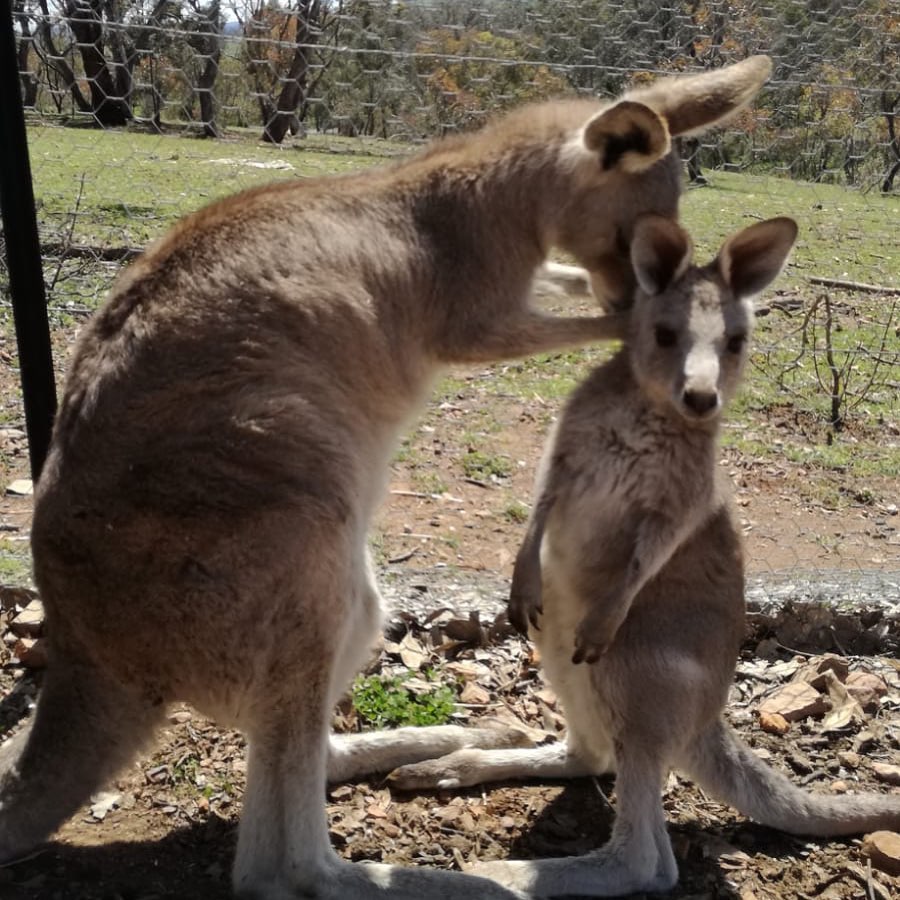
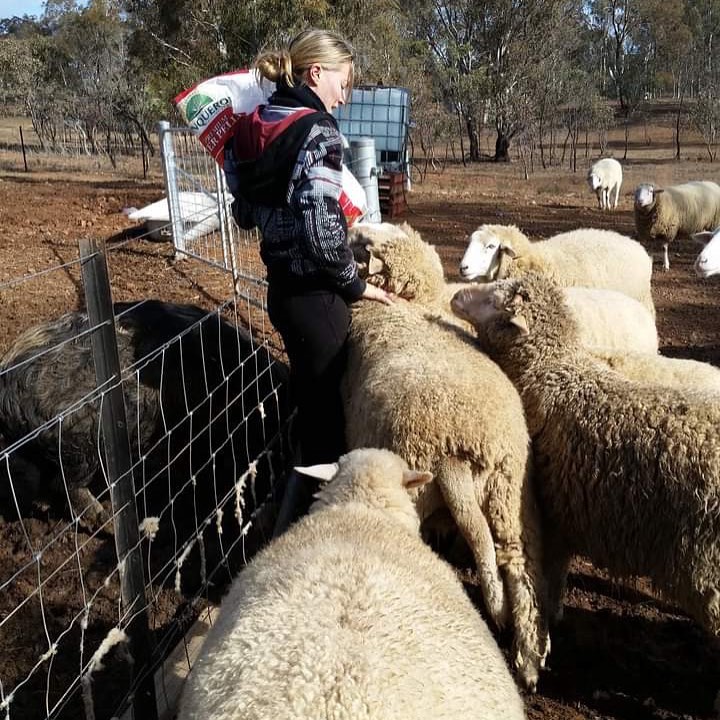
KC: It can be but we talk about the roster with all our volunteers. Generally, our rostering system works well. It’s incredible how people give their time. Everyone offers based on which days and times they have available. We send the roster out every fortnight. We delegate duties according to the animals’ needs. The animals have to come first. So, food, water, their bedding and shelter are the first priorities, and if they require any medications or veterinary attention. We have a duck on antibiotics at the moment and a kangaroo that is on some medications for muscle issues. All that comes first. We have routines and systems and people go into the shed over there and look on the wall, then they know exactly what food is given to each animal etcetera. The extras come after that. It may be time to rake one area or do some fence repairs or we need to rethink how we deal with some of the animals. Goats can be very cheeky sometimes. No way they’re going to bed and that type of thing so sometimes we have to think outside the box. The volunteers love the work. Look at those two young women, they are thrilled with the work, and we’re getting more men in now of all ages. It used to be predominantly women in caring roles and women who were having trouble in the workforce. Some were treated unfairly because they were older, some couldn’t get work because of their life circumstances, and because no one would give them references. They work with us here. We’re able to help them get public service positions, housing after divorce, that kind of thing because we provide a character reference for them.
GS: I imagine they continue to help the sanctuary.
KC: Yes, they do continue to help in different ways. We have a food pickup roster. Volunteers on that roster will always pick up extra shifts if they can. It’s a whole pay-it-forward system. We get given lots of fresh food for the animals as well as the purchased food. Like the sheep love strawberries, so the supermarkets sometimes give us cases of strawberries, watermelon, seasonal stuff.
GS: You must have a good relationship with your community.
KC: We do. There is one place called Choku Bai Jo, a farmers outlet, who have supported us for years. So that they don’t have waste, it comes in bins to us. That helps them out in terms of disposal. They work towards changing culture; where people want to eat plant-based diets for the benefit of our environment, our world, our health. They’ve started stocking a lot of plant-based products now. That’s amazing. I like their chocolate. They also support a lot of local farmers where they only deal with fruit and veg and don’t deal with animal products. It’s all done very much with a community spirit. They stock environmentally-friendly bags and bowl covers and all that.
GS: Do you see a change happening at the community level concerning protecting our environment and fighting climate disaster.
KC: I do. I didn’t think I would see such a significant change in my lifetime but it is happening. People are starting to think about their choices. They know that current systems and behaviours are not sustainable. Industrial farming, the release of methane gas, for example, is over the top. It’s going to ruin our planet if we don’t do something urgently. I also find a lot of people come here and visit, and once they find out how pigs are factory farmed for example, they have given up all pork products. Like the terrible way many chicken farms operate. At the end of the day, why would you want to consume an animal kept in such filthy conditions and filled with antibiotics? A girl is working here this weekend who has actually just chosen to become vegetarian. She is thinking about how her lifestyle affects the world and is making changes. That’s good.
GS: Why did you start the sanctuary?
KC: I have always been in animal rescue from a very young age. I’ve never stopped. I have letters from, I think it was Malcolm Fraser, our prime minister back when I was about, I don’t know, ten years old. I was mortified by the clubbing of seals so I sent letters everywhere and put up posters at school and decide then to be vegan. That was a difficult time. There weren’t many products. I ate a lot of fresh fruit and veg and I think it was a Campbell’s tin of four-bean mix. I thought if I have to eat these beans for protein, that’s fine. It was hard to be creative back then on the food front. I never thought of setting up an animal sanctuary. I always thought I would just volunteer at places that needed help, fundraise, provide supplies, that type of thing. I realised that there were many different animal rescue groups out there. Some had various ways of rescuing and caring for animals and that was okay but there were others where conditions weren’t good. I wasn’t happy with that kind of practice. So many animals were going through those places. We realised there was a need for another shelter. We started looking for a property. It was hard to find the perfect property where we were going to be happy because you have to live your life as well among the animals. We found this one relatively close to Canberra and accessible for people to come here without having to spend a lot of money on petrol or having to pack food or stay overnight. It’s a reasonably easy three-hour run from Sydney. We’ve also got onsite accommodation so people can stay. We don’t charge massive fees or anything like that, just as long as the utilities are covered. We just appreciate all the work everyone does while they’re here. The tank building, for example. Others who stayed here this weekend helped with all the feeding and cleaning.
GS: There was an enormous amount of work done this weekend.
KC: There was. It was huge. It makes us all feel amazing, and knowing that the animals are all so healthy and clean is great. We physically inspect every animal every single day.

GS: I assume your nursing experience has come in useful.
KC: My nursing experience has been invaluable, really. Syringing medications, giving needles, wound dressing, and there is a certain element of trust with our vets as well. We save a bit of money if I am supplied with the material then we can do a lot of the veterinary work ourselves on the property. If I had my time over, I possibly would have been a vet but it wasn’t to be. Fortunately, I am able to apply nursing skills to the animals quite a bit.
There is one of our volunteers who has just picked up another load of food. She has a bad back and finds it relatively light work to collect the food. That way, she gets to come out to the sanctuary and be a part of the operations. We work within everyone’s capabilities.
GS: Do you work full time as a nurse?
KC: I work full time and Yee, the other co-founder works full time. That’s why we are keen to develop our lovely volunteer base. Everyone is reliable. If the chips are down, they’ll come and help. There are some nights that we don’t get a lot of sleep but it’s for a good reason and we don’t mind.
GS: Do you get time to rest?
KC: Yes, I do get rest. Every now and then, maybe every three months, I will say to everyone, I need a night to myself. They understand because they see how much goes on. The work with the animals is a full-time job and then there’s the administration and the fundraising. We don’t get any government assistance. Not like farmers do. So we are very reliant on people’s generosity, sponsorship of the animals – a number of them are sponsored. That means all their food and medical bills are covered. COVID affected our fundraising because we had to cancel all the events. Still, we recently had a little festival in the city which went quite well. We get the message out there with our events and that means more visitors come here.
GS: How do you get the message out?
KC: Social media and our website. People print brochures but on that front, we are thinking of the environment and leaning toward just saying look us up. We have a section called Tuesday Tips where we give a lot of information on various recycling ideas. We let people know how to be water-wise, how to rescue wildlife from the side of the road or how to go about contacting the right people. We also recently wrote a piece about sanctuaries that you can stay at. That was both on electronic media with a national reach and printed as hard copy. I’m a bit old fashioned in that way because I like reading a newspaper. Our message is also spread by word of mouth. That’s important. Someone is always talking to someone else about coming out here, volunteering and they invite people here.
GS: How is telling stories about the animals important to the sanctuary?
KC: Well, each animal, not all of them but a lot of them, has suffered before coming to us. Shaun is one of our most beautiful sheep. He was tied to a four-meter rope for three years in an industrial area just outside the city. He was in a terrible way. He’d never had any veterinary treatment, never been sheared and he was bloated. He had a foul odour and was miserable. Thankfully, we got called in because he was getting frustrated. The owners knew they couldn’t handle him anymore. He just laid his head on my lap, he was so depressed. I suppose it’s like being stuck in a bedroom for three years. That’s what he was going through. We’ve done a lot of work with him. He was treated, we sheared him and he now gets fresh food and water. He met other sheep which was a big deal for him because he’d been so isolated. I videoed that moment. He was ecstatic. Sheep are herd animals, not meant to be on their own. They need their own kind.
It is important to tell the animals’ stories to our visitors and online. Even factory farming, chickens are terribly abused. They are only naturally supposed to lay twelve to twenty eggs. The factory-farming industry selectively breeds hens to pump out three hundred to four hundred eggs a year. Most of them usually succumb to cancerous tumours in their reproductive systems, peritonitis and fluids. They get respiratory problems, feet issues. We have just had one little girl brought in. Her wing had been stuck in the factory farm cage. A good Samaritan handed her into us. The wing wasn’t salvageable as all the vascular supply had been ruined. We took her to our vet, who did a successful amputation. She’s only about three months old now. She doesn’t have that drag on her side anymore. She’s spritely, has lots of energy and has an amazing personality. We called her Ella after Ella Fitzgerald, who was an amputee. Her legs were amputated due to diabetes. People can connect those stories to their food choices as well, right down to the eggs.
GS: Do those stories also help attract sponsors?
KC: Yes, they do.People hear about specific animals that way.We had some people here who fell in love with one of the alpacas and ended up sponsoring her.Her name was Dora and she was fascinated by them. She came from a stud that was closing down. We take in older animals too.
GS: Do you shear the alpacas?
KC: Yes, we shear the alpacas once a year. We have specialists come in to do that. We worm them and give them vitamin injections then as well.
GS: What do you do with the wool?
KC: We let anyone take the wool who wants it for spinning, some people make dog beds out of it. We leave some out for the birds to collect for their nests but it takes a long time to break down in the environment so we have to be careful. We shear the sheep twice a year; a full shear at the start of summer and their bottoms and tails in winter.
GS: I notice you don’t take off their tails.
KC: Yeah, it’s a misconception that sheep will always get fly-blown around that area. Mulesing and tail-docking came about because farmers wanted a clean shear and said it was for health reasons. Any sheep we’ve had here that had flystrike got it around the ribcage area. It comes down to good husbandry where you check your sheep regularly.
Sheep express themselves through their tails the same way a dog does. If they’re frightened or unsure, their tails go down between their legs. They wag their tails when they are happy, if you massage their body or when you feed them. You can know a lot about sheep by observing their tails. If they are cut off, it’s a lot more difficult to understand what’s going on. I read a study that proved they have phantom pain from their tails being cut off.
GS: Is there anything you would like to add?
KC: Come and visit us. Come and stay here with us. It’s accessible and I also think if people have made a donation, it would be great for them to come and see what they are supporting. Come and learn about the animals and what happens to them in our world. COVID is a big lesson for us. Bats and other wild species are in their natural environment and we have no right to mess with that. As we encroach on wildlife habitats, we can expect more spillover of animal diseases to human beings. Our use of pesticides is having devastating effects on the environment. I believe pesticides are the most likely cause of the cancer attacking our Tasmanian devils. The Tasmanian government has been lobbied many times to legislate to cease the use of chemical pesticides. So it’s crucial for us to look at the products we are buying, to find organic products. Farming practices such as introducing rabbits, foxes, then myxomatosis, cane toads, the list is long, have caused havoc on our wildlife.
GS: To finish up, how are love and respect relevant to your operation here at Lucky Stars?
KC: Well, we respect the animals as individuals and we respect their space. If they want to come to you for affection, they come to you on their own free will and accord. We never force an animal to interact. It is important to respect them as a species. It is no different for humans. We know we must respect personal space. We have a very strong policy at the sanctuary where we all treat each other with respect. I think the animals can feel our emotions. All the volunteers develop a love for the animals and respect their space and routines. We don’t force them, like at night time, we try to put them to bed. Some are just not ready preferring to do something else. We like to know all the animals are safe at night so we try to get them used to bedtime. Some go in later than others. One night, dogs attacked. That was traumatic for one sheep who lost an ear from the attack but fortunately survived. Yeah, so we like to know they are all safe at night. Even pigeons, I think they are the most hated bird on the planet, along with the poor old ibis. We’ve got one hundred pigeons here that were rescued from a hoarding situation. They’re funny. Some will build a nest with a few twigs and lay an egg, others have got the Taj Mahal going on in there. They’ve all got their individual personalities.
We treat all our animals with the utmost respect, including our older and our disabled animals. We make sure they are happy, comfortable and have the best possible life.
Interview conducted with Kerrie Carroll at Lucky Stars Sanctuary by Gaele Sobott, 11 October 2020.
Links:
 Gaele Sobott