Separation جدایی by Gaele Sobott

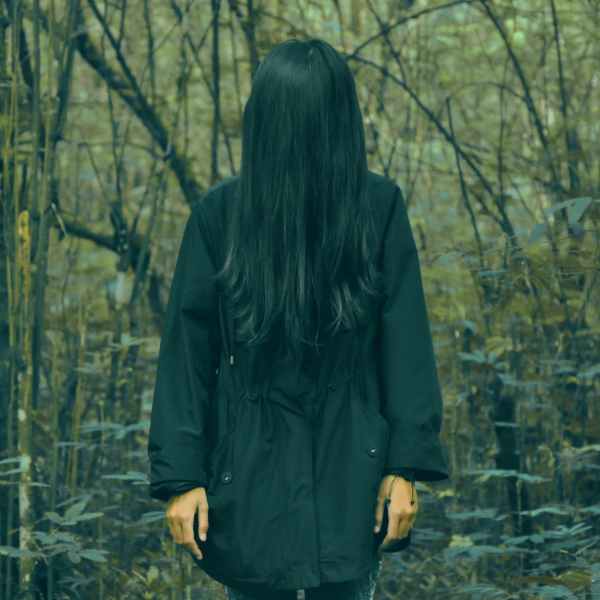
Colour photograph of a woman standing in a black coat in a forest. Her face is completely covered by her long black hair.

Photo by OVAN on Pexels.com

It seems my mother bore me for grief that grows of separation (from Hafez 352)


When I was a little girl in Iran I loved spinning around until my brain became fuzzy, I’d lose control and sometimes I’d fall. The roses in our garden swirled red, pink and white as I turned, and I’d smell their sweetness.

My husband has gone. There is a space where he used to be. That space loops brittle-boned into my body, across my apartment, out the window into the heavens. I water my plants on the window sill and I feed my canary, who sings yellow in his confinement. Little bird condemned to this boredom until you die. A huge bat hangs camouflaged black in the fig tree next door, across the broken concrete of the driveway. I walk fearful, careful like Mooch, my cat, soft on my toes. The moon, swollen with light, shudders as the bat takes off and I squeal. If I ran my fingers over those wings, they’d feel thin, stretched rubber or maybe silk. Shwoosh, shwoosh, stupid woman, it flies an elegant ellipse of protest high above our rows and rows of apartments to return and hang again black in the fig tree next door. My daughter weaves a life of her own in America with her husband. My grandchildren are far from me.

The evenings are cooling ever so slightly on my sadness as summer gives way to autumn. Lakemba days are shortening and people spend more time inside. Conversations in Arabic, Bengali, Mandarin drift with smoke from a wood fire, and smells of curry leaves and cumin frying. Death and rebirth, good and evil, the goldfish swims in its bowl ready for Norooz.

In Iran, I sat on my father’s lap enclosed like a Russian doll in our house, in the room with carpets, surrounded by the architecture of my father’s body, the warmth and murmured rumblings of his chest. His arms wrapped around me so I was almost in darkness. My father and his friends laughed and talked. The volume of their voices crescendoed and lulled in concentric circles. I peeked out to see my mother swinging a brass censer filled with coals. She seemed entranced by the swinging chain. The coals glowed in their cage. I broke from my father’s arms and ran to her. Pulling on the folds of her long robe, I wanted to feel the motion, the weight of the censer. I wanted to do as my mother did and make the coals breathe red. My brother followed me and my mother allowed us to swing the censer very gently before she took it to the brazier in the middle of the room. My father prepared two of his favourite vafoor. One pipe had a gold rim and paintings of blue birds with long tails on the bulb. It belonged to my grandfather who was growing smaller and smaller, sitting in the quieter shadows of the house, storm clouds under his eyes, and dark thin lips.

My uncle had returned from the edge of the desert where the air is crisp. He returned from Kerman with pistachios and the golden-brown tariaak they called senatori. The men joked about the senators smoking the highest quality opium. Now the ayatollahs have taken over from the senators. My father broke off a small piece of opium and put it in the pipe. My uncle held a burning coal in the tongs.

Grief has made its untidy nest in my apartment, in this body of mine. I try to sleep but the night is restless, the darkness is full of angst. I try to rest sitting on my couch reading but sentences scramble, scratching the paper like scuttling cockroaches. The words scream a cacophony of meaning at me and I feel their rage because I am porous. I have no boundaries.

In the morning, I leave my flat at 7am and walk to the train station. I walk tall, long feet and long fingers, wearing a dark suit. My hair long and black swings in time to my steps. Back and forth I walk every day, past discarded TVs and old mattresses. I walk past piles of clothes and curtains, and couches, broken tables and packaging that recently held a new refrigerator or television. Every day the train sways, stops and starts. People get on and people get off. Some play games on their phones. Some stare glassy-eyed into corners of their lives I cannot see. Belmore backyards flash by, we rattle through the inner west, Redfern platforms, sniffer dogs assiduous, salivating for a bust. I get off at Town Hall, moving at the same pace as everyone else, trotting up the escalator, across George Street, a fast-moving mass of people who seem to know their way, know what they want in life. Lines of square windows and grey concrete stretch to the sky but I rarely lift my head to look. I don’t stop in the city. In the city, I’m a lawyer. My work holds me tight like a corset. Keeps me going.

The lift zooms up to level thirty-two. I greet Helen, the receptionist. “How you doing today?”

She says, “My cat’s sick,”

“Sorry to hear that.” I commiserate.

“Yeah, she’s not eating. Just lies there. If she’s still like that after work, I’ll take her to the vet.”

The phone rings, she puts on head phones and her receptionist voice to answer. She winks at me and I continue to my office. Sexual harassment cases splayed across my desk, on chairs, clusters of papers, book upon book with fawn covers, gold titles on red binding. I click on my inbox. Emails like hordes of insects. I click, answer, click, answer. Read some specialist medical reports. So much reading. Reading consumes my day. Rowena’s complaint with the AHRC, the respondents denied the allegations. All attempts to bring the parties together have failed. Not the best-case scenario for Rowena. The alleged perpetrator relies on entitlement, on his positioning in the hierarchy of power. The offensive sexual jokes, suggestive and lurid remarks, sly rubbing of his cock against her body, always in tight spaces, in the kitchen, at the photocopier, fingers pinching her bottom, prodding. All that disappears with his denial and confident smirk. Rowena’s supporting evidence is weak. She’s depressed, experiencing reactive anxiety. She resigns from the job. Her marriage breaks apart. I’m not sure how she’s going to cope with the pain, the anger, shame, the humiliation of the public process. I’m a lawyer, a professional, but sometimes emotion and passion leak through my lawyer skin onto the desk, across the papers, like dark, golden sap escaping from the inside of a tree. When that happens, I am not useful to my client. When that happens, I want to cry.

On the train back home, the hurt under my breasts and the desire to cry are desperate, they rage against my false calm. The train doors whoosh shut, I climb the stairs, walk, unlock the front door, the cat rubs against my legs. Tip dry food into its bowl. Feed myself. White cheese, walnuts, dates, Persian cucumber, tomatoes, olives, nuts. I sip black tea from a glass and let lumps of sugar dissolve slowly in my mouth, longing for my mother’s sweets.

My mother put rose petals in with the tea leaves. She carried the teapot and glasses clinking on a tray. Her thick hair pinned up in a French roll. On one side of the manghal sat plates of honey crisps with almonds and the pistachios my Uncle brought us as a gift. Dates and figs, and small biscuits kept my father’s blood pressure from dropping too low. I sat on my father’s lap. My tooth ached. He inhaled, and the pipe whistled. He held his breath, his cheeks bulged, he blew smoke across the top of my head. Haalaa bekesh too. I inhaled and the woody perfume was purple or maybe turquoise, the most sensuous bitterness. I was transported away from pain.

Cat footprints mark the dust on my bookshelves like fallen blossoms, Mar Name leans neglected against a Farsi translation of Nietzsche. Deleuze and Guattari, Anti-Oedipus balances on Grammatology. In the Realm of Hungry Ghosts lies on the floor alongside classical music CDs I no longer play. I sit on the couch. My fingers habitually exploring the patch that covers a small hole burned by my cigarette into the fabric. Above me hang crooked on the wall, cheap copies from the seventies turning brown. I ran from Iran over twenty years ago, first to Pakistan, then here. I am forever a kharjee spirit, an outsider, an adventurer, maybe a heretic … at day and at night, branded by love, like Hafez, with nightingales of dawn, I cry songs, woes of separation.

Mooch stretches his tabby body across my thigh, heavy, snoring like the man of the house he is. He brings me lizards and mice and small birds. He lays them wet at my feet, sometimes moving, sometimes still.

I am still, here with my cat, and the canary asleep in its cage, and the fish.

The city on the edge of the desert, the ancient city called Kerman, where the air is crisp and very cold at night, is surrounded by fields of poppies but was once surrounded by fields of barley. I would lay on my stomach on our carpet from Kerman, rolling from one end to the other over the pastel shades, the blues and creams, back and forth until my brain was fuzzy. I imagined I was lying in fields of yellow barley ready for harvest, looking up at the sky so very blue. My father sat with his friends drinking tea, eating cakes and sweets. They laughed and they cried. They talked as if to stop talking would show weakness. They talked over the top of each other. Their conversation infinite, uninhibited…

Read more 

Published 8th November 2019 in Prometheus Dreaming
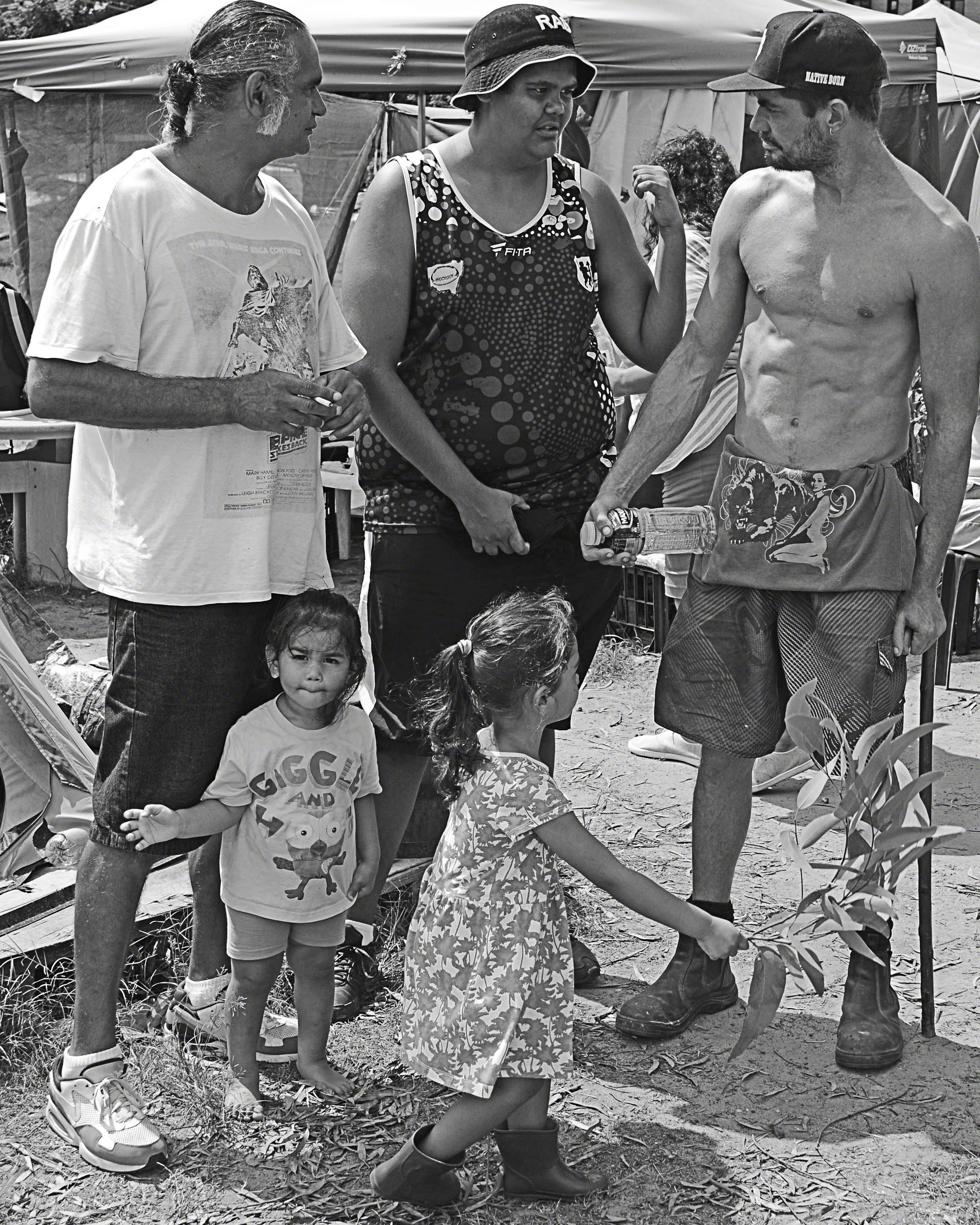
 

LOVE & SUPPORT AT REDFERN ABORIGINAL TENT EMBASSY


Creative Commons Licence This work is licensed under a Creative Commons Attribution-NonCommercial-NoDerivs 3.0 Australia License.


Gallery

WHO LET THE DOGS OUT . . .


Black and white photograph of two men, Bulldogs fans, sitting at a table on the street in Belmore. A bulldog on a leash sits under the table.


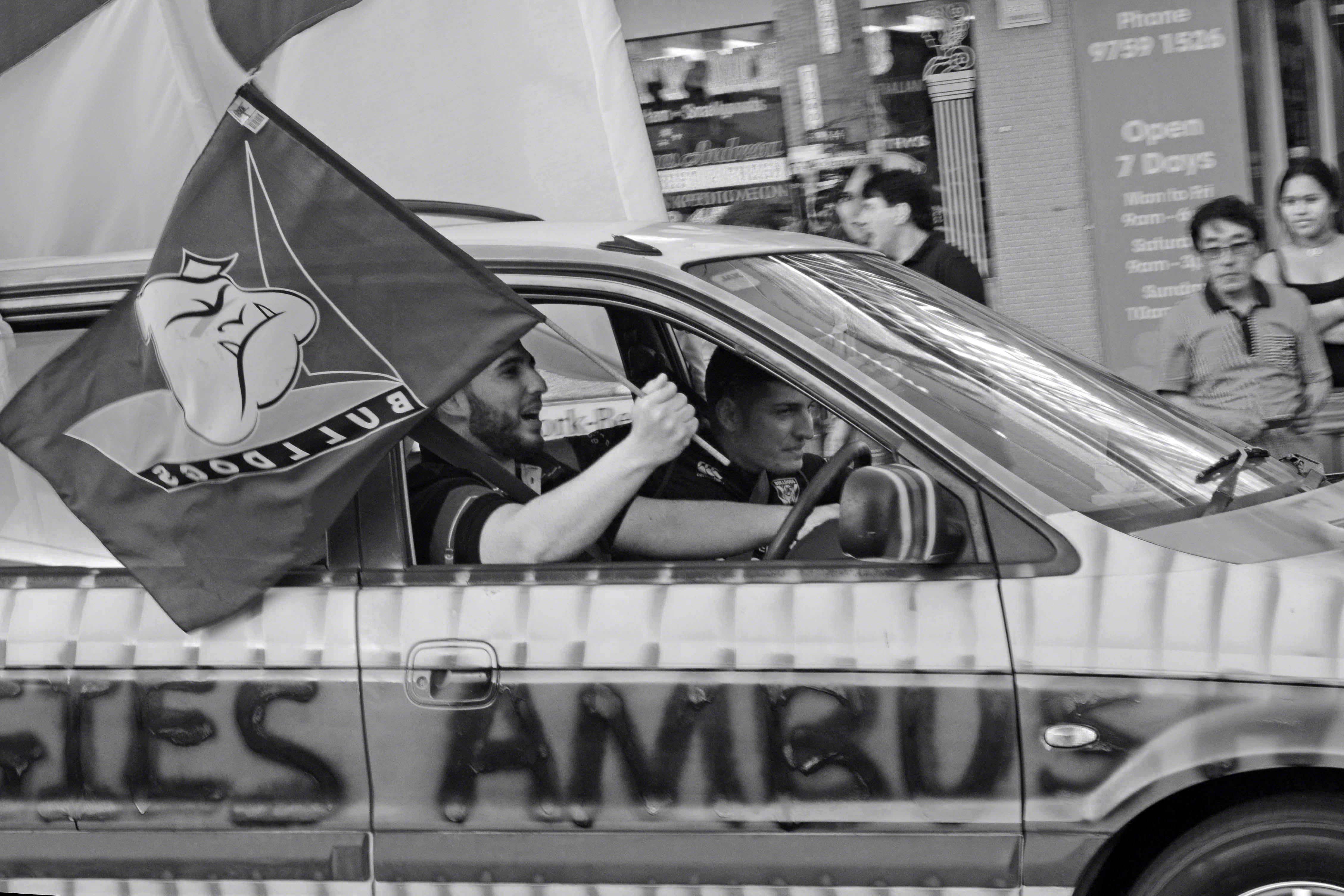
Black and white photograph of Bulldogs fans in a car. The driver is flying a Bulldogs flag out the window as he drives.


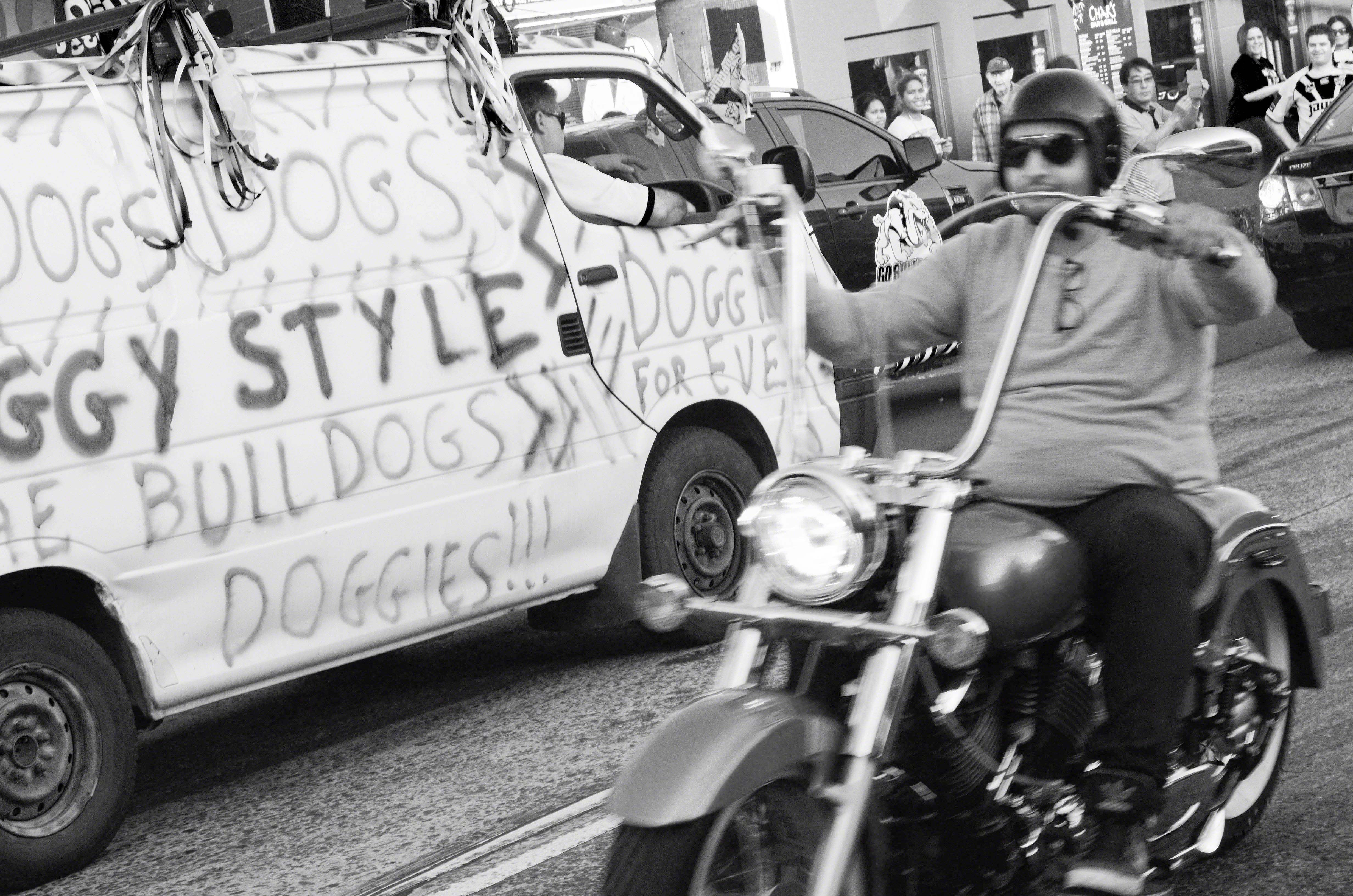
Black and white photograph of white van with 'dogs', 'doggies', 'doggy style' spray painted across the side, streamers hanging off it driving one direction and a biker driving the other direction. The street is full of fans, waving flags.


NRL Bulldog fans on Burwood Road, Belmore the day before the 2014 grand final between South Sydney Rabbitohs and Canterbury Bulldogs.


© Gaele Sobott 2014. Unauthorized use and/or duplication of this material without express and written permission from this blog’s author and/or owner is strictly prohibited. Excerpts and links may be used, provided that full and clear credit is given to Gaele Sobott with appropriate and specific direction to the original content.

ENLIGHTENING THE GATEKEEPERS… some thoughts on the Scribbler Literature Forum

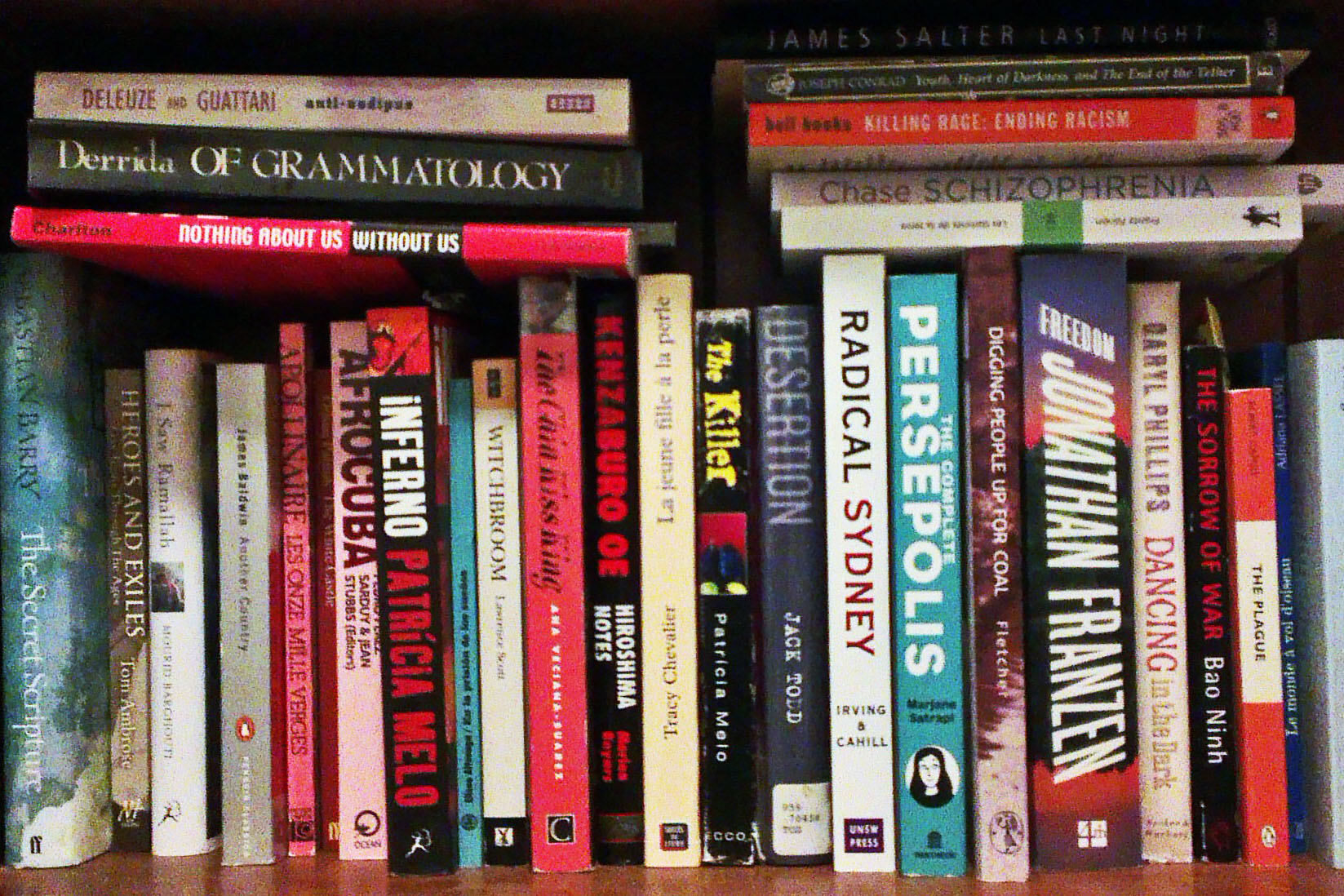
Image Description: Books on a bookshelf. Titles include Persepolis, Of Grammatology, Radical Sydney, AfroCuba


One of the more well-known slogans of the disability rights movement is “Nothing About Us Without Us” – the recent closure of ABC’s “Ramp Up” accentuates the fact that there are very few of “US” in the Australian media, literature and writing sector.

For many years, South Australia was the only state to run a program, through the SA Writers’ Centre, for writers with disability. In 2012 Arts Access Victoria and Writers Victoria took up the baton by launching the Write-ability project, supporting Victorian writers with disability to develop their skills and writing careers. At the 2014 Emerging Writers Festival in Melbourne, Write-ability proudly showcased six of its emerging writers.

Accessible Arts NSW began the process of addressing the barriers faced by writers with disability in NSW by organising the SCRIBBLER – Literature Forum at the NSW State Library, on 24th June this year. I was pleased to be invited to convene this event. Writers with disability gathered together with industry professionals to hold critical conversations around what we see as key concerns. Examples of these concerns are leadership opportunities in the sector, inclusion in festivals and on writing platforms, and changing the culture surrounding disability in the arts.

The keynote speaker at the Forum, Writer and Editor, Gayle Kennedy described in detail some of the access barriers she has faced as an award-winning writer who uses a wheelchair. One example she quoted was organisers refusing to pay her carer’s airfare, which meant Gayle was prevented from attending major events:

[As a] David Unaipon Award winner ‑ I did not get to go to any other  writers’ festivals. Year in and out every award winner is invited to the  festivals. But I didn’t. I didn’t get to go to Melbourne. I didn’t get to  go to Adelaide. I didn’t get to go to Perth.

The presenters on the “Writing the Boundaries” panel gave specific examples of the discrimination that effectively nullifies or hinders equal opportunity within their chosen occupation of writing. The experiences are complex and varied. Georgia Cranko, a writer and performing artist talked about privilege and oppression in her life, “…I am often marginalised in situations, but I have been fortunate to be equipped with tools that allow me to push through that oppression and neither be crippled by it nor defined by it. My intellect has always been doubted by strangers.” She feels lucky that she can prove her capability through her academic work and writing, not only to others but also to herself. She related how the physical manifestation of her impairment sometimes offers her privilege in comparison to people whose impairment is invisible but “It also underscores the social issues that I deal with. If employers were willing to hire someone like me, I wouldn’t need to rely on the government for the pension or be terrified that it will be cut…”

Amanda Yeo, a writer from Sweatshop Western Sydney Literacy Movement, refuses to be defined by her impairment, and does not accept the limiting inspirational, tragic or superpower tropes that are used to characterise people with disability in the media and literature. She has found writing to be an excellent way to explore her identity and learn to be comfortable in her own skin. She said,

I’m not saying we should write about people who find their disability a constant factor or concern, and I’m not saying we should only write about people with disability…I’m not saying we have to write about people with disability all the time; I’m just saying write about people.

In describing our embodied experiences of trying to work within a disabling world, the writers rejected posturing on disability by writers without disability. Historically people with disability have been the objects of research, not the researchers. We have not been seen as writers but have been written about and acted upon. The obvious way to change this is for writers with disability to write about disability themselves.

Gayle Kennedy called for affirmative action in relation to creating disability leadership opportunities, and dedicated disability access and arts funding. Affirmative action is a concept that is shied away from when discussing solutions to disabling experiences of discrimination in the arts. It is possibly the idea of quotas and succession plans that scare organisations. I think there should be a focus in Australia at this time on meaningful employment targets for artists, arts managers, arts organisers and arts workers with disability. I think we should also be focusing on effective leadership succession plans for people with disability in arts organisations, especially arts and disability organisations. But I would also emphasise that affirmative actions include training programs, outreach efforts, and many other positive steps. Jane McCredie, Executive Director of the NSW Writers’ Centre suggested that writing and literature organisations should include an access component in their budgets. I would love to see the creation of a national literary prize for writers with disability. Some publishers are beginning to actively seek out manuscripts by writers with disability. Every small step is a welcome contribution to shifting attitudes, and to creating a critical mass of people with disability in key positions in literature organisations, performing on literature festival platforms, and publishing their work.

To bring about change to the disabling aspects of our industry, I think we also need to develop a more precise understanding of how gatekeepers determine who becomes literate, who learns to write, who gets funded, what the funding criteria are, who publishes, who gets publicised, promoted, invited to read. The gatekeepers are in the media, in schools, community centres and arts organisations. They are publishers, festival directors, book reviewers and event organisers. Gatekeepers may also include parents, carers and community capacity officers. They are the people who decide. They are the people who assist in forming understandings of disability, the value and often the content of our work. They form the dominant norms of the system we live in. Gatekeeping can be subtle or blatant. We hear story after story of young people with disability being told by a parent or a teacher that they can never be a writer. Many publishers are known to prefer promoting an author who fits snugly into the narrow physical realm of normalised beauty. Festival organisers prefer a writer who can travel freely without extra accessibility costs rather than a wheelchair user. By understanding how gatekeeping works we are in a better position to design affirmative actions. In terms of creating leadership that will bring about change it is already clear that writers and arts workers with disability need to access positions of power. These include positions such as publishing editor, publicist, festival director and policy maker. We need to be on the employment interview and funding assessment panel, and the board of arts organisations.

Although I’m not sure how literature as an art form fares, the Australia Council for the Arts is leading the field at the moment in providing dedicated funding for artists with disability and a focus on leadership and disability. The Council sponsored the UK based artist and disability activist, Jo Verrant’s recent talks on the transformational potential of employing disabled people in leadership roles within the cultural sector – not just for those individuals themselves, but for the invigoration of cultural strategy, and for the benefit of all. By including writers with disability we are opening up literature to diverse perspectives, writing that stretches beyond the boundaries of traditional literary form, writing that defies genre, and the way we receive and understand normalised bodies and language. Joanna Agius, a writer and Deaf Arts Officer at AARTS NSW argued the case for writing in AUSLAN and creating AUSLAN books, which brings a whole new dimension to the category of “literature”.

I recognise that discrimination is not always intentional. It can come about through fear and ignorance. In this respect writers with disability are crucial to shifting the culture that surrounds disability in the arts and in society in general. The power of literature lies in its ability to gradually shift perception, consciousness and then reality. To paraphrase the Belgian-Egyptian writer, Khaled Diab, the culture of power can at least be rattled by the power of culture.

There is a lot to be done. Many possibilities emerged from the Forum, including more genre specific discussions, regional forums, writer-with disability-led initiatives, the creation of writing resources for writers with disability, exploration and replication of the S.A. and Victorian mentoring programs, advocate/agents who approach publishers on behalf of writers with complex communication requirements, the development of diversity action plans. Many writers at the Forum commented on Executive Director of the Australian Society of Authors, Angelo Loukakis’, reference to the Women’s Liberation Movement of the 60s and 70s when “sisters were doing it for themselves”. There is a move amongst writers with disability to create their own writing groups, their own networks and their own performance and publication platforms. While writers with disability would like to find ways of sustaining these initiatives themselves, there is also a desire to agitate for taxpayers’ money to be distributed more justly across the arts.

It is essential for writers with disability, our allies in the sector, Accessible Arts NSW and industry professionals to follow up on the ideas and the momentum created by the Scribbler forum.

Sam Twyford-Moore, the director of the Emerging Writers Festival finished his presentation at the Scribbler Forum with a quote, “Festival directors are gatekeepers, but most enlightened gatekeepers take on the role because they relish opening the gates, not because they like slamming them shut. Most responsible festival directors are acutely aware of accessibility and diversity issues, and are driven by a desire to transcend those limitations, not to cement them.”

For the benefit of literature, the arts and society in general, let us now enlighten the gatekeepers. More importantly let “US” too become enlightened gatekeepers, attuned to the specific manner disability discrimination operates in the industry, and also to the form, content and location of discrimination against writers and arts workers who belong to other sections of society.

Links to organisations mentioned in this blog:

Accessible Arts NSW

Arts Access Victoria

Australia Council for the Arts

Australian Society of Authors

Emerging Writers’ Festival

NSW Writers’ Centre

SA Writers’ Centre

Sweatshop Western Sydney Literacy Movement

Writers Victoria