THE COURAGE TO COME FORWARD – An Interview with Colin Hambrook

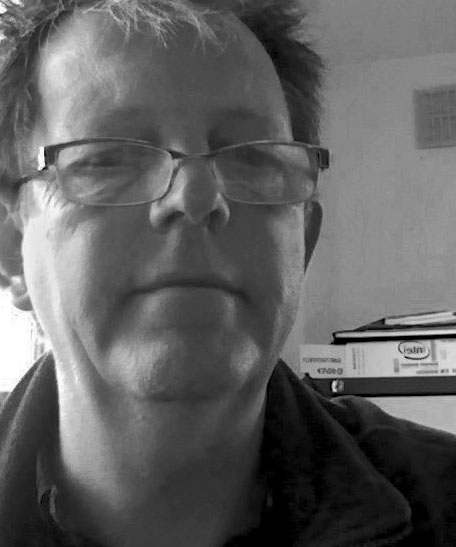
Black and White headshot of Colin Hambrook, a middle-aged, white man wearing glassesColin Hambrook was educated at Dartington College of Arts in South West England. Knitting Time, his exhibition of paintings, drawings and poetry about the experience of psychosis is on show at The Hub, East London until 15 November. The work was previously shown at Pallant House, Chichester and the Impact Arts Fair 2013. Colin’s first collection of poetry, 100 Houses was published by DaDaSouth in 2011, followed by Knitting Time (Waterloo Press ISBN 978-1-906742-65-2). He is the founding editor of Disability Arts Online

The interview was conducted by Gaele Sobott on 28th September 2015 at the Barbican Centre in London just before Colin attended the Creative Future Literary Awards at the Free Word Centre in Holborn.
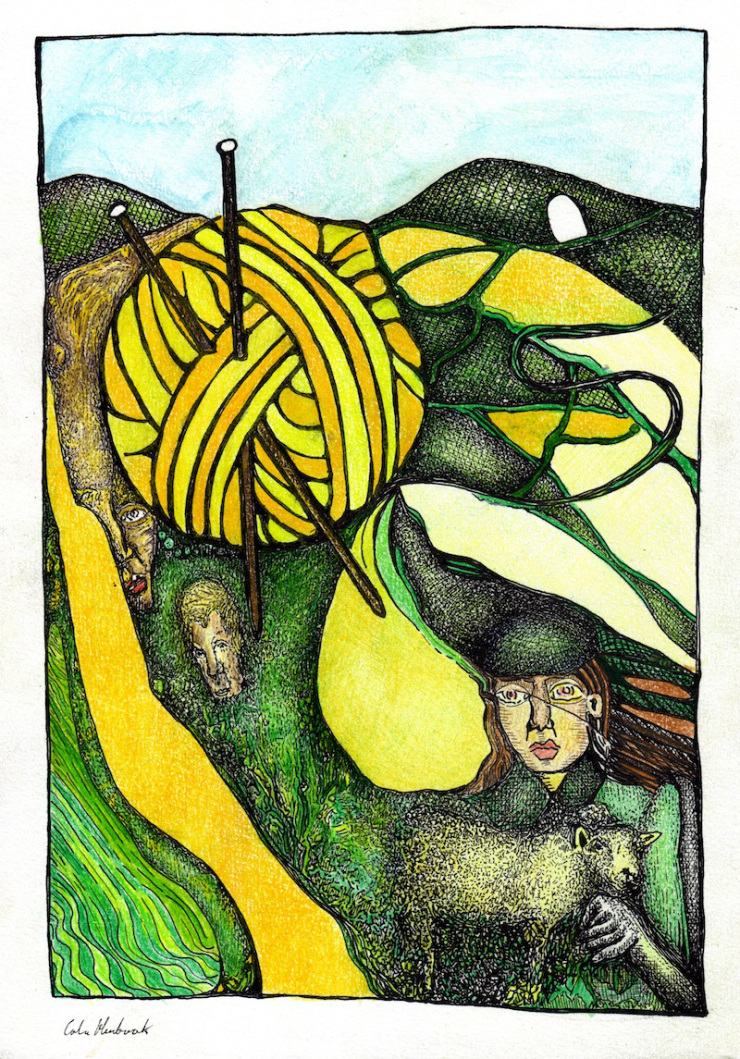
Drawing by Colin Hambrook. Blue sky with clouds above green hills, a large ball of yellow wool sits just below the hills. Brown knitting needles are stuck in the ball of wool. A thick yellow line runs down the left side of the picture like a river, and green and yellow squiggly lines run parallel to this yellow band. To the right of the picture there is another thick band of yellow intersected by thin meandering green curves that creates what looks like an aerial view of plots of land or small farms. There a two faces, one squashed between the ball of wool and the yellow band on the left and one just below the ball of wool. In the bottom right-hand corner there is a woman wearing a green beret type hat and green coat. She is holding a sheep.

Call of the Ancient by Colin Hambrook

Gaele Sobott: In Australia the visual arts and now dance appear to be surging ahead in terms of developing platforms and exposure for disabled artists. Literature is quite a way behind. In the UK disabled writers and literature seem to be better placed. What are the Creative Future Literature Awards and how is Disability Arts Online involved?
Colin Hambrook: Creative Future is a Brighton-based organisation looking to promote careers of ‘marginalised’ writers and artists. Amongst those they support with their annual Literary Award are a certain number of disabled writers. Disability Arts Online is a partner. We have signed up to help them promote the program, get information out, reach people. In terms of literature in the UK, Survivors’ literature has led the way.
GS: Please explain what Survivors’ Literature is.
CH: The key organisation is called Survivors’ Poetry, founded in 1990 by four poets with direct experience of the mental health system in the UK. In a really short space of time it mushroomed into a huge phenomenon. It was a UK network of groups that all became affiliated, some of them became registered charities or not-for-profit companies in their own right and I would say between ’94 to ‘96 it exploded and was reported on in the media and really picked up on. It was important that the people who ran the organisation and wrote for Survivors’ poetry come from a mental health background. They had experienced mental distress, been through or had an intimate knowledge of the mental health system.
GS: What kind of work were they producing?
CH: In the 90s there was a kind of performance poetry format, going into day centres, resource centres, organisations working with people who had come through the mental health system, and producing workshops and giving people the opportunity to perform. So typically the first half of an event would be open mic encouraging people to get up and perform their writing and the second half would be more experienced performance poets. The organisation still exists with a core force of people in London but it has become less prominent elsewhere in the UK over the last ten years.
GS: Why do you think that has happened?
CH: Survivors’ Poetry’s strength was in its Community Arts ethos, but it has become harder to find funding for grassroots work. It’s hard to keep integrity, supporting individual artists creativity at a grassroots level whilst maintaining support for ‘professional’ artists. Survivors’ Poetry turned to producing a literary output, which has been fairly successful. As part of the Unlimited showcase at London’s Southbank Centre last year, Disability Arts Online and Survivors’ Poetry celebrated the achievement of the organisation with a reading by some of the Survivors’ founding poets in the Saison Poetry Library in the Royal Festival Hall. The library contains twenty-seven titles under the Survivors’ Press imprint.
GS: Has Disability Arts Online managed to keep its integrity?
CH: Disability Arts Online in the last ten or twelve years has kind of managed. It’s a bit like a dance, you want to keep your core constituency on board and to nurture that talent, but also you’ve got to watch out, keep an eye on the priorities linked to where financial support can be found to ensure funders’ demands are satisfied.
For instance we have a modest contract with Unlimited to report on all of the artists and all of the projects that come out of Unlimited. It’s a fantastic opportunity to spread the word about this important initiative. Much of Unlimited’s aims and values concur with those of Disability Arts Online, working to support the development of art by disabled artists within the UK cultural sector. Disability Art Online’s brief is to interview the artists, review the shows, comment on the work as it progresses, and where possible, to commission copy for other online magazines and press in order to facilitate the reach of Unlimited to new audiences. Unlimited had a fairly substantial presence at the Edinburgh Fringe Festival this year, with several pieces of work in the British Council Edinburgh Showcase. Unlimited is spearheaded by two organisations: Shape and ArtsAdmin and they’ve received support from the British Council in facilitating the artists taking their work outside the UK. In many ways it is a bright, shiny success story.
We have to work hard to ensure our integrity isn’t compromised, which means creating projects that support and create opportunities for our core constituency and looking to remain disabled-led as much as possible, whilst also working with the high-profile initiatives. Without the support of Unlimited many of the artists we work with would never have got the profile they’ve achieved. For example Jess Thom was unknown as a performer before her company Touretteshero received an Unlimited research and development commission for Backstage in Biscuitland. After a year or so of touring she has been commissioned by Channel 4 with a version of the show made for television, Broadcast in Biscuitland.
GS: So does your core constituency consist of disabled artists at grassroots level?
CH: Yes, disabled artists, writers, who are what the Arts Council term as emerging artists. They are people who create because they’ve got to create, not because they’re making a living out of being artists, necessarily.
GS: Is it possible some of these artists could find themselves forever classified as emerging because of the nature of the market and the value system used to categorise their art?
CH: Yes but that’s just the label that the Arts Council puts on it. People are creative because they need to be creative and creativity isn’t a commodity. We have this schism in our society that divides creativity up into commodity and art. It’s nonsense really.
GS: You mentioned that much of the art by disabled performers at this year’s Edinburgh Fringe Festival focused on the body. Can you please talk more about that?
CH: Yes that’s not necessarily a bad thing. Culturally it’s very different from disability arts of possibly ten, certainly fifteen years ago where the focus on impairment was frowned on.
GS: Was that in defence of the Social Model of Disability?
CH: Defending the Social Model but also it was much more then about community and about people raging against the machine, standing up against discrimination, being a collective force. What’s happened is that as the focus for disability arts has moved away and broken up into impairment-focused issues, which I think are important . . .
GS: Why do you think these issues are important?
CH: Because the key problem with what I would call the first wave of disability arts from the mid 80s to the end of the 90s was that it was very much inward-looking and there was a very powerful community of disabled people who were very clear in their aims and making strong art for and by disabled people. Indeed we got the DDA (Disability Discrimination Act 1995). Not the DDA we wanted but we got the DDA. What happened then was that the very clear, concise stand against discrimination got diluted and the Social Model as a source of inspiration and power for people to find a voice kind of hit a brick wall because impairment within the Social Model wasn’t really addressed in a very strong way. So all the slogans like, Nothing About us Without us, the focus on things being disability-led, kind of fell apart when certain disabled leaders, say for example a wheelchair user, didn’t understand all the politics around Deaf issues or blind issues. Having disabled leaders is important but having that broad understanding of access and the issues faced by people with different impairments is more important.
GS: Isn’t it possible to have disabled leaders with a more complex understanding of disability, Deaf experiences, impairment?
CH: Yes that is the ideal, yes.
GS: Why hasn’t that developed or has it?
CH: There’s a choice that happens in either developing the politics or developing the arts. They can go hand in hand and work with each other and they can also work against each other. The emphasis from the funders has been that if you want the money you have got to develop the aesthetic, you’ve got to develop the art. The politics have been sacrificed to a large extent. A big part of that politics is the importance and value of work being disability-led, because at the end of the day, it’s the experience of being disabled by society that motivates us.
GS: With this huge austerity drive and all these cuts do you think there is more of a need now to develop disability political leadership and action?
CH: Yes there is more of a need now than ever. Absolutely.
GS: How do you see that developing given what you have just said?
CH: It needs people with courage to come forward and start demonstrating on the streets again.
GS: Do you see the march to Downing Street on Saturday protesting the changes being made to Access to Work as an example of this?
CH: I’m really angry that the government are cutting Access to Work. In this case the government said they will cap what any one BSL interpreter can earn at $40 000 a year. But who the hell in the arts is earning forty grand a year? Very few I would say. So the demonstrators were protesting the cuts in Access to Work with this cap on how much an individual can earn. There are thousands of disabled people dying because of cuts. The government is playing a game of divide and rule. On the one hand they are saying they want to get all disabled people into work, but on the other they’re denying means to make working an option. There needs to be a clearer focus in standing up to these issues.
GS: So are you saying that political leadership and analysis are lacking?
CH: Yes
GS: When you say there is a need for people with courage to come forward, the courage to do what?
CH: What the hell do we do in this political climate? I got very involved in supporting the 10 000 Cuts and Counting protest. At the end of 2013 we were working with Michael Meacher MP and the Dean of St Paul’s Cathedral. We met Michael Meacher in his office in Downing Street. He had a mass of files of printouts, of emails and letters of people who had written to him of their plight, their family’s plight, what was happening as a result of austerity, what was happening as a result of cuts in disability benefits. The main focus was that over ten thousand people had died within six weeks of being declared fit for work because their benefits had been cut and they’d been left with no money. Those individuals didn’t necessarily pass away because of the cut in their benefits, but equally, many did. Can you imagine the indignity of being on your deathbed and getting an official letter from the Department of Work and Pensions telling you that you are fit for work? And this has happened to many thousands of individuals and their families. There has been a very dangerous shift in attitude that as an individual living in this society you have to prove that you are financially contributing to it for your existence to be valid. We’ve gone back to the Victorian age within a few short years with the ruling class and their bastard politics. They’ve got every evil connivance of screwing the tax payer and they’ve got the media sewn up so they can infest everyone’s brains that it’s disabled people who have brought austerity upon us, that have brought down the economy. It’s evil!
GS: So do you think it is the responsibility of disabled artists to identify as part of the community and bring the politics into their art in some way?
CH: I personally think it is but then who am I to demand that of an individual? I encourage individuals to get involved in Disability Arts Online who have that ethos. I would say though that generally this time around people are finding it much harder to stand up for their rights.
GS: Why do you think that is?
CH: Well I would include myself in this criticism and say after the DDA was established, the disability movement never really went out of its way to include younger people. So we’ve still got the same old codgers now trying to make a stand like they did twenty or thirty years ago. People are older and frailer.
GS: The older people may no longer have the physical strength but they have knowledge. Do you think younger people are separated from that history, that knowledge of what has gone before them? Are they expected to reinvent the wheel?
CH: Yes and the tendency of Neoliberalism is to encourage people into their own little camps, individualism, losing sight of the larger collective.
GS: Do we need to theorise how to change that and if so how?
CH: It has to happen. I think going back to what we were saying earlier there is a value and an importance in the work that has become the key focus for disability arts – the relaying of stories about the body, stories of people’s experiences of individual impairment, of discrimination.
GS: How does art play a role in changing public perceptions?
CH: Art has a key role to play. You might not call an ITV soap opera, art, but in terms of popular culture, it’s much more wide-reaching than most art.  And so for example, Liam Bairstow who trained with Mind the Gap has recently got a lead role in ITV’s Coronation Street. I think that a young actor with learning difficulties being seen on TV is definitely going to change attitudes, make a lot of people think and those changes are really important.
GS: It seems you are saying that change needs to take place on many levels.
CH: That’s where disability arts is at now I think, certainly within the performing arts, and within the visual arts. In the visual arts there is possibly a bit more politics.
GS: Going back to individual courage – someone may have the courage needed to come forward but if others don’t join with that person it could be very demoralising. What is your experience in this regard?
CH: Well yes, for me, we went to all that effort with 10 000 Cuts and Counting and none of the media turned up and it was all forgotten very quickly. No one took any notice. Nobody seems to care that many thousands of disabled people died because of cuts. Nobody thinks that could be me, or that could be a member of my family.
GS: You said the media didn’t pick up on the story. Disability Arts Online plays an important role in providing an alternative media source.
CH: Yes we do provide an alternative media and we keep plugging away.
GS: You started Disability Arts Online in 2002, and in 2004 you set it up as a not-for-profit company limited by guarantee. So it’s been running for over eleven years. How do you fund the organisation?
CH: We’re constantly working on funding applications for projects. We have a broad vision for how we operate in terms of raising debate about disability arts practice and supporting the work of individuals and organisations across art forms.
We’ve recently received funding from Arts Council’s Grants for the Arts scheme for Viewfinder over the next eighteen months. Viewfinder will see us working in partnership with Wikimedia UK, Sick! Festival, SPILL Festival, Carousel, the New Wolsey Theatre and Goldsmiths Disability Research Centre. It’s very exciting. Wikimedia UK are keen for us to populate Wikipedia with pages dedicated to disabled artists and a history of the movement. The Disability Research Centre at Goldsmiths University is supporting us in running a series of workshops.
We’re producing a video platform and commissioning disabled artists/filmmakers to curate a selection of disability work from the archives of Sick! Festival in Brighton, SPILL Festival in Ipswich/London and Carousel’s Oska Bright Festival. We will produce videos commenting on the importance of the selection in advancing the practice of disabled artists. So, for example Matthew Hellett, who is a learning disabled filmmaker on the Oska Bright committee will be making a film about what makes for good representation; how the committee judge the best films for Oska Bright. We’ve also got another year of core funding from the Esmée Fairbairn Foundation, which is renowned for funding organisations with a community remit.
GS: Have you come up with ideas for sustaining Disability Arts Online on a more long-term, financial basis? Have you tried financing the group by any means other than government funding or philanthropy?
CH: We’ve tried a few experiments. We recently worked with Stopgap Dance Company. They produced the Independent Fringe platform in Edinburgh. Disability Arts Online produced a crowd-funding platform for one of the younger artists, Rowan James. That was successful. We raised £1500 towards getting him to the Edinburgh Fringe Festival. We want to do more of that.
GS: You have described how outside funding can determine the path you take. So if you want to be independent of those demands and priorities in terms of changing the political situation how do you achieve financial independence and sustainability?
CH: Well yes sometimes you feel that the odds are stacked against you. It is a constant struggle. We need time and energy and imagination to come up with strategies. We have a shared knowledge and experience that can be incredibly useful to many industries, so we are also working to find ways to be more sustainable through consultancy and media partnerships.
GS: You have shared your childhood and some challenging personal experiences through your poetry in a way that must be quite confronting but hugely important in terms of supporting people within the Survivors Movement and people who may feel isolated. Would you like to comment on how art can provide a form of community solidarity and empowerment, especially in reference to your latest collection of poetry, Knitting Time?

A drawing of a small boat knitted from yellow wool, sailing on a blue sea with stylised waves against a bright blue sky

Knitting Time by Colin Hambrook

CH: I’d like to think that Knitting Time had value in giving a voice to issues around mental distress. Mostly, psychiatry condemns individuals to the judgement of a medical imperative, which locates mental health problems in the head divorced from the individual’s life experience and circumstances or indeed from any emotional impact located in the body. It treats the individual as having a separate, disconnected body and mind and introduces powerful and potentially harmful drugs to suppress experience deemed as mental health problems. Often, those experiences can be exhilarating and creative even if they can make it harder to function in the ‘real world’. Often mental health ‘issues’ are a matter of an individual having the confidence to be comfortable with who they are.
So in sharing some of my own journey I would hope to break some of the isolation people feel. There is empowerment in hearing others’ stories, others’ expression. There are poets like John Clare and William Blake whose names come up frequently in terms of writers whose core work continues to inspire empowerment within a survivors’ community. There was a poem by Ellen Link that I go back to again and again that inspires my sense of the value of connection; and connection with nature as a healing force in contradistinction to this narrow framework we are meant to fit in with when it comes to being seen as valid, mentally healthy members of society: “In the woods they blast/ your courage to tell you/ you are not a tree, that the wild wind /and the grey skies are not your cousins/ though their atoms be like yours. . .”

For further reading:

Colin Hambrook’s Art and Poetry Blog

Celebrating the Survivors’ Movement

Jess Thom’s Tourettes Hero

10 000 Cuts and Counting 1

10 000 Cuts and Counting 2

10 000 Cuts and Counting 3

Creative Commons License
The Courage to Come Forward – an Interview with Colin Hambrook by Gaele Sobott is licensed under a Creative Commons Attribution-NoDerivatives 4.0 International License.
IF YOU DIDN’T LAUGH, YOU’D CRY : AN INTERVIEW WITH GAYLE KENNEDY

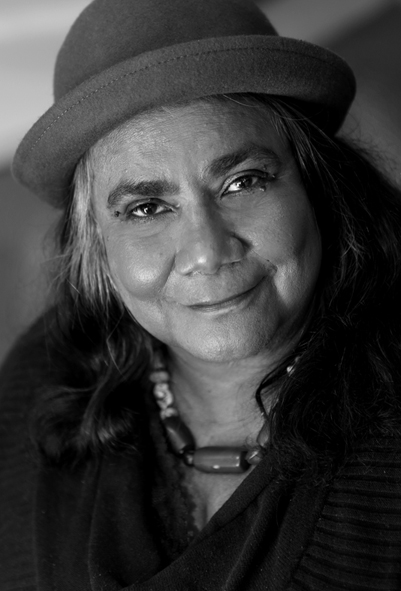
Black & white portrait of Gayle Kennedy smiling and wearing a hat and a necklace with large beads

Photograph taken by Belinda Mason

Gayle Kennedy is a proud member of the Wongaibon Clan of the Ngiayampaa speaking nation of South West NSW. She is an award-winning writer and has published work in newspapers, magazines, literature journals, and for radio. She was the Indigenous issues writer and researcher for Streetwize comics from 1995-1998. Her book of poetry, Koori Girl Goes Shoppin’, was shortlisted for the David Unaipon Award in 2005 and her prose work, Me, Antman & Fleabag[1] was the winning entry in 2006. She wrote eleven books for the Yarning Strong series. The Series won the 2011 Australian Publishers Association award for Excellence in Educational publishing. Gayle is a disability advocate and has spoken widely in Australia and overseas on disability and the arts.

Gaele Sobott: Can you tell me about your background? Where you were born, where you grew up, a little bit about your family?

Gayle Kennedy: I was born in Ivanhoe NSW and we moved to Hay when I was seven. In between, from the age of two to five, I was in the children’s hospital in Camperdown and then a rehab hospital in Wahroonga, then the Royal Far West in Manly recovering from Polio

My mother and father were both born in Condoblin but Dad’s family is from around Cobar. Mum’s family comes from the Euabalong area. Mum and Dad met when they were seventeen, working out at Wilcania. They’re both eighty-three now and they’ve been married sixty years this year. They had six children, four girls and two boys. One of my brothers was killed in a car accident at the age of eighteen in 1976. Dad worked for what was then the Department of Main Roads in the Central Darling Shire. Mum worked for a long while cleaning in hotels but gave that up about thirty years ago. They’re both retired now. I grew up with their stories. My parents’ story is in the national library. Francis Rush did that. She did an interview with me too about my experiences of polio for the Social History of Polio Oral History Project.[2]

GS: What are some of the memories you have of your childhood?

GK: I have vague memories of being in an iron lung and learning to walk again. My memories are mainly of me going backwards and forwards between home and the Far West. I remember loving rehab. It was the only home I knew at that stage. I was surprised to find out that I wasn’t from there when my parents came to pick me up. The first part of Me Antman & Fleabag where I write about the hospital is pretty much based on that time. The rest of it is fiction.

GS: Talk a little about your school experiences.

GK: When I was at the Far West I went to school there and it was okay. Because of the polio treatment I didn’t start school until I was seven. I went to the Convent school in Hay and the nuns were very good teachers. It was a great place because there was absolute zero tolerance of bullying or racism. Then I did one year at Hay Public School, which was awful. There were a couple of kids that bullied me and the headmaster was very racist and treated me like an idiot. Fortunately the teachers realised I was bright and totally ignored his directions to put me in the lower classes. So I got to work at the level I was used to which was the advanced level.

Then I won a two-year scholarship to go to Queenwood here in Sydney, at Mosman, right on Balmoral Beach. Violet Medway was one of the principals then. They were into providing a high standard of education for girls. No domestic science or any of those subjects that used to be taught to women. I loved English and History. I was a bit of a daydreamer – never really concentrated. I was always off in another world when they tried to tell me stuff. I generally crammed for exams. I was at Queenwood from age seventeen to nineteen. I made great friends there.

GS: Describe your early adulthood. What were you doing in your late teens, early twenties? What were your interests?

GK: After I finished at Queenwood I went to the Commonwealth Employment Service in North Sydney to look for work. That’s what you did in those days. They found me a position at the Australia Council as a clerk, Grade one. I went for an interview and got the job. I had a ball. It was fun meeting lots of fabulous people like Gillian Armstrong, Jane Campion, Gary Foley, Brian Syron, George Miller. They were just starting out in those days.

I was living in Cremorne, sharing a place with four guys. It was great fun. I’d go to the beach, go to the theatre. I liked Shakespeare and Ibsen. Reg Livermore was big then. I loved the Rocky Horror Show. There were a lot of new Australian plays happening. I’d go out to listen to bands. Live music was popular then in the pubs – blues, jazz and rock. We’d listen to bands like The Sports, Mondo Rock, the Divinyls. Cold Chisel was starting out. It’s changed now. People moved to the inner city areas from the North Shore, places like that, and started complaining about noise. Gentrification changed the live music scene and also poker machines took over in the pubs as the main entertainment.

I did my share of partying too. Everybody danced, played records, got stoned, got laid. I had lots of relationships – a couple long term. One of them lasted for ten years and one for about four years. I ended up being bored. I didn’t find them exciting or interesting anymore. They were good men but I never really took to being tangled up with anybody.

GS: Music seems to play a big part in your life.

GK: I’ve always been obsessed with music every since I was little. I like melodic music. If I like a piece of music, I want to know all about it. Who wrote it and why – the whole history. My tastes range over a lot of genres from Joni Mitchell to Hank Williams, Bob Dylan, Nancy Wilson, Sarah Vaughan. I listen to music all the time. It lifts my spirit and takes me to another place. If I’ve got a religion, it’s music.

I can remember singing when I was very young, maybe two, the old country songs like Don’t sell Daddy any more whiskey. Both my parents played and sang socially, at celebrations, weddings, funerals. Mum sings and plays guitar, piano accordion and piano. Dad sings, writes songs, plays guitar and performed around the traps.

GS: Tell me more about your work life and career.

GK: I stayed in the public service for years. I worked for a while with People with Disability and various community centres. From 1995 to 1998 I was a writer and researcher for StreetWize comics. I worked at the Aboriginal Medical Service and the Aboriginal Legal Service doing clerical work, research work, report writing. Then I started at the Attorney General’s Department as a policy officer around Aboriginal justice. I got sick of that and left in 2008. I’ve been a writer ever since.

GS: Why did you get sick of working at the Attorney General’s Department?

GK: Every time something good was happening the government would pull the pin. There was too much double speak, too many weasel words. I didn’t like the attitude of a lot of the young people I was working with who’d grown up not really knowing about hardship or what was really going on with Aboriginal people in the justice system. There’s no fire in their belly. They pay lip service to the struggle that went on but I don’t think they really acknowledge that struggle or give a damn. I just wanted to be out.

GS: How did you start your writing career?

GK: I had a plan before I left the public service. I started entering writing competitions. Irena Dunn initiated the Inner City Life writing competition in the mid 1990s when she was director of the NSW Writers’ Centre. I submitted a poem for that which was highly commended. The following year I won the competition with a prose piece called ‘Life’s Good When Ya Know How’. I liked the piece so much I expanded it into a book and entered it for the 2006 David Unaipon award. I won and everything grew from there.

I was commissioned to write a graphic novel as part of the OUP Yarning Strong series. One by one the other writers who had been commissioned dropped out so I ended up writing those stories. I published eleven books with the series. The illustrator was Ross Carnsew. I’d worked with him before on StreetWize.

GS: How do you find writing to a brief for children?

GK: It was challenging writing for a particular age group but I managed to make the stories interesting. I wrote the kind of books that kids want to read. You just think back to when you were a kid and put yourself in their shoes. I don’t use big words when I write for adults. I like clean, simple, lean writing. So writing for children is not difficult for me. With Yarning Strong I was given a word, family, land, lore, culture. I wrote whatever I liked around the subject.

The books went into the schools. Apparently they are much loved and are still selling very well. They were the overall winner of the 2011 Australian Publishers Association Awards for Excellence in Educational Publishing. The series was also awarded Best Student Learning Literacy resource for 2011.

GS: Your work at StreetWize was specifically for low-level literacy readers, Indigenous and non-Indigenous. Do you think there is a need for more of this kind of writing?

GK: Well there is no real organisation doing that kind of publishing anymore. Yes there is a definite need for more. It was a great way of providing for kids and adults with low-level literacy. StreetWize publications were very mobile, very accessible. You’d find their comics in waiting rooms, classrooms, wherever. It relied on government grants and was closed because of lack of money. Howard got in to government. Need I say more?

GS: What was your experience with writers’ festivals and the media directly after winning the David Unaipon award? How were you received as a writer with disability?

GK: I was only invited to three writers festivals – Sydney, Darwin and Brisbane. The festivals didn’t want to have me because it meant paying the extra fare for my personal assistant. The organisers didn’t check that accommodation and venues were wheelchair accessible which made it difficult. There were no radio interviews, no press. The other David Unaipon award winners got a lot more attention. I think that was to do with me being an older writer and one with disability. Writers’ festivals like the young writers.

But Me, Antman & Fleabag is still selling after all these years and now it’s starting to sell overseas. That’s mainly due to social media and word of mouth.

I think writers today are expected to have the kind of face that looks good on magazine covers, to be celebrities, attractive in that way. They have to be highly visible, good with sound bites.

GS: You’ve written about people with disability as being ‘the shadow people’. What do you mean by this?

GK: People with disability are often in the background, in the shadows. Everyone else gets up to talk for us, which I find very frustrating. We’ve got voices!

GS: How does being Aboriginal, Disabled and Woman play out in your life experience?

GK: I’ve never experienced any major problems with being a woman or being Aboriginal. I’m very proud of being Aboriginal. In terms of my writing, I don’t like the way the literary scene ghettoises books. For example, if you walk into a bookstore you’ll find my book lumped into the Indigenous section when it should be in the humour section. Indigenous writing should be categorised as part of the mainstream.

I’ve always done everything I wanted as a woman. Disability is the lowest on the pole in my experience. I think leadership is the key to changing that. Too often it is the hands of people who don’t have disability. I never took much notice of it when I was young. It was later in my life when post-polio kicked in and I realised the physical barriers and obstacles, discrimination, people talking over you or to whoever is accompanying you rather than to you.

I think there is some change happening, more and more people are coming out but they don’t get the opportunities to voice their concerns. They’re not given the stage. People without disability write about people with disability and they’re given the glory and the money. You see that at the writers’ festivals and in the media.

GS: What other changes would you like to see happening in the Australian arts and cultural sector?

GK: I’d like to see a broader and more representative spectrum of writers and actors. I mean Australia is so white. You turn on the television and you’re lucky to see a black face or an Asian face or Arab face. I don’t know whose reality it’s supposed to be. I’m so tired of watching those programs about young, hip and happening people in their shorts doing up a house. Until the public starts demanding more substantial entertainment it’s not going to change. Why would production houses and TV executives spend a couple of million dollars creating a drama or a comedy when all they have to do is put some want-to-be in a house or in a kitchen. Cheap as chips.

We need to get in the door. If I got my foot in that door, I would change what goes on inside!

GS: Iva Polack from the University of Zagreb writes that Me, Antman & Fleabag  ‘ . . . is an observational comedy and a dark satire of Aboriginal contemporaneity asking the reader to get into the circle of laughter by simultaneously laughing with, at and back.’[2] What role does humour play in your work?

GK: Humour is very much part of what I write. Even in the most serious sections, I like to have a laugh and to make people laugh out aloud. Humour is very important. Sharing laughter makes you feel good. That’s what it’s meant to do. The old saying goes, if you didn’t laugh you’d cry. Laughter is up there with music in life.

GS: Do you think there is something distinctive about Aboriginal humour?

GK: Yes, Aboriginal humour is pretty much at the expense of other people, taking the piss out of yourself and people around you. It’s often anecdotal and based on love and trust. You’re comfortable enough to laugh with each other. It’s clever. You’ve got to be very quick, nothing gets missed, and it’s very much observational. It’s a humour that engages deeply with what’s going on around us.

GS: What are you working on at the moment?

GK: I’m doing a lot of talks on disability, on writing, whatever pays the bills. I would like to be writing my own book. I want to do a three-part story looking at my life and experiences with polio, intertwined with my parents’ lives.

GS: How have you changed over the last forty years from the time you first lived in Sydney to present day?

GK: I took every advantage of being young, good looking, carefree. Now I don’t need to be going out all the time. I’m happy with my own company. I wasn’t for a long time. I’m glad I made it to sixty. I’m a lot more tolerant of people. I think a lot more deeply about things.

I don’t miss living in Hay. I haven’t been back there for a couple of years but I’ll be there in October for my parents’ sixtieth wedding anniversary. I do miss the people. Sydney is my home, my friends are here and I’m comfortable. I’ve lived here longer than I’ve lived anywhere else. I started out on the north side, Neutral Bay, Cremorne, Manly then moved to Balmain 1977. I’ve been here ever since apart form a two-year stint in Newtown. That was too hip for me.

I write now. I never would have back then. I was too busy going out having fun.

GS: In your keynote speech at the 2014 Scribbler Forum you said, you have not been a political person. It seems to me that you are a very political person determined to bring about change in a number of areas including for artists with disability.

GK: I guess I am but that’s only emerged in the last few years because I realised you can’t effect change by staying silent.

Notes:

[1] Me, Antman & Fleabag,Paperback, 130 pages. Published September 1st 2008 by University of Queensland Press
[2] Gayle Kennedy interviewed by Frances Rush in the Social history of Polio oral history project [sound recording] http://catalogue.nla.gov.au/Record/6184496
[3] Iva Polak, ‘To Laugh, or Not to Laugh – That is the Lesson: Gayle Kennedy’s Me, Antman & Fleabag’ presented at Australasian Humour Studies Network Annual Conference, hosted by Flinders Institute of Research in the Humanities at the State Library South Australia, 4-6 February 2015

This interview was conducted in Balmain, Sydney, 12th June 2015

Creative Commons License
If You Didn’t Laugh, You’d Cry: An interview with Gayle Kennedy by Gaele Sobott is licensed under a Creative Commons Attribution-NoDerivatives 4.0 International License.
CROSSING CHASMS OF MISCONCEPTION: Contemporary short stories from Gaza and Sydney

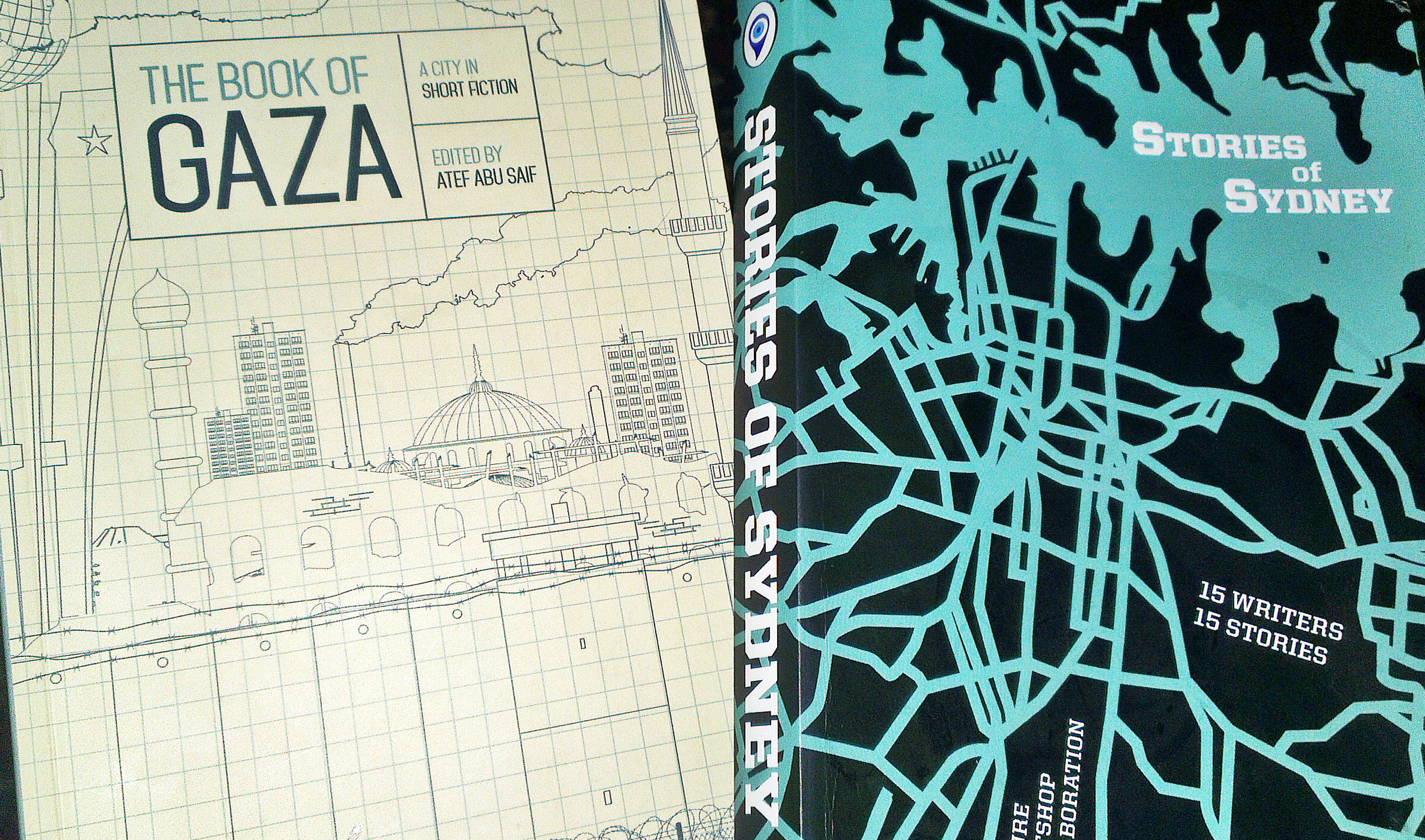
Image Description: Two books.The Book Of Gaza - Front cover is a drawing of Israeli Separation Wall in the foreground and the city of Gaza beyond the wall. Stories of Sydney - Front cover is Sydney harbour and streets in turquoise on black background.
The Book of Gaza
Edited by Atef Abu Saif
Published by Comma Press 2014
128 pages
ISBN 978-1-905583-64-5
£8.75 plus postage from Comma Press

Stories of Sydney
Edited by Michael Mohammed Ahmad, Alice Grundy and David Henley
Published by Seizure and Sweatshop 2014
249 pages
ISBN 978-1-921134-26-5
$19.95 AU Seizure

“Gaza has always had a central place in the literary life of Palestine,” says editor and writer, Atef Abu Saif in his introduction to The Book of Gaza. Important Palestinian literary figures from Gaza extend back to the eighth-century poet, philologist and one of the founders of Islamic jurisprudence, Imam al-Shafii. They include poets like Mu’in Bseiso and Harun Hashim Rasheed both born in the late 1920s, and the novelist and poet, Abdul Karim Sabawi born in 1942. In 1948 the city of Gaza and the surrounding Gaza strip, which has a total area of 360 km², suddenly became home to a large number of Palestinian refugees forced from their houses, villages, towns and cities by an-Nakba. As well as being one of the oldest cities in the world Gaza became one of the most densely populated cities. With Israel’s occupation of the Gaza strip in 1967, most writers left and took refuge in countries like Lebanon, Egypt and Iraq. Abdul Karim Sabawi eventually migrated to Australia. Atef Abu Saif describes how:

Despite restrictions on freedom of expression, the art of the short story attained great popularity during the 1960s, 1970s and 1980s . . . Through the brevity and symbolism of the short story, Gazan writers found a way to overcome printing and publishing restrictions imposed by Israeli occupation forces.

In the 1980s and 90s Gaza gained a reputation as “the exporter of oranges and short stories.”

The Book of Gaza brings together 10 short stories by ten of Palestine’s modern writers. Abdallah Tayeh, Zaki al ‘Ela and Ghareeb Asqalani represent the pioneers of the short story. They describe the long queues of exhausted Palestinian workers waiting to cross into Israel. They write of curfews, prisoners’ suffering, and heroes like Zaki al ‘Ela’s Abu Jaber, who actively resists Israeli oppression. They also write about the determination and solidarity that exists between Palestinian people. Asqalani’s story in this Anthology, “A White Flower for David”, is complex and dense. It is hard work figuring out the characters and their relationships to each other. The narrators change, perspectives shift. A fraught friendship develops between a Palestinian family, which includes three generations, and Esther who is married to David, a Jewish man. Sahimah, The Palestinian mother and grandmother, finds Esther’s name strange. Esther sits cross-legged on the bed. We see her through Mahmoud’s eyes as he addresses David, ” exposing half of her flesh, nearly making my brother, Abdallah pass out. My mother threw her coat over Esther’s nakedness . . . It was Arab shame and fear, something she hadn’t expected, but you were typically Hebrew in kidding me about it.” Esther leaves the family at the end of the day wearing a madjalawi robe, a gift from Sahimah, and a knitted shawl wrapped around her head.

Cultural differences are part of the tension that underscores the relationship between the two families but far more ominous is the fact that despite the human desire to be kind, understanding, to be friends, they are positioned socially, economically, and in the everyday reality of Gaza, as enemies. The story begins with Mahmoud standing “face to face with death” forced to choose between “two deaths: to kill or see your son killed.” He decides to hurl the rock he is clasping in his hand.

Israeli soldiers are ever-present. As Mahmoud walks late at night he sees soldiers ahead of him chasing some young men. “Kicks, blows and batons rained down; aching bones and suppressed moans. The soldiers hammered them, marked every inch of their bodies, ripped out their very identities . . .”  One handsome young man cracks a joke and bursts out laughing until the pain in his jaw becomes too much for him. Mahmoud touches the man’s moist face and curses as the life drains from him. Later, Abdallah is beaten by soldiers as his nephew looks on. He lies on the ground, “a bleeding, crumpled heap . . . his vision clouding over as the sand of the street soaked up his gushing blood. It pooled in a great red patch as the UN truck loomed into view. The soldiers dragged the wounded man into the armoured car and set off . . .”  The men sell their souls seeking a day’s work, trying to scrape a living together, martyrs fall, nerves dangle on a thread. The force of anger churns in the breasts of the young men.

Mahmoud, his wife, Haifa, and son, Husam visit Esther and David’s house. Once inside, Mahmoud watches his son looking out the balcony window. His heart pounds as Husam observes a group of soldiers at a bus stop, saying “If only I had a catapult with me . . .”

The writing is tight and nuanced. The atmosphere is claustrophobic. Somehow a very delicate shard of humanity survives amongst the rubble.

The younger generation of writers in the anthology are more introspective. They write about feelings and desire. They engage with and critique their society. Their stories are less hopeful, sometimes despondent. The space surrounding the characters seems even more restricted. Atef Abu Saif’s story, “A Journey in the Opposite Direction” is about two young men and two young women who were friends in their younger days but haven’t seen each other for ten or more years. They meet by chance in the border city of Rafah. The description is rich. Thin shafts of evening sunlight play across the road. Bananas and dates hang “like lost opportunities” in front of the fruit shop at the corner of the square. Travellers are returning from work or from visiting friends and family in Gaza city. Honda and Mercedes taxis line up. People sit on plastic chairs sipping hot anise tea at a small wooden hut that serves as a café. There is just enough room for the owner to squeeze inside to make the hot drinks on a gas stove beside the fridge, or prepare the nargilah pipe. The journey to Rafah from Gaza city is about 40 kilometres. It is the longest stretch of coast and the lengthiest trip any resident of Gaza can make. Ramzi is in Rafah to meet his brother who has been living overseas for twenty years. But it takes a miracle to get in or out of Gaza.

The four young characters chase after the moon, driving from Rafah back towards Gaza in Ramzi’s small blue car. As they approach the bridge over Wadi Gaza the road gets busier until the traffic grinds to a halt. “The water from the valley had spilled over onto the road and the bridge was impassable.” The four of them stand by the car looking at the scene in disbelief like “scarecrows or ships’ masts” sunk in the harbour.

Gaza is not known for its women writers. Palestine does however have a history of women writers and poets. Although she has been largely left out of literary studies, Samira Azzam, born in Akka in 1926 is considered a pioneer in the development of the Arab and Palestinian short story. In 1948 she fled with her family to Lebanon. By the time of her death in 1967 she had published four collections of short stories including Tiny Matters (1954) and The Great Shadow (1956). Sahar Khalifeh is Palestinian writer, born 1942 in Nablus, who has published many novels depicting the life of Palestinian women.[1]

Five of the ten writers in The Book of Gaza, are women – Mona Abu Sharekh, Najlaa Ataallah, Asmaa al Ghul and Nayrouz Qarmout. Their stories are bold, sensuous, and defiant. All explore gender restrictions in their society. Nayrouz Qarmout’s “The Sea Cloak” is about a family’s trip to the beach. Gaza’s coastline is not clean. Everything is scattered about in disarray. The sand is littered with rubbish and tents dot the beach. “This is just the way Gaza is: a young girl yet to learn the art of elegance. A young girl who has not yet developed her own scent and is still, willingly or not, perfumed by all around her.” The protagonist remembers the point where her family no longer considered her a girl. Her father slapped her across the cheek. Her mother dragged her from the room, yelling, “That’s the last time you’re going out on the streets . . . You’re grown-up now, not a little girl. Go and look at yourself in the mirror. Take your sister’s scarf and wrap your hair in it.”

On the beach she is wearing a long black robe and a headscarf. She walks past a group of young men playing cards, children dying their lips with Slush Puppies, a donkey splashing about in the sea, and a stall selling lupin beans. The scent of cardamom-infused coffee wafts from hot coals, an old man recounts tales of Palestine’s history. She walks, surrounded by her memories, into the ocean. She swims further out, feeling “an excited tingle that was almost too much to bear. Arousal grew inside her . . .”

The Book of Gaza is successful in doing what it sets out to do. That is to present us with “glimpses of life in the Strip that go beyond the global media headlines.” There are stories of anxiety, oppression, violence and self-reflection, of resilience, despair and hope. By translating these stories into English and creating this anthology, Comma Press offers English-speaking readers the opportunity to read Palestinian literature and understand the everyday experiences of the people of Gaza as they struggle to live with dignity in what many have called the largest prison in the world.

Stories of Sydney is an anthology featuring five writers from Inner Sydney and ten writers from Western Sydney. In the Editor Notes at the back of the book, Michael Mohammed Ahmad explains the editors agreed that since Western Sydney’s population outweighs Inner Sydney’s population, the ratio should be reflected in the publication. Ahmad despairs that Western Sydney is misrepresented. “When you watch a movie or read a book on Western Sydney, it’s usually about ethnic crime – our guns, gangs, drugs and sexual assaults.” The anthology claims to celebrate the diversity that exists in Sydney. If diversity means an assortment or a miscellany of stories then there is definitely a mix of identifiable cultural experiences, storytelling traditions, and other language influences on the English language and writing styles within this anthology. Some stories are stronger than others. While the content of the stories vary, it is by and large situated within the context of the humdrum of everyday life.

The protagonist in Peter Polites’ story “More Handsome than a Monkey” furtively tracks his lover, “a wheat-fed kid” with “overdose green eyes and speckled guns.” He follows him on a train trip, catching the:

6.30 am, XPT Central – Orange…The shiny city turned into the inner west. The inner west became suburbia with a middle class name. Suburbia became the outer west. The outer west. The outer west became large streets, backyards with children’s toys and BBQ patios. It slowly became rural.

Polites’ writing style is almost Neo-noir with terse dialogue and a snappy first-person narrative. The observations are realist and generally gritty. A sexual relationship drives the plot. The milieu is low-level drug dealing involving “getters” and “freshies”. The main character works in a sports club where the carpet is “a multi-colour galaxy. Yellow stars, red crescents and green comets on a cyan background.” He is flawed but not deeply. He’s looking for love. His behaviour is borderline self-destructive. When things go wrong for him he finds a “fat Leb” in a matching tracksuit. Does a blowie in the toilets and is given some crystals. He moves back into the family home. It seems he always has a room there.

“The 25th Paragon of Filial Piety” by Amanda Yeo is a collection of finely wrought, slightly tongue-in-cheek snippets of the family, work and social life of a young woman. The Yuan Dynasty scholar, Guo Jujing wrote exemplars of filial piety towards parents, nearly all about the piety of sons. These were assembled into a book called The Twenty-four Paragons of Filial Devotion. Amanda Yeo tells her stories of a daughter’s exemplary conduct, helping her mother prepare kai lan, pouring hot water into an aunty’s mug while the women interrogate her sister about her ang moh boyfriend. In the story “The Curtain Between” Maryam Azam explores the tender beginnings of a relationship between two Muslim students. Tamar Chnorhokian writes about an Armenian-Australian woman who reminisces about her late aunt in “Let Me Look at Your Face”. In “Five Arrivals” Luke Carman’s character is torn away from a conversation with an artist at a party in Concord by a phone call from his cousin growling, “Where the seven fucks have you been dick-nigger?” He gets into his Camry, with its bald tyres and speeds down the highway towards Western Sydney. The road outside his cousin’s house is “streaked with tyre marks from doughies and burnouts leading to stretches of muddied lawn.” PM Newton’s story “Aqua” is superb in its rendering of emotion. The geographical setting encompasses Sydney from Chatswood to Marrickville but focuses on the North Sydney Olympic Swimming Pool with Sydney Harbour Bridge to one side and the leering grin of the Luna park entrance on the other side. It is a story told through the eyes of a daughter, now a mother, of her family’s painful experiences of the war in Vietnam, and the pool’s significance in her life.

In the Editor notes, Alice Grundy and David Henley write:

. . . there remains a divide between ‘inner’ and ‘outer’ Sydney, between the new-formed establishment and writers who live in Western Sydney, or who speak English as a second language, or whose families are migrants, or from an Indigenous background; or a combination of the above.

So what of the pressing question of diversity? It seems that here, diversity is about cultural minorities or “lives you don’t often get to see, from authors as varied as the city itself” becoming more visible, being heard, accessing the centre. In an article she wrote for The Guardian about racism in Australian theatre, Nakkiah Lui interrogates the use of the word ‘diversity’, claiming that “diversity doesn’t challenge whiteness, it bolsters it, because we are never questioning what is at the centre.” Rather than asking, why is there not enough diversity in the arts, she argues people in positions of power should be asking questions like “Why am I in the position I am in? Why do I think I deserve to be here?” She says:

We need to remember that diversity is the means to an end. Diversity isn’t complexity, and ultimately, what we want is not a diverse country but a complex one.  By accepting diversity as an end we are just fooling ourselves into thinking that the playing field is equal.[2]

Rather than critique Stories of Sydney for not including for example, more First Nation writers or writers from African communities or of African heritage, I would ask that publishers and editors look at the processes. When applying for funding for a writing/publishing project, they should think about working to  include leaders and decision makers from diverse communities. It is not a matter of ticking boxes, or token last minute inclusions to make a collection of stories diverse. It is an organic and lengthy process of searching for and inviting existing writing groups from different communities to participate, of acting in solidarity to assist the development of new groups, new writers. It is a process of opening up to varied story telling and literary traditions, different uses of language, of seemingly unusual or irregular and sometimes uncomfortable realities. It is also a process of invigorating Australian short fiction through the reinvention of writing aesthetics and reading values. The publishers of Stories of Sydney Seizure and Sweatshop Western Sydney Literacy Movement, are at least on the right path. The launch of the First Nations Australia Writers’ Network in February, and the Accessible Arts NSW Scribbler Literature Forum held in June this year are also positive moves to achieving this kind of complexity.

The Book of Gaza and Stories of Sydney present us with tales from two very different cities. While generally recognising established short story traditions, both books offer writing that contests dictates of form and style. The stories, especially those from Gaza and Western Sydney, give voice to perspectives that challenge mainstream victim, terrorist, criminal, and superhero stereotypes. Instead of flattening people into one-dimensional images these stories offer the reader a chance to feel and experience the day-to-day life of individuals, brothers, sisters, mothers, fathers, children, lovers, workers, living in Gaza and in Sydney. Much of the writing in these two anthologies is an act of resistance. The writers in Gaza have responded to the latest Israeli onslaught by continuing to write. [3] According to an email from Ra Page, director of Comma Press, “all of the Book of Gaza contributors are writing away like crazy, whilst they have power.” [4]

The writers in both anthologies provide bridges for readers to cross over chasms of misconception, and meet the inhabitants of different communities, neighbourhoods, suburbs, cities and surrounds. This is one way of looking at people we don’t know, to look and actually see, at least partially, the depth and complexity of their humanity.

In reading these stories we also begin to understand our own identities, our privileges and our oppression. We begin to understand our responsibilities as human beings. With Israel’s relentless aerial bombardments, shelling and ground attacks in Gaza over the past two weeks, I believe this understanding is urgent.

1. Sahar Khalifeh’s books include We Are Not Your Slave Girls (1974), Thorns(1975) translated into English by Al-Saqi Books in 1985, Sunflower(1980), Memoirs of an Unrealistic Woman (1986), The Door of the Courtyard (1990) and The Inheritance (1997).

2. Nakkiah Lui, “Is Australian Theatre Racist? The Guardian 12 June, 2014

3. Follow Najlaa Ataallah’s blog

4. Sarah Irving, “Gaza’s writers keep writing under the bombs”, Electronic Intifada, 20 July, 2014 (Eighty percent of households in Gaza currently have only up to four hours power per day)

ENLIGHTENING THE GATEKEEPERS… some thoughts on the Scribbler Literature Forum

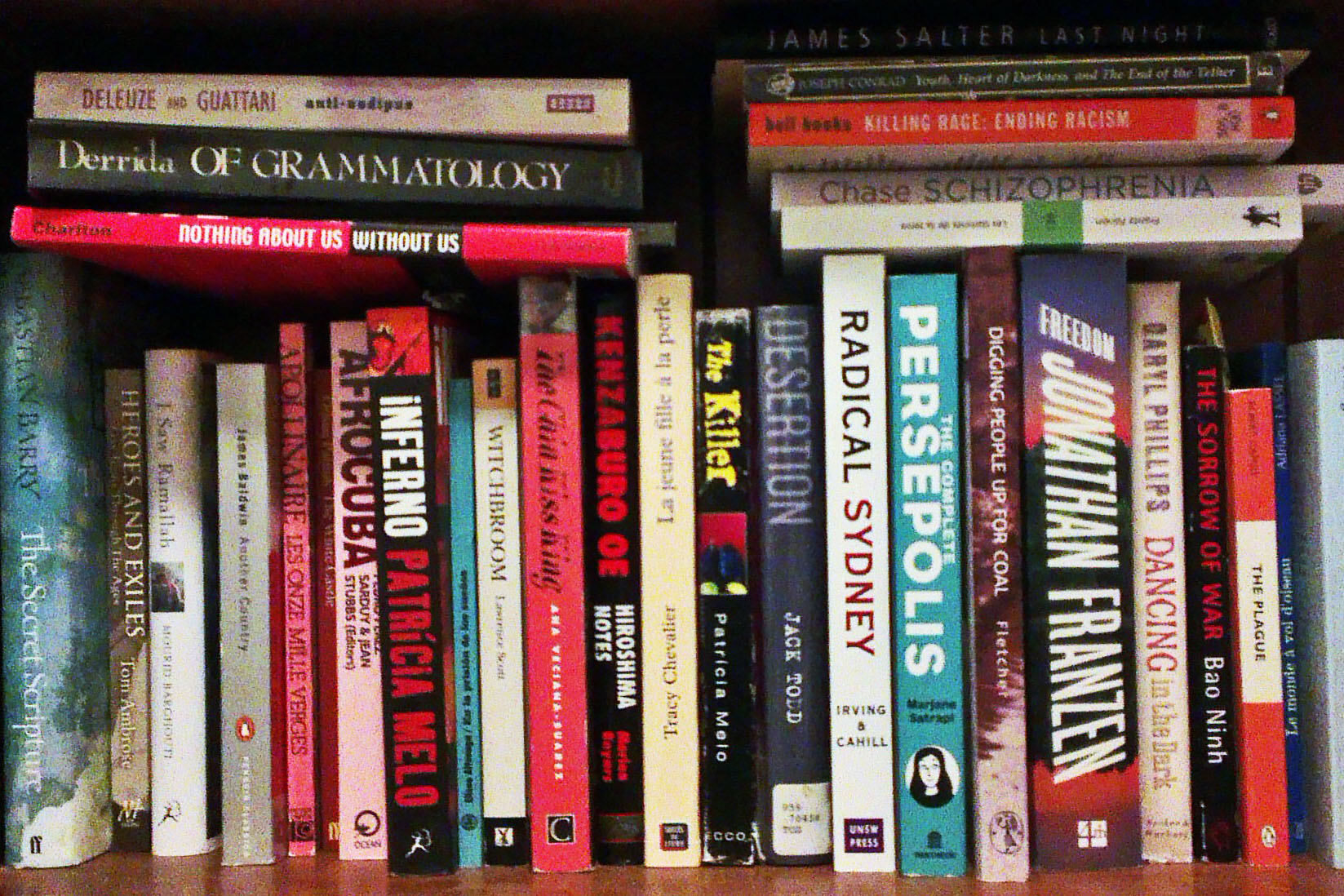
Image Description: Books on a bookshelf. Titles include Persepolis, Of Grammatology, Radical Sydney, AfroCuba


One of the more well-known slogans of the disability rights movement is “Nothing About Us Without Us” – the recent closure of ABC’s “Ramp Up” accentuates the fact that there are very few of “US” in the Australian media, literature and writing sector.

For many years, South Australia was the only state to run a program, through the SA Writers’ Centre, for writers with disability. In 2012 Arts Access Victoria and Writers Victoria took up the baton by launching the Write-ability project, supporting Victorian writers with disability to develop their skills and writing careers. At the 2014 Emerging Writers Festival in Melbourne, Write-ability proudly showcased six of its emerging writers.

Accessible Arts NSW began the process of addressing the barriers faced by writers with disability in NSW by organising the SCRIBBLER – Literature Forum at the NSW State Library, on 24th June this year. I was pleased to be invited to convene this event. Writers with disability gathered together with industry professionals to hold critical conversations around what we see as key concerns. Examples of these concerns are leadership opportunities in the sector, inclusion in festivals and on writing platforms, and changing the culture surrounding disability in the arts.

The keynote speaker at the Forum, Writer and Editor, Gayle Kennedy described in detail some of the access barriers she has faced as an award-winning writer who uses a wheelchair. One example she quoted was organisers refusing to pay her carer’s airfare, which meant Gayle was prevented from attending major events:

[As a] David Unaipon Award winner ‑ I did not get to go to any other  writers’ festivals. Year in and out every award winner is invited to the  festivals. But I didn’t. I didn’t get to go to Melbourne. I didn’t get to  go to Adelaide. I didn’t get to go to Perth.

The presenters on the “Writing the Boundaries” panel gave specific examples of the discrimination that effectively nullifies or hinders equal opportunity within their chosen occupation of writing. The experiences are complex and varied. Georgia Cranko, a writer and performing artist talked about privilege and oppression in her life, “…I am often marginalised in situations, but I have been fortunate to be equipped with tools that allow me to push through that oppression and neither be crippled by it nor defined by it. My intellect has always been doubted by strangers.” She feels lucky that she can prove her capability through her academic work and writing, not only to others but also to herself. She related how the physical manifestation of her impairment sometimes offers her privilege in comparison to people whose impairment is invisible but “It also underscores the social issues that I deal with. If employers were willing to hire someone like me, I wouldn’t need to rely on the government for the pension or be terrified that it will be cut…”

Amanda Yeo, a writer from Sweatshop Western Sydney Literacy Movement, refuses to be defined by her impairment, and does not accept the limiting inspirational, tragic or superpower tropes that are used to characterise people with disability in the media and literature. She has found writing to be an excellent way to explore her identity and learn to be comfortable in her own skin. She said,

I’m not saying we should write about people who find their disability a constant factor or concern, and I’m not saying we should only write about people with disability…I’m not saying we have to write about people with disability all the time; I’m just saying write about people.

In describing our embodied experiences of trying to work within a disabling world, the writers rejected posturing on disability by writers without disability. Historically people with disability have been the objects of research, not the researchers. We have not been seen as writers but have been written about and acted upon. The obvious way to change this is for writers with disability to write about disability themselves.

Gayle Kennedy called for affirmative action in relation to creating disability leadership opportunities, and dedicated disability access and arts funding. Affirmative action is a concept that is shied away from when discussing solutions to disabling experiences of discrimination in the arts. It is possibly the idea of quotas and succession plans that scare organisations. I think there should be a focus in Australia at this time on meaningful employment targets for artists, arts managers, arts organisers and arts workers with disability. I think we should also be focusing on effective leadership succession plans for people with disability in arts organisations, especially arts and disability organisations. But I would also emphasise that affirmative actions include training programs, outreach efforts, and many other positive steps. Jane McCredie, Executive Director of the NSW Writers’ Centre suggested that writing and literature organisations should include an access component in their budgets. I would love to see the creation of a national literary prize for writers with disability. Some publishers are beginning to actively seek out manuscripts by writers with disability. Every small step is a welcome contribution to shifting attitudes, and to creating a critical mass of people with disability in key positions in literature organisations, performing on literature festival platforms, and publishing their work.

To bring about change to the disabling aspects of our industry, I think we also need to develop a more precise understanding of how gatekeepers determine who becomes literate, who learns to write, who gets funded, what the funding criteria are, who publishes, who gets publicised, promoted, invited to read. The gatekeepers are in the media, in schools, community centres and arts organisations. They are publishers, festival directors, book reviewers and event organisers. Gatekeepers may also include parents, carers and community capacity officers. They are the people who decide. They are the people who assist in forming understandings of disability, the value and often the content of our work. They form the dominant norms of the system we live in. Gatekeeping can be subtle or blatant. We hear story after story of young people with disability being told by a parent or a teacher that they can never be a writer. Many publishers are known to prefer promoting an author who fits snugly into the narrow physical realm of normalised beauty. Festival organisers prefer a writer who can travel freely without extra accessibility costs rather than a wheelchair user. By understanding how gatekeeping works we are in a better position to design affirmative actions. In terms of creating leadership that will bring about change it is already clear that writers and arts workers with disability need to access positions of power. These include positions such as publishing editor, publicist, festival director and policy maker. We need to be on the employment interview and funding assessment panel, and the board of arts organisations.

Although I’m not sure how literature as an art form fares, the Australia Council for the Arts is leading the field at the moment in providing dedicated funding for artists with disability and a focus on leadership and disability. The Council sponsored the UK based artist and disability activist, Jo Verrant’s recent talks on the transformational potential of employing disabled people in leadership roles within the cultural sector – not just for those individuals themselves, but for the invigoration of cultural strategy, and for the benefit of all. By including writers with disability we are opening up literature to diverse perspectives, writing that stretches beyond the boundaries of traditional literary form, writing that defies genre, and the way we receive and understand normalised bodies and language. Joanna Agius, a writer and Deaf Arts Officer at AARTS NSW argued the case for writing in AUSLAN and creating AUSLAN books, which brings a whole new dimension to the category of “literature”.

I recognise that discrimination is not always intentional. It can come about through fear and ignorance. In this respect writers with disability are crucial to shifting the culture that surrounds disability in the arts and in society in general. The power of literature lies in its ability to gradually shift perception, consciousness and then reality. To paraphrase the Belgian-Egyptian writer, Khaled Diab, the culture of power can at least be rattled by the power of culture.

There is a lot to be done. Many possibilities emerged from the Forum, including more genre specific discussions, regional forums, writer-with disability-led initiatives, the creation of writing resources for writers with disability, exploration and replication of the S.A. and Victorian mentoring programs, advocate/agents who approach publishers on behalf of writers with complex communication requirements, the development of diversity action plans. Many writers at the Forum commented on Executive Director of the Australian Society of Authors, Angelo Loukakis’, reference to the Women’s Liberation Movement of the 60s and 70s when “sisters were doing it for themselves”. There is a move amongst writers with disability to create their own writing groups, their own networks and their own performance and publication platforms. While writers with disability would like to find ways of sustaining these initiatives themselves, there is also a desire to agitate for taxpayers’ money to be distributed more justly across the arts.

It is essential for writers with disability, our allies in the sector, Accessible Arts NSW and industry professionals to follow up on the ideas and the momentum created by the Scribbler forum.

Sam Twyford-Moore, the director of the Emerging Writers Festival finished his presentation at the Scribbler Forum with a quote, “Festival directors are gatekeepers, but most enlightened gatekeepers take on the role because they relish opening the gates, not because they like slamming them shut. Most responsible festival directors are acutely aware of accessibility and diversity issues, and are driven by a desire to transcend those limitations, not to cement them.”

For the benefit of literature, the arts and society in general, let us now enlighten the gatekeepers. More importantly let “US” too become enlightened gatekeepers, attuned to the specific manner disability discrimination operates in the industry, and also to the form, content and location of discrimination against writers and arts workers who belong to other sections of society.

Links to organisations mentioned in this blog:

Accessible Arts NSW

Arts Access Victoria

Australia Council for the Arts

Australian Society of Authors

Emerging Writers’ Festival

NSW Writers’ Centre

SA Writers’ Centre

Sweatshop Western Sydney Literacy Movement

Writers Victoria


Video

Georgia Cranko Presentation at Sweatshop WS Artists with Disability Seminar

Highlights from the November 2013 Sweatshop WS Artists with Disability Seminar held at Writing and Society Research Centre, University of Western Sydney, Bankstown Campus, facilitated by Dr Gaele Sobott. The seminar was a chance for artists to discuss their stories and experiences, and the politics of disability.

Video

Highlights Sweatshop Western Sydney Artists with Disability Seminar

Highlights from the November 2013 Sweatshop WS Artists with Disability Seminar held at Writing and Society Research Centre, University of Western Sydney, Bankstown Campus, facilitated by Dr Gaele Sobott. The seminar was a chance for artists to discuss their stories and experiences, and the politics of disability.