Grandmother by Gaele Sobott

A Profile portrait of an African man, pensive, sitting with his arms resting on his lap and his hands clasped in front of him. He is wearing colourful print clothing and head gear. Blocks of yellow, navy and red make up the background wall.

Front cover art by Buhle Nkalashe

This story appears in New Contrast, one of the first South African literary journals. New Contrast is devoted to publishing the best of poetry and prose, art, reviews and interviews from both local and international authors. I am thrilled to be keeping company with such outstanding poets, prose writers, artists and photographers in this Autumn 2020 edition. Please go the New Contrast website and support this journal which relies on sales of hard-copy print editions. 

Grandmother

I smell meat cooking on the barbeque, innocuous in a typical suburban yard in Blacktown. The warmth of the winter sun penetrates my skin, the grass is cut, the deck needs oil, a scrawny rose bush winds its way too high, clinging to the asbestos wall, clambering up and over into the guttering. My granddaughter, Yasmina, throws a red ball into the blueness of the sky. The smoke twists up through my hair. I close my eyes, listening to the spitting fat.

*

Insignificant popping sounds, spitting, getting louder. A vehicle speeding so late in the winter dark pulls up, brakes screaming. Tyres graze the gravel outside. It seems my feet are walking the icy tiles before my torso leaves the bed. My hands feel for jeans, one leg in and then the other, I pull the denim up over my thighs, scrunching folds  of floral nightdress between the waistband and my skin. The zip bites down hard on the cotton fabric. Beating, clattering, chattering. Giant insects flying frantic against glass, wings flapping.

Running now down the passage into their room. I lift baby warm from her cot curled in blankets and stride skin silent on the floor across to her sister’s bed.

“Boni, Boni, I want you to lie here under the bed. Hold Moratiwa. Don’t let her go. Don’t talk. Whatever happens stay quiet.”

“Yes Mama,” she whispers.

I’m pushing the quilt and a pillow and Boni and Moratiwa under the bed.

Bre-bre-bre-bre-bre … not insects flapping wings  …  bre-bre-bre- bre … no they are not insects. Ghost men with rounded backs, bent men swarm from a white combi van. They run into our neighbours’ yard, the old colonial house is dark behind the trees, its wide veranda grimacing. The servants’ quarters, submissive and small in front of the house near the road.

Bre-bre-bra-bra, lines of yellow light burst from stumpy machine guns into the blackness, into the brick quarters where two young women live.

Peering from the side of the lounge-room window, through the crack where the curtain doesn’t quite cover the night, the grass  quivers, long and colourless under moonlight. The men throw grenades. White light flares up the lounge-room wall. The numbers on the clock flash bright. Short thuds of sound. I drop down, moving on hands and knees across the rug. The sofa and baby’s teddy in the hallway gleam iridescent razor-blade blue, every atom of my body is noise, intense loud limpet, cracking, reverberating circles, flattening my belly to the floor, shuddering walls, shattering windows, pieces of glass falling into my hair.

I crawl up the hallway, into the bedroom, crunch my hipbone cold into the white tiles, clinging to my children, not moving. They  are quiet. The dead night is quiet. There are no sirens, no dogs bark. Gaborone is acrid silence.

*

My son-in-law turns the steaks. The sausages spatter fat at his big-pony Ralph Lauren shirt and he jumps back, his body curves like a letter C. His sneakers are never-been-worn white.

I say, “I like your hair cut Walid. Really smart.”

“Thanks Lena. Got it cut this morning.”

Boni yells from across the yard, “He’s so particular about his hair! He’s been going to the same barber for fifteen years. Won’t let anyone else but Joe cut it.”

“Baby, he’s an expert blender. Not many guys know how to blend.”

“I think he’s got a bit of a bromance going with Joe,” Boni says. She’s wearing a light denim dress that criss-crosses over her back and sticks out like a tent over her pregnant belly, my second grandchild. We already know a boy is on his way.

Walid leaves the meat, comes over and bends his head down in front of me.

“Look here, he cuts with a zero, then a half, then a one, faded high like navy cut with no lines. You know what I mean?”

I nod, “Yeah, I can see.”

“The fade’s the most important part, very difficult to blend from zero to half into one without showing lines. It has to look smooth and crisp. Other hairdressers stop halfway up the back of the head because it’s too hard. Not Joe, he brings the fade right up to the top of the head, seamless. Then he scissor-cuts the top. Strictly scissors. No blade.”

Walid strolls back to the barbeque and starts putting the steaks onto a plate.

“Yeah, he thins out the top so it doesn’t look so thick and the hair sits edgy not flat. That’s the beauty of this cut. I can wear it gelled up like now or I can wear it flattened down to either side, neat like, for work.”

“It’s a smart cut,” I add.

Yasmina runs towards Walid, her arms flailing above her head like a windmill,

“I wanna help Baba,” she says grabbing hold of a steak with her plump little fingers, quickly dropping it in the dirt, looking stunned, about to cry.

“It’s hot Yasmina. Don’t touch anything. Go to Nanna.” He holds their two little white dogs back with his foot as if he’s playing soccer and guides his daughter away from the barbeque.

I call, “Come here Yasmina.”

She walks over, nonchalantly, slightly bow-legged, curly hair dancing in the breeze. Her body is solid in pink and green leggings, a green mouse dances on her tee shirt. Yasmina climbs onto my lap. I hug her, tender skin warm against mine. Boni drags a chair over to where we’re sitting. She’s puffing and as if her tiredness is contagious, I feel deep fatigue, a dark uneasiness.

“Mum, will you come to the delivery again?” “Yes, sure I’d love to.”

“Good, Walid and Moratiwa and you, just like Yasmina’s birth hey?”

“Will they do a caesarean straight away this time?” I ask.

“No, I want to try for a natural birth first. Prefer to avoid caesarean. It’s a pretty major operation.”

My granddaughter sits moist against my body, listening.

“Ok, come and help yourselves to the food,” Walid yells.

Yasmina jumps off my lap and sprints towards him. I half-expect her to fall but she doesn’t.

*

Going home, Homebush Bay Drive exit, diesel fumes slip through the vents. A mammoth truck next to me, another in front. My car, dark- green, 1998, shabby, gets me from A to B, and I fantasise, if I had money, which car would I buy? Not the Mercedes C200, maybe the black Mazda 3 in front, or the orange Toyota Camry with black mag wheels that roars when it takes off from the traffic lights. Roberts Road. Bunnings looms like a military bunker on my left, a red and yellow Maccas flag flies next to the Australian union jack and stars, my country of exile, the bright lights of a petrol station, Oporto chicken. Cruising through the green light across Juno, right up to Punchbowl Road.

I park, trying not to scrape the fence. The outside lights at Koh I Noor Court stopped working last time it rained. We want to pay to get the electrics sorted but strata fees don’t keep up with all the burst pipes and broken windows. A patchy lawn in front of the apartment block. The geraniums flower orange-pink next to the bay tree. The leaves on the dwarf mandarin curl, white with some kind of fungus. I pass my neighbour’s door, climb the stairs, to the same children’s songs I hear every day and every night… and if one green bottle should accidentally fall, there’d be five green bottles hanging on the wall…

Two and a half years since I first became a grandmother, now another grandchild is about to be, being, humans being. Strip off, shower, let the warm water flow down my arms, my legs. Curled up on the bed, comforted by the towelling of my robe, textured against moist skin. Sleep comes easily but briefly, I drift in the space behind closed eyes assailed by gruesome images, flickering faces, distorted, ugly. Unclench my hands one finger at a time, stretch out my arms, try to relax the muscles in my neck.

My  grandchildren  will  never  know  their  maternal  grandfather.  I conjure up the face of RraBoni. He rolls a joint, relaxed, laughing, listening to his favourite fusion. Tilting his head back, he blows wispy, white circles of smoke that hover, gently falling apart over the trumpet lines, the congas, the guitar snaking through Miles Davis, Bitches Brew, the bluesy keyboard on Weather Report’s Birdland. My children’s baby faces — Boni, her brown skin, freckled by the sun, a smiling dimple on her left cheek. These images relieve my nightmares. Moratiwa, more petite, darker skin, darker hair that falls in spirals over her shoulders. The one who is loved. My granddaughter, her brown, gold-tipped curls that spring in all directions, her alert eyes observing me. My yet-to-be- born grandson, another gift from the ancestors.

*

The reflection of my body moves ethereal in the sliding mirror doors of the wardrobe. My existence is enmeshed in history, some parts fluid, some parts rotting, torpid beneath my living. After almost thirty years, I feel an urgent need to tear away the scabs, dig down to the core, the agony. I begin searching, frantic, closed up in my flat. I claw at the skin of apartheid, searching for details of what happened that night. I want to know about the men who planned the killing, the men who murdered, those who justified and covered up the crimes. I trawl the Internet, South African Truth and Reconciliation Commission documents, reports, SABC  videos. There are so many submissions, so much brutality, over 20,000 statements from victims, nearly 8,000 applications for amnesty from perpetrators of crimes against humanity, a small but somehow representative taste of apartheid from the 1st March 1960 to the 10th May 1994.

Still and stiffened into a monstrously crooked position, I read like an addict craving horror, ripping open and exposing the cruel core of a desperate regime. Under the heading, ‘cross-border military operations’, I find testimonies. On 14 June 1985, twelve people were killed in Operation Plecksy … in Gaborone, Botswana. Eight of the dead were South Africans. The others were a Somali citizen, a Basotho child and two citizens of Botswana. Some of the Security Branch operatives who identified the targets and planned the raid applied for amnesty. I read their names. Their words avoid the truth. Their words are small truths, just enough to get amnesty, no more. Some are obvious lies.

A rooster crows next door, another rooster answers from the darkness across the road. I unbend my body, stand and stretch my arms in the air. I can see the tree in our neighbour’s yard. The half-moon has fallen, pale, from the sky and lies trapped in the tree’s branches. I move from one room to another without purpose, walking in the gloom.

Mrs Hilda Phahle addresses the Human Rights Violations Hearing in Alexandra. Our children fled this oppression of this country … the land of their birth, the land of their forefathers. They were tortured beyond reason and fled. The enemy followed them and brutally massacred them … the SADF arrived swearing and behaving like people well-drugged and drunk, ordering George to open the door. The door was blown open … the piano fell against Levi’s bed under which he was hiding. God spared him to tell the story. He watched from under the bed as they pumped bullets into his brother and his wife, bullets penetrating them simultaneously. They turned them over face upwards and one asked, “Is hulle dood?” (“Are they dead?”). “Morsdood” (“stone dead”) was their reply.

My eyes are scratchy in their sockets, my limbs creak like heavy machinery in need of oil. My head, an abandoned factory, echoing the vicious cruelty. Someone walks around the flat below, a door closes, a toilet flushes.

Mrs Phahle wears large, metallic pink-rimmed glasses. A woollen green and red scarf protects her neck from the winter cold. She wraps a Basotho blanket around her shoulders. Her voice has the timbre of mother love, woven loosely with threads of grief and anger. I hear her weariness. Her face is light-skinned, gentle. She says to a television camera,

As Christians we’ve got to accept what has come our way, more so that we cannot repair the damage. The only thing is for us to accept and we pray that such a thing never happens again. That’s all.

I lay on mounds of blanket twisted in sheet. Sleep rises up in the blackness and falls like a small boat on large waves. So many of the living are suffering. I’m fearful the waves will break, and the boat will smash into many pieces.

An insistent electronic pulse draws me from sleep. My fingers fumble with my phone, sliding across the small screen. Turn the alarm off. There is wind blowing outside. A branch of the bay tree scrapes against my bedroom window. I call work. My voice deliberately weak,

“Hi Maureen, I’m so sorry I won’t be coming in today. I’ve got a really bad migraine.”

*

The broken windows allow the frosty morning to creep into the lounge room, over the shattered glass, up the hallway into the bedroom. A bird dares to twitter. I hear the front door open. RraBoni has come home with two friends. They’re holding multi-pronged, metal spikes.

“Look what they threw on the roads. Eeesh, everyone has flat tyres.” My husband is a big man, wide shoulders hunched now. He puts his arm around me and I lean further into the balminess of his body, alcohol and sweat. His face is red from a night of drinking.

“Are the girls alright?”

“They’re fine. Sleeping in our bed.”

“Anyone like a coffee?” I ask.

“I’d love one thanks Lena,” the smaller man says. He is hunched over, shivering.

I turn on the kettle, go to the bedroom and lift the quilt from Boni’s bed.

“Here Motusi.” He wraps it around his shoulders, pastel green, pink, brown squares, elephant, crocodile, monkey and lion.

“Danke Mma.”

“Still no sign of the police,” says RraBoni

I’m careful not to cut myself, fingers like tweezers, picking up the bigger pieces of glass and putting them in a bucket. Sweep the kitchen floor and the hallway.

A BDF army jeep pulls up. We file outside. The grass sways yellow in winter. Everything is sepia, the trees, the gravel, the rusting wire fence. A tabby cat follows us, mewing. Confusing, smoky-meat odour clings to my skin, sweet like almonds. Pieces of the young women’s bodies grasp the fence, the grass, hang from the syringa trees. People come slowly from the flats, from the surrounding houses. Two soldiers throw a long metal box on the ground. We collect a shoe, a bloodied bra, a hand. We collect burnt chunks of flesh. No one speaks. No one cries. We gather the remains of our neighbours into the metal box.

*

It is suburban quiet. Children with shiny skin and bright white socks pass my window on their way to school. My kitchen, fake marble benches, white cupboards, is small but filled with light. I chop apple and banana into a bowl, drink green tea. I will not go to work. Bare feet, hair unbrushed, hunching over the laptop, four days and nights melt into a blistered mass of knobbled ash and grit. Friday, Saturday, Sunday, Monday, searching for detail. Gentle people murdered  in their beds, intellectuals, artists and writers, musicians and teachers. Seven of the twelve associated with the ANC. The killers shot open the front door of Tami Mnyele’s home and machine-gunned the artist as he ran across the backyard. They joked, kicked his corpse and took trophy photographs. Blasted his artwork, splintering his easels and paintbrushes, splattering paint.

Swallow painkillers, stretch my neck, bend my back, my hands dangling at my feet. I fall onto my bed again and stare at the ceiling. The Scottish woman who lives in number nine is talking to our neighbour about his fruit trees. I close my bedroom window and pull the blind.

At two o’clock Tuesday morning, I sit crunched  over  the  laptop. The men in combi vans murdered Duke Mashobane. His six-year-old nephew, Peter Mofoka, fled screaming from the bedroom, wearing flannel pyjamas. They pumped bullets into his small body, continuing at close range long after the boy was dead. Dick Mtsweni, ‘Mkhulu’, was shot and his house set alight. His body burnt to nothing. Michael Hamlyn was executed as he knelt on the floor at the end of his bed, looking up at the attackers, his red hair tousled from sleeping. He was a conscientious objector, who refused to serve in the South African Defence Force. They murdered Somali refugee and Dutch national, Ahmed Geer. His wife, Roeli, eight months pregnant, escaped with bullet wounds to her legs.

Most of those who took responsibility for planning the attack were granted amnesty from human rights abuses. The names of the 5 Recce SADF commandos and the Barnacle operatives from Special Forces are not listed. Those men who drove across the border to take the lives of twelve people didn’t apply for amnesty. I can’t find anything to say they were ever charged for their crimes. One working as a mercenary in Iraq was killed in Al Kut in 2004. His mutilated body was hung up for public display.

My phone rings. “Hi Lena.”

“Walid, what’s happening?”

“Everything is fine. We are at Westmead. Boni’s waters broke about an hour ago. Can you come?”

“I’m on my way. See you soon.”

“Great.”

Travelling through the early morning is like watching a film on the plane without headphones, everything is hushed, just the sound of my car’s engine as I drive the M4 to Westmead.

I’m at the hospital, walking into the birthing room. The lights are dull and Boni is moaning. She’s hooked up to monitors.

Walid smiles, “She’s doing well Lena.”

The nurse says, “Yes, she’s doing very well. She’s dilated to seven centimetres. The cervix has softened. I think it will be a vaginal birth this time.”

I place my hand on Boni’s forehead. Her hair sticks to her skin. She’s groaning and her lips are dry. I offer her some lip moisturiser. She digs some out of the small pot, her finger shakes. Smears it greasy over her mouth.

“Is Yasmina with your sister?” I ask Walid.

“Yes, she’s sleeping. Anisa’s at home with her.”

Boni moans and yells, “I can’t stand this pain.” She breathes out, grabs the gas and sucks on it.

“I’ll just be waiting outside.” I stroke Boni’s arm, then leave the room, walking across the shiny floor into the corridor. Sitting on a hospital chair, dread filters through my pores like grimy smog.

The passageway is empty, no sound other than the groans and she-wolf howls of women giving birth. I take a pen from my bag, bend down and scratch hard into the vinyl floor. Gladys Kelope Kesupile and Eugenia Kakale Kobole. A man pads around the corner wearing  a surgical gown. I pretend I’m picking up the pen from the ground.  He doesn’t look at me. Bending again I write, We have not forgotten. I scratch the words over and over, so they are etched deep and black into the beige vinyl. Gladys and Eugenia came to Gaborone for work, one  a typist, the other a domestic worker, not even twenty years old. That night they walked home from a prayer meeting. The killers came as they lay sleeping in their beds.

In the corridor under neon lights, I unlatch my consciousness, trying hard not to sink into pools of unarticulated fear. I sit waiting for my second grandchild, waiting for everything to be all right.

J.D. Salinger’s daughter quotes her father as saying he never really got the smell of burning flesh out of his nose entirely. No matter how long you live, that smell remains. I remember our neighbours, the two young women blown apart that indignant night. The fragrance of their lives is as fluid and volatile as the corpuscles in my blood.


In this issue of New Contrast:

Interviews:

  • An Interview with Buhle Nkalashe by David Griessel

Poetry

  • Kobus Moolman, Henry and June / The Earth is Flat / I Am Made
  • Juanita Louw, Homogeen / Love Machine
  • Rizwan Akhtar, Last Year / Now We Will Say “Happy New Year”
  • Steve Lambert, Unbecoming / Ars Poetica
  • Fiona Zerbst, Closer to Light / On the Edge of Darkness / Portrait of Three Lions
  • Bibhu Padhi, Another Need / The Address
  • Warren Jeremy Rourke, Washing Up / Double Rainbow
  • Johann Lodewyk Marais, Die stasiewa / Die eerste wens
  • Stuart Payne, The Planet
  • Justin Fox, Building Wall
  • Stephanie Williams, Mother / Let’s Talk
  • Alessio Zanelli, Hiker and Lines / Dear Old Beloved Padan Fog
  • Sarah Frost, Gold
  • Ian Salvaña, This Town We Left To Miss, You Said, Is Home / The Birthing of a Poem
  • Tom Paine, Seeds / Kamikaze Bees / That’s All

Prose

  • Gaele Sobott, Grandmother
  • Melissa Gow, One of Us Is Bleeding
  • Jonathan Tager, Guidestar
  • Rémy Ngamije, Black, Coloured And Blue (or, The Gangster’s Girlfriend)

Artworks

  • Jono Dry, In My Silence / Restrained I Unravel / Wrapped in Tradition / Separation


To purchase this issue (R120) email the business manager at business@newcontrast.net

The Struggle Continues: An interview with Juby Mayet and Cecilie Palmer

Juby Mayet and Cecilie Palmer standing in front of Constitution Hill Women's Prison

Zubeida ‘Juby’ Mayet (1937 – 2019) was a journalist who dedicated her life to fighting for a free press in South Africa, gender justice and an end to the Apartheid regime. She began writing for the Golden City Post in 1957 and worked for Drum magazine. In 1977 she joined The Voice, in Lenasia, Johannesburg, where she was appointed Deputy Chief Sub-Editor, a first for black women journalists. She was a founding member of the Union of Black Journalists (UBJ), serving as its assistant secretary-treasurer, a member of the Writer’s Association of South Africa, and contributed a great deal to the Media Workers’ Association of South Africa (MWASA). Juby also wrote for UBJ Bulletin Asizothula and The Worker. She was detained in 1979 and upon her release, served with a five-year banning order under the Internal Security Act. She and her family suffered continued police harassment and surveillance

Cecilie Palmer (1944 – 2019) was a stateswoman, active in the struggle against the South African Apartheid regime and in fighting for the emancipation of women. She served in many organisations including, the United Democratic Front, the Federation of Transvaal Women, the Legal Resource Centre and Sizoya Sibuye, a platform for raise public awareness of women’s experiences of torture and jail during the struggle and counselling ex-prisoners. Before her arrest in 1976, she was active in the National Union of South African Students on the University of the Witwatersrand campus. Cecilie was also one of the founders of  the Women’s Institute for Leadership, Development and Democracy (WILDD). She and her family experienced continued police harassment and surveillance after her release from prison.

Gaele Sobott: We have just visited the Constitution Hill Women’s Prison, where you were both detained in the 70s. You’ve described the torture of women in the prison and the mental scars that have plagued you and the other women who were detained from the time of their release onward. Cecilie, you had two children and you were pregnant when you were detained and your mother, Vesta Smith, was also detained in the same prison. Juby you relied on friends to look after your children while you were detained. You were both involved in your different ways in the struggle against Apartheid and to bring about a more just society in South Africa.

In the years leading up to 1994, I am wondering how you balanced or negotiated the need for a hierarchical leadership to overthrow the old Apartheid regime and establish a new regime with the need to broaden and deepen the education of the general population?

Cecilie Palmer: I remember the time, years ago, I think it was 1982 or 1983, when the President’s Council presented its proposals for the reform of government structures, and we were having debates about whether to go into that Council under the new constitution or not to go in. I was sitting with Professor Mohammed and Firoz Cachalia and some others in the UDF office. We were debating and we were dead against going into the Council. Firoz and them were trying to push us to change. That was the kind of consultation that went on. We debated in the branches and the decisions were taken from there up. It’s true, education, that kind of education stopped, that kind of mix of people, it stopped when the exiles arrived back here and they said, ‘This is how it’s going to be done!’

GS: When was that?

Juby Mayet: They started coming back late eighties, early nineties. Sorry I have almost lost my voice. It’s a bit difficult for me to speak. I’ll whisper.

CP: Ja, they built a different structure and they said, ‘This is how you will fight.’ So then you had this structure where the country was really being ruled by six people sitting in Luthuli House.

GS: How did they gain the power to do that?

CP: I don’t know. What ever they did, it was very cleverly done. Remember, people used to trust each other. We were all comrades in the struggle. Some of us were mixed, right.

GS: What do you mean by mixed?

CP: In the sense that I didn’t really belong to the African National Congress (ANC). I didn’t belong to the Black Consciousness Movement (BCM).

JM: Yes.

CP: I didn’t belong to anybody. I went where it was necessary to fight a battle. That was how I operated. Then they came with the UDF and at that time, I remember we were asked very specifically,  because we had a very good women’s movement at that time, the Federation of Transvaal Women. Each province had their own women and we saw ourselves as women working towards common goals. Then we were told no, we had to choose whether we Charterists or whether we were BC. I remember one ANC woman asked me that question and I stood back and said, ‘None. I like to work where I’m needed most.’ But when the ANC was unbanned, people positioned themselves where they knew or thought the power was going to be …

JM: Where they thought their bread was going to be buttered.

CP: For instance, in Eldorado Park, which is a township just on the other side of Lens.

JM: Ja, we passed it. I pointed it out to you.

GS: Yes.

CP: We worked very hard there. We had established a really strong activist community where we had an advice centre, a women’s group, we had women against the abuse of women, we had a pre-school programme. The pre-school programme was designed by one of the women in Eldorado Park who was a pre-school specialist and that programme was designed on a non-sexist, non-racist basis. It was assessed by a professor from Rhodes University who said the programme should expand right through Africa. We replicated that programme from Eldorado Park throughout the Transvaal.

GS: By we, you mean the Eldorado Park women’s group?

CP: Yes. We had a strong movement going. We also had a civic association. Our belief and my belief was that civic associations belong to the people of the community that starts those associations, irrespective of what their political affiliations are.

JM: Yes, absolutely.

CP: Then we were asked by the ANC, because they had regrouped, to spearhead the formation of the South African National Civic Association (SANCO) and that was affiliated directly to the ANC. We said, ‘No, we’re not going to do that.’ Our pre-school programme had established pre-schools in the Transvaal and those pre-schools each had parent bodies. We taught the women in those parent bodies politics, not party politics but  community activism, so they knew about political, social and economic injustice and they were figuring out ways to build alternatives in their communities. This all grew from the strong community activism in Eldorado Park, so we brought those Eldorado women and the women from the pre-school parent groups into the Federation of Transvaal Women. We didn’t realise the ANC and those leaders who decided to identify with them, were positioning themselves for future power. The ANC started choosing people for their executive committees in Eldorado Park. They were lobbying.

JM: Manipulating.

CP: Ja, so, none of the activists, the youth groups, the women’s group, none of those activists were chosen for the executive committees. Anyone who wasn’t ANC was kicked out of those groups. We were very innocent then. Not skilled in that kind of politicking.

GS: Do you think the ANC saw those people, those activists on the ground who did not want to join them, as a threat and if so why?

CP: I really don’t know why they saw them as a threat but they did.  I think they were scared of people who had experience in the struggle but were refusing to join the ANC, probably because they were a stumbling block to those who were opportunists, those people who joined the ANC to climb. Those activists were wise and they expected the organisations to be run on same lines as they had been run on before. I think that’s probably what it was. I don’t know. One needs to think very deeply about this time and what happened.

JM: It was the ANC state capture. They rode roughshod over all these people and groups, like they were the only ones who fought to liberate us. The Pan African Congress (PAC), Azanian People’s Organisation (AZAPO), all the rest, were just thrown to the wayside. I’ve never been a card carrying member of any political party. I was labelled a sickly humanist. I worked for the human rights committee which had ANC members and Liberal Party members, then after I covered the  South African Student Organisation (SASO) trial in Pretoria, Sathasivan Cooper, Sivalingam Moodley, Audrey Mokoape, I became kind of involved with, not involved but enamoured of the Black Consciousness Movement and of course when I met people like Sobukwe, he was such a lovely man, and  Joe Tlholoe who was so young when he was sent to jail for so-called PAC activities, so I never really had a particular inclination towards any political party, I just felt I had to do a typical sickly humanist’s job.

GS: As an individual do you resent being dominated in a job or within a community?

JM: Not really. If I am dominated by anybody who thinks they are better than me, yes. I think I am as good as the next person.

CP: In other words, you refuse to be bullied.

GS: There is bullying and there is sometimes the need for hierarchical leadership. Do you think it is possible for South Africa to change existing social and economic conditions without hierarchical leadership?

JM: It has got to come from the younger generation.

CP: Exactly.

JM: I don’t know if they are better educated. They go to varsity and vandalise the school structures, the very place of learning. I don’t understand that mentality.

CP: I think our education system doesn’t teach people to think. It teaches them to regurgitate stuff without thinking.

JM: I went on protest marches but I never threw a stone through anybody’s window or set fire to any buildings. We marched with our banners and we sang our freedom songs without vandalising or damaging people’s cars or property. I cannot understand that mentality, especially when they go and burn down schools.

CP: Twenty eight schools burnt just a few months ago.

GS: Why? What caused that anger?

CP: Municipal demarcation. Dividing the wards up. The local government structures are divided in to wards. It affects voting. That’s why they keep changing it. They changed the boundaries and the community didn’t want it. Like Vuwani, where the community withdrew their children from school as a form of protest. Then they burnt the schools. The schools become the targets.

JM: That is why I say it is because of a lack of education. Those parents obviously did understand that this is not the right way to protest and make change. We need those schools. We are depriving our children of education.

CP: If you look at the age group of those people, it’s the age group that went to school after 1994. They are keeping their children out of school. They are the ones who are throwing stones. The ones who were born in the mid-eighties. That’s my view. Yes, we had Bantu education, Coloured education, Indian education but I swear that was one-hundred-and-ten-times better than the education we have today.

GS: During that period of change, how do you think it could have been done differently in terms of education?

JM: It would help if we had a president who was actually literate. Our education system is terrible. They keep saying how young people must be educated to become future leaders but it has become empty rhetoric, just words, no substance.

CP: It was during his time, that education started deteriorating. With every step, the education system seems to deteriorate further with every change they make. The very last change was the curriculum assessment policy called CAPS, a system that came in 2013. Plus the mentality of the new teachers is not good. We need better teacher training.

Juby Mayet and Cecilie Palmer standing in front of cells in Constitution Hill women's prison

GS: What happened to AZAPO, PAC leaders?

CP: They were just pushed out and ignored.

JM: I meet up with those guys and we talk. There was a group of students from SOWETO and they were quite surprised by the way I spoke. I make it quite clear that the ANC sucks! They irritate the hell out of me. I don’t have anything to do with them. I tell them that. I don’t vote for the ANC. Sometimes I say why don’t you guys form a coalition. Can you imagine if AZAPO and the BC people came together then the ANC would be seriously challenged, voted out in elections.

CP: They pushed out a lot of leaders, extremely well educated people, some died, like Percy Qoboza,   but none of them are anywhere in government structures. Brilliant people were pushed aside.

GS: What do you think can be done to stop the party that is about to take power in a situation like that from isolating or silencing intellectuals?

CP: They didn’t just sideline intellectuals they also preached that the older people who stayed in the country, that we were stupid and didn’t know what we were doing. Some children are extremely angry because their parents have been treated so badly.  We’ve got this inter-generational dialogue and it’s all about talking with the younger people and not at them. Some of them are extremely angry at Nelson Mandela.

GS: Why?

CP: Because he sold out. I sit there and I think, yes, it is true what you say but I cannot say that. So, I go the other way and say, ‘Look, he had to do what he did otherwise violence would have consumed the country.’  That’s true. There was Eugene Terre Blanche and Inkatha and all that but if you go further back they had been negotiating with Mandela a very long time before his release without the other prisoners being involved. They actually moved him from Robben Island and took him to Pollsmoor and Pollsmoor wasn’t private enough so they took him to Victor Verster where he was living in a house. So that is the truth of the matter and that is where a lot of the anger comes from. That is why they are saying, “We are struggling today because our parents are not living any differently than before apartheid, look at my mother living in a little pondotjie somewhere and so on. All those things are boiling. We can’t pay bills. Even when people study where are they going to get jobs.

JM: We should suggest to them that the next time they want to go on a burning spree, they should start with Luthuli House.

GS: How were the big corporations positioned during the transition from Apartheid?

JM: Big business just kept going like a steam roller.

CP: The same white bosses and even though black Joe might be the CEO, he still doesn’t really control the business. They are definitely not going to change our society for the better. I told you the story of Eldorado Park, now also in Eldorado Park we were working with UNISA against violence and that kind of thing and then they came and told us that they had been funded by the police. Imagine, funded by the police during the time of Apartheid! We said, ‘Oh oh, no thank you. Within a week, I was summoned to Luthuli House, Ralph phoned me and said, come in to see us because we want to talk to you about the UNISA program. I said, ‘No, I will not come to Luthuli House. You come to the township!’ I mean that was where the group started. He could talk to the board there were we all operated. Then they also asked us to spearhead the formation of the ANC women’s league in Eldorado Park. We said no to that too. Like I said, our belief about the women’s group was that we were all working together, no matter what party women supported. We were combining our strengths to make change happen. But from then on we were totally isolated by the ANC. We founded the Women’s Institute for Leadership, Development and Democracy (WILDD) in 1994 and we were being funded by the Swedes so what  the ANC did about the second or third year after they came into power, they ruled on bilateral funding so it then had to be government to government funding. So any foreign funding had to go through the government. That is how they destroyed a lot of the NGOs. So they were quite clever. They managed to destroy independent community organisations and thinkers. Through the WILDD, we used to help women’s groups in townships. Let’s say a group was working against gender violence, we would write a proposal that might include establishing shelters for women, things like that and that was one of the ways we increased the consciousness, the awareness and the education of women and men. We had a women’s cooperative that was a successful community enterprise. So, we would write the proposals and the women would get money. Then we would teach them to draw up progress reports and insist that they prepared and submitted regular reports to us. We needed those reports to get more funding and train more women. Very, very soon, the women began to say that the government was giving them funding because of this new government to government funding I spoke about. So the ANC was the one giving them the funding not foreign sources and the women did not need to report to us anymore. They could not be expected to bite the hand that feeds them. We as community leaders were isolated that way too. The original structures we had all built were destroyed. The government gave the groups money once, they gave twice, then they deserted the women and other civic groups.

So now we work very quietly.

GS: How do you think that kind of scenario can be prevented before it gets to that point?

CP: I don’t know. It is a very hard question to answer. But I think also what happens in people’s minds is that they saw the ANC as their liberators and they were told that they were their liberators.

JM: If the propaganda, the lie, is told often enough, people believe it.

CP: It’s like starting again right from the beginning which means starting in the house, starting in the street, in the factory, in the mines. It’s important to work within the community.

JM: I think we need a true revolution. It won’t be difficult to build up to a proper revolution because people have not settled into this so-called solution. They do not accept this life of entitlement that ANC officials and black CEOs and the like are living. The top guys are treating the country’s assets as if everything is there for the taking. That becomes the attitude. If they are doing, what is wrong with me doing it too.

CP: And the jargon is there all the time, you know, I can tell you now, let’s say I was going to a Women’s Day celebration, and the speaker gets on the stage. Before she opens her mouth, I know exactly what she is going to say. It will be the same thing that is repeated all the time, the same jargon, the propaganda repeated over and over again. Empty rhetoric. No real analysis. No encouragement of independent thinking. It’s also more difficult because before with Apartheid, the enemy was clearer. If you criticise the ANC, they say that you want to bring the white oppressor back.

JM: That’s another thing. We had Apartheid but there wasn’t the same yackety yack that there is now about racism. It’s used now for small things, almost like a diversion from the bigger picture, the economic problems, the economic system.

CP: The economic oppression is still very much there. We have a lot of black people in charge now of administration and the running of government but they treat other black people badly.

JM: You see it in the shops and the cafes and the post office. People are not there to serve. They are there to fill their pockets and stuff you Jack. I remember going to Ackermans with my late mother. She was struggling because my daddy left us and we were ten children. She somehow made friends with an Afrikaner lady working there. That woman used to assist my mother by putting extra items into the bag when she was buying school shirts or trousers for the boys. Sometimes my mother used to send me to Ackermans to buy items. I can’t remember that woman’s name now but I can see her face, a stylish woman and she would treat me in such a friendly way. She’d ask me how my mother was. Whatever I was buying, underwear or socks for the boys, she would always manage to sneak extra into the bag.

CP: Strangely, Juby, some of the Afrikaner people were very human, very genuine. An Afrikaner either liked you or hated you. It was clear cut. Where with the English you never knew. And Afrikaner children even up to today will respect an older person. They will say Tannie to me. That is how they are brought up. But if they don’t like you, they don’t like you and they make no bones about it. You knew exactly what your place was with them.

But going back to your question about what could be done differently, I don’t know but many people change. I cannot understand how they can change like that because it must be very uncomfortable.

JM: The day I landed in Number Four (Constitution Hill Prison), Debs wasn’t there at that time. Thenjiwe and Joyce and other women were. A white warden was taking me through to my cell, my new living quarters, and she was stunned when those other women prisoners broke into cheers and yelling Amandla and hey Juby what took you so long? The warden took me to my cell and she asked, ‘How do you know those women?’ I knew some of them personally, most of them knew me because I was a journalist but she couldn’t figure it out, ‘Die Coolie met dai Kaffir.’ When we were in there we had political discussions, we celebrated June 16. So then Thenji and all of them were released and I was left there with Gladys Manzi from Kwazulu and then they brought Debs from Maritzburg. She was in a bad way.

CP: Oh God.

JM: She’d been tortured. Her hair was falling out. Eventually I was released. We were all released. Some of us kept in touch. Some of us wrote to each other. Some moved on with their lives. The next time I saw one of the woman I had got close to in prison was  at some journalism awards event at one of the conference rooms at the South African Broadcasting Commission but you know, she didn’t acknowledge me. We were so close in Number Four but by then she had become ambassador or something like that. I looked directly at her and she looked directly at me. No smile. Nothing. I thought, God, what have I done? She just refused to acknowledge me. I was going  to go up to her and ask her how she was but then I thought okay I won’t. You give me a cold shoulder like that, I will ignore you. But I couldn’t believe it and I was hurt. From the person I knew in Number Four to this. She’s now up there and I am just the same old Juby.

CP: So why should she associate with you?

JM: Exactly. So, I thought, well stuff you, buddy boy!

CP: Yes, you can walk away and feel good about it. I must say, I feel free. I don’t owe anyone anything. I live on my one thousand five hundred Rand pension and I’m comfortable with it. I don’t owe anybody. I feel free but those people we are talking about have no vision. That is the sad part. They go into these positions. In 1994, nobody knew how to govern and we accept that. They employed consultants and what have you. They chased the Boer out who were in those positions. They didn’t want to learn from them. I think they should have first learnt from those people. Taken advantage of their knowledge and experience and then made them move over. They could have said, ‘Okay, we will make you consultant in this department for five years.’ They decided to chase those people out and employ consultants but up to today, they haven’t learned. About four years ago I spoke to one of the ANC women and told her what I saw happening in our communities. They don’t go to their constituents. They don’t know what’s really going on. I told her that communities are fragmenting more and more along lines of race, religion, political party and all that. We need to get these people back together. She agreed and suggested we involve other people in government and she did that. She got them in and I presented a proposal which we discussed. I emphasised that this drive to get people back together has to start by the ANC admitting their mistakes. The next thing, they were talking about fragmentation of communities and that the SACC was going to do this and that. They didn’t involve me nonetheless, I was happy it seemed to be going ahead. But it fell apart because they didn’t have the same vision. If you don’t have the vision for going forward, it is just not going to work. They stole people’s projects. A group would write a proposal to them with what they wanted. Then they would call those people in and ask for more detail. The group would give them all their ideas. Four weeks later they’d see someone from government announcing those very ideas on TV as a government initiative.

Juby, you know the saga about registering children on-line for school?

JM: Yes.

CP:  The education department has announced the idea of registering children on-line from grade one to grade eight. It’s an idea that they have stolen. Somebody presented this proposal to them around 2008. They dismissed her saying it was nonsense. Thank heaven she is taking it up with them. She’s not letting them get away with it. NGOs don’t stand a chance with the government stealing ideas like that. That lack of vision is terrible. They took over our women’s groups and now the gender violence is getting worse not better. Another peculiar thing that is happening most of our experts are whites and people who do not live in the townships. They are on TV telling us what we need.  So we are asking, why is it always about us but we are not leading. We know what is happening in the township. We know what is happening in our communities because we still live here. We don’t live in a big house in the white suburbs with high fences and security guards. But no, those experts have all the answers.

JM: The statisticians.

CP: We must sound like bitter people.

GS: You sound like people with many years of experience.

CP: When I do a tour or give talks, people sometimes ask me, ‘But don’t you hate the people who have done these things?’ No I don’t.

JM: Hatred is a waste of energy.

CP: Hatred to me is a wasted emotion, a waste of energy. I don’t hate but I also haven’t forgotten and I’m not going to forget because it did happen. Actually, I’m  not sure at this moment that I don’t hate the people who are sitting in Luthuli House. I’m not sure I don’t hate them for what they are doing to this country.

JM: My remedy is laugh it off and say stuff you lot!

CP: Like there is Kenny Motsamai who they have only just released from jail. Nearly twenty eight years in jail. Yet, they let Eugene de Kock out who tortured and murdered so many people who fought against Apartheid. There are still other PAC cadre sitting in jail.

JM: Now we have black on black Apartheid. That’s what it has come down to. Economic.

CP: They spent over a billion rand on the ANC campaign for the local government elections. Where did they get that money from?

JM: Exactly and why not use it on something more constructive? Building houses, schools, medical facilities. Prioritising the education of teachers. They did away with teacher training.

CP: They closed nursing colleges. They are trained at university with no practical experience. They come into the wards and will not take advice from the older nurses who did the proper training including the practical internships and the like. They are starting to privatise the services.

JM: Like the prisons are semi-privatised now.

CP: And the bureaucracy is getting bigger and bigger. It’s messed up. There’s no getting away from it.

JM: We need to teach that the ANC were not the only liberators of the country. Campaign to change voting patterns.

CP: I think we really need to get back to thorough and committed community activism, community responsibility and confidence. I work with the women from the inner city. They are eager to jump when the ANC Women’s League says jump, the rent a crowd kind of thing. Their responses and their problems are different to our problems in the townships. You know another thing we don’t have is an alternative media. We were lucky because we used to have the Vrye Weekblad, an Afrikaans newspaper which was really helpful, one of the best newspapers.

JM: Ja, Max du Preez.

CP:  It was run by Max du Preez. We need that kind of newspaper back. The Weekly Mail was also there. Those newspapers tried but they were never free to do what they wanted. The Post used to have ugly stories that didn’t educate anybody.

JM: Like the Sun today.

CP: Like the Daily Sun. Now that’s the only newspaper that people can afford. The Daily Sun will tell you that the rat ate the cat. Like the TV. Keep the masses uneducated and you can do whatever you want.

JM: That is why I read books. Our young people need to read more.

CP: Reading is very important. Education for our young people has to improve. Over half of our children cannot read fluently. We should be working on basic literacy and numeracy. We are condemning a huge majority of young people to unemployment and  poverty. You know, we are a depressed country at the moment. You don’t see people smiling and laughing. We used to laugh and talk and scream and sing even during the time of Apartheid. We’ve stopped. I definitely don’t think we would be  better off under Apartheid. We still need to rid ourselves of the legacy of Apartheid. We really need to sit and talk and analyse what has not worked in the struggle. The ANC has to admit its mistakes. Maybe then we will begin to smile again.

Gaele Cecilie JubyInterview conducted with Juby Mayet and Cecilie Palmer in Lenasia, 2016 – May you rest in peace and power my friends.

Links:

Black Wednesday, the day the Apartheid government banned 18 Black Consciousness Movement organisations and three newspapers (featuring Juby Mayet)

Interview with Cecilie Palmer  in the Constitution Hill Women’s Jail

My freedom is writing. My freedom is my peace of mind. My freedom is building a good relationship – An Interview with Ken Canning

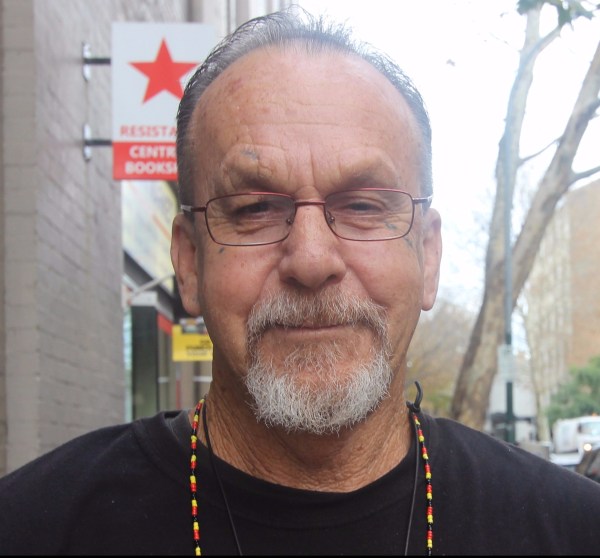
Head shot of Ken Canning. He is wearing glasses, and a long necklace of small, red, gold and black beads (Aboriginal colours). He has a greying mustache and beard, and he is smiling.

Credit: Socialist Alliance

Ken Canning is a Murri activist, writer and poet. His people are from the Kunja Clan of the Bidjara Nation in south west Queensland, Australia. His Bidjara name is Burraga Gutya. Ken has lived in Sydney for over 30 years. He worked as an academic and cultural adviser at the University of Technology Sydney and is currently a support worker at the Judge Rainbow Memorial Fund, where he assists people who have experienced the criminal justice system.

Ken’s poetry has been translated into several languages. His publications include Ngali Ngalga, Breakout Press,1990 and Yimbama, Vagabond Press, 2015. His first major play, 49 Days a Week, was showcased at the Yellamundie National First Peoples Playwriting Festival 2017. He has also written a half-hour film script called Cocky on a Biscuit Tin.

Gaele Sobott: Let’s start with your birth. There’s information on the Internet stating you were born on Bribie Island, Queensland.

Ken Canning: I spent some time on Bribie Island as a kid but I wasn’t born there. I was born in Frankston, Victoria. My mother’s family come from Charleville in Queensland.  Dad was stationed in Victoria when Mum was pregnant with me.

GS: Where was your father from?

KC: He was from Toowoomba. My Dad was a whitefella. The family was Irish from County Cork. They were very rich and very powerful. My grandfather’s name was Bob Canning.

GS: Where did you parents meet?

KC: Granddad worked out at Charleville. My father was in the navy and when he got leave, he went out to see his father. That’s where he met my mother. When they decided to marry, the Canning family didn’t want anything to do with us because they were against inter-racial marriage.

My grandfather said, ‘My son can marry who he wants.’

So, the family disowned both my father and Granddad. Any wealth, any land my father and grandfather were entitled to was stripped from them. They were outcasts. Granddad was disappointed with his family. He said they were traitor Irish. They took part in some of the massacres of Aboriginal people. I researched it years later with Dr Carroll Graham at University of Technology Sydney (UTS). They didn’t come here like your average Irishman who didn’t like authority. One of granddad’s uncles even became a policeman.

The reason I was born in Frankston was a bit random because while Mum was pregnant with me, she accidentally trod on a Red-Belly Black snake and got bitten on the foot. An old fella reacted quickly, got a sharp knife, cut her foot open and sucked the poison out. She was lucky, she was only a bit crook but after that she wanted to be with my father so she went and stayed in Frankston. About six months after I was born, we headed to Narrabeen in Sydney and then we took off to Queensland.

GS: So, you may have a bit of Red-belly Black venom in you?

KC: Well I might. I was fascinated by snakes growing up. There were snakes everywhere on Bribie Island. One time I was hiding from my cousins behind a tree, waiting to scare them and a snake crawled across my foot. I froze. I knew if I kept still it would leave me alone and it did. It took off when my cousins came running up the road. I admire snakes but I don’t really want them crawling on me!

I used to stalk kangaroos as a kid. I knew I couldn’t catch them. They were too clever for me. I’d chase goannas too then one evening a goanna turned on me. Jeez, I tell you what, I reckon if it had been an Olympic trial, I would’ve won. I ran home and slammed the door. My brother and I were looking through the front window and it was sitting there waiting for me to come out. It was much bigger than what I’d initially thought. They can give you a nice bite. The funny thing about a goanna bite is that every year to the day the bite mark will come back.

GS: Can you talk a little about your mother’s family?

KC: I don’t know the traditional names but my great, great granny was called Jane Boyd by the whites who invaded the area. I read a police document on her – ‘Jane Boyd, Aboriginal woman, associate of Chinese gardeners. Likes opium, is armed and will shoot at police.’ The Chinese came to the area because they were being persecuted. They lived with our people.

My great, great grandfather walked down from Tenant Creek right into the middle of the wars, the Forty-Year war. He married Jane Boyd. He was given the name Edward Prince. There are still Princes out West but he originally came from the Northern Territory, Carpet Snake Dreaming. My mother’s side are Magpie Dreamers. My great granny looked after me. She used to tell me stories about how her mother would stand up to the police. They were very strong people. Granny got kicked in the hip by a horse out West and the doctors wouldn’t come to see her. The family mended the hip bone as best they could but she had trouble with it all her life. So, a lot of the time she was bedridden. She was addicted to morphine. She passed when I was about fifty-six.

It was confusing growing up because Mum had me when she was young and when I was little, I thought she was my sister and called her Joan. I thought my grandmother was my mother. I used to call her Mum, and I thought my great grandmother was my grandmother. That still sticks in my mind today. Often when I talk about my gran, I’m actually talking about my great grandmother.

GS: Tell me more about the Forty-Year war.

KC: The Forty-Year War was one of the longest wars in Australian history. Not the whole Bidjara people but our clan group, the Kunja clan, fought for forty years. That war went from the 1860s right up to the 1900s when they allegedly defeated our people. Men, women and children were fighting against the British. After that a lot of my great uncles went off with the bushrangers to continue fighting for another twenty years.

My great, great grandmother was carrying a gun around everywhere she went, shooting at police. We were a people who travelled on foot then. We didn’t take to horses until the cattle stations started using us as labour. Some of people rode horses but basically our guerrilla warfare was on foot. We only have oral history records of that war. My cousin, Sam Watson, found some information in the archives in Brisbane. There was a box just sitting there collecting dust and he started reading through some fascinating documents, but the archive staff told him the material wasn’t for public viewing and he should come back. When he went back the whole box was gone.

There is no official acknowledgement that the Kunja clan of the Bidjara people fought for forty years. That’s two generations and no recognition. When you look at our society today, we’re coming up to Anzac Day where people beat their chests and say, ‘My grandfather fought to save this country.’ I don’t have that right. It’s a denial of history. Like the very first boys’ home I was put into, does not exist. It’s been wiped from history.

GS: Where was the boys’ home?

KC:  It was in Scarborough, run by the Catholics behind a boarding school for white kids. The building was full of Aboriginal kids who had allegedly committed crimes. They were totally brutalised. There is no record of that place ever existing. The Catholic Church denies it ever existed. It does not exist but I was there. I know other people who were there too. I knew people who committed suicide in there. It’s as though I fabricated eighteen months of my life. Our history is denied.

GS: How old were you when you went to Scarborough?

KC: I was ten, almost eleven. It was just after my great gran died. There were a lot of kids my age there and kids up to sixteen, seventeen-years. The place was run by brothers who were mad brutal rapists. They did some terrible things. They didn’t care what damage they caused. When they tried to take me, I’d jump up on the bed and scream, bite, kick. I was too much trouble for them. But they did bed checks every day so they set me up by putting two cigarettes under my pillow. I was flogged, every single day for the two cigarettes they’d find.

I was christened a Catholic. My parents were Catholic. Then I remembered Granddad talking about a cousin of his, called Archbishop Duhig, the archbishop of Brisbane at that time. I told one of the brothers. They must have checked it out and then there was a big change in attitude towards me.

GS: Why were you put in the boys’ home?

KC: I was living on Bribie Island and there was a shop I wasn’t allowed into because I was Aboriginal. The place was all bush back then. It was beautiful. Not like now. It’s disgusting. All built up. Multi-million dollar homes.  I was waiting on the road up from the shop for my cousin. Some white boys came out of the shop. I knew them. They were older than me.

They said, ‘Do you want a bag of lollies Johnny?’

That’s my middle name. Anyway, I said, ‘Yeah, thanks.’

So, I was standing there with the bag of lollies when the shopkeeper came out and accused me of stealing them. He knew I wasn’t allowed in the shop.

I said, “I’m not allowed in the shop. How could I have stolen them?’

He took me to the policeman who put me in the cells. Twice a week a priest came to Bribie from the mainland. He was there too. The shopkeeper, the policeman and the priest made the decision without any consultation with my family, to send me to Scarborough. My family didn’t know where I was. They assumed I’d been taken to Brisbane. Everyone was looking for me in Brisbane. Some of my relatives went to the boys’ home in Scarborough but there were only records for orphans. The people in the office didn’t know who was in the home. Most of us kids were taken there illegally.

When stories started circulating about the place, and blokes in jail started talking about the treatment they’d received at the home, the Catholics closed it down. No record of anything ever happening there.

GS: You came from Frankston in Victoria, stayed for a while in Sydney and then came back to Queensland. Where did you live? Was it Bribie Island?

KC: We came from Sydney back to Charleville.

GS: What are your memories of that time?

KC: I was a funny little kid. I was fair. The old people in the family who lived inland, didn’t have any contact with white people, they’d come and visit, and every time they left, I’d follow them back out to the desert. Those men and women laughed at me and gave me the nick name, Myal. In our region that means an Aboriginal person who doesn’t want anything to do with white ways. The whites changed the meaning to a wild Blackfella. I later heard that all the family were killed by white people.

West Queensland in those days was lawless. It was brutal towards Aboriginal people but we had some good fighters in our family. We had some victories. My uncle Bill Bailey was a big, powerful man, huge. Any time we’d work for the white man, he wouldn’t pay us. It didn’t stop Blackfellas from working to try and make a living. My Uncle didn’t accept it.

He said, ‘I don’t care if I go to jail. You pay me or you’ll be in your grave.’

They paid him. We weren’t allowed to have bank accounts so he saved his money in an old Sunshine Milk tin that he buried in different places. No one ever knew where. Aboriginal people weren’t allowed in Charleville. He’d walk up the main street. Blackfellas weren’t allowed in the pub. He’d go in and demand to be served and they served him. The local police couldn’t get him into the jail. He was too powerful.

He saved enough money to buy a block of land just out of Charleville. We weren’t allowed to own land but they sold him the land. It’s still in the family. He made history. I loved Uncle Bill.

GS: When did you move to Bribie Island?

KC: We were hounded out of West Queensland. My old gran, my mother’s mum, wanted us to go. The government didn’t let blackfellas go to school and because of my complexion, I would have been taken by Welfare. We moved around South-West Queensland for a while then we stayed in Brisbane. We lived at a hotel under the Story Bridge. Unfortunately, by then, Mum had become an alcoholic. I was about five years old and I wandered off and nearly fell into the Brisbane River. The authorities put me in an orphanage. Two years later Dad came out of the navy. Because he was white, he was allowed to take me from the orphanage. He was a violent man.

One time, I was sitting on the beach with my granddad when he was dying of leukemia in the 80s and I asked him, ‘Have you got any regrets?’

The old fella said, ‘Yes, one regret, your father!

I got on well with Granddad. We lived in Redcliff for a while. I was seven or eight when Grandad got me into a Catholic school but they kicked me out because I was disruptive. I stood on the desk and hit people on the head with a ruler so they gave me a warning. Not long after that I got up on the roof of the boys’ toilets, jumped down onto a group of people and got stuck into them. I had a lot of rage by then. After that we moved to Bribie Island.

GS:  Where did that rage come from?

KC:  The rage came from a whole lot of things. There was a lot of violence in the home and alcoholism had taken my Mum. I found my grandfather on my mother’s side dead at the kitchen table. That shocked me. I was starting to understand the attitudes of white people towards my mother, towards Aboriginal people, racism. The police, and white people in general would call my mother names like whore, slut. Those things affect you as a little kid.

 GS: You’ve said you chased kangaroos and goannas, how else did you like to spend your time as a kid?

KC: Yeah, I played in the bush but I’d also take time and go and sit with my Gran. She’d tell me stories about what was happening in her day and her mother’s day. She talk about which family groups were related to other family groups and where they went to when they were hunted out. She told me a whole lot of things. She told me stories about the black servicemen from the States stationed in Charleville during the Second World War. She didn’t like them. Stories of rape and violence towards our women. She experienced it personally.

In our land before white people came we were very much matriarchal. Gran and my old Granny Boyd, they had several husbands. They were open about their views that if a man started playing up, getting silly after he’d done his job, given them kids, they’d show them the door. Our lands were matriarchal. That didn’t mean that men were demeaned or exploited.

Another thing I liked doing was listening to the wireless. I used to listen to radio plays, the news, BBC programs.

GS: So, you were taken to the boys’ home in Scarborough from Bribie Island. How long were you in that home?

KC: I was in there for about one year or so. When I got out, the authorities took me back to Bribie Island and dumped me in the middle of the road outside an abandoned house. I was twelve going on thirteen-years-old. I went around to my old boxing trainer. He told me the family had gone to Brisbane looking for me. He drove me to Brisbane and I asked him to drop me at Musgrave Park. I sat with all the Blackfellas there and people took me in. They looked around and found Mum living at Wilston.

I was only in Brisbane for a little while and the local police grabbed me and took me to Windsor police station. They were screaming at me about a heap of break and enter crimes. Mum came in and tried to set the record straight. They called her every filthy name under the sun and threatened to lock her up. She got Granddad and he demanded to see the charge sheets.

He said, “My grandson was in the boy’s home in Scarborough for most of these.’ The coppers weren’t about to argue with Granddad and they let me go.

After the boys’ home in Scarborough, I made a habit of being alone. I didn’t want any ties for a long time. I got into a lot of trouble in Brisbane and ended up in Westbrook, another boy’s home. I ran away from there and stole a car. Police cars surrounded me down near Roma street and ran me off the road. They were shooting at me, bullets flying everywhere. One went through the door straight into my leg near the knee. I jumped out of the car and collapsed.

They put straight into the men’s prison, Boggo Road, Two Division. That was illegal because I was only sixteen. When Two Division was eventually closed in 1989, the Australasian Post, described it as the most notorious division in Australia. It was a hell hole. They had a young offenders’ yard but they put me in the men’s yard. I came in on crutches. My Uncle Vic was in there. He said, ‘You’ll be right. Settle down.’

Everyone knew Vic. Because I was his nephew, they left me alone. I only did a couple of months and I was let out. I told Mum I was going bush for a while. I had a bit of money because I was working hot so I caught the train to Sydney. Then went to Melbourne, across to Adelaide and on to Perth. I got knocked over there with a mini minor full of stolen property. How stupid was I then? You’d think I would’ve got a bigger truck.

The authorities contacted the Queensland authorities about me. They told them that they’d put me in Boggo Road because the boys’ homes couldn’t handle me. So, Western Australia put me straight into Freemantle adult prison. I was alright there because all the Blackfellas knew me. Again, I wasn’t there long. When I got out, the police put me on the train handcuffed. Just before it pulled out they took the cuffs off and said, ‘If you come back to WA we’ll put a bullet in you.’

None of the passengers would talk to me on the trip across the Nullarbor. It was a very spooky little trip.

I got to Sydney and found out that a member of our family had been shot to death by the police in Melbourne. Cuz and I went mental. We were already working hot but after that we made sure we were armed with sawn-off shot guns coxnd pistols wherever we went.

GS: I’d like to talk about your play 49 Days a Week.  I saw the reading at Yellamundie 2017. The story is very powerful, moving, thought-provoking.  Could you tell me a bit about the creative development process?

KC: I started writing that play years ago when I was at uni. I wrote a piece for a prisoner radio program. It was stream of consciousness, the thoughts of a bloke walking up and down his cell and I added some sound effects. That was the genesis but I changed it for Yellamundie reading. I set it in the cages at Bogo Road jail not the cells. That was the focus of the story, what the cage does to your mind. I had a lot of bad experiences in Long Bay jail too but I couldn’t set the Yellamundie play in two environments so I just kept it to the Boggo Road cages.

I wore myself down to the ground doing the writing. I was working, arranging the Invasion Day march at the same time and sitting up every night doing re-writes. I really wore myself out and I got ill. That sort of shut everything down. I’ve had a break now and I’m ready to write again.

Yesterday I was at the bus stop and along comes Fred Copperwaite, the director. He told me they are interested in developing the play further. He liked it because his father and his uncle had been in jail.  I was scared that audiences wouldn’t like it, that they wouldn’t get it, they wouldn’t get why it had to be so intense.  But the reception it got at Yellamundie was really good. The play means a lot to me because my friend was actually executed by the police in 1984. He was thirty-five.

GS: He was of Irish origin?

KC:  Yes.

GS: Can you tell me more about him?

KC: Well, he was a professional armed robber. We met when we were kids. He had a great sense of humour. Me and Cuz were up and coming and the older robbers took to us. Our friend was one of the people from that era who got in with the old guard of armed robbers.

GS: 1970s?

KC: Yeah, the late 60s going into the 70s. I started doing stick-ups in Brisbane when I was very young and got mixed up with older fellas. When I escaped, I did jobs in Sydney, then I’d head off to Adelaide to live quietly. That was a little recipe I had. Come back and do some more. I got to know some good people. They were good at their trade. They liked me and Cuz because we were naturals. We started when we were sixteen. We got knocked when we were eighteen but in those couple of years we did some big jobs. When we escaped, people saw exactly how willing and how good we were at the work.

GS: What makes a good armed robber?

KC: I used to talk to my best mates who were armed robbers about this subject. One of them is a whitefella with a long surname. I don’t know if it’s German or what. He was the most infamous escapee we had in this country and the most proficient armed robber we’ve ever seen. The authorities described him as a modern-day Ned Kelly, only better. I liked him. So, we’d spend hours discussing these sorts of things. Once you escape, the authorities always say, ‘He’s armed and dangerous and will shoot at police. Do not approach.’

So, the public gets the idea that you’re a raving lunatic and a killer. The consensus is that we’re low in intellect but my mates were all deep thinkers.

We talked about our early lives and how those experiences influenced what we did for a living. Whatever happened to one man must have been traumatic. He had no memory of anything before he was eight. He couldn’t remember what his parents or aunties or uncles looked like. Not one memory from his childhood. Completely blank. Another came from a poor Irish family. His father refused to assimilate, refused to obey authority. From the start, my friend was targeted because he was the son of a mad Irishman who hated the authorities and liked blackfellas. When he was about seventeen, he moved in with an Aboriginal woman. They had a baby together. He told me he had thought his life was hard but once he started living with a Murri woman, the police were breaking down the door, putting a gun to his head, calling her all sorts of filthy names, even putting guns at the baby’s head. It was like a horror story.

When you have those kinds of experiences, you can go two ways. You can take the anti-social path where you are reckless or the anti-social path where you want to beat them. We were driven by the desire to beat them. We were all thorough planners. We all had a mad survival instinct and a sixth-sense for trouble. Every one of us were experts at counter surveillance. If we were under surveillance, we knew it.

When one mate escaped from Katingal, he was out for eleven years. That’s a phenomenal amount of time to be on the run. He was the smartest of us all. In all aspects of criminality, he was an absolute genius. The other commonality we had was, we didn’t think we were doing anything wrong.

To be a good armed robber you need to be able to plan. A well-thought-out escape route is the most important aspect of the planning. you’ve got to be able to think on your feet. Something might go wrong. Someone in the crowd might try to rush you. It’s best to work by yourself or as a pair. Three people gets too complicated. We were a close circle of friends. We trusted and knew each other. Fitness was another requirement. We all worked-out very hard. Even in jail. Exercise was illegal in Boggo Road but I worked out in my cell all night. Fitness for when I escaped. We didn’t like drugs and alcohol.

GS: Can you briefly describe a typical job?

KC: We re-enacted one in the play. You run through the front door. You’re wearing overalls, gloves and balaclavas. One puts everyone on the ground, the other jumps the bank counter and takes the money. That’s easy to do.

We were the first groups to hit armoured trucks in the seventies. We’d wait for then to come out with the money. Then we’d come from behind, put them on the ground, take their weapons, take the money and get out. You’ve got to do your homework. I’d watch a place for five or six weeks. During the seventies and eighties and into the nineties vans were being done over left, right and centre. The insurance premiums were going through the roof. You can’t do it now. They’ve tightened up now, invested in better security in the banks, back-up people and back-up cars for the vans. Those cassettes they put in the ATMs hold A$200,000. I know that because even after I’ve done my time and retired, I still observe these things. If I see a van pull up I look at the time and note the location. I automatically go ding, ding, ding and start figuring out how to do the job. It’s a habit. I’m not remotely interested in robbing a place but I can’t help observing.

One of the smartest robberies was done by the late Jack Wilson and Don Flanders in the mid-seventies. They ran a postal van off the road, coming from the Sunshine Coast to the Reserve Bank. It was full of old bank notes but still legal tender. They got over a quarter of a million. In those days, it was a lot of money. Jackie Wilson was as smooth as a cucumber. We used to call him Hungry Jack because he’d be sitting on a fortune but he was as tight as they come. He’d open his wallet and moths would fly out. A cunning old bugger. He wouldn’t give away a thing but Donny got knocked and the coppers verballed Jackie.

GS: What does verballed mean?

KC:  It’s when an unsigned record of interview was used to convict suspects. I got convicted on unsigned records of interview. I never got convicted on evidence, neither did Cuz, or our mates. Brett Collins was one of my old colleagues. He started up the Prisoners Action Group and they worked hard to get verbals outlawed. You’d say nothing but the coppers would just type up a confession. They’d present it in court saying this man confessed then refused to sign the confession. It was accepted as evidence.

Before I first got verballed, we were in Sydney working, I was only young, and the armed robbery squad got hold of us and told us that if we gave them twenty-five percent of our earnings, we could do what we liked. Our answer was, ‘What earnings?’

They’d say, ‘We know you’re running hot.’

We’d say, ‘The only thing we’ve got going is a hot shower.’

No way we’d work with them. There were people that did work with them and they got free range but we hated them. They also gave up other criminals. Part of the deal was dropping other crooks in. They were dogs, informers. Barking to the coppers. I had so much contempt for people like that. All of us who refused to work with the police, when we got shopped, we were in for a very long time, but at least we had our honour. We chose a certain life and we stuck by what we thought were the rules.

We used to talk about all kinds of things in the cages. When I first tried to read Foucault, I wasn’t used to the language and it didn’t make much sense but once I did get the language, I sat down in the class at UTS and said, ‘You know, this is very ordinary.’

They said, ‘What?’

I told them I was sitting in a cage for years and we used to talk about this stuff. We were uneducated men talking about prison structures. Two Division was a circular design. You could see everybody at once. At any given time, you could be observed.

We didn’t call it the Panopticon but we did talk about how the prison meant you were under constant surveillance and that you ended up surveilling yourself and everyone else. You became your own jailer. We worked that out and we were one step ahead of the system because we deliberately allowed ourselves to fuck up. It was as simple as that. I was considered a very violent inmate. But all my life I have acted intentionally. I was violent intentionally. I don’t deny that sometimes I’d blow up. I’d lose my temper but most of the time it was planned and there was purpose to it. I saw what I was doing as part of the war against the invaders. My mate saw it as the continuing war against the British. We were aware that the surveillance was happening but we were not going to let them control us.

I’ve always felt that defiance, that wilfulness. I think that goes back to my old gran. Granny was strong willed too. Well before the Black Panthers came on the scene, she gave me my first taste of Black Power. It was on Queens Street in Brisbane. She wanted to go to a shop across the road. My cousins told her she had to walk down to the lights to cross.

She said, ‘Why would I want to go all the way down there and back when the place I want to go is just opposite?’

My cousins said, ‘That’s what it’s like in the city Gran,’ and they all ran off to the lights.

I was stuck with my grandmother. So, she just crossed the road there and then with me following behind. A car beeped its horn and she smashed the walking stick straight into the bonnet of the car.

She yelled, ‘I’m walking on my land. You don’t do that!’

It was in the middle of Brisbane where black people were locked up and shot at the drop of a hat. To use a biblical analogy, it was like Moses parting the Red Sea. The traffic stopped. She walked across her walking stick in the air, yelling, ‘I’ll go where I want to go.’

She didn’t speak very good English. I was in a sort of daze. I felt like I was floating a foot off the ground. It was an amazing thing for me after seeing so much oppression, then here was this black woman standing up to a city. She was my hero. The feeling that surged through me at that point was pure strength.

When I was in Sydney’s Long Bay we had some very bad things happen to us. We had an attempted breakout. It backfired and we took over the amenities block. The screws grabbed us, stripped us naked and flogged us. It got that bad some of the screws dropped their batons and went to get the senior to stop the others belting us. We were taken to the cells and dumped naked. The ones who stopped the beating insisted the prison doctor should come. He said we were alright. We weren’t alright. The sweepers could hear our groans. Other prisons knew we were not alright. They threatened to burn the jail down unless an independent doctor came in. There was an inquiry and that independent doctor gave evidence saying the four men he examined nine days after the beatings resembled four lumps of raw meat in a butcher shop. Heaven knows how we survived.

I was in and out of consciousness.  I couldn’t move and the only way I could breathe was taking lots of short breaths through my mouth. Later the pain of taking a drink of water was unbearable. One guy was found dead in his cell months later. We got sent back to Queensland and put in the cages. Cuz was put in the intractable section in Parramatta. They had him in a cage for five years. It was a horrific period of time but it taught me a lot.

GS: What did it teach you?
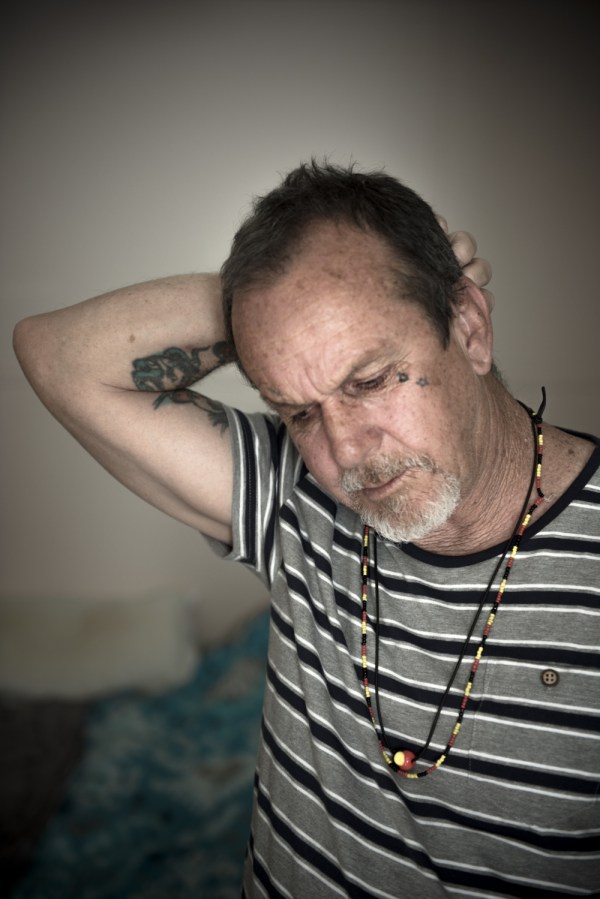
Colour photograph, interior, mid shot of Ken Canning standing in his apartment. Right hand clasped around the back of his head. He wears a striped grey, white and black T-shirt and two necklaces in the colours of the Aboriginal flag.

Credit: John Janson-Moore

KC: I know more about the world by being in there than I probably would if I was out. I know how peoples’ minds work. When you’re in there you’re seeing the most brutal aspects of mankind and you must work out how to survive. How to come out with your sanity intact? I developed some mental health issues but I learnt how to survive. When you get out, it’s worse. We didn’t do medium security or minimum security, it was all maximum. When you get out, you’re a lunatic. How do you survive that? The first few years I was completely off my head. Mad!

GS: When did you get out?

KC: In 1979. My parole was transferred to NSW. I was hallucinating, seeing things, screaming. By 1982 I was starting to calm down.

GS: Did the hallucinating start after you got out?

KC: No, I started hallucinating in jail. When I came out of the cages, I was in the mess hall getting my food, walking with my plate looking at one of the other prisoners and he turned into a creature. That was alarming.

GS: Can you describe the cages?

KC: They built six cages onto the walls in one corner of the yard where it narrowed into a point. Metal bars in front, to the sides and across the top. Small barred, rectangles joining each other.  A rough concrete floor and a seat built out of the same iron bars.  We’d get escorted down from the cells. We were in the cells at night. In the morning at about seven-thirty, the screws would drop the flap on the cell door, we’d put our hands out to get handcuffed. The screws would not enter the cell unless we were handcuffed and facing the back wall. Four small paces square. Because we were classified as intractables, they had to have a minimum of four prison officers to take one of us out.

GS: What are intractables?

KC: We didn’t accept the prison discipline and kept on escaping.  I was classified as an intractable not long after I first went to prison. That classification doesn’t exist anymore. Once your papers were stamped, intractable, they could isolate and brutalise you, put you in the cages for as long as they wanted.

GS: You were saying a minimum of four prison officers were required to take you out of the cell.

KC: Yes, the first thing they did when they entered was smash our head so our face would hit the wall. That was how every day started. Then they’d turn the cell upside down, go away and leave you to clean up the mess. They’d come back in ten minutes and escort the prisoner out of the wing, down a passage way and through the yard. The blokes in the yard were not allowed to talk to us.

Some refused to obey and would say, ‘How you goin’ Bra?’

We’d be carrying our toilet tub. When we got to the cages yard, there were three security doors to go through. The detail would grab the toilet tub and it’d be back outside the cell when we returned. Once in the cages, we’d put our hands out a little square in the door and they take the cuffs off. That was our outside time. They’d take us back about three o’clock. There was a cold shower at the front of the cages but for a while they wouldn’t let me shower. That’s why I’m fanatical about showering now.

GS: What was the worst thing about being in the cells?

KC: No space. As much as we got on together, sometimes we really got on each other nerves, wanting to kill each other. Most blokes were put in the cages for a couple of months, we were in there for years. For extra punishment, we’d be taken to the underground cells.

GS: You kept escaping?

KC: Yes, I liked to escape.

GS: Why did you like it?

KC:  It was like doing stick-ups, there was an adrenaline rush and it was defiance. There were cruel, despicable, white people in control in the jail. A hardened, inhuman bunch of people. I was not going to accept their authority over me.  I was always in maximum security. Escaping from maximum meant I only got three months on top of my sentence. Medium was twelve months and minimum was eighteen months. Every minute of every day, I’d be planning my escape. I was obsessed.

I talked to a criminologist, Dr Tony Vincent, about this. He believed that my obsession with getting out, stopped me becoming institutionalised mentally. If you go along with the daily routine and the surveillance, your mind becomes part of the system. Bodily I was pretending to go along with it most of the time but not in my mind. It was continual defiance on my part.

My initial sentence was thirty-two years. I’d just turned nineteen and I was given thirty-two years for four armed robberies. That’s unheard of. Every morning I’d come out of my cell and look at my cell card, my name, crime and sentence – thirty-two years. I was going to get out when I was fifty-one. When you’re nineteen, that’s like a death sentence. I appealed and got one of the sentences reduced to eight years so I ended up doing seventeen years, but when I was on appeal, I escaped from the courthouse. I’ve got a photo of me when I was on the run. It’s in a nightclub. I look like an office worker.

The next time I escaped, I faked a broken ankle, dropped my crutches and ran from the hospital. The time after that I turned a big garden sprinkler into a grappling hook, plaited sheets for a rope, jumped out of the yard and over the wall at Boggo Road. I escaped from maximum security three times.

Before that I escaped from police cells, and police cars, and I escaped from boys’ homes. There were a couple of attempted escapes too. One from Long Bay and one in Brisbane. I was working in the bake house in Boggo Road and watching their security when they send the bread out to the hospitals. They were slack. I got the blokes to pack me in the back of the truck with the loafs of bread. But the screws  did a random check in between gates and found me. I was laughing. If you’re busted, you’re busted.

Another time, it cost me a couple of grand but I got a little, diamond-tipped, flexible hacksaw smuggled in. I’d almost sawed through the top hinge of my door and was half way through the bottom hinge. I had no idea what I would do once I got out of my cell. Maybe I’d get out of the wing but then what? Hide somewhere until I figured out how to get out of the prison. But the guards came to do their usual check and one of them dragged his baton across the door. I was lying in bed and the door started wobbling. All hell broke loose. This was about two or three in the morning. They left me in the cell and cleared the rest of the wing out, tear-gassed it. Everyone was in the yards and it was cold. Then they came in armed, wearing their gas masks, the whole rigmarole.

I was put in the underground cells for that. They can only keep you underground for four days at a time because it’s brutally inhumane. They unscrew a big metal flap and lift it up then walk you down the stairs. There’s no light and hardly any air. Every day they give you a piece of bread and a jug of water but mix up the time so you are disoriented. Men go mad in those cells after two days and just start talking gibberish. They never came back from that. I knew some of those men. It broke them, I was afraid I might be next.

There was no bed in there just a toilet tub. I didn’t want to lay down because they don’t clean those places. People don’t always get the tub when they go to the toilet. I’d sleep sitting on top of the tub with my head against the wall. It stank and it was pitch black. If they wanted to keep me in longer than the four days, they’d wait until the middle of the day, run down, drag me up into the bright sunlight and order me to stand to attention and salute the Australian flag. I couldn’t. It was impossible. I was so disoriented and couldn’t handle the glare. So, then they picked me up, ran me over to the superintendent’s office, charge me with disobedience and took me for another four days down the hole. One time I was down there for almost twenty days.

GS: You’ve spoken about mental illness. How did you cope?

KC: I say to people, I went mad one hundred times but I came back ninety-nine times.

GS: One bit of madness is still hanging in there. When did you learn to read and write?

KC: Before I was in the cages, a whitefella, called Keith, who was in for fraud, taught me. He was a white-collar criminal but he gave the superintendent lip. One of the blokes who worked in the office told us. So, the super chucked him in our yard, Two Division, where all the ratbags were. The first day he walked in he had his hands behind his back. His hair was slicked down and he had an upper-class accent and he appeared arrogant. Normally, a bloke like that would get slaughtered. It didn’t happen. There was something about the guy and people just left him alone.

One day he sat down and asked, ‘Anybody have trouble reading or writing?

A couple of blackfellas said, ’Yeah.’

He asked, ‘You want to learn?’

It ended up he was a good teacher. He taught Aboriginal prisoners because only white prisoners could go to the education courses. We were in the middle of a campaign to change that.  So, this old bloke put the word out that we need equipment. The whitefellas who were going to the courses started knocking stuff off. Bringing back stencils and rulers and pencils. But in max the prisoners are not the only ones with instincts. The screws have instincts too. When something is going on, they know it. They were running around checking the cells then they did a big bust on Keith Edwards’ cell. It was the biggest bust they’d done for a long time. They were upending everything looking for contraband. We laughed because all they found was educational material. He went to solitary for seven days because of that.

It took a lot of years before Aboriginal prisoners were allowed education in prison. I was writing poetry by then and short stories.

The screws came to my cell and said, “Poetry’s considered a hobby and to do a hobby you’ve got to have permission. You don’t have a permission slip. This is an illegal hobby.’

They gathered up all my writing, handcuffed me, took me down to the incinerator and burnt all my work. That hurt far more than the floggings they gave me. I retaliated that night. Some of the poems were in my memory. I had a spoon in the cell and the concrete walls were old and a bit damp and soft, so I engraved a poem on the wall.

GS: Sometime after you were released, you went to UTS. What did you study?

KC: Yes, I went to UTS and studied Communications and then Oral History. Oral history became a battle in the politics of history. I was fighting to do my master’s thesis orally. I wanted to carry on the traditions of oral history in my work. They didn’t recognise oral history as history unless whatever was said, was proven to be true by someone else. After that Social Sciences developed a new master’s degree that allowed students to incorporate their cultural and socio-economic experiences.

GS: You were one of the founding members of Jumbunna Indigenous House of Learning at UTS. Tell me about that.

KC: Franny Peters-Little, Uncle Norm Newlin and I were the founders. It was called the Aboriginal Education Centre then. We did a lot of other things at UTS. The appointment of Debbie Stoddard as the first overseas students’ officer was because of a campaign we initiated. She became human rights coordinator for the ALTSEAN, the regional human rights group. We campaigned hard for more people from Non-English Speaking Backgrounds to study at UTS as well as Aboriginal students. We were responsible for the first anti-racism policy at UTS. The first policy aimed at hiring Aboriginal staff was drawn up by me and a non-Aboriginal man called Michael Refshauge.

GS: Were you one of the first Aboriginal students to enroll at UTS?

KC: There were other Aboriginal students before us but they didn’t sit it out. I finished in 1987 and I was the first Aboriginal student to graduate. Francis Peters-Little was the second. She was the first Aboriginal woman to graduate.  I graduated in 1988 and I pulled out the Aboriginal flag, wrapped myself in it, ran up and gave the black power salute. There was shock horror. Everyone was disgusted in what I did. At the reception. It was like I had spiders all over me. People just kept away. Twenty years later the University has used footage they have of that graduation to celebrate diversity at UTS. I didn’t realise they had filmed it.

GS: You published your first collection of poems in 1990, Ngali Ngalga: Let’s Talk.

KC: Yes, it was published by Breakout Press. The first poem I ever wrote is in that book. I eventually got permission to write and I wrote down the poems I remembered, the ones the screws destroyed, and I wrote other poems. A lot of those poems were rubbish some were so romantic, they were sick but writing was important to me. It was my survival. One bloke told me I had to have rhythm and rhyming schemes and all that and I was doing it but driving myself a bit mad. Then I thought oh bugger this. I was looking for words at the expense of feeling and emotion so I decided to just write what I think. I started writing my own patterns. Long lines then bang, one word. I liked that style. Sometimes it’s a bit disjointed. I like that too. Visually my poems are not square or rectangular.

GS: What is your favourite poem in Ngali Ngalga?

KC: ‘Black Baby’ is my favourite in that collection.  ‘Small soft baby, thrust from the womb . . . ‘

GS: Your second collection, Yimbanna, was published by Vagabond Press in 2015.

KC: Yes, Yimbanna means to understand. So, we’ve already talked in the first collection and now it’s time to understand. One of my favourite poems in the collection is ‘We Said.’ It’s about listening and understanding, about relationships. It’s a simple poem but deeper than what I originally thought when I wrote it. If everyone lived by this poem, we’d have world peace. You’ve got to listen to each other.

. . . LISTEN – To what
You said, I said, you said.
We both said instead,
I did, you did, I did – you.
Neither of us did,
Understand –
A word.
A sentence.
A thought.
A feeling.
A rejection.
A misperception
Of
each other.
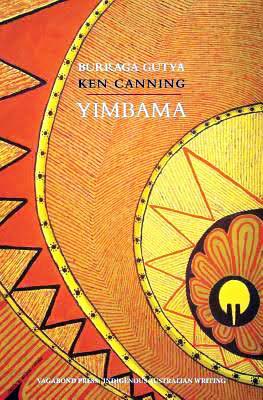
YimbamaIt’s not about blaming anyone. There’s a degree of fault all around. It’s about solving disagreements. You’ve got to sit back and look at each other, listen to each other. All parties need to engage. I’ve learnt to develop that skill of listening and talking with Cheryl, my wife. We have definite commonalities but we don’t always think alike. At times we are opposites. Our politics can be different but we have learnt how to co-exist. We have respect for each other.

I learnt about valuing other people’s opinions from my gran. She was really against putting people down because of their beliefs. She made that very clear to me. Once my cousin, Peter, called someone, I still can’t say the word, a W.O.G, she flogged him.

She said, ‘You don’t like people calling us bad names, you don’t call anybody bad names!’

GS: How would you describe the focus of your writing?

KC: I write about a diverse range of topics. I’m an Aboriginal man in my 60s who has seen a lot of oppression, my personal experiences and the experiences of my people. I write about the horror of these experiences, our strength and our survival, about the love of our culture and I write about our respect for mother earth.

GS: There are poems in Yimbama about mental distress. One is called ‘Psychotic Serenade.’ Why did you write that poem? What was going on in your life?

KC: I was living in Merrylands when I realised I had a serious mental health issue going on. It wasn’t just episodes where I was a bit off. The doctors had diagnosed PTSD, I wasn’t sleeping and I was a bit of a nervous wreck but I hadn’t been diagnosed with anything else. I was sitting on the veranda and I went straight inside and wrote that poem to describe what I was feeling.

Sing – high sing loud
the songs of the silent
musical mayhem,
suicidal symphonies.
Sprinkle sprinkle cyanide star
now I know how disturbed you are.

That’s the last stanza.

Realising I was experiencing some kind of mental distress was one thing but getting something done about it was another thing. I was picked up a lot in the Parramatta area. The police would take me in, give me the knuckle then let me go. It escalated and I got really disorientated.

One time the police took me in and where giving me a hiding in the cells. One copper came in and told them to stop. He realised I need help not a flogging. He had joined the police force in his thirties and worked as a plumber before that so he had a different perspective to the kid who came straight out of Goulburn Police Academy.

I was in hospital for a long time and I went in and out a few times after that. One of those times I was picked up by the police again and sitting in the back of the paddy van, handcuffed and one copper said, ‘You’ll have to wait a while, these other nut-jobs are getting booked in.”

I didn’t like that. That same copper who used to be a plumber heard him and saw my reaction. He intervened and told off the other copper.

The fact that someone who I saw as the enemy was understanding was a big part of my healing. Sometimes it just takes that one person.

I was diagnosed with Schizo-affective Disorder.  But if I allow the mental health diagnosis to define who I am, I’m allowing my life experiences of oppression and brutality to define me. I have always had very strong self-awareness. The psychiatrist who treated me was a wonderful woman. She said one of the saving graces was my awareness of my illness and where it came from. She believed I wouldn’t need to be on medication for the rest of my life.

At first the doctors at Rozelle told me I’d never be able to work again. When they let me out, I agreed to come back as an outpatient but made it clear that I fully intended going back into the workforce. I got my job back at UTS. I’m not saying it was easy but I got through it.

GS: You just said, ‘Sometimes it just takes that one person.’ Can you talk a bit more about that?

KC: Every other policeman was giving it to me, but that one policeman understood. In my journey since day one, there have been a lot of strange, undesirable people but I’ve also been fortunate enough to meet some of the most amazing people you’d ever want to know. Like the late Uncle Jimmy Little.  In his life time, he was called a Living National Treasure. He was Mr Smooth in his nice suits up on the stage but at home he’d be dressed in old ragged shorts and an old singlet, eating damper and because he couldn’t find a cup big enough to drink his tea. He was a big influence on me. Jimmy wasn’t as calm as everyone thought. He was radical in his way of thinking.

He said to me, ‘If you’re going to take a hard line, don’t take a backward step. Keep to that line. It’s your path.

GS: Do you see yourself as unflinching once you take a stand?

KC: Yes, and at the same time, I’m good at identifying the enemy. The enemy is not the woman next door, not the bloke who lives up the road, the enemy is bad government. The enemy is oppressive government and people who buy into racism like the United Patriots Front and groups like that. I don’t want to focus on the bloke who’s doing his job to earn a wage. I focus on the leadership, the heads of power. Even individual coppers, I’m not going to hate them. I don’t like coppers but I focus on the system that creates and uses them. There are some coppers out there saving people, running into house fires, things like that. I forged my political beliefs and direction in prison. I learnt a hard edge but a rational edge. I also developed a softness for people victimised by the system. In prison, we witnessed people being beaten to death. In my play, Mick hears Ray being beaten to death. I heard a very close friend of mine being beaten to death in the cell next to me. That experience has never left me. In those days when a prisoner was beaten to death, it didn’t require a coronial inquiry. All that was required was a doctor’s signature on the death certificate. Like I said before, the prison doctors were alcoholics who did whatever the jail wanted. The screws told the doctor the prisoner had a heart attack and that’s what the doctor signed. So, I was hardened by those experiences but sometimes I’d sit and cry. The authorities never succeeded in crushing my humanity. But jail does snuff out the humanity of some inmates. That’s sad too.

My saving grace was writing. I was so confused when I got out. Writing saved me.

GS: How do you define freedom?

KC: When they turn that key to let you out of prison, that’s not freedom. Cuz and I found the key to freedom. After we were brutalised and kept in institutions, from a young age, where within those mechanisms you had to be violent to survive, we didn’t continue to be violent. We didn’t go out of our way to hurt anyone. The very fact that I am not a violent person means I am free.

The authorities, the state, the society failed to turn me into a monster. I am a human being. That is freedom. If they turn me into a monster, I belong to them.

When Cuz and I got out, we talked about it a lot.

He said, ‘Now we’re out, we can’t afford to inflict our anger on those around us. I know there are times you feel like just giving it to everyone in the street.’

I said, ‘Yeah, I do.’

He said, ‘Well, we can’t cross that line. If we do, the authorities, the screws, own our minds, our hearts and our souls.’

There are good white people. There are also a lot of white people who have a history of despicable behaviour against our people. For me, freedom is not allowing that to cloud my thinking, not to be pre-judgmental towards all white people. If I say to myself, every problem we have as Aboriginal people in this country has come at the hands of white invasion, so therefore every white person is the enemy, then I’m still in prison. Racism wants us to think that way. But once we think that way, we cannot have conversations. Once we cannot converse, we can’t learn what happened, how it happened, how it continues.

Freedom for me is my old gran telling me, ‘Think what you want.’

My freedom is writing. My freedom is my peace of mind. My freedom is building a good relationship.

Ken Canning was interviewed by Gaele Sobott in Glebe, Sydney, 22 April, 2017

Creative Commons License
My freedom is writing. My freedom is my peace of mind. My freedom is building a good relationship – An Interview with Ken Canning by Gaele Sobott is licensed under a Creative Commons Attribution-NoDerivatives 4.0 International License.
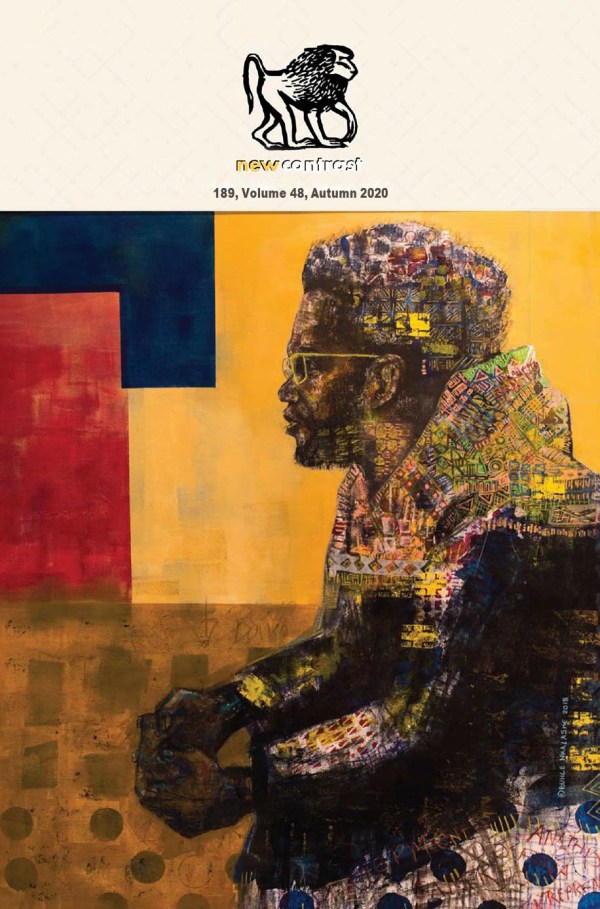
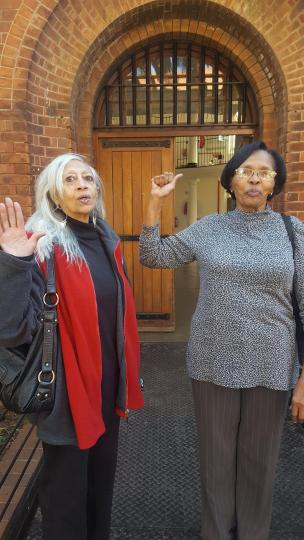
Dignity is essential. It means we are viewed by the other as a human being : an interview with Alice Cherki

A recent black and white photograph of Alice Cherki, sitting at a table, smiling.

Alice Cherki

ALICE CHERKI is a psychiatrist, psychoanalyst and author. Born in Algiers, 1936. She knew Frantz Fanon well, working by his side in Algeria and Tunisia as a psychiatrist, and sharing his political commitment during the war of independence in Algeria.

Alice Cherki has lived in France since 1965. She is co-author of the books, Retour à Lacan (Fayard, 1981) and Les Juifs d’Algérie (Editions du Scribe, 1987), and author of La frontière invisible (Editions des Crépuscules, 2009) Frantz Fanon, portrait (Seuil, 2000) translated into English by Nadia Benabid and published as Frantz Fanon: A Portrait (Cornell University Press, 2006) and Mémoire anachronique (Editions De L’aube, 2016).

Gaele Sobott: Can you talk a little about the history of your family, your place of birth and your childhood?

Alice Cherki: I was born in a family of Jewish Algerians who were in Algeria since the Romans or before the Romans. My parents were born in the small towns of Medea and Ksar Bukhari but they met in Algiers. I was born and I lived in Algiers. I am Algerian, voilà!

Some of my family are Jewish Berbers.

GS: Were there Jewish people in Algeria before the Arabs?

AC: Yes, the majority were there well before. Some came later in 1492 from Spain through Morocco, others from Italy, and then Alsatian Jews, but at that point it was already colonial Algeria.  Many of those left again and went elsewhere. But most of the Jews of Algeria had been there for a very, very, very long. Some of them were Berbers who converted to Judaism. I belong to that history.

GS: Did you speak Arabic?

AC: Very little. I’m not very good at languages. I come from the same environment as Derrida. at school, we learnt Latin and Greek.

GS: Did you know Derrida?

AC: I knew Derrida very well. He was eight or nine years older than me and that represents a big difference but yes I knew Derrida well.

Like Hélène Cixous and Derrida, my childhood was marked by the Vichy anti-Jewish legislation which excluded Jews born in Algeria, denied us French nationality, the right to go to school, the right for Jews to work in government administration. This was hugely traumatic for me as a child.

One Christmas, I was 4 or 5 years old, my teacher said, “Tell your mother that after the break you must not come to school anymore.”

When I asked her the reason, the only answer I got was, “It’s because you’re Jewish.”

I didn’t know what that meant.  So, I gathered my courage and asked, “What’s Jewish?”

She replied, “It’s you with your big eyes, big mouth and big ears.”

Each of us, as Derrida also relates, was excluded from school, our parents could no longer work.

GS: How has this experience affected your adult life?

AC: It opened my eyes to the injustices of the world in which we live; a world marked by colonial ideology.  In Algiers in the 1950s, there was no intersection between Europeans, the Jews and Arabs –  the so-called natives. I didn’t experience it at home but we were caught up in all that. I talk about it a little in my book, Mémoire anachronique.  Everyone lived in their own sphere. Some of us would meet each other outside these spheres.

During my early years at primary school there was no mixing at all. In Grade 6, there were some girls; Rachida, Malika.  For the whole of my secondary schooling I only knew of one Algerian woman student even though my school was not the most snobbish high school in Algiers.

GS: It was the same principle as Apartheid?

AC: The same principle except that it was more camouflaged. Algerians were contained in their own neighbourhoods. Even the bourgeois had their areas. The Algerians passed like shadows in the European neighbourhoods

GS: What area of Algiers did you live in?

AC: I first lived on the border of a working-class suburb, near the boys’ school, known then as Lycée Bugeaud, now it’s called Lycée Abdel Kader. Later, at the age of 17, we moved to Central Boulevard in Hydra. Our house was on a piece of land owned by my uncle –  my father’s brother, my father’s sister, and my father. After some years, they managed to build a three-storey house there for the three families.

GS: What did your father do for a living?

AC: My father traded in cereal. He carried out transactions with farmers for the export and import of chickpeas and lentils.

GS: How did your interest in psychiatry come about?

AC: Firstly, it was a struggle for me as a woman to study. After I passed my baccalaureate, even though I was from the middle-class, it was not usual for women to continue their education. Women were expected to marry and so on. I had an older brother and a younger brother and was the only girl. Neither of my parents continued their studies. My father, a brilliant student, was pulled out of school at age 16 by his father. He was the eldest of ten children There were two or three girls before him so he had to work. I believe my mother chose to leave school to get married. When she met my father, she dropped out.

My parents were both very intelligent and relatively progressive. My father spoke Arabic, but they did not have a higher education.

I already had a certain outlook on society and I was more inclined towards literature. I wasn’t a good student and had never received any awards for excellence. I was impertinent and people always told me I would make an excellent actress. With no one to advise me, in those days, if I had decided I wanted to be an actress, it would have been worse than deciding to be a prostitute. Having said that, I did later have the luck to meet many people who became involved in theatre.

So, I found myself first in hypokhâgne and then khâgne. You know what they are?

GS: No.

AC: Preparatory literary classes for the grandes écoles. The equivalent also exists in the scientific field. I was interested in studying philosophy but decided that would mean cutting myself off from the real world. I made up my mind that I wanted to be useful so I chose to study medicine. But very soon I realized medicine didn’t meet my needs. It was all about identifying symptoms and responding with treatments. I remember a teacher saying, “But Mademoiselle, you ask too many questions.”

We never say, “Why” in medicine. Instead we talk about, “How to fix it.”

So, I was part of two cultures; one of interest for human beings and their psyche, and the other a group culture which stemmed from my medical studies.

GS: Were there other women you knew of who were studying medicine then?

AC: There were a few, but they were a definite minority.

There was a saying that summarized the situation quite well. It relates to sitting the intern examination:

If you are white, European and male, you have an 80% chance of sitting the exam. If you are female and European, you have a 60% chance. If you are Jewish and male, you have a 50% chance. If you are female and Jewish, you have a 25% chance. If you are Muslim and male, you have a 10% chance. As for being Muslim and a woman, you are not even mentioned because you just don’t get the opportunity.

Some managed to study medicine or become trainees but none got to sit the intern examination, voilà!

GS: When did you meet Fanon for the first time?

AC: I was part of a youth movement called AJASS (Association of Algerian Youth for Social Action) and Fanon was invited to give a lecture by a friend of mine, Pierre Chaulet, who died recently. It was a lecture on fear and anxiety in 1955. I must have been 19 or 20 at the time and had to leave my parents’ home where I’d been living. Most of the interns at the hospital were French-Algerian and because of my opinions I faced all kinds of problems. My car tyres were punctured, my white doctor’s coat soiled, my files stolen. So, when Fanon found out I wanted to do psychiatry, he told Pierre Chaulet I should come and intern under him at Blida psychiatric hospital.

GS: So you lived at the hospital in Blida?

AC: Yes, as an intern. That’s where I met my husband, Charles Géronimi. He shared my ideas, but having Corsican parents, teachers but Corsicans, they had trouble accepting a little Jew in their family, especially my mother-in-law.

GS: What were your first impressions of Fanon?

AC: My first impressions, at 20, I found everything he had to say very interesting and didn’t think of him as black. He analysed the subjectivity of racism which was very different from the discourse of the time. On the one hand, we had Existentialism and on the other, Marxist materialism which didn’t include questions of subjectivity. It was the first time I’d met someone who was only 10 years older than me but had immense experience, and a developed understanding of these two worlds, of the two ‘ideologies’.  He was neither on one side nor the other which met my expectations, answered my questions.

GS: He had practical ideas?

AC: Yes, he was a hands-on kind of man.

GS: That’s to say, the development of his thought was founded not only on the theoretical but also on his lived-experience?

AC: On his experience, yes. And that also pleased me. It was from his lived-experience that he elaborated his ideas. But he also had very advanced psychiatric training.

GS: What were some of the work experiences during your time with Fanon in Blida that influenced your practice of psychiatry?

AC: Everything he brought to psychiatry, especially his critique of the School of Algiers’ theory of primitivism. He also introduced social therapy, institutional psychotherapy.

GS: How do you define institutional psychotherapy?

AC: Institutional psychotherapy, as developed by Tosquelles, took off in France with the support of Oury and Bonnafé. It encourages the residents of psychiatric institutions to share things with their caregivers. Through humanising the functions of these institutions, it allows understanding not only of patient symptoms but also the roots of these symptoms. There are still two or three people in France who are struggling to create places that foster institutional psychotherapy, but it is becoming more and more difficult.

GS: Why is it becoming more difficult?

AC: Because of the prevailing ideology. Now we have DCM 3, DCM 4, DCM 5. It is a performative ideology that absolutely bypasses all subjective aspects of alienation.

GS: Did you have any significant experiences in the hospital setting as a female doctor caring for patients in that historical and social context?

AC: What do you mean by significant experiences?

GS: For example, when you worked at Joinville-Blida Hospital, were there certain events that affected you?

AC: Yes, of course.

GS: What were they?

AC: So many things. For example, I saw women hospitalised after childbirth for postpartum, transitory delirium. Some doctors didn’t understand and sometimes even people in the women’s families said, “It’s the djnoun who came to inhabit her.”

It affected me deeply because  I wanted to ascertain their experience of the delivery because it influences their relationship to the newborn baby.  It’s a complicated relationship.

GS: Did you have your own children at that time?

AC: No, I had no children at the time. I now have a son who is 40 years old. He studied political science and then he got involved in theatre.

GS: So, he is fortunate?

AC: Well there you have it.

Black and white photograph of Alice Cherki as a young women. She has short, dark hair, is wearing a white, V-neck dress and a necklace, and she is smiling.

GS: As a female doctor, what were your professional relationships like with your colleagues at the hospital?

AC: Amongst us interns at the psychiatric hospital of Blida, I was considered an equal.

I married an intern from the hospital. No, I can’t say I had any problems. On the other hand, before that when I was at the Mustapha Hospital in Algiers, I was very young, I did my hair in a bun and put on big glasses to make myself look older so I’d be left in peace.

GS: Was your husband originally from Blida?

AC: No, he was also from Algiers but he was an intern with Fanon in Blida. They wrote a paper together on Algerian women and the cultural specificity of TATs (Thematic Apperception Tests).

GS: In your book, Fanon, Portrait, you mention a meeting between Fanon and Jeanson. (1)

AC: Yes.

GS: In that meeting Fanon expressed his wish to go beyond certain ideas so that readers can experience aspects of life that they could never know firsthand.  You talk about Fanon exploring the sensory dimension of language. Do you think that this approach to writing could enable us to communicate experiences around difference, to understand our differences from an egalitarian point of view – not superior or even inferior?

AC: Yes, I think this type of writing is essential. In my experience, sensory writing starts from perceptions, sensations to try to improve communication with the other, I think it is very, very necessary.

GS: Do you know any writers today who write like that?

AC: I’m not qualified to say. I don’t know today’s writers that well. But Kateb Yacine wrote like that.

GS: Do you see difference as a dialectical space that can trigger creativity and imagination?

AC: Yes, that’s what I call the relationship to the other, the recognition of the outside, the stranger. It is important. I wrote another book called La frontière invisible, in which I insist on the relationship to the other. This allows you to accept the outsider in yourself.

GS: In your book, La frontière invisible, you link psychoanalysis and politics. I understand colonial violence, violence of displacement, violence against the subject in the social context, the context of specific historical and political circumstances, for example, those of Algeria and France. But when I try to analyse this violence from a psychoanalytic point of view, I find it difficult to understand.

AC: It is complicated. But you have sought out strangers?

GS: Always, yes.

AC: Perhaps it’s not by chance.

GS: Perhaps not.

Did you know Fanon outside his work, in his family life? What kind of man was he as husband and father?

AC: Yes, of course I had the opportunity to know Fanon outside his work. I knew his wife well and I know his son very well. As a dedicated husband and father. At the same time, he was a very busy man. But he was very dedicated to his family. When his father left for Africa, Olivier didn’t see him that often only from time to time when Fanon came back from working there.  Olivier was only five when his father died.

Fanon loved life. He liked to go out to dinner, go dancing, things like that.

GS: What type of dancing did he like?

AC: All the dances of that time, le slow, the rhumba . . .

GS: Did you like to dance?

AC: It has been a long time since I really danced but yes at the time I loved it.

GS: At friends’ places?

AC: Yes.

GS: What type of music did Fanon like?

AC: He especially loved Caribbean music.

GS: And you?

AC: Back then my tastes were very eclectic. I liked the Arab-Andalusian, Jewish-Andalusian music right through to Bach, Beethoven, Mozart and then Jean Ferrat, Barbara, Montand. More and more now I love Musique Concrète.

GS: Tell me more. 

AC: When I was a psychoanalyst, I was working very hard. In the evening, when I had finished working and my head was full of words, words, words, I’d play the likes of Kurtág and Blériot. The music is largely based on the sonority of the human body. It defies the normality of melody. It’s best to listen to it alone. There are not many people who love and desire that genre of music. It scares them.

GS: What kind of a sense of humour did Fanon have? What made him laugh?

AC: He had a great sense of humour, Fanon. It was humour that made him laugh.

GS: People who are very involved in revolutionary struggle often dedicate huge amounts of time and energy to the cause, and I suppose that doesn’t allow them to be very good parents.

AC: That’s true, yes. Especially at the time because the people involved in the struggle were very young.

GS: Have you met children whose parents were not only very involved but who were tortured, wounded or killed as part of the struggle?

AC: Yes, children who became orphans.

GS: Regarding the children of revolutionaries, what observations have you made?

AC: It was very variable. For example, Fatma Oussedic, her father was a great militant and she has good memories of her relationship with him. In addition, many families did not only consist of the father and mother, there were, aunts, uncles, cousins etc. They weren’t nuclear families. If we’re talking about orphans this helps a little. But when you see your parents killed before your eyes, that’s not the same thing. As for the children of the surviving revolutionaries following independence, the notion that their fathers are heroes has weighed heavily on many of them.

GS: Would you mind giving me a brief definition of your concept of alienation and the ways it may be experienced in countries marked by colonisation.

AC: That’s a big question. Both the coloniser and countries who achieved their independence, like Algeria, deny in various ways the colonial wars that have taken place. Algeria swept a large part of the past away by claiming the national story begins at the time of Independence. Generations have been taught that they have one history, one language, one origin. This kind of discourse has done a lot of damage. There are many young people who now don’t know who they are.

GS: How does that manifest psychologically?

AC: It varies considerably and is different in Algeria and in France. Here in France these young people are excluded from participating in the inner circle, In Algeria they are divided. There is group of social conformists who represent the youth, and another group of which no one ever speaks but which gnaws away at the heart and soul of the country.  Young people are suffering a great deal, even those who are socially successful. Many young people ask, “What was Algeria like before 1962?” Many are Berbers. The heterogeneity of their roots has been hidden from them. It is as if these roots don’t exist but they are longing for what I call multiple identification … not to be cast in a single mould.

In France there are many young people who describe their lives very well and write novels. Some are very interesting, written in the language of the suburbs. For example, Sabri Louatah, Les Sauvages.

GS: What is your definition of dignity, especially the dignity of colonised people, people considered mentally ill or disabled?

AC: Dignity is essential. Dignity means we are viewed by the other as a human being.

GS: In revolutionary situations, when a group of people can no longer withstand massive pressure and extreme violence, they react violently to create a change in the power structure. This changeover is often quick, lasts for a moment, the objective is specific: to get rid of the immediate cause of the violence that oppresses them. Beyond this moment of revolutionary violence, what measures do you think people can use to get rid of the everyday violence that continues?

AC: Firstly, to speak.

GS: To whom?

AC: Speak, tell, write. . . I think there are many forms of expression, of creation. Because we must get by. We must get out of the stupor. The essential thing is to get out of it, including through collective struggle.

GS: What for you is the most urgent task required to change human relations in the future? What needs to be done to update and develop new definitions of power?

AC: We need to do work in many areas if we are going to change human relations and bring about new definitions of power. Each person should focus on their own domain, the place where they live. It’s true, like many people, I feel I am very active and committed. At the same time, I denounce all modes of liberalism and things like that.

GS: How do you define liberalism?

AC: It is being governed by financial capitalism which transforms the subject into an object.

GS: Is it enough to denounce? Sometimes I get the impression that it is useless.

AC: I know it well. Organisations are important. There are organisations, people who are militant. I am fortunate to have a son, and nephews who are politically engaged in their fields. Me, everyone knows my positions, my writings. My son works in theatre. They go to schools, to high schools. I am not against the revolution.

GS: Do you think that as individuals, we are afraid of revolutionary violence, afraid of revolutionary confrontation?

AC: It depends. There are many people who are afraid of violence. In my case, I’m not afraid. Many French people want to stay in their little cocoons. In Europe, the French are very much like that, withdrawn on their plots of land, and yet they made a revolution.

But I believe violence is . . . for example, what happened in 2005 in the housing estates, with Sarkozy insulting everyone. People called them riots but I called them revolts. Those young people were not afraid.

GS: It is temporary, a moment?

AC: Revolution is always like that. It’s a moment. But moments that produce difference. Every revolutionary moment must be seen as the introduction of change.

GS: Even if it takes a long time to get to that point.

AC: Yes, like psychoanalysis.

GS: Why did you choose to become a psychoanalyst?

AC: Because I found it was the best way to understand the psyche and help people. It’s exciting, I love it, yes, I like it very much.

GS: You must undergo psychoanalysis for several years to be a psychoanalyst?

AC: Yes, you do. It’s experience. You see, even you talk to an 80-year-old woman who is a psychoanalyst and it’s fine.

GS: Yes, it’s been good.

AC: I have lots of stories to tell. I am attentive to other human beings.

GS: Ah yes, but not all psychoanalysts are like you.

AC: That’s true.

GS: Did you have any conversations with Fanon about the ‘Jewish question’ or the events that led to the establishment of the State of Israel?

AC: Of course, Algerian Jews, like myself and Jacques Azoulay, worked with Fanon in Blida. Fanon had very close Jewish friends in Tunis. The subject of the establishment of the State of Israel was far from our concerns. Fanon was profoundly atheist. I, too, am an atheist. We were part of the struggle for Algerian independence, there was never any conversation about the existence of God for example. Those questions and discussions were not on our radar.

GS: But religious discourse was there nonetheless with Messali . . .

AC: Oh, yes. Those discussions took place within the independence movement. It was very heterogeneous. There were plenty of different poles of thought, different ideas. For example, Fanon, returning from sub-Saharan Africa, jokingly said to his colleagues, to the revolutionary friends of the mujahidin, that they should follow the example of Islamic Africans, their wives can walk topless. He said that jokingly. I mean the issue of Islam as a fundamental direction was probably underestimated, but religion was not ubiquitous in our workplace. I think, even Messali, he was for independence from France, he was married to a French woman, he wasn’t a religious Iman.

GS: When and why did you leave Algeria? Do you consider yourself a woman in exile?

AC: I did not really leave Algeria. I settled in Paris but with frequent trips to Algeria and back. I’m not in national exile and I think exile of the psyche is the hallmark of any successful human life.

Notes:

1. Alice Cherki refers to a meeting  between Fanon and Jeanson in her book, Fanon, portrait (Seuil, 2000), however the English translation, Fanon: A Portrait, (Cornell University Press, 2006) refers to a letter.

Alice Cherki was interviewed by Gaele Sobott in Paris, 26 September 2015 and by email between 18 and 20 November 2016.

Translated from French by Gaele Sobott

Creative Commons License
“Dignity is essential. Dignity means we are viewed by the other as a human being”: an interview with Alice Cherki by Gaele Sobott is licensed under a Creative Commons Attribution-NoDerivatives 4.0 International License.
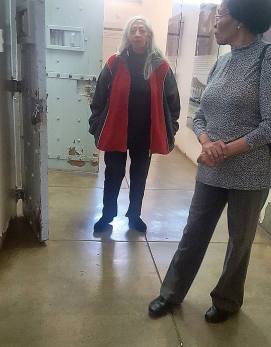
“I Think of Dance as My Most Honest and Purest Form of Expression . . .” An interview with Christelle Dreyer

Christelle Dreyer1

Credit: Marike Van Wyk

Christelle Dreyer is a freelance graphic designer and dancer who lives in Brackenfell, Cape Town.  She took up competitive ballroom and Latin dancing in 2004, then moved onto contemporary dance in 2010, performing in Dance Joint produced by Jazzart Dance Theatre and choreographed by Jackie Manyaapelo,  Infecting the City, choreographed by Tebogo Munyai, and Unmute Project, choreographed by Andile Vellum. She has worked on projects with various dance companies, including Jazzart Dance Theatre, Remix and Unmute. She recently performed in No Fun ction alL anguage, at South Africa’s National Arts Festival 2016 in Grahamstown.

Gaele Sobott: How did your passion for ballroom and Latin dancing initially develop?

Christelle Dreyer: As a child I loved listening to all kinds of music and watching people dance. I can`t really recall exact dates, but Jazzart Dance Theatre came to my school and I was lucky enough to be chosen as one of the kids to be part of a performance. It opened me up to realising that I actually could move and not just be on the side admiring people as they danced. After that I started Ballroom and Latin dancing.

GS: What then led you to contemporary dance?

CD: I started taking open dance classes as a way to keep fit and do something different. I enjoyed it so much I never stopped.

GS: How did you become involved in No Fun ction al Language?

CD: I received a phone call from Danieyella Rodin who works at The Chaeli Campaign, the organisation that produced No Fun ction al Language. She asked me if I’d like to audition for the show and then emailed me all the relevant information. I contacted Jayne Batzofin, the director, who was conducting the auditioning process over a two week period. So I auditioned and got a part in the show.

GS: Who are the other performers in the show?

CD: Andile Vellem Daniel Mpilo Richards, and Iman Isaacs are the other dancers. Dave Knowles is the musician.

GS: Tell me about your experience of working on the show.

CD: No Fun ction alL anguage has been an exceptional experience and an amazing opportunity. From the start of the creation process to the final production and the moments in between it’s been an incredible process of growth and discovery.

Jayne Batzofin and the cast, everyone involved, have been so open-hearted and open-minded. Some of them, before meeting me, hadn’t had any interaction with a disabled person but the way they approached the idea of disability is no less than amazing. I would like to think that we have become a little No Fun ction alL anguage family. I feel blessed to be part of the team. Together we created a work that has stimulated discussion around what happens if we don’t have the right words or any words to share our thoughts, discussion about our desperate search for meaning and about inclusivity for all members of our society. Each chapter of No Fun ction alL anguage encouraged different thought processes and emotional dialog within me. It was great being in a position to explore these things through performance. The response from audiences has been more than overwhelming.

GS: How did you contribute to the choreography of the piece?

CD:  When Jayne choreographs she uses a theme then allows us to improvise our body movements in relation to the theme. So we generated new movements and material. These were then incorporated into duets or into the larger choreography.  In chapter five of No Fun ction alL anguage, for example, that entire solo was created by me, and Jayne refined and detailed some moments.

GS: Please describe what Chapter Five is about.

CD: Chapter Five was about deception. How you experience deception, what it means to us. I looked at the emotions we feel when we are deceived and when we deceive and worked on translating that into movement. So Daniel explored the act of deceiving someone. His character was saying, “I love you” but not meaning it. Andile and Iman looked at how you can deceive yourself, and I worked on how sometimes you want to believe the deception. You know you are being deceived but you want to go ahead, for example, you believe that person loves you. So the choreography I developed was communicating that process of trying to hold on to what you know is not true but what somehow is pleasurable. Well it would be pleasurable if it was true. You try to hold onto that pleasurable non-reality for as long as you can. So my choreography was very quiet.

GS: How did you translate quiet into movement?

CD: Slow and controlled, under the radar.

GS: I think it was Silence, the chapter where you were on your back and moved your leg up very, very slowly.  That was a powerful moment.

CD: Yes that took extreme concentration, and the right breathing.

GS: Do you have control over your safety during the creative process?

CD: Complete control. If my body doesn’t want to do something, I don’t. But I try new moves. If that doesn’t suit me, I say so. I know what my body is capable of. Anyone who works with a disabled dancer knows that there are certain traditional ways of dancing that may be impossible. It’s a fine line between a director knowing when to push and when not to push you. At the same time you don’t want a director to be patronising and not get you to push boundaries.

From left to right, two male dancers, one standing facing audience, the second lifting his arms and one leg high over the third dancer who is seated in a wheelchair. She leans away from him and holds her hands on her head. The last dancer, a woman, stands facing the away from the other dancers. They are all dressed in casual pants and tee shirts in various shades of grey.


GS: How do the themes of language and communication addressed in No Fun ction al Language relate to you personally?

CD: For me communication takes on many different forms. I think of dance as my most honest and purest form of expression and communication. In those moments of dance, the movement and the spaces between movement, I find what I really want to say to the world. I also communicate as a graphic designer. My work tends to be minimalist, which I feel expresses my easy-going personality.

I think the way I communicate with others is largely determined by the circumstances I’m presented with. For example, the way I communicate with Andile Vellem, who is Deaf, is different to how I communicate with the rest of the cast. My sign language is very bad, but somehow it’s often easier to convey information to him than to someone who can hear, other times we have big gaps in communication. I really need to work on my SASL (South African Sign Language). As far as spoken language goes I am fluent in English and Afrikaans. Not really sure about fluent as my vocabulary is not that large, in my mind at least. I find it difficult to learn new languages. But also I realise the value of discovering new forms of communication and maybe just maybe, I will be putting pen to paper more often.

GS: Afrikaans and English. How do these languages figure in your life? Do you consider either of these languages as your first language or mother tongue?

CD: Both languages are equally as strong as each other in my life. My parents raised me speaking English and I went to an English-speaking school but my family, my parents, aunts and uncles, also speak Afrikaans, and my community.

 GS: Afrikaans has historical significance in the context of the ant-Apartheid struggles and the 1976 student uprisings against the Afrikaans Medium Decree. Do you think the language still represents an oppressive force for some people? Tell me more about what the language means to you.

CD: I was a bit too young to fully understand what it was like during Apartheid. I don’t really have the experience. My parents are the ones who know about what happened then. But from what I observe now Afrikaans is becoming a more general language in Cape Town. There are a lot of Coloured people who speak Afrikaans but it’s a bit different to the way White people speak the language, not pure like in the text books.  Coloured people have their own slang, and it’s more musical. Also the humour in the way Coloureds speak the language is different. I enjoy that humour.

GS: What are the elements of your identity that have remained steadfast over the years, what has changed?

CD: Well my identity is not something I really think about in great depth. Apart from the more obvious things like the fact that I am a Coloured disabled artist. I think I have always been open to experiencing different things. Perseverance and persistence is something I’ve always had and I have a feeling that will not change anytime soon.

I never understood myself as unique. That was partly to do with me being a twin. I am a twin but actually my sister and I are completely different.  My immersion in creative processes demanded that I explore my sense of self. So that definitely helped me realise and embrace my uniqueness.

GS: I was recently at an event where the writer and journalist, Sylvia Vollenhoven was talking about her book, The Keeper of the Kumm. She said, you can be Zulu or Xhosa and it defines to some extent your history but Coloured is a more general term. She feels that people who identify as Coloured are largely excluded from the narratives of nationhood that South Africa is now constructing. What does this part of your identity mean to you?

CD: There are lots of divisions and classes in the Coloured community. The way you live as a Coloured person, where you live, the way you identify, the way you’re brought up. Generally yes, a Black person has a very strong sense of identity. The backstory of being Black or the backstory of being White is usually solid where they know their granny’s granny’s granny.  Many Coloured people haven’t answered the questions, Who am I? What is my history? Where do I belong? Like what exactly is a Coloured person? Yeah, it’s complex. I don’t think Coloureds really know how to define themselves. They don’t have resources to draw on. Like me, I don’t know the history of my grandparents or beyond them.

GS: Why do you think that is? The reasons why you don’t know?

CD: Maybe because the past has been painful and people haven’t wanted to talk about it. But I’m lucky at least I knew all my grandparents. I only have my grandfather left. He has dementia now so I can’t really ask him about our family history. My father’s parents died many years ago. My mother’s mother, Ma Yvonne Lopes, played a big role in encouraging me to be confident and proud of who I am. She was an amazing grandmother. My mother too, she instilled certain values in me and I don’t give her enough credit for all my successes. I am content with who I am and where I am in my life. My friends and family keep me grounded.

GS: Elaborate a little on your identity as a disabled artist?

CD: I was diagnosed with OI (Osteogenesis Imperfecta) when I was a baby. My sister also has OI, I mention this because I always get asked since we’re twins. Because of my OI I spent many of my childhood years with broken bones or in hospital. My mother has lost count of the number of operations I’ve had, at least twenty.  The amount of times I’ve broken my bones seems endless. My tolerance to pain has become so high that most of the time I don’t realise I have a broken bone and in some cases more than one.  I was born and grew up in Cape Town with my parents. I’ve always been surrounded by family and friends so apart from OI issues I’ve had a very normal childhood.  OI is one of the many layers that shapes who I am. I Matriculated in 2004 and started studying Graphic Design at Cape Peninsula University of Technology in 2006. I graduated with a Baccalaureus Technologie in 2011. During my years as a university student I never stopped working on my dance goals and dreams.

GS: Can you describe any barriers you have encountered as an artist with OI?

CD: The strangest thing to me is that artists are generally more open to individuality and people expressing their uniqueness. But somehow when people see disabled artists they have this preset idea that disabled people cannot produce the same high quality as them. I am not saying it is all arts practitioners and audiences but that bias is there. Yet in many cases the standard of work produced is of equal quality or even better.

I have experiences where I would go for graphic designer interview and I’d be told they could not hire me because I was not what they expected but I have a very good CV and portfolio. I don’t put the fact that I am disabled in my CV as that should not be the measure as to whether I get the job or not. Of course they know they can`t say to my face it is because I am disabled that they will not hire me, so they come up with polite and creative ways to tell me. It really is not fair.

It’s very satisfying when I get to prove people wrong and exceed their expectations of me as an artist. Like after performances of No Fun ction al Language when audiences are left not only in awe but with different perspectives of disability.

GS:  How did you find disability access at Grahamstown National Arts Festival 2016? What changes would you like to see?

CD: I feel that disability access was not taken into consideration at the Festival. This is really disappointing as there where disabled artists on the festival program. There is so much said in South Africa about human rights and treating people as equals, yet the basic needs of people using wheelchairs, deaf people, blind people are not being considered. I’m blessed to be able to walk for short periods of time, but what about disabled people who can`t walk at all and need their wheelchairs to get around? Access is not just needed for artists but also people attending the festival, audience members. It’s a national festival, disabled artists and audiences should be welcomed, not excluded.

I think disabled people are standing up for themselves more than in the past and that they are being integrated as part of their communities so much better. There is still however a long way to go.

Grahamstown National Arts Festival 2016 – No Fun ction alL anguage Trailer

This interview was conducted 21st July 2016

Creative Commons License
“I Think of Dance as My Most Honest and Purest Form of Expression . . .” An interview with Christelle Dreyer by Gaele Sobott is licensed under a Creative Commons Attribution-NoDerivatives 4.0 International License.
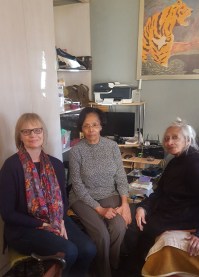
People love stories: An interview with Amit Sharma

A young woman wearing a blue singlet lying on a bed with an anxious expression on her face. Next to her is a young man also lying on his back. He is only wearing black shorts.

GENEVIEVE BARR AND ARTHUR HUGHES AS ALICE AND PHIL IN THE SOLID LIFE OF SUGAR WATER BY JACK THORNE CREDIT: PATRICK BALDWIN


Amit Sharma 2Credit-Matt Cetti-RobertsAmit Sharma has been the Associate Director of Graeae Theatre Company, London, since 2011. He recently directed The Solid Life of Sugar Water, a Graeae Theatre Company and Theatre Royal Plymouth production, gaining unanimous acclaim at the 2015 Edinburgh Festival Fringe, leading to a 2016 UK tour including a run at the National Theatre.

Amit is a graduate from Graeae’s Missing Piece actor training course. In 2012, he co-directed the outdoor spectacle Prometheus Awakes (with La Fura dels Baus/co-commissioned by GDIF and SIRF), marking the first large-scale outdoor production to be artistically led by Deaf and disabled people in the UK. Also for Graeae, he directed Ted Hughes’ The Iron Man, which toured both nationally and internationally and co-directed Graeae’s Rhinestone Rollers in Sequins and Snowballs with Jenny Sealey at the Southbank Centre. As Assistant Director, he has worked on Graeae’s productions of The Threepenny Opera, The Changeling and on The Four Fridas for Greenwich and Docklands International Festival 2015. Amit currently leads on Write to Play, Graeae’s flagship new-writing programme in partnership with venues across the UK.


GaeleSobott: Can we start by talking about the set design in The Solid Life of Sugar Water. The bed is central, upstage, vertical with the actors standing against it. From the audience perspective it is as if they are looking down on the characters lying on the bed.

Amit Sharma: The thing about Sugar Water and the aspect that I was really interested in was the relationship between the two characters, Alice and Phil, how much they were or weren’t communicating. The style, as it was written by Jack Thorne, consists of two monologues essentially inter-dispersed with both the characters’ dialogue. Well it is much more intricate and clever than how I’ve just described it to you, but the nature of them not talking to each other and addressing the audience set up something which is immediately striking, irrespective of the subject matter. There is some form of subtext that is going on between the two characters, which is very exciting. When we did our original set design it was very abstract, very sparse actually. Then we did a reading of it and the designer said to me, ‘I think we’ve got this wrong. I think the audience needs to be placed in the bedroom. The bed is missing.’

She was absolutely right. The bed was like the third element of the relationship within the text. So then we needed to decide how to be artistic about it. We didn’t want the bed to be literal. The piece isn’t naturalistic. We jump from the past to the present and then back again. So we developed the idea of looking down into the couple’s bedroom.

GS: What is that perspective? What does it give to the play?

AS: I really wanted the audience to feel that they couldn’t get away from being privy to and a part of the couple’s life. I don’t know about you, but when I visit a friend’s house the bedroom is always the last place I look. It would be a bit weird to go and look in their bedroom. That’s because it’s private and you’d feel as if you were prying into someone’s very personal space, even if they’re not in the room. I wanted the audience to feel like they were able to be in that space.

GS: How does this position the audience? Are they voyeurs or perhaps fly on the wall?

AS: I think more fly on the wall. I think voyeurism has an element of choice about it. Maybe fly on the wall does too. I just wanted the audience to really feel the pressure cooker of the couple’s relationship and be a part of that. Not able to separate themselves from it. That’s what the play does. You fall into it and by the end you’re feeling all kinds of emotions because of the performances but also because of Jack’s writing. The writing and the set. That’s why I wanted the audience to be together in the bedroom with the couple. I wanted them to be with them in their private moments without feeling they were intruding. At the end I wanted the audience to feel they have been through so much with this couple. It’s actually about healing both for the couple and also for the audience.

GS: The audience are looking down on the bed but they are also being spoken to directly by the characters. It is not possible for the audience to position themselves as just observers. They have to participate. What are your thoughts on this?

AS: That’s the good thing about theatre. You can set up a convention and then just totally break it. So whenever the characters were on the floor, that was like the wall of their bedroom but it became less about the bedroom, it was the post office, the bridge, even though the bed was always present. As a creative team we wanted it to be subtle, so yes the bed was always in the background because there was always that big question of them trying to have sex.

GS: There are many disabled artists and directors who feel there is a need to explore sex and disability, for various reasons including societal attitudes, the infantilisation of disabled people. What is the importance of sex in disabled art? What is the relation of this play to the exploration of sex and disability?

AS: The most interesting thing coming out of Sugar Water is that question has not been asked. It has not been unpacked. What the play does is almost normalise that very question of sex and disability. It is such a huge topic for so many different reasons. Perhaps it is because of the performers, one performer is Deaf and one performer has a physical impairment, but not to the extent where it impacts on their sex lives. What I mean by that is that if, say, one of the characters was a wheelchair user who had 24 hour personal care then that dynamic shifts. I was reading an article today about the Independent Living Fund and this guy saying how it can be difficult to live independently for example to go out and chat up girls because you’ve got someone else there all the time. So you have to negotiate that relationship. This play doesn’t go there. People have picked up on the element of communication between the couple, but the sex element not so. I also think it is because of how Jack as a writer was playing with the idea of sex. There’s a lot of comedy with some really graphic descriptions.

GS: Well yes there is comedy and there are very serious moments, a fine line.

AS: Yes, Jack Thorne gets that fine line absolutely right. In rehearsals we spoke about how graphic we should get or if we should get graphic at all. If we were brave enough to show our naked bodies and those kinds of discussions. It quickly became apparent that it wasn’t about that. It would have become alienating, as opposed to the audiences going: ‘Come on, we’re theatre audiences. We’re pretty smart. We can go whichever way you want us to go. We don’t have to see nudity to get what you’re talking about.’

It felt like we could just tell the story. The most interesting thing is the intricacy of communication between the audience and the performers. The couple think they are talking to each other and they’re not really, and they do the direct address where there is a conceit between each character and the audience. There are many different levels of communication.

A close up of a man's head, profile looking down with streams of water flowing over his head and face.

GS: Can you talk a little about the quality of the reviews the play has received?

AS: Well I think the journey of journalism and the way this show, and other shows at the Edinburgh Fringe by Deaf and disabled artists, have been reviewed has really shifted. It’s really come a long way. The art is now being reviewed as opposed to the performers and their physical shapes and sizes and what have you. It is really refreshing to see the work being reviewed in this way.

Talking about Sugar Water the reviews spoke about the subject matter as happening to two human beings not to two disabled people. In relation to Genevieve, being a Deaf performer, the discourse was quite intelligent as opposed to talking about a Deaf person blah blah blah, it was more sophisticated in both the reviewing and the conversation around it. That hasn’t always been the case.

GS: What comments did reviewers make in relation to Genevieve being a Deaf performer and character?

AS: The discussions were linked to the idea of communication. Naturally if your partner doesn’t sign then you have to rely on lip reading and you may not catch all the communication. Phil can’t sign so he is not able to get what he feels across all the time. The scene when he’s on the bridge and he tries to sign and gets it completely wrong really resonated and got the biggest laugh every time. By that point the audience realises Alice and Phil are not communicating on a number of levels. It was about them as individuals and what they felt for each other, what they wanted and needed from each other. Phil had never had a huge number of relationships before hand. Alice had just come out of a very difficult relationship. So that makes two very vulnerable people in a position where they are wondering if the relationship can work, can they get along. Can they get married and try to have a baby. Is their relationship driven by their love and passion for each other or by their insecurities? Sometimes the best art doesn’t answer the questions it poses. It poses the questions for the audience to consider.

GS: Do you think Alice and Phil’s relationship is resolved in the end?

AS: I don’t want to say. Some people are unsure whether they continue or they don’t and I intended for that to happen. In my head they do, yeah. But I didn’t want to answer that. I spoke to Jack about it. He really wanted a happy ending and I really didn’t want a happy ending. I said, “Ok if we’re going to have a happy ending we have to hint and suggest the possibility.”

GS: I do think the play ends with them understanding and respecting each other.

AS: It’s only at the end that they actually say, ‘I love you’ to each other. Having been through the trauma of losing a baby. Jack’s a smart dude!

GS: There seems to be some relationship and similarities between The Solid Life of Sugar Water and Lungs, which also played at 2015 Edinburgh Fringe. Can you explain this?

AS: We had read the script about three or four years ago. When we got the script we were really interested. Duncan Macmillan is a great writer. We were thinking of doing a double bill but then Paines Plough went ahead with the commission so we didn’t.

GS: I found the story quite similar.

AS: Yes that’s why we had the idea that the two plays could work together.

GS: Where are you taking the play next?

AS: We’re putting a tour together. We’re going to be at the National Theatre for three weeks, which is superb. It’s the first time Graeae has been there and we’re incredibly proud. We hope the momentum builds from there.

It’s one of those plays. I remember reading it for the first time, here as a company, and the kind of silence at the end of the reading, everyone taking deep breaths. We knew it was a huge impact type of play. Audience reactions to the play have been emotional and deep. One woman stopped watching half way through. She sat there with her head down and just wouldn’t watch. There was obviously something that really connected with her. She started watching again a bit later. She was with a group of her friends and I saw her at the end. She was just in complete floods of tears. I don’t really feel bad about too many things but I did then.

GS: Why did you feel bad?

AS: I felt for her because I didn’t know her story and didn’t know what it was that she was relating to. I went over and asked her and her friends if they were alright and did as much as I could, offered her a gin and tonic. Theatre is such a powerful thing. I think people sometimes forget the impact theatre can have.

GS: Why do you think theatre powerful as opposed to other mediums of storytelling?

AS: It’s so immediate. You’re there. You can connect, relate to the work. You are immersed in the play for the length of the piece. People love stories.

GS: You can watch a series on TV and experience stories. What is it specifically about theatre?

AS: The craft of theatre is important, the putting together of the story although you can also do that with film and TV. There is something unique about theatre in showing that passage of time. I think the immediacy of you as a member of the audience and your relationship with the performers is so unique to you in an environment where there are other people as well. That is very special. You can watch television or a film in a cinema however the screen allows you to be one step removed from it. You can’t really do that with theatre. It is more interactive. It’s more immediate.

The question in theatre is – Why now? What’s important about telling the story now? With TV and film you can go back to it again and those performances won’t change but with theatre they will. You can go one night and the next night there will be subtle differences, something may have shifted – become more superficial, something may have become deeper. There’s an unknown quality. There’s that thing also where if something ‘goes wrong’ the performers just have to pick up the baton and carry on and audiences love those moments when it doesn’t all go to plan. Film and TV are created where it all goes to plan so with theatre there’s a different type of freedom and an improvisational quality.

It’s about creating the story. The performers grab the audience very quickly, in a vital and stark way, asking them to empathise with them.

GS: Did the actors contribute to Jack Thorne’s script during rehearsal. Were changes made for any reason?

AS: Well the actors didn’t really suggest changes but we did shift the script around them. We didn’t have any idea who we wanted to work with so in the beginning in Jack’s script the character, Alice, wasn’t Deaf. When we cast Genevieve as the actor for that part, Jenny Sealey, the Artistic Director of Graeae, and I had a conversation and we gave notes to Jack saying there are elements relating to Genevieve that should have some representation in the script. But in contrast, the Post Office scene about Phil not being very strong wasn’t adapted for him because of Arthur’s arm or anything. That was the original script.

GS: I didn’t take that scene as being about his arm.

AS: Well some people do you see. They think that was where his impairment was being referenced because he had this big box that he couldn’t quite carry. That was always there. But Phil signing on the bridge wasn’t there before we cast the actors. Jack did a couple of rewrites based on Jenny’s and my notes.

The stuff that happens behind the scenes may change according to the actor you cast. At the beginning we had created a soundscape and every now and then there’d be a heartbeat noise as a cue for the actors to shift position. There was also a sound cue for the actors to know the audience was seated and we’d got clearance from front of house. It was a dog bark. Genevieve has hearing aids so she could feel the vibrations of the heartbeats, the shift and the change, because there was a speaker close to her. What became slightly tricky was her trying to listen to the dog barking because of the frequency and because there were so many people in the room all making noise. So we discussed a better way of cueing and her feeling comfortable within the cueing system.

Also because there is so much direct address, I said, ‘You have permission to look at Arthur whenever you want. We’re not asking you to play hearing.’ But Genevieve got around that by learning Arthur’s script as well and picked up on his rhythms, picked up on how he delivered the text. That was her process. She wanted the same access and freedom as him and decided on her own cues. That didn’t mean Arthur had to do it exactly the same way each time. So there was that kind of negotiation going on during rehearsal.

GS: How do you cast at Graeae? How did you cast the actors for this play?

AS: For this play I got a casting director in. We work with some amazing performers and some amazing actors. I just felt this time round it would be really healthy for the Company to audition new people and add to our expanding pool of performers.

GS: Do you specifically cast disabled actors?

AS: For this play I decided the casting breakdown. Irrespective of impairment this is what I’m looking for. Just by the nature of the play we needed people who would be good at delivering text. I don’t mean in the classical sense, I mean it’s such a wordy play. There is a demand that Jack’s writing presents itself. That doesn’t mean being quick or slow or whatever. That’s what Graeae does – we say this is the play and this is what we are looking for. Let’s see who we can get through the door.

GS: I believe Graeae practises some form of affirmative action in casting performers and actors who identify as Deaf and disabled. How does this work?

AS: Yeah in our plays we’ve got at least fifty percent actors who identify as Deaf or disabled. For the two-hander I thought we had to have two performers who identify. We couldn’t have one. It just didn’t feel right. It was such a small company. But when we did the Threepenny Opera there were something like twenty performers so ten were disabled and ten were non-disabled. As it transpired, we got to the end of rehearsals and three of the people who previously didn’t identify said, Oh yeah, I’m deaf in this ear or I’ve got this impairment. So the Deaf and disabled were staring to outnumber the non-disabled. It was interesting. One of the reasons is that if people declare their impairment jobs shut down.

GS: But not here at Graeae?

AS: Yeah exactly, absolutely not at Graeae. For Sugar Water we were conscious we wanted new blood and we found it. The other thing is that we will use some of the people who auditioned but didn’t get involved in Sugar Water for other projects. So we did pull in a new pool of actors. We are good at that.

GS: What’s the next project?

AS: At the moment we’ve got the Write to Play initiative, nurturing new writing talent. We’re also developing a new adaptation of The Hunchback of Notre Dame for production in 2017. There is also a verbatim play around the Incapacity Benefit, the Employment and Support Allowance, that’s under commission.

GS: Whose voices are represented? Those who apply for or receive the benefit, or those in the bureaucracy who assess people, hand out the benefit.

AS: A bit of both but mostly people on the receiving end of decisions. We’ve got a doctor. We’ve got a legal aid person, a variety. We’re doing a taster session at the moment in aerial training building up to a project with war veterans in 2018 – an outdoor piece I think. It’s linked into the recent 1914-1918 reflections on the First World War. There’s a big artistic element to it all. We are very fortunate to be working in this profession on great projects with wonderful people. It’s a really odd time because for a lot of Deaf and disabled people at the moment they don’t know whether they’re coming or going.

GS: Are you referring to government austerity measures?

AS: Yeah but the profile of Graeae is really accelerating. The Company is being recognised for the work that we’re doing. We’ve got Ensemble starting next week. It’s an eight-month, work-based, professional-development programme for six young artists. They’re nineteen to twenty-five year olds and we’re training them as theatre makers. Jodi Alissa Bickerton is our Creative Learning Director. She’s running that programme. It’s in response to barriers faced by many Deaf and disabled artists, as well as a lack of diversity within the current theatre climate.

GS: How do you choose the participants?

AS: We get the information out there. There’s an application process. We audition, then we interview them and go from there.It’s difficult at the moment because the austerity drive is seriously impacting disabled people on a number of levels, work, living, health.

GS: Do you think disabled artists have a responsibility to reflect this in their art?

AS: I think disabled artists have a responsibility to their art. It’s a tricky one. I think it’s about choice. Some artists are deciding to reflect in their work what’s happening socially, economically in our society. Other artists feel that the art itself, no matter what it’s about, will create the shift, create the change. It’s a difficult choice but I don’t begrudge anyone for whatever the choice is that they make. I really resist the idea of hierarchical disability. Disability includes such a wide range of circumstances. It can mean so many different things to people. The wider the experience and the subject matter of our art, the better it is for changing perspectives. Graeae does a lot of advocacy work but it can be really relentless. The cuts are creating a lot of insecurity.

GS: How important do you feel disability-led writing and directing is to changing public perceptions around disability?

AS: I think everything needs to be driven by the story that the writer or the director is trying to convey. Sometimes that feeling of importance can be restricting and uncreative. Audiences are smart, open and intelligent. If you take them on a journey then they’ll go with it. If everything about a play or a show becomes agenda driven then it can fail in changing those perceptions. The story is the thing.

Further Information:

Interview with Genevieve Barr & Arthur Hughes

Information on Graeae and the tour of The Solid Life of Sugar Water  or

The interview was conducted by Gaele Sobott on 28th September 2015 at Graeae Theatre Company in London

Creative Commons License
People Love Stories – an Interview with Amit Sharma by Gaele Sobott is licensed under a Creative Commons Attribution-NoDerivatives 4.0 International License.

In Memory of Lauretta Ngcobo 1931-2015

Front cover of book. Close up photo of woman's eye, nose and mouth in orange tones. Title - And They Didn't Die Autor - Lauretta Ngcobo


Lauretta Gladys Nozizwe Duyu Ngcobo (née Gwina)  was born in the southern-most part of KwaZulu Natal in 1931. She was the first girl in a family of four. Her mother, Rosa Fisekile Cele, had a difficult time with the birth. Lauretta wrote,

On the night of the second day, my grandfather, who knew the white doctor personally, had managed to persuade him to venture into the black reserve, by night, to save the life of his elder daughter and her unborn child. And so he did.1

Lauretta was born into a family of storytellers, growing up in a rural setting where she valued her exposure to oral literary traditions. Commenting on how poetry informed all occasions she said,

It was performed to honour kings, to welcome newly born babies, and to rock them to their sleep. It is sung at weddings, at funerals and at war. It even heralds peace.2

She recalled her mother relenting in family arguments and reciting poetry at the doorway of the ‘great house’, ‘the maternal family line first, followed by the paternal line’ until the grandmother nodded her head and the argument was over.3

Lauretta’s mother would tell her African folk stories. Her great-grandmother narrated episodes of Zulu history. She composed poetry about her painful life as the least-loved wife of her husband’s four wives. She also created poetry for each child in the family including Lauretta who used to cry as a baby. ‘Apparently I had a very sharp voice . . . My poetry imitates the honey bird which is very insistent.’ 4

When Lauretta was seven years old her father, Simon Shukwana Gwina, died. Both he and Lauretta’s mother were teachers. Lauretta’s mother became the sole breadwinner in the family. Despite the difficulties, she was determined that all her children would be educated regardless of their gender.

The public openly condemned us, girls, who ‘demanded’ the same privileges as boys. In a family where mother had never made us aware of the preferences, the remarks were not only hurtful, but created a throbbing consciousness of one’s burdensome value.5

Lauretta went to primary school in Webbstown and Nokweja. In 1944 she was at a boarding school run by American missionaries in Dumisa and then in 1946 she went to Inanda Seminary. At home, she had gained a knowledge and interest in English literature and history from her mother.

My mother got me interested in her favourite writer, Montgomery, Anne of Green Gables. Her stories became my favourites too. From her I learned about Henry the Eighth. I was very fond of Thomas Hardy and his stories of rural England and I liked Charles Dickens.6

She enjoyed school but began to sense a ‘silent disapproval of the barefoot life-style and art that was part of my whole way of life’. The ‘borrowed culture of city girls’ was the dominant ethos and she found herself caught in a ‘tug of warring cultures’. She described how she felt a ‘disfigurement of outlook, a mutilation within’, a conflict that ‘persisted even against the most arduous efforts to strike a balance’.7

In 1950 Lauretta attended the University of Fort Hare and obtained a BA in Psychology, and Zulu Language and Literature. She also studied for a postgraduate University Education Diploma. Fort Hare had a ‘ratio of thirty-five women students to five hundred men in those days. In some classes the preference given to male students was disarming.’ 8

Her first job as a teacher was in Pietermaritzburg in 1954. One year later, she took up a position as a scientific research assistant for the CSIR. In 1957 she married Abednego Ngcobo and in 1960 went back to teaching in Durban. Lauretta always enjoyed writing. She wrote a number of articles and books which she discarded or burned mainly due to her assumption that nobody would be interested in reading anything she had to say, ‘not the men’ and not the ‘white people’.  She stated,

I don’t think I know why I write, I just know I must. I scribble a lot that I know will never be read by anyone, for since I was a little girl by conditioning, I never expected anyone to read anything that I wrote, outside my classroom assignments. I feel the need to communicate with myself. It is a duty to myself. Yet, by its very nature, writing is an outgoing channel of communication, no matter how private.9

She saw the Bantu Education Act of 1953 as the greatest limitation on Black writing in South Africa. 

Cut off from the mainstream of world literature which could otherwise act as a model and an inspiration. I have shared these limitations with all Black South Africans whether male or female.’10

Lauretta’s husband was imprisoned in 1960 for his political activities in the PAC and the Sharpeville uprising. In 1963 she was forced to leave South Africa.

I learned that there was a plan to have me arrested. It was the month of May. I had to escape and leave my two children with my mother. I decided to leave at once: the next day, at five in the morning, the police burst into my house to get me. I made it by the skin of my teeth.11

She spent the first six years of her exile in Swaziland and Zambia where she worked as a teacher. Her children were later able to join her in Swaziland. The family moved to England in 1969 and Lauretta began teaching in London at Tufnell Park Primary School. She then taught at Lark Hall Infant School where she became Deputy and then acting Head. She also began to write, spending ‘hours pinning my episodes together at the seams. I cannot think of a more time-consuming way to write . . . I had no time limit to my expression and no deadlines to meet.’ 12

In 1987, her novel, Cross of Gold, was published and time became very important her. She was invited to talk and write essays on a wide range of subjects,

I had to read a lot more widely. This factual diet does little for my creativity – especially considering how limited time is between my teaching job, my ‘factual’ reading and speechifying and creativity. What I need as a writer, more than anything, is time.13

Cross of Gold is told from the perspective of a young, male activist, Mandla. The women characters are silent and isolated. The only active, strong woman, Sindisiwe, dies in the first chapter of the book. She is shot by the South African border police while trying to flee apartheid South Africa into Botswana. Reflecting on the many questions that came from women readers, Lauretta realised that although she was actively occupied with gender issues in her life, ‘it hadn’t occurred to me that the book was not about me, was not about Sindisiwe, it was about a man!’14 She felt that this was a product of her socialisation and began to think of her construction as a rural, black South African woman growing up with the migrant labour system and the absence of men. ‘I was brought up by women. They were strong, independent and silent . . . it was inescapable that I should turn out very much like them: fertile and rich from within but silent or barren from without.’15

Lauretta edited a collection of essays, stories and poems, Let It Be Told: Black Women Writers in Britain, published in 1987.  The book aims to ’embody a largeness and a continuity’ extending beyond conventional race and gender stereotypes.16 She included a detailed introduction, an essay on her life and writing and an extract from Cross of Gold. In 1990, she published her second novel, And They Didn’t Die. Lauretta said,

I hadn’t written about women successfully, but at the same time I knew all about women. As I had shared so much of their pain, it could be that that was one of the reasons why I could write a different story in And They Didn’t Die.17

She presents active women characters and portrays the solidarity and strength that binds rural Black South African women. It is through the life of Jezile, a young rural woman, that we are made aware of women’s experiences under apartheid and the migrant labour system. Traditional Zulu power structures, especially that of the mother-in-law, and patriarchy are also problematised in what is a tragic yet tender tale of deep love, human strength and resilience. Her children’s story, Fiki Learns to Like Other People, published in 1993, is based in Southern Africa and aimed primarily at children learning English as a second language.

Lauretta taught Black Women’s Literature on a part-time basis in the Department of Extra-Mural Studies at the University of London. She lectured in Britain, the United States, Italy, Holland, Sweden, South Africa, Botswana and in Zimbabwe where she spoke on the problems of women in publishing at the International Book Fair. She published various essays under the name of Nomzamo. Her article, ‘Four Women Writers in Africa’, was published in South African Outlook in 1984. ‘Black African Women Writers’ was published in Cambridge Journal of Education in the same year. She wrote,

In our modern world, when women assert their right to self-determination and self-definition, it has become urgent for the African woman to write, to reverse the long-established opinions and beliefs that are prevalent today. It has become imperative for our schools to approach African women with enlightened curiosity. It is in the classrooms of our changing world that people must learn about the African women from the authentic voices of the African women themselves.18

In 1985 Kunapipi published ‘The African Woman Writer’, a speech given by Lauretta at the African Writers’ Conference in London in 1984, and an essay entitled ‘My Life and Writing’. ‘The Plight of Exiles’ appeared in African Concord and in 1990 ‘Black, Female, British and Free’ was published in For a Change. For many years Lauretta was president of ATCAL, the Association for the Teaching of Caribbean, African and Associated Asian Literatures.  She said, ‘We sought to persuade the Department of Education and Science through the inspectorate, to introduce into the various syllabi some text books from these rich literature sources.’19 She was also a founding member of the African women’s organisation, Akina Mama Wa Afrika which produced the journal, African Woman.

Lauretta felt strongly that ‘African writing should draw more from the African traditions of oral culture. I have not done much myself in this way but I feel it ought to be the way my writing goes’.20  She would like to write fictional works based on the lives of some of Southern Africa’s women leaders and spiritualists. After thirty years in exile, she returned to South Africa. She worked in education, and served on the KwaZulu-Natal provincial legislature until 2008.  It was in this year that she was awarded the Order of Ikhamanga by the South African government in recognition of her literary achievements. She edited an anthology of exiled South African women writers, Prodigal Daughters published in 2012. Lauretta Ngcobo died in Johannesburg on the 3rd November 2015. She is one of South Africa’s literary pioneers. A writer who fought tirelessly to give voice to her people, to Africans, to people of the African diaspora, to Black women. She specifically represented the experiences, resistance and power of Black, South African women. 

Hamba Kahle Mme Lauretta Ngcobo

Notes

1 ‘My Life and My Writing’. Kunapipi, Special Double Issue Colonial and Post-Colonial Women’s Writing, 7, 2 &3, 1985, p.83 Lauretta Ngcobo has published two articles entitled ‘My Life and My Writing’. One published in Kunapipi and republished in A Double Colonization: Colonial and Post-Colonial Women’s Writing, eds. K. Petersen and A. Rutherford. Oxford: Dangaroo Press. 1986 and another published in Let It Be Told, ed. Lauretta Ngcobo, London: Virago. 1988. The two articles are different.
2 ibid p.84
3 ibid
4 Interview with Lauretta Ngcobo’ by Anissa Talahite, Journal of Gender Studies, 1,3 1992, p.317
5 ‘My Life and My Writing’, Kunapipi, p.85
6 Letter from Lauretta Ngcobo to Gaele Sobott, June, 1993
7 ‘My Life and Writing’, Kunapipi, p.85
8 ibid
9 ‘My Life and Writing’. Let It Be Told. ed. Lauretta Ngcobo. London:Virago, 1988, p.134
10 ibidp.135
11 Interview with Lauretta Ngcobo by ltala Vivan, August, 1980, Between The Lines II. eds. Eva Hunter and Craig Mackenzie, Grahamstown: NELM, 1993, p.99
12 ‘My Life and Writing’, Let It Be Told, p.139
13 ibid
14 ‘Interview with Lauretta Ngcobo’ by Anissa Talahite, p.317
15 ibid. p.317
16 lntroduction to Let It Be Told, p.l
17 ‘Interview with Lauretta Ngcobo’ by Anissa Talahite, p.318
18 ‘Black African Women Writers’, Cambridge Journal of Education, 14, 3, 1984, p.17
19 Letter, June 1993
20 ibid

Bibliography

Books

Cross of Gold, London: Longman, 1981

Let it Be Told: Black Women Writers in Britain, ed. Lauretta Ngcobo, London: Pluto, 1987

And They Didn’t Die, London:Virago, 1990; Johannesburg: Skotaville, 1991; New York:

George Braziller Publishers, 1991

Fiki Learns to Like Other People, London: Macmillan, 1993

Prodigal Daughters, University of KwaZulu-Natal Press,  2012

Essays/Articles

‘Four Women Writers in Africa’, South African Outlook, May, 1984, p.16

‘Black African Women Writers’, Cambridge Journal of Education, 14,3 1984, p.17

‘The Plight of Exiles’, African Concord, May, 1987, p.32

‘The African Woman Writer’ and ‘My Life and Writing’, Kunapipi, Special Double Issue

Colonial and Post-Colonial Women’s Writing, 7, 2 & 3 1985 pp.83-86; A Double Colonization: Colonial and Post-Colonial Women’s Writing, eds. Petersen & Rutherford, Oxford: Dangaroo, 1986

‘Impressions and Thoughts on the Options of South African Women’, Kunapipi, Double Issue New Art and Literature From South Africa, 13, 1&2 1991, pp.165-169

Introduction to Like A House On Fire: Contemporary Women’s Writing, Art and Photography, Johannesburg: COSAW, 1994


This is an edited version of an entry written in 1994 for Wozanazo : A Bio-bibliographical Survey of Twentieth-Century Black South African Women Writers (University of Hull)

Creative Commons License
In Memory of Lauretta Ngcobo by Gaele Sobott is licensed under a Creative Commons Attribution-NoDerivatives 4.0 International License.


THE COURAGE TO COME FORWARD – An Interview with Colin Hambrook

Black and White headshot of Colin Hambrook, a middle-aged, white man wearing glassesColin Hambrook was educated at Dartington College of Arts in South West England. Knitting Time, his exhibition of paintings, drawings and poetry about the experience of psychosis is on show at The Hub, East London until 15 November. The work was previously shown at Pallant House, Chichester and the Impact Arts Fair 2013. Colin’s first collection of poetry, 100 Houses was published by DaDaSouth in 2011, followed by Knitting Time (Waterloo Press ISBN 978-1-906742-65-2). He is the founding editor of Disability Arts Online

The interview was conducted by Gaele Sobott on 28th September 2015 at the Barbican Centre in London just before Colin attended the Creative Future Literary Awards at the Free Word Centre in Holborn.

Drawing by Colin Hambrook. Blue sky with clouds above green hills, a large ball of yellow wool sits just below the hills. Brown knitting needles are stuck in the ball of wool. A thick yellow line runs down the left side of the picture like a river, and green and yellow squiggly lines run parallel to this yellow band. To the right of the picture there is another thick band of yellow intersected by thin meandering green curves that creates what looks like an aerial view of plots of land or small farms. There a two faces, one squashed between the ball of wool and the yellow band on the left and one just below the ball of wool. In the bottom right-hand corner there is a woman wearing a green beret type hat and green coat. She is holding a sheep.

Call of the Ancient by Colin Hambrook

Gaele Sobott: In Australia the visual arts and now dance appear to be surging ahead in terms of developing platforms and exposure for disabled artists. Literature is quite a way behind. In the UK disabled writers and literature seem to be better placed. What are the Creative Future Literature Awards and how is Disability Arts Online involved?
Colin Hambrook: Creative Future is a Brighton-based organisation looking to promote careers of ‘marginalised’ writers and artists. Amongst those they support with their annual Literary Award are a certain number of disabled writers. Disability Arts Online is a partner. We have signed up to help them promote the program, get information out, reach people. In terms of literature in the UK, Survivors’ literature has led the way.
GS: Please explain what Survivors’ Literature is.
CH: The key organisation is called Survivors’ Poetry, founded in 1990 by four poets with direct experience of the mental health system in the UK. In a really short space of time it mushroomed into a huge phenomenon. It was a UK network of groups that all became affiliated, some of them became registered charities or not-for-profit companies in their own right and I would say between ’94 to ‘96 it exploded and was reported on in the media and really picked up on. It was important that the people who ran the organisation and wrote for Survivors’ poetry come from a mental health background. They had experienced mental distress, been through or had an intimate knowledge of the mental health system.
GS: What kind of work were they producing?
CH: In the 90s there was a kind of performance poetry format, going into day centres, resource centres, organisations working with people who had come through the mental health system, and producing workshops and giving people the opportunity to perform. So typically the first half of an event would be open mic encouraging people to get up and perform their writing and the second half would be more experienced performance poets. The organisation still exists with a core force of people in London but it has become less prominent elsewhere in the UK over the last ten years.
GS: Why do you think that has happened?
CH: Survivors’ Poetry’s strength was in its Community Arts ethos, but it has become harder to find funding for grassroots work. It’s hard to keep integrity, supporting individual artists creativity at a grassroots level whilst maintaining support for ‘professional’ artists. Survivors’ Poetry turned to producing a literary output, which has been fairly successful. As part of the Unlimited showcase at London’s Southbank Centre last year, Disability Arts Online and Survivors’ Poetry celebrated the achievement of the organisation with a reading by some of the Survivors’ founding poets in the Saison Poetry Library in the Royal Festival Hall. The library contains twenty-seven titles under the Survivors’ Press imprint.
GS: Has Disability Arts Online managed to keep its integrity?
CH: Disability Arts Online in the last ten or twelve years has kind of managed. It’s a bit like a dance, you want to keep your core constituency on board and to nurture that talent, but also you’ve got to watch out, keep an eye on the priorities linked to where financial support can be found to ensure funders’ demands are satisfied.
For instance we have a modest contract with Unlimited to report on all of the artists and all of the projects that come out of Unlimited. It’s a fantastic opportunity to spread the word about this important initiative. Much of Unlimited’s aims and values concur with those of Disability Arts Online, working to support the development of art by disabled artists within the UK cultural sector. Disability Art Online’s brief is to interview the artists, review the shows, comment on the work as it progresses, and where possible, to commission copy for other online magazines and press in order to facilitate the reach of Unlimited to new audiences. Unlimited had a fairly substantial presence at the Edinburgh Fringe Festival this year, with several pieces of work in the British Council Edinburgh Showcase. Unlimited is spearheaded by two organisations: Shape and ArtsAdmin and they’ve received support from the British Council in facilitating the artists taking their work outside the UK. In many ways it is a bright, shiny success story.
We have to work hard to ensure our integrity isn’t compromised, which means creating projects that support and create opportunities for our core constituency and looking to remain disabled-led as much as possible, whilst also working with the high-profile initiatives. Without the support of Unlimited many of the artists we work with would never have got the profile they’ve achieved. For example Jess Thom was unknown as a performer before her company Touretteshero received an Unlimited research and development commission for Backstage in Biscuitland. After a year or so of touring she has been commissioned by Channel 4 with a version of the show made for television, Broadcast in Biscuitland.
GS: So does your core constituency consist of disabled artists at grassroots level?
CH: Yes, disabled artists, writers, who are what the Arts Council term as emerging artists. They are people who create because they’ve got to create, not because they’re making a living out of being artists, necessarily.
GS: Is it possible some of these artists could find themselves forever classified as emerging because of the nature of the market and the value system used to categorise their art?
CH: Yes but that’s just the label that the Arts Council puts on it. People are creative because they need to be creative and creativity isn’t a commodity. We have this schism in our society that divides creativity up into commodity and art. It’s nonsense really.
GS: You mentioned that much of the art by disabled performers at this year’s Edinburgh Fringe Festival focused on the body. Can you please talk more about that?
CH: Yes that’s not necessarily a bad thing. Culturally it’s very different from disability arts of possibly ten, certainly fifteen years ago where the focus on impairment was frowned on.
GS: Was that in defence of the Social Model of Disability?
CH: Defending the Social Model but also it was much more then about community and about people raging against the machine, standing up against discrimination, being a collective force. What’s happened is that as the focus for disability arts has moved away and broken up into impairment-focused issues, which I think are important . . .
GS: Why do you think these issues are important?
CH: Because the key problem with what I would call the first wave of disability arts from the mid 80s to the end of the 90s was that it was very much inward-looking and there was a very powerful community of disabled people who were very clear in their aims and making strong art for and by disabled people. Indeed we got the DDA (Disability Discrimination Act 1995). Not the DDA we wanted but we got the DDA. What happened then was that the very clear, concise stand against discrimination got diluted and the Social Model as a source of inspiration and power for people to find a voice kind of hit a brick wall because impairment within the Social Model wasn’t really addressed in a very strong way. So all the slogans like, Nothing About us Without us, the focus on things being disability-led, kind of fell apart when certain disabled leaders, say for example a wheelchair user, didn’t understand all the politics around Deaf issues or blind issues. Having disabled leaders is important but having that broad understanding of access and the issues faced by people with different impairments is more important.
GS: Isn’t it possible to have disabled leaders with a more complex understanding of disability, Deaf experiences, impairment?
CH: Yes that is the ideal, yes.
GS: Why hasn’t that developed or has it?
CH: There’s a choice that happens in either developing the politics or developing the arts. They can go hand in hand and work with each other and they can also work against each other. The emphasis from the funders has been that if you want the money you have got to develop the aesthetic, you’ve got to develop the art. The politics have been sacrificed to a large extent. A big part of that politics is the importance and value of work being disability-led, because at the end of the day, it’s the experience of being disabled by society that motivates us.
GS: With this huge austerity drive and all these cuts do you think there is more of a need now to develop disability political leadership and action?
CH: Yes there is more of a need now than ever. Absolutely.
GS: How do you see that developing given what you have just said?
CH: It needs people with courage to come forward and start demonstrating on the streets again.
GS: Do you see the march to Downing Street on Saturday protesting the changes being made to Access to Work as an example of this?
CH: I’m really angry that the government are cutting Access to Work. In this case the government said they will cap what any one BSL interpreter can earn at $40 000 a year. But who the hell in the arts is earning forty grand a year? Very few I would say. So the demonstrators were protesting the cuts in Access to Work with this cap on how much an individual can earn. There are thousands of disabled people dying because of cuts. The government is playing a game of divide and rule. On the one hand they are saying they want to get all disabled people into work, but on the other they’re denying means to make working an option. There needs to be a clearer focus in standing up to these issues.
GS: So are you saying that political leadership and analysis are lacking?
CH: Yes
GS: When you say there is a need for people with courage to come forward, the courage to do what?
CH: What the hell do we do in this political climate? I got very involved in supporting the 10 000 Cuts and Counting protest. At the end of 2013 we were working with Michael Meacher MP and the Dean of St Paul’s Cathedral. We met Michael Meacher in his office in Downing Street. He had a mass of files of printouts, of emails and letters of people who had written to him of their plight, their family’s plight, what was happening as a result of austerity, what was happening as a result of cuts in disability benefits. The main focus was that over ten thousand people had died within six weeks of being declared fit for work because their benefits had been cut and they’d been left with no money. Those individuals didn’t necessarily pass away because of the cut in their benefits, but equally, many did. Can you imagine the indignity of being on your deathbed and getting an official letter from the Department of Work and Pensions telling you that you are fit for work? And this has happened to many thousands of individuals and their families. There has been a very dangerous shift in attitude that as an individual living in this society you have to prove that you are financially contributing to it for your existence to be valid. We’ve gone back to the Victorian age within a few short years with the ruling class and their bastard politics. They’ve got every evil connivance of screwing the tax payer and they’ve got the media sewn up so they can infest everyone’s brains that it’s disabled people who have brought austerity upon us, that have brought down the economy. It’s evil!
GS: So do you think it is the responsibility of disabled artists to identify as part of the community and bring the politics into their art in some way?
CH: I personally think it is but then who am I to demand that of an individual? I encourage individuals to get involved in Disability Arts Online who have that ethos. I would say though that generally this time around people are finding it much harder to stand up for their rights.
GS: Why do you think that is?
CH: Well I would include myself in this criticism and say after the DDA was established, the disability movement never really went out of its way to include younger people. So we’ve still got the same old codgers now trying to make a stand like they did twenty or thirty years ago. People are older and frailer.
GS: The older people may no longer have the physical strength but they have knowledge. Do you think younger people are separated from that history, that knowledge of what has gone before them? Are they expected to reinvent the wheel?
CH: Yes and the tendency of Neoliberalism is to encourage people into their own little camps, individualism, losing sight of the larger collective.
GS: Do we need to theorise how to change that and if so how?
CH: It has to happen. I think going back to what we were saying earlier there is a value and an importance in the work that has become the key focus for disability arts – the relaying of stories about the body, stories of people’s experiences of individual impairment, of discrimination.
GS: How does art play a role in changing public perceptions?
CH: Art has a key role to play. You might not call an ITV soap opera, art, but in terms of popular culture, it’s much more wide-reaching than most art.  And so for example, Liam Bairstow who trained with Mind the Gap has recently got a lead role in ITV’s Coronation Street. I think that a young actor with learning difficulties being seen on TV is definitely going to change attitudes, make a lot of people think and those changes are really important.
GS: It seems you are saying that change needs to take place on many levels.
CH: That’s where disability arts is at now I think, certainly within the performing arts, and within the visual arts. In the visual arts there is possibly a bit more politics.
GS: Going back to individual courage – someone may have the courage needed to come forward but if others don’t join with that person it could be very demoralising. What is your experience in this regard?
CH: Well yes, for me, we went to all that effort with 10 000 Cuts and Counting and none of the media turned up and it was all forgotten very quickly. No one took any notice. Nobody seems to care that many thousands of disabled people died because of cuts. Nobody thinks that could be me, or that could be a member of my family.
GS: You said the media didn’t pick up on the story. Disability Arts Online plays an important role in providing an alternative media source.
CH: Yes we do provide an alternative media and we keep plugging away.
GS: You started Disability Arts Online in 2002, and in 2004 you set it up as a not-for-profit company limited by guarantee. So it’s been running for over eleven years. How do you fund the organisation?
CH: We’re constantly working on funding applications for projects. We have a broad vision for how we operate in terms of raising debate about disability arts practice and supporting the work of individuals and organisations across art forms.
We’ve recently received funding from Arts Council’s Grants for the Arts scheme for Viewfinder over the next eighteen months. Viewfinder will see us working in partnership with Wikimedia UK, Sick! Festival, SPILL Festival, Carousel, the New Wolsey Theatre and Goldsmiths Disability Research Centre. It’s very exciting. Wikimedia UK are keen for us to populate Wikipedia with pages dedicated to disabled artists and a history of the movement. The Disability Research Centre at Goldsmiths University is supporting us in running a series of workshops.
We’re producing a video platform and commissioning disabled artists/filmmakers to curate a selection of disability work from the archives of Sick! Festival in Brighton, SPILL Festival in Ipswich/London and Carousel’s Oska Bright Festival. We will produce videos commenting on the importance of the selection in advancing the practice of disabled artists. So, for example Matthew Hellett, who is a learning disabled filmmaker on the Oska Bright committee will be making a film about what makes for good representation; how the committee judge the best films for Oska Bright. We’ve also got another year of core funding from the Esmée Fairbairn Foundation, which is renowned for funding organisations with a community remit.
GS: Have you come up with ideas for sustaining Disability Arts Online on a more long-term, financial basis? Have you tried financing the group by any means other than government funding or philanthropy?
CH: We’ve tried a few experiments. We recently worked with Stopgap Dance Company. They produced the Independent Fringe platform in Edinburgh. Disability Arts Online produced a crowd-funding platform for one of the younger artists, Rowan James. That was successful. We raised £1500 towards getting him to the Edinburgh Fringe Festival. We want to do more of that.
GS: You have described how outside funding can determine the path you take. So if you want to be independent of those demands and priorities in terms of changing the political situation how do you achieve financial independence and sustainability?
CH: Well yes sometimes you feel that the odds are stacked against you. It is a constant struggle. We need time and energy and imagination to come up with strategies. We have a shared knowledge and experience that can be incredibly useful to many industries, so we are also working to find ways to be more sustainable through consultancy and media partnerships.
GS: You have shared your childhood and some challenging personal experiences through your poetry in a way that must be quite confronting but hugely important in terms of supporting people within the Survivors Movement and people who may feel isolated. Would you like to comment on how art can provide a form of community solidarity and empowerment, especially in reference to your latest collection of poetry, Knitting Time?

A drawing of a small boat knitted from yellow wool, sailing on a blue sea with stylised waves against a bright blue sky

Knitting Time by Colin Hambrook

CH: I’d like to think that Knitting Time had value in giving a voice to issues around mental distress. Mostly, psychiatry condemns individuals to the judgement of a medical imperative, which locates mental health problems in the head divorced from the individual’s life experience and circumstances or indeed from any emotional impact located in the body. It treats the individual as having a separate, disconnected body and mind and introduces powerful and potentially harmful drugs to suppress experience deemed as mental health problems. Often, those experiences can be exhilarating and creative even if they can make it harder to function in the ‘real world’. Often mental health ‘issues’ are a matter of an individual having the confidence to be comfortable with who they are.
So in sharing some of my own journey I would hope to break some of the isolation people feel. There is empowerment in hearing others’ stories, others’ expression. There are poets like John Clare and William Blake whose names come up frequently in terms of writers whose core work continues to inspire empowerment within a survivors’ community. There was a poem by Ellen Link that I go back to again and again that inspires my sense of the value of connection; and connection with nature as a healing force in contradistinction to this narrow framework we are meant to fit in with when it comes to being seen as valid, mentally healthy members of society: “In the woods they blast/ your courage to tell you/ you are not a tree, that the wild wind /and the grey skies are not your cousins/ though their atoms be like yours. . .”

For further reading:

Colin Hambrook’s Art and Poetry Blog

Celebrating the Survivors’ Movement

Jess Thom’s Tourettes Hero

10 000 Cuts and Counting 1

10 000 Cuts and Counting 2

10 000 Cuts and Counting 3

Creative Commons License
The Courage to Come Forward – an Interview with Colin Hambrook by Gaele Sobott is licensed under a Creative Commons Attribution-NoDerivatives 4.0 International License.

IF YOU DIDN’T LAUGH, YOU’D CRY : AN INTERVIEW WITH GAYLE KENNEDY

Black & white portrait of Gayle Kennedy smiling and wearing a hat and a necklace with large beads

Photograph taken by Belinda Mason

Gayle Kennedy is a proud member of the Wongaibon Clan of the Ngiayampaa speaking nation of South West NSW. She is an award-winning writer and has published work in newspapers, magazines, literature journals, and for radio. She was the Indigenous issues writer and researcher for Streetwize comics from 1995-1998. Her book of poetry, Koori Girl Goes Shoppin’, was shortlisted for the David Unaipon Award in 2005 and her prose work, Me, Antman & Fleabag[1] was the winning entry in 2006. She wrote eleven books for the Yarning Strong series. The Series won the 2011 Australian Publishers Association award for Excellence in Educational publishing. Gayle is a disability advocate and has spoken widely in Australia and overseas on disability and the arts.

Gaele Sobott: Can you tell me about your background? Where you were born, where you grew up, a little bit about your family?

Gayle Kennedy: I was born in Ivanhoe NSW and we moved to Hay when I was seven. In between, from the age of two to five, I was in the children’s hospital in Camperdown and then a rehab hospital in Wahroonga, then the Royal Far West in Manly recovering from Polio

My mother and father were both born in Condoblin but Dad’s family is from around Cobar. Mum’s family comes from the Euabalong area. Mum and Dad met when they were seventeen, working out at Wilcania. They’re both eighty-three now and they’ve been married sixty years this year. They had six children, four girls and two boys. One of my brothers was killed in a car accident at the age of eighteen in 1976. Dad worked for what was then the Department of Main Roads in the Central Darling Shire. Mum worked for a long while cleaning in hotels but gave that up about thirty years ago. They’re both retired now. I grew up with their stories. My parents’ story is in the national library. Francis Rush did that. She did an interview with me too about my experiences of polio for the Social History of Polio Oral History Project.[2]

GS: What are some of the memories you have of your childhood?

GK: I have vague memories of being in an iron lung and learning to walk again. My memories are mainly of me going backwards and forwards between home and the Far West. I remember loving rehab. It was the only home I knew at that stage. I was surprised to find out that I wasn’t from there when my parents came to pick me up. The first part of Me Antman & Fleabag where I write about the hospital is pretty much based on that time. The rest of it is fiction.

GS: Talk a little about your school experiences.

GK: When I was at the Far West I went to school there and it was okay. Because of the polio treatment I didn’t start school until I was seven. I went to the Convent school in Hay and the nuns were very good teachers. It was a great place because there was absolute zero tolerance of bullying or racism. Then I did one year at Hay Public School, which was awful. There were a couple of kids that bullied me and the headmaster was very racist and treated me like an idiot. Fortunately the teachers realised I was bright and totally ignored his directions to put me in the lower classes. So I got to work at the level I was used to which was the advanced level.

Then I won a two-year scholarship to go to Queenwood here in Sydney, at Mosman, right on Balmoral Beach. Violet Medway was one of the principals then. They were into providing a high standard of education for girls. No domestic science or any of those subjects that used to be taught to women. I loved English and History. I was a bit of a daydreamer – never really concentrated. I was always off in another world when they tried to tell me stuff. I generally crammed for exams. I was at Queenwood from age seventeen to nineteen. I made great friends there.

GS: Describe your early adulthood. What were you doing in your late teens, early twenties? What were your interests?

GK: After I finished at Queenwood I went to the Commonwealth Employment Service in North Sydney to look for work. That’s what you did in those days. They found me a position at the Australia Council as a clerk, Grade one. I went for an interview and got the job. I had a ball. It was fun meeting lots of fabulous people like Gillian Armstrong, Jane Campion, Gary Foley, Brian Syron, George Miller. They were just starting out in those days.

I was living in Cremorne, sharing a place with four guys. It was great fun. I’d go to the beach, go to the theatre. I liked Shakespeare and Ibsen. Reg Livermore was big then. I loved the Rocky Horror Show. There were a lot of new Australian plays happening. I’d go out to listen to bands. Live music was popular then in the pubs – blues, jazz and rock. We’d listen to bands like The Sports, Mondo Rock, the Divinyls. Cold Chisel was starting out. It’s changed now. People moved to the inner city areas from the North Shore, places like that, and started complaining about noise. Gentrification changed the live music scene and also poker machines took over in the pubs as the main entertainment.

I did my share of partying too. Everybody danced, played records, got stoned, got laid. I had lots of relationships – a couple long term. One of them lasted for ten years and one for about four years. I ended up being bored. I didn’t find them exciting or interesting anymore. They were good men but I never really took to being tangled up with anybody.

GS: Music seems to play a big part in your life.

GK: I’ve always been obsessed with music every since I was little. I like melodic music. If I like a piece of music, I want to know all about it. Who wrote it and why – the whole history. My tastes range over a lot of genres from Joni Mitchell to Hank Williams, Bob Dylan, Nancy Wilson, Sarah Vaughan. I listen to music all the time. It lifts my spirit and takes me to another place. If I’ve got a religion, it’s music.

I can remember singing when I was very young, maybe two, the old country songs like Don’t sell Daddy any more whiskey. Both my parents played and sang socially, at celebrations, weddings, funerals. Mum sings and plays guitar, piano accordion and piano. Dad sings, writes songs, plays guitar and performed around the traps.

GS: Tell me more about your work life and career.

GK: I stayed in the public service for years. I worked for a while with People with Disability and various community centres. From 1995 to 1998 I was a writer and researcher for StreetWize comics. I worked at the Aboriginal Medical Service and the Aboriginal Legal Service doing clerical work, research work, report writing. Then I started at the Attorney General’s Department as a policy officer around Aboriginal justice. I got sick of that and left in 2008. I’ve been a writer ever since.

GS: Why did you get sick of working at the Attorney General’s Department?

GK: Every time something good was happening the government would pull the pin. There was too much double speak, too many weasel words. I didn’t like the attitude of a lot of the young people I was working with who’d grown up not really knowing about hardship or what was really going on with Aboriginal people in the justice system. There’s no fire in their belly. They pay lip service to the struggle that went on but I don’t think they really acknowledge that struggle or give a damn. I just wanted to be out.

GS: How did you start your writing career?

GK: I had a plan before I left the public service. I started entering writing competitions. Irena Dunn initiated the Inner City Life writing competition in the mid 1990s when she was director of the NSW Writers’ Centre. I submitted a poem for that which was highly commended. The following year I won the competition with a prose piece called ‘Life’s Good When Ya Know How’. I liked the piece so much I expanded it into a book and entered it for the 2006 David Unaipon award. I won and everything grew from there.

I was commissioned to write a graphic novel as part of the OUP Yarning Strong series. One by one the other writers who had been commissioned dropped out so I ended up writing those stories. I published eleven books with the series. The illustrator was Ross Carnsew. I’d worked with him before on StreetWize.

GS: How do you find writing to a brief for children?

GK: It was challenging writing for a particular age group but I managed to make the stories interesting. I wrote the kind of books that kids want to read. You just think back to when you were a kid and put yourself in their shoes. I don’t use big words when I write for adults. I like clean, simple, lean writing. So writing for children is not difficult for me. With Yarning Strong I was given a word, family, land, lore, culture. I wrote whatever I liked around the subject.

The books went into the schools. Apparently they are much loved and are still selling very well. They were the overall winner of the 2011 Australian Publishers Association Awards for Excellence in Educational Publishing. The series was also awarded Best Student Learning Literacy resource for 2011.

GS: Your work at StreetWize was specifically for low-level literacy readers, Indigenous and non-Indigenous. Do you think there is a need for more of this kind of writing?

GK: Well there is no real organisation doing that kind of publishing anymore. Yes there is a definite need for more. It was a great way of providing for kids and adults with low-level literacy. StreetWize publications were very mobile, very accessible. You’d find their comics in waiting rooms, classrooms, wherever. It relied on government grants and was closed because of lack of money. Howard got in to government. Need I say more?

GS: What was your experience with writers’ festivals and the media directly after winning the David Unaipon award? How were you received as a writer with disability?

GK: I was only invited to three writers festivals – Sydney, Darwin and Brisbane. The festivals didn’t want to have me because it meant paying the extra fare for my personal assistant. The organisers didn’t check that accommodation and venues were wheelchair accessible which made it difficult. There were no radio interviews, no press. The other David Unaipon award winners got a lot more attention. I think that was to do with me being an older writer and one with disability. Writers’ festivals like the young writers.

But Me, Antman & Fleabag is still selling after all these years and now it’s starting to sell overseas. That’s mainly due to social media and word of mouth.

I think writers today are expected to have the kind of face that looks good on magazine covers, to be celebrities, attractive in that way. They have to be highly visible, good with sound bites.

GS: You’ve written about people with disability as being ‘the shadow people’. What do you mean by this?

GK: People with disability are often in the background, in the shadows. Everyone else gets up to talk for us, which I find very frustrating. We’ve got voices!

GS: How does being Aboriginal, Disabled and Woman play out in your life experience?

GK: I’ve never experienced any major problems with being a woman or being Aboriginal. I’m very proud of being Aboriginal. In terms of my writing, I don’t like the way the literary scene ghettoises books. For example, if you walk into a bookstore you’ll find my book lumped into the Indigenous section when it should be in the humour section. Indigenous writing should be categorised as part of the mainstream.

I’ve always done everything I wanted as a woman. Disability is the lowest on the pole in my experience. I think leadership is the key to changing that. Too often it is the hands of people who don’t have disability. I never took much notice of it when I was young. It was later in my life when post-polio kicked in and I realised the physical barriers and obstacles, discrimination, people talking over you or to whoever is accompanying you rather than to you.

I think there is some change happening, more and more people are coming out but they don’t get the opportunities to voice their concerns. They’re not given the stage. People without disability write about people with disability and they’re given the glory and the money. You see that at the writers’ festivals and in the media.

GS: What other changes would you like to see happening in the Australian arts and cultural sector?

GK: I’d like to see a broader and more representative spectrum of writers and actors. I mean Australia is so white. You turn on the television and you’re lucky to see a black face or an Asian face or Arab face. I don’t know whose reality it’s supposed to be. I’m so tired of watching those programs about young, hip and happening people in their shorts doing up a house. Until the public starts demanding more substantial entertainment it’s not going to change. Why would production houses and TV executives spend a couple of million dollars creating a drama or a comedy when all they have to do is put some want-to-be in a house or in a kitchen. Cheap as chips.

We need to get in the door. If I got my foot in that door, I would change what goes on inside!

GS: Iva Polack from the University of Zagreb writes that Me, Antman & Fleabag  ‘ . . . is an observational comedy and a dark satire of Aboriginal contemporaneity asking the reader to get into the circle of laughter by simultaneously laughing with, at and back.’[2] What role does humour play in your work?

GK: Humour is very much part of what I write. Even in the most serious sections, I like to have a laugh and to make people laugh out aloud. Humour is very important. Sharing laughter makes you feel good. That’s what it’s meant to do. The old saying goes, if you didn’t laugh you’d cry. Laughter is up there with music in life.

GS: Do you think there is something distinctive about Aboriginal humour?

GK: Yes, Aboriginal humour is pretty much at the expense of other people, taking the piss out of yourself and people around you. It’s often anecdotal and based on love and trust. You’re comfortable enough to laugh with each other. It’s clever. You’ve got to be very quick, nothing gets missed, and it’s very much observational. It’s a humour that engages deeply with what’s going on around us.

GS: What are you working on at the moment?

GK: I’m doing a lot of talks on disability, on writing, whatever pays the bills. I would like to be writing my own book. I want to do a three-part story looking at my life and experiences with polio, intertwined with my parents’ lives.

GS: How have you changed over the last forty years from the time you first lived in Sydney to present day?

GK: I took every advantage of being young, good looking, carefree. Now I don’t need to be going out all the time. I’m happy with my own company. I wasn’t for a long time. I’m glad I made it to sixty. I’m a lot more tolerant of people. I think a lot more deeply about things.

I don’t miss living in Hay. I haven’t been back there for a couple of years but I’ll be there in October for my parents’ sixtieth wedding anniversary. I do miss the people. Sydney is my home, my friends are here and I’m comfortable. I’ve lived here longer than I’ve lived anywhere else. I started out on the north side, Neutral Bay, Cremorne, Manly then moved to Balmain 1977. I’ve been here ever since apart form a two-year stint in Newtown. That was too hip for me.

I write now. I never would have back then. I was too busy going out having fun.

GS: In your keynote speech at the 2014 Scribbler Forum you said, you have not been a political person. It seems to me that you are a very political person determined to bring about change in a number of areas including for artists with disability.

GK: I guess I am but that’s only emerged in the last few years because I realised you can’t effect change by staying silent.

Notes:

[1] Me, Antman & Fleabag,Paperback, 130 pages. Published September 1st 2008 by University of Queensland Press
[2] Gayle Kennedy interviewed by Frances Rush in the Social history of Polio oral history project [sound recording] http://catalogue.nla.gov.au/Record/6184496
[3] Iva Polak, ‘To Laugh, or Not to Laugh – That is the Lesson: Gayle Kennedy’s Me, Antman & Fleabag’ presented at Australasian Humour Studies Network Annual Conference, hosted by Flinders Institute of Research in the Humanities at the State Library South Australia, 4-6 February 2015

This interview was conducted in Balmain, Sydney, 12th June 2015

Creative Commons License
If You Didn’t Laugh, You’d Cry: An interview with Gayle Kennedy by Gaele Sobott is licensed under a Creative Commons Attribution-NoDerivatives 4.0 International License.

CROSSING CHASMS OF MISCONCEPTION: Contemporary short stories from Gaza and Sydney

Image Description: Two books.The Book Of Gaza - Front cover is a drawing of Israeli Separation Wall in the foreground and the city of Gaza beyond the wall. Stories of Sydney - Front cover is Sydney harbour and streets in turquoise on black background.
The Book of Gaza
Edited by Atef Abu Saif
Published by Comma Press 2014
128 pages
ISBN 978-1-905583-64-5
£8.75 plus postage from Comma Press

Stories of Sydney
Edited by Michael Mohammed Ahmad, Alice Grundy and David Henley
Published by Seizure and Sweatshop 2014
249 pages
ISBN 978-1-921134-26-5
$19.95 AU Seizure

“Gaza has always had a central place in the literary life of Palestine,” says editor and writer, Atef Abu Saif in his introduction to The Book of Gaza. Important Palestinian literary figures from Gaza extend back to the eighth-century poet, philologist and one of the founders of Islamic jurisprudence, Imam al-Shafii. They include poets like Mu’in Bseiso and Harun Hashim Rasheed both born in the late 1920s, and the novelist and poet, Abdul Karim Sabawi born in 1942. In 1948 the city of Gaza and the surrounding Gaza strip, which has a total area of 360 km², suddenly became home to a large number of Palestinian refugees forced from their houses, villages, towns and cities by an-Nakba. As well as being one of the oldest cities in the world Gaza became one of the most densely populated cities. With Israel’s occupation of the Gaza strip in 1967, most writers left and took refuge in countries like Lebanon, Egypt and Iraq. Abdul Karim Sabawi eventually migrated to Australia. Atef Abu Saif describes how:

Despite restrictions on freedom of expression, the art of the short story attained great popularity during the 1960s, 1970s and 1980s . . . Through the brevity and symbolism of the short story, Gazan writers found a way to overcome printing and publishing restrictions imposed by Israeli occupation forces.

In the 1980s and 90s Gaza gained a reputation as “the exporter of oranges and short stories.”

The Book of Gaza brings together 10 short stories by ten of Palestine’s modern writers. Abdallah Tayeh, Zaki al ‘Ela and Ghareeb Asqalani represent the pioneers of the short story. They describe the long queues of exhausted Palestinian workers waiting to cross into Israel. They write of curfews, prisoners’ suffering, and heroes like Zaki al ‘Ela’s Abu Jaber, who actively resists Israeli oppression. They also write about the determination and solidarity that exists between Palestinian people. Asqalani’s story in this Anthology, “A White Flower for David”, is complex and dense. It is hard work figuring out the characters and their relationships to each other. The narrators change, perspectives shift. A fraught friendship develops between a Palestinian family, which includes three generations, and Esther who is married to David, a Jewish man. Sahimah, The Palestinian mother and grandmother, finds Esther’s name strange. Esther sits cross-legged on the bed. We see her through Mahmoud’s eyes as he addresses David, ” exposing half of her flesh, nearly making my brother, Abdallah pass out. My mother threw her coat over Esther’s nakedness . . . It was Arab shame and fear, something she hadn’t expected, but you were typically Hebrew in kidding me about it.” Esther leaves the family at the end of the day wearing a madjalawi robe, a gift from Sahimah, and a knitted shawl wrapped around her head.

Cultural differences are part of the tension that underscores the relationship between the two families but far more ominous is the fact that despite the human desire to be kind, understanding, to be friends, they are positioned socially, economically, and in the everyday reality of Gaza, as enemies. The story begins with Mahmoud standing “face to face with death” forced to choose between “two deaths: to kill or see your son killed.” He decides to hurl the rock he is clasping in his hand.

Israeli soldiers are ever-present. As Mahmoud walks late at night he sees soldiers ahead of him chasing some young men. “Kicks, blows and batons rained down; aching bones and suppressed moans. The soldiers hammered them, marked every inch of their bodies, ripped out their very identities . . .”  One handsome young man cracks a joke and bursts out laughing until the pain in his jaw becomes too much for him. Mahmoud touches the man’s moist face and curses as the life drains from him. Later, Abdallah is beaten by soldiers as his nephew looks on. He lies on the ground, “a bleeding, crumpled heap . . . his vision clouding over as the sand of the street soaked up his gushing blood. It pooled in a great red patch as the UN truck loomed into view. The soldiers dragged the wounded man into the armoured car and set off . . .”  The men sell their souls seeking a day’s work, trying to scrape a living together, martyrs fall, nerves dangle on a thread. The force of anger churns in the breasts of the young men.

Mahmoud, his wife, Haifa, and son, Husam visit Esther and David’s house. Once inside, Mahmoud watches his son looking out the balcony window. His heart pounds as Husam observes a group of soldiers at a bus stop, saying “If only I had a catapult with me . . .”

The writing is tight and nuanced. The atmosphere is claustrophobic. Somehow a very delicate shard of humanity survives amongst the rubble.

The younger generation of writers in the anthology are more introspective. They write about feelings and desire. They engage with and critique their society. Their stories are less hopeful, sometimes despondent. The space surrounding the characters seems even more restricted. Atef Abu Saif’s story, “A Journey in the Opposite Direction” is about two young men and two young women who were friends in their younger days but haven’t seen each other for ten or more years. They meet by chance in the border city of Rafah. The description is rich. Thin shafts of evening sunlight play across the road. Bananas and dates hang “like lost opportunities” in front of the fruit shop at the corner of the square. Travellers are returning from work or from visiting friends and family in Gaza city. Honda and Mercedes taxis line up. People sit on plastic chairs sipping hot anise tea at a small wooden hut that serves as a café. There is just enough room for the owner to squeeze inside to make the hot drinks on a gas stove beside the fridge, or prepare the nargilah pipe. The journey to Rafah from Gaza city is about 40 kilometres. It is the longest stretch of coast and the lengthiest trip any resident of Gaza can make. Ramzi is in Rafah to meet his brother who has been living overseas for twenty years. But it takes a miracle to get in or out of Gaza.

The four young characters chase after the moon, driving from Rafah back towards Gaza in Ramzi’s small blue car. As they approach the bridge over Wadi Gaza the road gets busier until the traffic grinds to a halt. “The water from the valley had spilled over onto the road and the bridge was impassable.” The four of them stand by the car looking at the scene in disbelief like “scarecrows or ships’ masts” sunk in the harbour.

Gaza is not known for its women writers. Palestine does however have a history of women writers and poets. Although she has been largely left out of literary studies, Samira Azzam, born in Akka in 1926 is considered a pioneer in the development of the Arab and Palestinian short story. In 1948 she fled with her family to Lebanon. By the time of her death in 1967 she had published four collections of short stories including Tiny Matters (1954) and The Great Shadow (1956). Sahar Khalifeh is Palestinian writer, born 1942 in Nablus, who has published many novels depicting the life of Palestinian women.[1]

Five of the ten writers in The Book of Gaza, are women – Mona Abu Sharekh, Najlaa Ataallah, Asmaa al Ghul and Nayrouz Qarmout. Their stories are bold, sensuous, and defiant. All explore gender restrictions in their society. Nayrouz Qarmout’s “The Sea Cloak” is about a family’s trip to the beach. Gaza’s coastline is not clean. Everything is scattered about in disarray. The sand is littered with rubbish and tents dot the beach. “This is just the way Gaza is: a young girl yet to learn the art of elegance. A young girl who has not yet developed her own scent and is still, willingly or not, perfumed by all around her.” The protagonist remembers the point where her family no longer considered her a girl. Her father slapped her across the cheek. Her mother dragged her from the room, yelling, “That’s the last time you’re going out on the streets . . . You’re grown-up now, not a little girl. Go and look at yourself in the mirror. Take your sister’s scarf and wrap your hair in it.”

On the beach she is wearing a long black robe and a headscarf. She walks past a group of young men playing cards, children dying their lips with Slush Puppies, a donkey splashing about in the sea, and a stall selling lupin beans. The scent of cardamom-infused coffee wafts from hot coals, an old man recounts tales of Palestine’s history. She walks, surrounded by her memories, into the ocean. She swims further out, feeling “an excited tingle that was almost too much to bear. Arousal grew inside her . . .”

The Book of Gaza is successful in doing what it sets out to do. That is to present us with “glimpses of life in the Strip that go beyond the global media headlines.” There are stories of anxiety, oppression, violence and self-reflection, of resilience, despair and hope. By translating these stories into English and creating this anthology, Comma Press offers English-speaking readers the opportunity to read Palestinian literature and understand the everyday experiences of the people of Gaza as they struggle to live with dignity in what many have called the largest prison in the world.

Stories of Sydney is an anthology featuring five writers from Inner Sydney and ten writers from Western Sydney. In the Editor Notes at the back of the book, Michael Mohammed Ahmad explains the editors agreed that since Western Sydney’s population outweighs Inner Sydney’s population, the ratio should be reflected in the publication. Ahmad despairs that Western Sydney is misrepresented. “When you watch a movie or read a book on Western Sydney, it’s usually about ethnic crime – our guns, gangs, drugs and sexual assaults.” The anthology claims to celebrate the diversity that exists in Sydney. If diversity means an assortment or a miscellany of stories then there is definitely a mix of identifiable cultural experiences, storytelling traditions, and other language influences on the English language and writing styles within this anthology. Some stories are stronger than others. While the content of the stories vary, it is by and large situated within the context of the humdrum of everyday life.

The protagonist in Peter Polites’ story “More Handsome than a Monkey” furtively tracks his lover, “a wheat-fed kid” with “overdose green eyes and speckled guns.” He follows him on a train trip, catching the:

6.30 am, XPT Central – Orange…The shiny city turned into the inner west. The inner west became suburbia with a middle class name. Suburbia became the outer west. The outer west. The outer west became large streets, backyards with children’s toys and BBQ patios. It slowly became rural.

Polites’ writing style is almost Neo-noir with terse dialogue and a snappy first-person narrative. The observations are realist and generally gritty. A sexual relationship drives the plot. The milieu is low-level drug dealing involving “getters” and “freshies”. The main character works in a sports club where the carpet is “a multi-colour galaxy. Yellow stars, red crescents and green comets on a cyan background.” He is flawed but not deeply. He’s looking for love. His behaviour is borderline self-destructive. When things go wrong for him he finds a “fat Leb” in a matching tracksuit. Does a blowie in the toilets and is given some crystals. He moves back into the family home. It seems he always has a room there.

“The 25th Paragon of Filial Piety” by Amanda Yeo is a collection of finely wrought, slightly tongue-in-cheek snippets of the family, work and social life of a young woman. The Yuan Dynasty scholar, Guo Jujing wrote exemplars of filial piety towards parents, nearly all about the piety of sons. These were assembled into a book called The Twenty-four Paragons of Filial Devotion. Amanda Yeo tells her stories of a daughter’s exemplary conduct, helping her mother prepare kai lan, pouring hot water into an aunty’s mug while the women interrogate her sister about her ang moh boyfriend. In the story “The Curtain Between” Maryam Azam explores the tender beginnings of a relationship between two Muslim students. Tamar Chnorhokian writes about an Armenian-Australian woman who reminisces about her late aunt in “Let Me Look at Your Face”. In “Five Arrivals” Luke Carman’s character is torn away from a conversation with an artist at a party in Concord by a phone call from his cousin growling, “Where the seven fucks have you been dick-nigger?” He gets into his Camry, with its bald tyres and speeds down the highway towards Western Sydney. The road outside his cousin’s house is “streaked with tyre marks from doughies and burnouts leading to stretches of muddied lawn.” PM Newton’s story “Aqua” is superb in its rendering of emotion. The geographical setting encompasses Sydney from Chatswood to Marrickville but focuses on the North Sydney Olympic Swimming Pool with Sydney Harbour Bridge to one side and the leering grin of the Luna park entrance on the other side. It is a story told through the eyes of a daughter, now a mother, of her family’s painful experiences of the war in Vietnam, and the pool’s significance in her life.

In the Editor notes, Alice Grundy and David Henley write:

. . . there remains a divide between ‘inner’ and ‘outer’ Sydney, between the new-formed establishment and writers who live in Western Sydney, or who speak English as a second language, or whose families are migrants, or from an Indigenous background; or a combination of the above.

So what of the pressing question of diversity? It seems that here, diversity is about cultural minorities or “lives you don’t often get to see, from authors as varied as the city itself” becoming more visible, being heard, accessing the centre. In an article she wrote for The Guardian about racism in Australian theatre, Nakkiah Lui interrogates the use of the word ‘diversity’, claiming that “diversity doesn’t challenge whiteness, it bolsters it, because we are never questioning what is at the centre.” Rather than asking, why is there not enough diversity in the arts, she argues people in positions of power should be asking questions like “Why am I in the position I am in? Why do I think I deserve to be here?” She says:

We need to remember that diversity is the means to an end. Diversity isn’t complexity, and ultimately, what we want is not a diverse country but a complex one.  By accepting diversity as an end we are just fooling ourselves into thinking that the playing field is equal.[2]

Rather than critique Stories of Sydney for not including for example, more First Nation writers or writers from African communities or of African heritage, I would ask that publishers and editors look at the processes. When applying for funding for a writing/publishing project, they should think about working to  include leaders and decision makers from diverse communities. It is not a matter of ticking boxes, or token last minute inclusions to make a collection of stories diverse. It is an organic and lengthy process of searching for and inviting existing writing groups from different communities to participate, of acting in solidarity to assist the development of new groups, new writers. It is a process of opening up to varied story telling and literary traditions, different uses of language, of seemingly unusual or irregular and sometimes uncomfortable realities. It is also a process of invigorating Australian short fiction through the reinvention of writing aesthetics and reading values. The publishers of Stories of Sydney Seizure and Sweatshop Western Sydney Literacy Movement, are at least on the right path. The launch of the First Nations Australia Writers’ Network in February, and the Accessible Arts NSW Scribbler Literature Forum held in June this year are also positive moves to achieving this kind of complexity.

The Book of Gaza and Stories of Sydney present us with tales from two very different cities. While generally recognising established short story traditions, both books offer writing that contests dictates of form and style. The stories, especially those from Gaza and Western Sydney, give voice to perspectives that challenge mainstream victim, terrorist, criminal, and superhero stereotypes. Instead of flattening people into one-dimensional images these stories offer the reader a chance to feel and experience the day-to-day life of individuals, brothers, sisters, mothers, fathers, children, lovers, workers, living in Gaza and in Sydney. Much of the writing in these two anthologies is an act of resistance. The writers in Gaza have responded to the latest Israeli onslaught by continuing to write. [3] According to an email from Ra Page, director of Comma Press, “all of the Book of Gaza contributors are writing away like crazy, whilst they have power.” [4]

The writers in both anthologies provide bridges for readers to cross over chasms of misconception, and meet the inhabitants of different communities, neighbourhoods, suburbs, cities and surrounds. This is one way of looking at people we don’t know, to look and actually see, at least partially, the depth and complexity of their humanity.

In reading these stories we also begin to understand our own identities, our privileges and our oppression. We begin to understand our responsibilities as human beings. With Israel’s relentless aerial bombardments, shelling and ground attacks in Gaza over the past two weeks, I believe this understanding is urgent.

1. Sahar Khalifeh’s books include We Are Not Your Slave Girls (1974), Thorns(1975) translated into English by Al-Saqi Books in 1985, Sunflower(1980), Memoirs of an Unrealistic Woman (1986), The Door of the Courtyard (1990) and The Inheritance (1997).

2. Nakkiah Lui, “Is Australian Theatre Racist? The Guardian 12 June, 2014

3. Follow Najlaa Ataallah’s blog

4. Sarah Irving, “Gaza’s writers keep writing under the bombs”, Electronic Intifada, 20 July, 2014 (Eighty percent of households in Gaza currently have only up to four hours power per day)