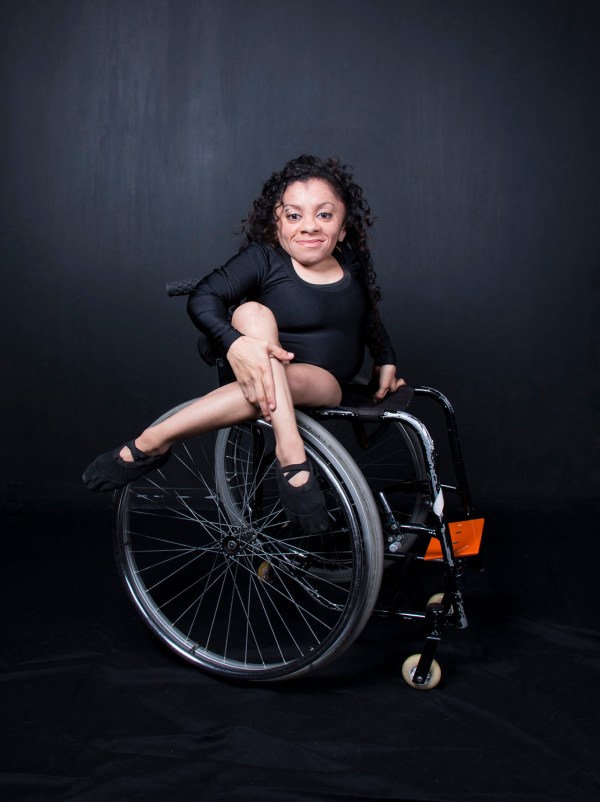
“I Think of Dance as My Most Honest and Purest Form of Expression . . .” An interview with Christelle Dreyer

Christelle Dreyer1

Credit: Marike Van Wyk

Christelle Dreyer is a freelance graphic designer and dancer who lives in Brackenfell, Cape Town.  She took up competitive ballroom and Latin dancing in 2004, then moved onto contemporary dance in 2010, performing in Dance Joint produced by Jazzart Dance Theatre and choreographed by Jackie Manyaapelo,  Infecting the City, choreographed by Tebogo Munyai, and Unmute Project, choreographed by Andile Vellum. She has worked on projects with various dance companies, including Jazzart Dance Theatre, Remix and Unmute. She recently performed in No Fun ction alL anguage, at South Africa’s National Arts Festival 2016 in Grahamstown.

Gaele Sobott: How did your passion for ballroom and Latin dancing initially develop?

Christelle Dreyer: As a child I loved listening to all kinds of music and watching people dance. I can`t really recall exact dates, but Jazzart Dance Theatre came to my school and I was lucky enough to be chosen as one of the kids to be part of a performance. It opened me up to realising that I actually could move and not just be on the side admiring people as they danced. After that I started Ballroom and Latin dancing.

GS: What then led you to contemporary dance?

CD: I started taking open dance classes as a way to keep fit and do something different. I enjoyed it so much I never stopped.

GS: How did you become involved in No Fun ction al Language?

CD: I received a phone call from Danieyella Rodin who works at The Chaeli Campaign, the organisation that produced No Fun ction al Language. She asked me if I’d like to audition for the show and then emailed me all the relevant information. I contacted Jayne Batzofin, the director, who was conducting the auditioning process over a two week period. So I auditioned and got a part in the show.

GS: Who are the other performers in the show?

CD: Andile Vellem Daniel Mpilo Richards, and Iman Isaacs are the other dancers. Dave Knowles is the musician.

GS: Tell me about your experience of working on the show.

CD: No Fun ction alL anguage has been an exceptional experience and an amazing opportunity. From the start of the creation process to the final production and the moments in between it’s been an incredible process of growth and discovery.

Jayne Batzofin and the cast, everyone involved, have been so open-hearted and open-minded. Some of them, before meeting me, hadn’t had any interaction with a disabled person but the way they approached the idea of disability is no less than amazing. I would like to think that we have become a little No Fun ction alL anguage family. I feel blessed to be part of the team. Together we created a work that has stimulated discussion around what happens if we don’t have the right words or any words to share our thoughts, discussion about our desperate search for meaning and about inclusivity for all members of our society. Each chapter of No Fun ction alL anguage encouraged different thought processes and emotional dialog within me. It was great being in a position to explore these things through performance. The response from audiences has been more than overwhelming.

GS: How did you contribute to the choreography of the piece?

CD:  When Jayne choreographs she uses a theme then allows us to improvise our body movements in relation to the theme. So we generated new movements and material. These were then incorporated into duets or into the larger choreography.  In chapter five of No Fun ction alL anguage, for example, that entire solo was created by me, and Jayne refined and detailed some moments.

GS: Please describe what Chapter Five is about.

CD: Chapter Five was about deception. How you experience deception, what it means to us. I looked at the emotions we feel when we are deceived and when we deceive and worked on translating that into movement. So Daniel explored the act of deceiving someone. His character was saying, “I love you” but not meaning it. Andile and Iman looked at how you can deceive yourself, and I worked on how sometimes you want to believe the deception. You know you are being deceived but you want to go ahead, for example, you believe that person loves you. So the choreography I developed was communicating that process of trying to hold on to what you know is not true but what somehow is pleasurable. Well it would be pleasurable if it was true. You try to hold onto that pleasurable non-reality for as long as you can. So my choreography was very quiet.

GS: How did you translate quiet into movement?

CD: Slow and controlled, under the radar.

GS: I think it was Silence, the chapter where you were on your back and moved your leg up very, very slowly.  That was a powerful moment.

CD: Yes that took extreme concentration, and the right breathing.

GS: Do you have control over your safety during the creative process?

CD: Complete control. If my body doesn’t want to do something, I don’t. But I try new moves. If that doesn’t suit me, I say so. I know what my body is capable of. Anyone who works with a disabled dancer knows that there are certain traditional ways of dancing that may be impossible. It’s a fine line between a director knowing when to push and when not to push you. At the same time you don’t want a director to be patronising and not get you to push boundaries.
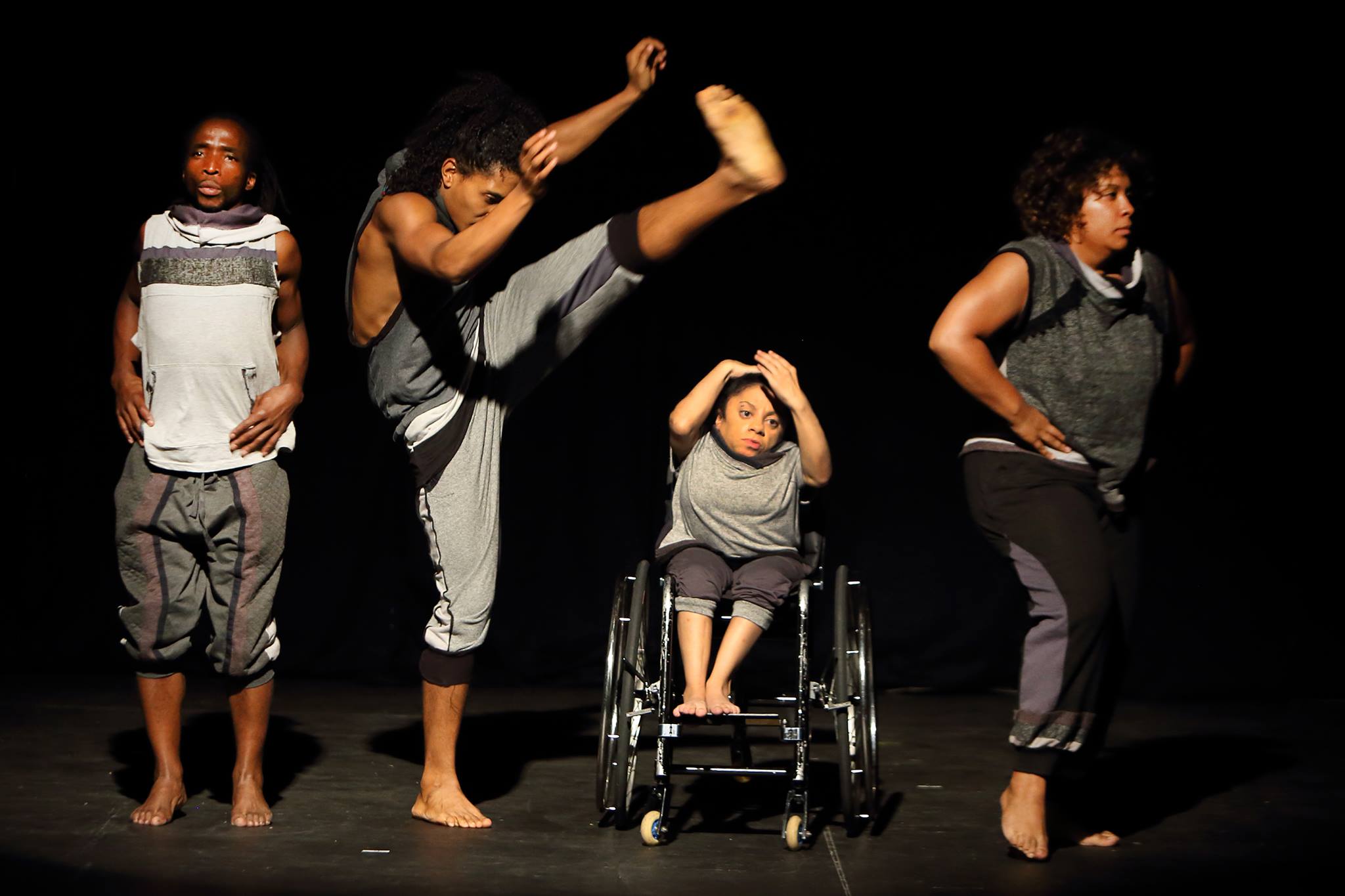
From left to right, two male dancers, one standing facing audience, the second lifting his arms and one leg high over the third dancer who is seated in a wheelchair. She leans away from him and holds her hands on her head. The last dancer, a woman, stands facing the away from the other dancers. They are all dressed in casual pants and tee shirts in various shades of grey.


GS: How do the themes of language and communication addressed in No Fun ction al Language relate to you personally?

CD: For me communication takes on many different forms. I think of dance as my most honest and purest form of expression and communication. In those moments of dance, the movement and the spaces between movement, I find what I really want to say to the world. I also communicate as a graphic designer. My work tends to be minimalist, which I feel expresses my easy-going personality.

I think the way I communicate with others is largely determined by the circumstances I’m presented with. For example, the way I communicate with Andile Vellem, who is Deaf, is different to how I communicate with the rest of the cast. My sign language is very bad, but somehow it’s often easier to convey information to him than to someone who can hear, other times we have big gaps in communication. I really need to work on my SASL (South African Sign Language). As far as spoken language goes I am fluent in English and Afrikaans. Not really sure about fluent as my vocabulary is not that large, in my mind at least. I find it difficult to learn new languages. But also I realise the value of discovering new forms of communication and maybe just maybe, I will be putting pen to paper more often.

GS: Afrikaans and English. How do these languages figure in your life? Do you consider either of these languages as your first language or mother tongue?

CD: Both languages are equally as strong as each other in my life. My parents raised me speaking English and I went to an English-speaking school but my family, my parents, aunts and uncles, also speak Afrikaans, and my community.

 GS: Afrikaans has historical significance in the context of the ant-Apartheid struggles and the 1976 student uprisings against the Afrikaans Medium Decree. Do you think the language still represents an oppressive force for some people? Tell me more about what the language means to you.

CD: I was a bit too young to fully understand what it was like during Apartheid. I don’t really have the experience. My parents are the ones who know about what happened then. But from what I observe now Afrikaans is becoming a more general language in Cape Town. There are a lot of Coloured people who speak Afrikaans but it’s a bit different to the way White people speak the language, not pure like in the text books.  Coloured people have their own slang, and it’s more musical. Also the humour in the way Coloureds speak the language is different. I enjoy that humour.

GS: What are the elements of your identity that have remained steadfast over the years, what has changed?

CD: Well my identity is not something I really think about in great depth. Apart from the more obvious things like the fact that I am a Coloured disabled artist. I think I have always been open to experiencing different things. Perseverance and persistence is something I’ve always had and I have a feeling that will not change anytime soon.

I never understood myself as unique. That was partly to do with me being a twin. I am a twin but actually my sister and I are completely different.  My immersion in creative processes demanded that I explore my sense of self. So that definitely helped me realise and embrace my uniqueness.

GS: I was recently at an event where the writer and journalist, Sylvia Vollenhoven was talking about her book, The Keeper of the Kumm. She said, you can be Zulu or Xhosa and it defines to some extent your history but Coloured is a more general term. She feels that people who identify as Coloured are largely excluded from the narratives of nationhood that South Africa is now constructing. What does this part of your identity mean to you?

CD: There are lots of divisions and classes in the Coloured community. The way you live as a Coloured person, where you live, the way you identify, the way you’re brought up. Generally yes, a Black person has a very strong sense of identity. The backstory of being Black or the backstory of being White is usually solid where they know their granny’s granny’s granny.  Many Coloured people haven’t answered the questions, Who am I? What is my history? Where do I belong? Like what exactly is a Coloured person? Yeah, it’s complex. I don’t think Coloureds really know how to define themselves. They don’t have resources to draw on. Like me, I don’t know the history of my grandparents or beyond them.

GS: Why do you think that is? The reasons why you don’t know?

CD: Maybe because the past has been painful and people haven’t wanted to talk about it. But I’m lucky at least I knew all my grandparents. I only have my grandfather left. He has dementia now so I can’t really ask him about our family history. My father’s parents died many years ago. My mother’s mother, Ma Yvonne Lopes, played a big role in encouraging me to be confident and proud of who I am. She was an amazing grandmother. My mother too, she instilled certain values in me and I don’t give her enough credit for all my successes. I am content with who I am and where I am in my life. My friends and family keep me grounded.

GS: Elaborate a little on your identity as a disabled artist?

CD: I was diagnosed with OI (Osteogenesis Imperfecta) when I was a baby. My sister also has OI, I mention this because I always get asked since we’re twins. Because of my OI I spent many of my childhood years with broken bones or in hospital. My mother has lost count of the number of operations I’ve had, at least twenty.  The amount of times I’ve broken my bones seems endless. My tolerance to pain has become so high that most of the time I don’t realise I have a broken bone and in some cases more than one.  I was born and grew up in Cape Town with my parents. I’ve always been surrounded by family and friends so apart from OI issues I’ve had a very normal childhood.  OI is one of the many layers that shapes who I am. I Matriculated in 2004 and started studying Graphic Design at Cape Peninsula University of Technology in 2006. I graduated with a Baccalaureus Technologie in 2011. During my years as a university student I never stopped working on my dance goals and dreams.

GS: Can you describe any barriers you have encountered as an artist with OI?

CD: The strangest thing to me is that artists are generally more open to individuality and people expressing their uniqueness. But somehow when people see disabled artists they have this preset idea that disabled people cannot produce the same high quality as them. I am not saying it is all arts practitioners and audiences but that bias is there. Yet in many cases the standard of work produced is of equal quality or even better.

I have experiences where I would go for graphic designer interview and I’d be told they could not hire me because I was not what they expected but I have a very good CV and portfolio. I don’t put the fact that I am disabled in my CV as that should not be the measure as to whether I get the job or not. Of course they know they can`t say to my face it is because I am disabled that they will not hire me, so they come up with polite and creative ways to tell me. It really is not fair.

It’s very satisfying when I get to prove people wrong and exceed their expectations of me as an artist. Like after performances of No Fun ction al Language when audiences are left not only in awe but with different perspectives of disability.

GS:  How did you find disability access at Grahamstown National Arts Festival 2016? What changes would you like to see?

CD: I feel that disability access was not taken into consideration at the Festival. This is really disappointing as there where disabled artists on the festival program. There is so much said in South Africa about human rights and treating people as equals, yet the basic needs of people using wheelchairs, deaf people, blind people are not being considered. I’m blessed to be able to walk for short periods of time, but what about disabled people who can`t walk at all and need their wheelchairs to get around? Access is not just needed for artists but also people attending the festival, audience members. It’s a national festival, disabled artists and audiences should be welcomed, not excluded.

I think disabled people are standing up for themselves more than in the past and that they are being integrated as part of their communities so much better. There is still however a long way to go.

Grahamstown National Arts Festival 2016 – No Fun ction alL anguage Trailer

This interview was conducted 21st July 2016

Creative Commons License
“I Think of Dance as My Most Honest and Purest Form of Expression . . .” An interview with Christelle Dreyer by Gaele Sobott is licensed under a Creative Commons Attribution-NoDerivatives 4.0 International License.
People love stories: An interview with Amit Sharma

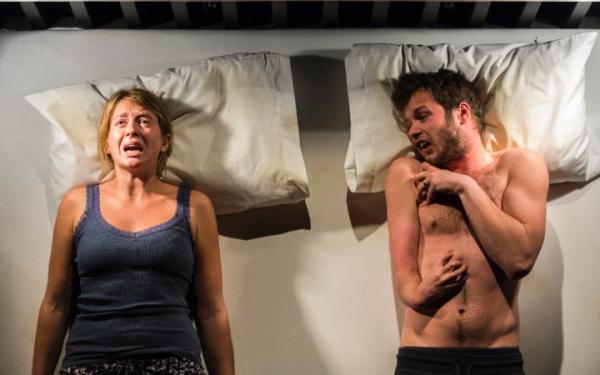
A young woman wearing a blue singlet lying on a bed with an anxious expression on her face. Next to her is a young man also lying on his back. He is only wearing black shorts.

GENEVIEVE BARR AND ARTHUR HUGHES AS ALICE AND PHIL IN THE SOLID LIFE OF SUGAR WATER BY JACK THORNE CREDIT: PATRICK BALDWIN


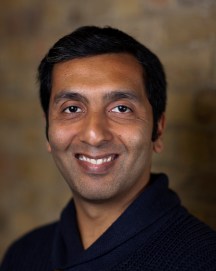
Amit Sharma 2Credit-Matt Cetti-RobertsAmit Sharma has been the Associate Director of Graeae Theatre Company, London, since 2011. He recently directed The Solid Life of Sugar Water, a Graeae Theatre Company and Theatre Royal Plymouth production, gaining unanimous acclaim at the 2015 Edinburgh Festival Fringe, leading to a 2016 UK tour including a run at the National Theatre.
Amit is a graduate from Graeae’s Missing Piece actor training course. In 2012, he co-directed the outdoor spectacle Prometheus Awakes (with La Fura dels Baus/co-commissioned by GDIF and SIRF), marking the first large-scale outdoor production to be artistically led by Deaf and disabled people in the UK. Also for Graeae, he directed Ted Hughes’ The Iron Man, which toured both nationally and internationally and co-directed Graeae’s Rhinestone Rollers in Sequins and Snowballs with Jenny Sealey at the Southbank Centre. As Assistant Director, he has worked on Graeae’s productions of The Threepenny Opera, The Changeling and on The Four Fridas for Greenwich and Docklands International Festival 2015. Amit currently leads on Write to Play, Graeae’s flagship new-writing programme in partnership with venues across the UK.


GaeleSobott: Can we start by talking about the set design in The Solid Life of Sugar Water. The bed is central, upstage, vertical with the actors standing against it. From the audience perspective it is as if they are looking down on the characters lying on the bed.

Amit Sharma: The thing about Sugar Water and the aspect that I was really interested in was the relationship between the two characters, Alice and Phil, how much they were or weren’t communicating. The style, as it was written by Jack Thorne, consists of two monologues essentially inter-dispersed with both the characters’ dialogue. Well it is much more intricate and clever than how I’ve just described it to you, but the nature of them not talking to each other and addressing the audience set up something which is immediately striking, irrespective of the subject matter. There is some form of subtext that is going on between the two characters, which is very exciting. When we did our original set design it was very abstract, very sparse actually. Then we did a reading of it and the designer said to me, ‘I think we’ve got this wrong. I think the audience needs to be placed in the bedroom. The bed is missing.’

She was absolutely right. The bed was like the third element of the relationship within the text. So then we needed to decide how to be artistic about it. We didn’t want the bed to be literal. The piece isn’t naturalistic. We jump from the past to the present and then back again. So we developed the idea of looking down into the couple’s bedroom.

GS: What is that perspective? What does it give to the play?

AS: I really wanted the audience to feel that they couldn’t get away from being privy to and a part of the couple’s life. I don’t know about you, but when I visit a friend’s house the bedroom is always the last place I look. It would be a bit weird to go and look in their bedroom. That’s because it’s private and you’d feel as if you were prying into someone’s very personal space, even if they’re not in the room. I wanted the audience to feel like they were able to be in that space.

GS: How does this position the audience? Are they voyeurs or perhaps fly on the wall?

AS: I think more fly on the wall. I think voyeurism has an element of choice about it. Maybe fly on the wall does too. I just wanted the audience to really feel the pressure cooker of the couple’s relationship and be a part of that. Not able to separate themselves from it. That’s what the play does. You fall into it and by the end you’re feeling all kinds of emotions because of the performances but also because of Jack’s writing. The writing and the set. That’s why I wanted the audience to be together in the bedroom with the couple. I wanted them to be with them in their private moments without feeling they were intruding. At the end I wanted the audience to feel they have been through so much with this couple. It’s actually about healing both for the couple and also for the audience.

GS: The audience are looking down on the bed but they are also being spoken to directly by the characters. It is not possible for the audience to position themselves as just observers. They have to participate. What are your thoughts on this?

AS: That’s the good thing about theatre. You can set up a convention and then just totally break it. So whenever the characters were on the floor, that was like the wall of their bedroom but it became less about the bedroom, it was the post office, the bridge, even though the bed was always present. As a creative team we wanted it to be subtle, so yes the bed was always in the background because there was always that big question of them trying to have sex.

GS: There are many disabled artists and directors who feel there is a need to explore sex and disability, for various reasons including societal attitudes, the infantilisation of disabled people. What is the importance of sex in disabled art? What is the relation of this play to the exploration of sex and disability?

AS: The most interesting thing coming out of Sugar Water is that question has not been asked. It has not been unpacked. What the play does is almost normalise that very question of sex and disability. It is such a huge topic for so many different reasons. Perhaps it is because of the performers, one performer is Deaf and one performer has a physical impairment, but not to the extent where it impacts on their sex lives. What I mean by that is that if, say, one of the characters was a wheelchair user who had 24 hour personal care then that dynamic shifts. I was reading an article today about the Independent Living Fund and this guy saying how it can be difficult to live independently for example to go out and chat up girls because you’ve got someone else there all the time. So you have to negotiate that relationship. This play doesn’t go there. People have picked up on the element of communication between the couple, but the sex element not so. I also think it is because of how Jack as a writer was playing with the idea of sex. There’s a lot of comedy with some really graphic descriptions.

GS: Well yes there is comedy and there are very serious moments, a fine line.

AS: Yes, Jack Thorne gets that fine line absolutely right. In rehearsals we spoke about how graphic we should get or if we should get graphic at all. If we were brave enough to show our naked bodies and those kinds of discussions. It quickly became apparent that it wasn’t about that. It would have become alienating, as opposed to the audiences going: ‘Come on, we’re theatre audiences. We’re pretty smart. We can go whichever way you want us to go. We don’t have to see nudity to get what you’re talking about.’

It felt like we could just tell the story. The most interesting thing is the intricacy of communication between the audience and the performers. The couple think they are talking to each other and they’re not really, and they do the direct address where there is a conceit between each character and the audience. There are many different levels of communication.

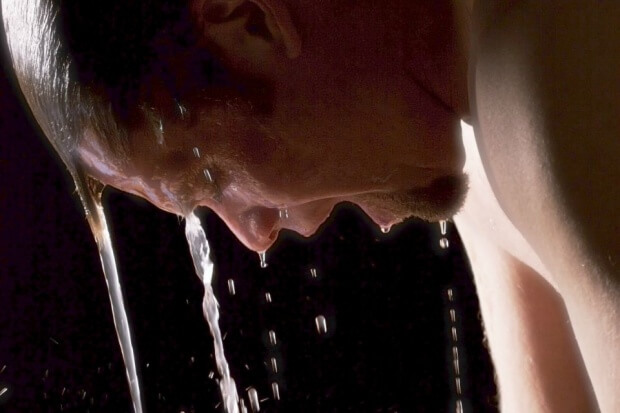
A close up of a man's head, profile looking down with streams of water flowing over his head and face.

GS: Can you talk a little about the quality of the reviews the play has received?

AS: Well I think the journey of journalism and the way this show, and other shows at the Edinburgh Fringe by Deaf and disabled artists, have been reviewed has really shifted. It’s really come a long way. The art is now being reviewed as opposed to the performers and their physical shapes and sizes and what have you. It is really refreshing to see the work being reviewed in this way.

Talking about Sugar Water the reviews spoke about the subject matter as happening to two human beings not to two disabled people. In relation to Genevieve, being a Deaf performer, the discourse was quite intelligent as opposed to talking about a Deaf person blah blah blah, it was more sophisticated in both the reviewing and the conversation around it. That hasn’t always been the case.

GS: What comments did reviewers make in relation to Genevieve being a Deaf performer and character?

AS: The discussions were linked to the idea of communication. Naturally if your partner doesn’t sign then you have to rely on lip reading and you may not catch all the communication. Phil can’t sign so he is not able to get what he feels across all the time. The scene when he’s on the bridge and he tries to sign and gets it completely wrong really resonated and got the biggest laugh every time. By that point the audience realises Alice and Phil are not communicating on a number of levels. It was about them as individuals and what they felt for each other, what they wanted and needed from each other. Phil had never had a huge number of relationships before hand. Alice had just come out of a very difficult relationship. So that makes two very vulnerable people in a position where they are wondering if the relationship can work, can they get along. Can they get married and try to have a baby. Is their relationship driven by their love and passion for each other or by their insecurities? Sometimes the best art doesn’t answer the questions it poses. It poses the questions for the audience to consider.

GS: Do you think Alice and Phil’s relationship is resolved in the end?

AS: I don’t want to say. Some people are unsure whether they continue or they don’t and I intended for that to happen. In my head they do, yeah. But I didn’t want to answer that. I spoke to Jack about it. He really wanted a happy ending and I really didn’t want a happy ending. I said, “Ok if we’re going to have a happy ending we have to hint and suggest the possibility.”

GS: I do think the play ends with them understanding and respecting each other.

AS: It’s only at the end that they actually say, ‘I love you’ to each other. Having been through the trauma of losing a baby. Jack’s a smart dude!

GS: There seems to be some relationship and similarities between The Solid Life of Sugar Water and Lungs, which also played at 2015 Edinburgh Fringe. Can you explain this?

AS: We had read the script about three or four years ago. When we got the script we were really interested. Duncan Macmillan is a great writer. We were thinking of doing a double bill but then Paines Plough went ahead with the commission so we didn’t.

GS: I found the story quite similar.

AS: Yes that’s why we had the idea that the two plays could work together.

GS: Where are you taking the play next?

AS: We’re putting a tour together. We’re going to be at the National Theatre for three weeks, which is superb. It’s the first time Graeae has been there and we’re incredibly proud. We hope the momentum builds from there.

It’s one of those plays. I remember reading it for the first time, here as a company, and the kind of silence at the end of the reading, everyone taking deep breaths. We knew it was a huge impact type of play. Audience reactions to the play have been emotional and deep. One woman stopped watching half way through. She sat there with her head down and just wouldn’t watch. There was obviously something that really connected with her. She started watching again a bit later. She was with a group of her friends and I saw her at the end. She was just in complete floods of tears. I don’t really feel bad about too many things but I did then.

GS: Why did you feel bad?

AS: I felt for her because I didn’t know her story and didn’t know what it was that she was relating to. I went over and asked her and her friends if they were alright and did as much as I could, offered her a gin and tonic. Theatre is such a powerful thing. I think people sometimes forget the impact theatre can have.

GS: Why do you think theatre powerful as opposed to other mediums of storytelling?

AS: It’s so immediate. You’re there. You can connect, relate to the work. You are immersed in the play for the length of the piece. People love stories.

GS: You can watch a series on TV and experience stories. What is it specifically about theatre?

AS: The craft of theatre is important, the putting together of the story although you can also do that with film and TV. There is something unique about theatre in showing that passage of time. I think the immediacy of you as a member of the audience and your relationship with the performers is so unique to you in an environment where there are other people as well. That is very special. You can watch television or a film in a cinema however the screen allows you to be one step removed from it. You can’t really do that with theatre. It is more interactive. It’s more immediate.

The question in theatre is – Why now? What’s important about telling the story now? With TV and film you can go back to it again and those performances won’t change but with theatre they will. You can go one night and the next night there will be subtle differences, something may have shifted – become more superficial, something may have become deeper. There’s an unknown quality. There’s that thing also where if something ‘goes wrong’ the performers just have to pick up the baton and carry on and audiences love those moments when it doesn’t all go to plan. Film and TV are created where it all goes to plan so with theatre there’s a different type of freedom and an improvisational quality.

It’s about creating the story. The performers grab the audience very quickly, in a vital and stark way, asking them to empathise with them.

GS: Did the actors contribute to Jack Thorne’s script during rehearsal. Were changes made for any reason?

AS: Well the actors didn’t really suggest changes but we did shift the script around them. We didn’t have any idea who we wanted to work with so in the beginning in Jack’s script the character, Alice, wasn’t Deaf. When we cast Genevieve as the actor for that part, Jenny Sealey, the Artistic Director of Graeae, and I had a conversation and we gave notes to Jack saying there are elements relating to Genevieve that should have some representation in the script. But in contrast, the Post Office scene about Phil not being very strong wasn’t adapted for him because of Arthur’s arm or anything. That was the original script.

GS: I didn’t take that scene as being about his arm.

AS: Well some people do you see. They think that was where his impairment was being referenced because he had this big box that he couldn’t quite carry. That was always there. But Phil signing on the bridge wasn’t there before we cast the actors. Jack did a couple of rewrites based on Jenny’s and my notes.

The stuff that happens behind the scenes may change according to the actor you cast. At the beginning we had created a soundscape and every now and then there’d be a heartbeat noise as a cue for the actors to shift position. There was also a sound cue for the actors to know the audience was seated and we’d got clearance from front of house. It was a dog bark. Genevieve has hearing aids so she could feel the vibrations of the heartbeats, the shift and the change, because there was a speaker close to her. What became slightly tricky was her trying to listen to the dog barking because of the frequency and because there were so many people in the room all making noise. So we discussed a better way of cueing and her feeling comfortable within the cueing system.

Also because there is so much direct address, I said, ‘You have permission to look at Arthur whenever you want. We’re not asking you to play hearing.’ But Genevieve got around that by learning Arthur’s script as well and picked up on his rhythms, picked up on how he delivered the text. That was her process. She wanted the same access and freedom as him and decided on her own cues. That didn’t mean Arthur had to do it exactly the same way each time. So there was that kind of negotiation going on during rehearsal.

GS: How do you cast at Graeae? How did you cast the actors for this play?

AS: For this play I got a casting director in. We work with some amazing performers and some amazing actors. I just felt this time round it would be really healthy for the Company to audition new people and add to our expanding pool of performers.

GS: Do you specifically cast disabled actors?

AS: For this play I decided the casting breakdown. Irrespective of impairment this is what I’m looking for. Just by the nature of the play we needed people who would be good at delivering text. I don’t mean in the classical sense, I mean it’s such a wordy play. There is a demand that Jack’s writing presents itself. That doesn’t mean being quick or slow or whatever. That’s what Graeae does – we say this is the play and this is what we are looking for. Let’s see who we can get through the door.

GS: I believe Graeae practises some form of affirmative action in casting performers and actors who identify as Deaf and disabled. How does this work?

AS: Yeah in our plays we’ve got at least fifty percent actors who identify as Deaf or disabled. For the two-hander I thought we had to have two performers who identify. We couldn’t have one. It just didn’t feel right. It was such a small company. But when we did the Threepenny Opera there were something like twenty performers so ten were disabled and ten were non-disabled. As it transpired, we got to the end of rehearsals and three of the people who previously didn’t identify said, Oh yeah, I’m deaf in this ear or I’ve got this impairment. So the Deaf and disabled were staring to outnumber the non-disabled. It was interesting. One of the reasons is that if people declare their impairment jobs shut down.

GS: But not here at Graeae?

AS: Yeah exactly, absolutely not at Graeae. For Sugar Water we were conscious we wanted new blood and we found it. The other thing is that we will use some of the people who auditioned but didn’t get involved in Sugar Water for other projects. So we did pull in a new pool of actors. We are good at that.

GS: What’s the next project?

AS: At the moment we’ve got the Write to Play initiative, nurturing new writing talent. We’re also developing a new adaptation of The Hunchback of Notre Dame for production in 2017. There is also a verbatim play around the Incapacity Benefit, the Employment and Support Allowance, that’s under commission.

GS: Whose voices are represented? Those who apply for or receive the benefit, or those in the bureaucracy who assess people, hand out the benefit.

AS: A bit of both but mostly people on the receiving end of decisions. We’ve got a doctor. We’ve got a legal aid person, a variety. We’re doing a taster session at the moment in aerial training building up to a project with war veterans in 2018 – an outdoor piece I think. It’s linked into the recent 1914-1918 reflections on the First World War. There’s a big artistic element to it all. We are very fortunate to be working in this profession on great projects with wonderful people. It’s a really odd time because for a lot of Deaf and disabled people at the moment they don’t know whether they’re coming or going.

GS: Are you referring to government austerity measures?

AS: Yeah but the profile of Graeae is really accelerating. The Company is being recognised for the work that we’re doing. We’ve got Ensemble starting next week. It’s an eight-month, work-based, professional-development programme for six young artists. They’re nineteen to twenty-five year olds and we’re training them as theatre makers. Jodi Alissa Bickerton is our Creative Learning Director. She’s running that programme. It’s in response to barriers faced by many Deaf and disabled artists, as well as a lack of diversity within the current theatre climate.

GS: How do you choose the participants?

AS: We get the information out there. There’s an application process. We audition, then we interview them and go from there.It’s difficult at the moment because the austerity drive is seriously impacting disabled people on a number of levels, work, living, health.

GS: Do you think disabled artists have a responsibility to reflect this in their art?

AS: I think disabled artists have a responsibility to their art. It’s a tricky one. I think it’s about choice. Some artists are deciding to reflect in their work what’s happening socially, economically in our society. Other artists feel that the art itself, no matter what it’s about, will create the shift, create the change. It’s a difficult choice but I don’t begrudge anyone for whatever the choice is that they make. I really resist the idea of hierarchical disability. Disability includes such a wide range of circumstances. It can mean so many different things to people. The wider the experience and the subject matter of our art, the better it is for changing perspectives. Graeae does a lot of advocacy work but it can be really relentless. The cuts are creating a lot of insecurity.

GS: How important do you feel disability-led writing and directing is to changing public perceptions around disability?

AS: I think everything needs to be driven by the story that the writer or the director is trying to convey. Sometimes that feeling of importance can be restricting and uncreative. Audiences are smart, open and intelligent. If you take them on a journey then they’ll go with it. If everything about a play or a show becomes agenda driven then it can fail in changing those perceptions. The story is the thing.

Further Information:

Interview with Genevieve Barr & Arthur Hughes

Information on Graeae and the tour of The Solid Life of Sugar Water  or

The interview was conducted by Gaele Sobott on 28th September 2015 at Graeae Theatre Company in London

Creative Commons License
People Love Stories – an Interview with Amit Sharma by Gaele Sobott is licensed under a Creative Commons Attribution-NoDerivatives 4.0 International License.

IF YOU DIDN’T LAUGH, YOU’D CRY : AN INTERVIEW WITH GAYLE KENNEDY

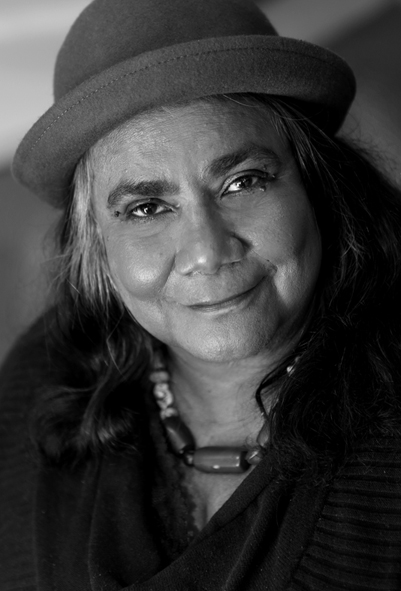
Black & white portrait of Gayle Kennedy smiling and wearing a hat and a necklace with large beads

Photograph taken by Belinda Mason

Gayle Kennedy is a proud member of the Wongaibon Clan of the Ngiayampaa speaking nation of South West NSW. She is an award-winning writer and has published work in newspapers, magazines, literature journals, and for radio. She was the Indigenous issues writer and researcher for Streetwize comics from 1995-1998. Her book of poetry, Koori Girl Goes Shoppin’, was shortlisted for the David Unaipon Award in 2005 and her prose work, Me, Antman & Fleabag[1] was the winning entry in 2006. She wrote eleven books for the Yarning Strong series. The Series won the 2011 Australian Publishers Association award for Excellence in Educational publishing. Gayle is a disability advocate and has spoken widely in Australia and overseas on disability and the arts.

Gaele Sobott: Can you tell me about your background? Where you were born, where you grew up, a little bit about your family?

Gayle Kennedy: I was born in Ivanhoe NSW and we moved to Hay when I was seven. In between, from the age of two to five, I was in the children’s hospital in Camperdown and then a rehab hospital in Wahroonga, then the Royal Far West in Manly recovering from Polio

My mother and father were both born in Condoblin but Dad’s family is from around Cobar. Mum’s family comes from the Euabalong area. Mum and Dad met when they were seventeen, working out at Wilcania. They’re both eighty-three now and they’ve been married sixty years this year. They had six children, four girls and two boys. One of my brothers was killed in a car accident at the age of eighteen in 1976. Dad worked for what was then the Department of Main Roads in the Central Darling Shire. Mum worked for a long while cleaning in hotels but gave that up about thirty years ago. They’re both retired now. I grew up with their stories. My parents’ story is in the national library. Francis Rush did that. She did an interview with me too about my experiences of polio for the Social History of Polio Oral History Project.[2]

GS: What are some of the memories you have of your childhood?

GK: I have vague memories of being in an iron lung and learning to walk again. My memories are mainly of me going backwards and forwards between home and the Far West. I remember loving rehab. It was the only home I knew at that stage. I was surprised to find out that I wasn’t from there when my parents came to pick me up. The first part of Me Antman & Fleabag where I write about the hospital is pretty much based on that time. The rest of it is fiction.

GS: Talk a little about your school experiences.

GK: When I was at the Far West I went to school there and it was okay. Because of the polio treatment I didn’t start school until I was seven. I went to the Convent school in Hay and the nuns were very good teachers. It was a great place because there was absolute zero tolerance of bullying or racism. Then I did one year at Hay Public School, which was awful. There were a couple of kids that bullied me and the headmaster was very racist and treated me like an idiot. Fortunately the teachers realised I was bright and totally ignored his directions to put me in the lower classes. So I got to work at the level I was used to which was the advanced level.

Then I won a two-year scholarship to go to Queenwood here in Sydney, at Mosman, right on Balmoral Beach. Violet Medway was one of the principals then. They were into providing a high standard of education for girls. No domestic science or any of those subjects that used to be taught to women. I loved English and History. I was a bit of a daydreamer – never really concentrated. I was always off in another world when they tried to tell me stuff. I generally crammed for exams. I was at Queenwood from age seventeen to nineteen. I made great friends there.

GS: Describe your early adulthood. What were you doing in your late teens, early twenties? What were your interests?

GK: After I finished at Queenwood I went to the Commonwealth Employment Service in North Sydney to look for work. That’s what you did in those days. They found me a position at the Australia Council as a clerk, Grade one. I went for an interview and got the job. I had a ball. It was fun meeting lots of fabulous people like Gillian Armstrong, Jane Campion, Gary Foley, Brian Syron, George Miller. They were just starting out in those days.

I was living in Cremorne, sharing a place with four guys. It was great fun. I’d go to the beach, go to the theatre. I liked Shakespeare and Ibsen. Reg Livermore was big then. I loved the Rocky Horror Show. There were a lot of new Australian plays happening. I’d go out to listen to bands. Live music was popular then in the pubs – blues, jazz and rock. We’d listen to bands like The Sports, Mondo Rock, the Divinyls. Cold Chisel was starting out. It’s changed now. People moved to the inner city areas from the North Shore, places like that, and started complaining about noise. Gentrification changed the live music scene and also poker machines took over in the pubs as the main entertainment.

I did my share of partying too. Everybody danced, played records, got stoned, got laid. I had lots of relationships – a couple long term. One of them lasted for ten years and one for about four years. I ended up being bored. I didn’t find them exciting or interesting anymore. They were good men but I never really took to being tangled up with anybody.

GS: Music seems to play a big part in your life.

GK: I’ve always been obsessed with music every since I was little. I like melodic music. If I like a piece of music, I want to know all about it. Who wrote it and why – the whole history. My tastes range over a lot of genres from Joni Mitchell to Hank Williams, Bob Dylan, Nancy Wilson, Sarah Vaughan. I listen to music all the time. It lifts my spirit and takes me to another place. If I’ve got a religion, it’s music.

I can remember singing when I was very young, maybe two, the old country songs like Don’t sell Daddy any more whiskey. Both my parents played and sang socially, at celebrations, weddings, funerals. Mum sings and plays guitar, piano accordion and piano. Dad sings, writes songs, plays guitar and performed around the traps.

GS: Tell me more about your work life and career.

GK: I stayed in the public service for years. I worked for a while with People with Disability and various community centres. From 1995 to 1998 I was a writer and researcher for StreetWize comics. I worked at the Aboriginal Medical Service and the Aboriginal Legal Service doing clerical work, research work, report writing. Then I started at the Attorney General’s Department as a policy officer around Aboriginal justice. I got sick of that and left in 2008. I’ve been a writer ever since.

GS: Why did you get sick of working at the Attorney General’s Department?

GK: Every time something good was happening the government would pull the pin. There was too much double speak, too many weasel words. I didn’t like the attitude of a lot of the young people I was working with who’d grown up not really knowing about hardship or what was really going on with Aboriginal people in the justice system. There’s no fire in their belly. They pay lip service to the struggle that went on but I don’t think they really acknowledge that struggle or give a damn. I just wanted to be out.

GS: How did you start your writing career?

GK: I had a plan before I left the public service. I started entering writing competitions. Irena Dunn initiated the Inner City Life writing competition in the mid 1990s when she was director of the NSW Writers’ Centre. I submitted a poem for that which was highly commended. The following year I won the competition with a prose piece called ‘Life’s Good When Ya Know How’. I liked the piece so much I expanded it into a book and entered it for the 2006 David Unaipon award. I won and everything grew from there.

I was commissioned to write a graphic novel as part of the OUP Yarning Strong series. One by one the other writers who had been commissioned dropped out so I ended up writing those stories. I published eleven books with the series. The illustrator was Ross Carnsew. I’d worked with him before on StreetWize.

GS: How do you find writing to a brief for children?

GK: It was challenging writing for a particular age group but I managed to make the stories interesting. I wrote the kind of books that kids want to read. You just think back to when you were a kid and put yourself in their shoes. I don’t use big words when I write for adults. I like clean, simple, lean writing. So writing for children is not difficult for me. With Yarning Strong I was given a word, family, land, lore, culture. I wrote whatever I liked around the subject.

The books went into the schools. Apparently they are much loved and are still selling very well. They were the overall winner of the 2011 Australian Publishers Association Awards for Excellence in Educational Publishing. The series was also awarded Best Student Learning Literacy resource for 2011.

GS: Your work at StreetWize was specifically for low-level literacy readers, Indigenous and non-Indigenous. Do you think there is a need for more of this kind of writing?

GK: Well there is no real organisation doing that kind of publishing anymore. Yes there is a definite need for more. It was a great way of providing for kids and adults with low-level literacy. StreetWize publications were very mobile, very accessible. You’d find their comics in waiting rooms, classrooms, wherever. It relied on government grants and was closed because of lack of money. Howard got in to government. Need I say more?

GS: What was your experience with writers’ festivals and the media directly after winning the David Unaipon award? How were you received as a writer with disability?

GK: I was only invited to three writers festivals – Sydney, Darwin and Brisbane. The festivals didn’t want to have me because it meant paying the extra fare for my personal assistant. The organisers didn’t check that accommodation and venues were wheelchair accessible which made it difficult. There were no radio interviews, no press. The other David Unaipon award winners got a lot more attention. I think that was to do with me being an older writer and one with disability. Writers’ festivals like the young writers.

But Me, Antman & Fleabag is still selling after all these years and now it’s starting to sell overseas. That’s mainly due to social media and word of mouth.

I think writers today are expected to have the kind of face that looks good on magazine covers, to be celebrities, attractive in that way. They have to be highly visible, good with sound bites.

GS: You’ve written about people with disability as being ‘the shadow people’. What do you mean by this?

GK: People with disability are often in the background, in the shadows. Everyone else gets up to talk for us, which I find very frustrating. We’ve got voices!

GS: How does being Aboriginal, Disabled and Woman play out in your life experience?

GK: I’ve never experienced any major problems with being a woman or being Aboriginal. I’m very proud of being Aboriginal. In terms of my writing, I don’t like the way the literary scene ghettoises books. For example, if you walk into a bookstore you’ll find my book lumped into the Indigenous section when it should be in the humour section. Indigenous writing should be categorised as part of the mainstream.

I’ve always done everything I wanted as a woman. Disability is the lowest on the pole in my experience. I think leadership is the key to changing that. Too often it is the hands of people who don’t have disability. I never took much notice of it when I was young. It was later in my life when post-polio kicked in and I realised the physical barriers and obstacles, discrimination, people talking over you or to whoever is accompanying you rather than to you.

I think there is some change happening, more and more people are coming out but they don’t get the opportunities to voice their concerns. They’re not given the stage. People without disability write about people with disability and they’re given the glory and the money. You see that at the writers’ festivals and in the media.

GS: What other changes would you like to see happening in the Australian arts and cultural sector?

GK: I’d like to see a broader and more representative spectrum of writers and actors. I mean Australia is so white. You turn on the television and you’re lucky to see a black face or an Asian face or Arab face. I don’t know whose reality it’s supposed to be. I’m so tired of watching those programs about young, hip and happening people in their shorts doing up a house. Until the public starts demanding more substantial entertainment it’s not going to change. Why would production houses and TV executives spend a couple of million dollars creating a drama or a comedy when all they have to do is put some want-to-be in a house or in a kitchen. Cheap as chips.

We need to get in the door. If I got my foot in that door, I would change what goes on inside!

GS: Iva Polack from the University of Zagreb writes that Me, Antman & Fleabag  ‘ . . . is an observational comedy and a dark satire of Aboriginal contemporaneity asking the reader to get into the circle of laughter by simultaneously laughing with, at and back.’[2] What role does humour play in your work?

GK: Humour is very much part of what I write. Even in the most serious sections, I like to have a laugh and to make people laugh out aloud. Humour is very important. Sharing laughter makes you feel good. That’s what it’s meant to do. The old saying goes, if you didn’t laugh you’d cry. Laughter is up there with music in life.

GS: Do you think there is something distinctive about Aboriginal humour?

GK: Yes, Aboriginal humour is pretty much at the expense of other people, taking the piss out of yourself and people around you. It’s often anecdotal and based on love and trust. You’re comfortable enough to laugh with each other. It’s clever. You’ve got to be very quick, nothing gets missed, and it’s very much observational. It’s a humour that engages deeply with what’s going on around us.

GS: What are you working on at the moment?

GK: I’m doing a lot of talks on disability, on writing, whatever pays the bills. I would like to be writing my own book. I want to do a three-part story looking at my life and experiences with polio, intertwined with my parents’ lives.

GS: How have you changed over the last forty years from the time you first lived in Sydney to present day?

GK: I took every advantage of being young, good looking, carefree. Now I don’t need to be going out all the time. I’m happy with my own company. I wasn’t for a long time. I’m glad I made it to sixty. I’m a lot more tolerant of people. I think a lot more deeply about things.

I don’t miss living in Hay. I haven’t been back there for a couple of years but I’ll be there in October for my parents’ sixtieth wedding anniversary. I do miss the people. Sydney is my home, my friends are here and I’m comfortable. I’ve lived here longer than I’ve lived anywhere else. I started out on the north side, Neutral Bay, Cremorne, Manly then moved to Balmain 1977. I’ve been here ever since apart form a two-year stint in Newtown. That was too hip for me.

I write now. I never would have back then. I was too busy going out having fun.

GS: In your keynote speech at the 2014 Scribbler Forum you said, you have not been a political person. It seems to me that you are a very political person determined to bring about change in a number of areas including for artists with disability.

GK: I guess I am but that’s only emerged in the last few years because I realised you can’t effect change by staying silent.

Notes:

[1] Me, Antman & Fleabag,Paperback, 130 pages. Published September 1st 2008 by University of Queensland Press
[2] Gayle Kennedy interviewed by Frances Rush in the Social history of Polio oral history project [sound recording] http://catalogue.nla.gov.au/Record/6184496
[3] Iva Polak, ‘To Laugh, or Not to Laugh – That is the Lesson: Gayle Kennedy’s Me, Antman & Fleabag’ presented at Australasian Humour Studies Network Annual Conference, hosted by Flinders Institute of Research in the Humanities at the State Library South Australia, 4-6 February 2015

This interview was conducted in Balmain, Sydney, 12th June 2015

Creative Commons License
If You Didn’t Laugh, You’d Cry: An interview with Gayle Kennedy by Gaele Sobott is licensed under a Creative Commons Attribution-NoDerivatives 4.0 International License.

Video

Georgia Cranko Presentation at Sweatshop WS Artists with Disability Seminar

Highlights from the November 2013 Sweatshop WS Artists with Disability Seminar held at Writing and Society Research Centre, University of Western Sydney, Bankstown Campus, facilitated by Dr Gaele Sobott. The seminar was a chance for artists to discuss their stories and experiences, and the politics of disability.