Grandmother by Gaele Sobott

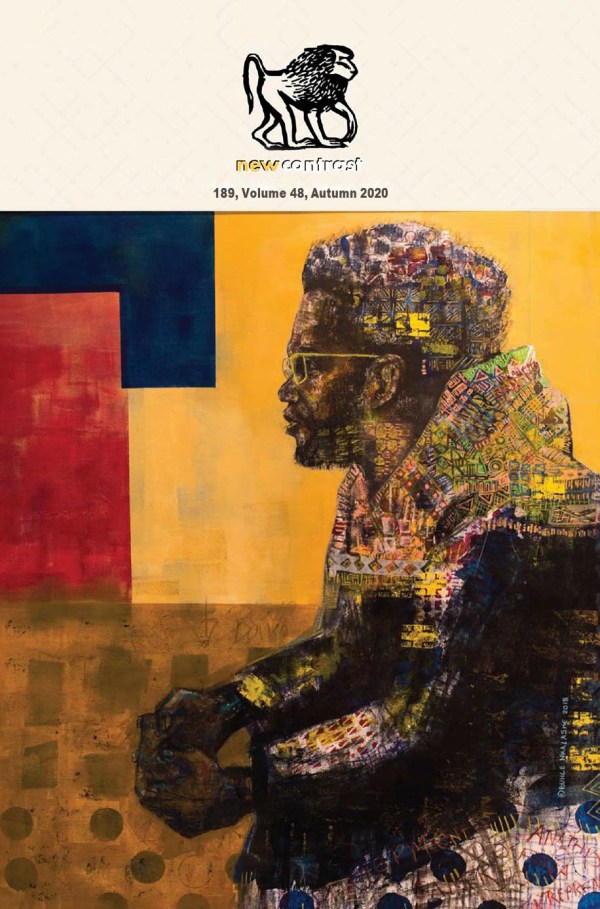
A Profile portrait of an African man, pensive, sitting with his arms resting on his lap and his hands clasped in front of him. He is wearing colourful print clothing and head gear. Blocks of yellow, navy and red make up the background wall.

Front cover art by Buhle Nkalashe

This story appears in New Contrast, one of the first South African literary journals. New Contrast is devoted to publishing the best of poetry and prose, art, reviews and interviews from both local and international authors. I am thrilled to be keeping company with such outstanding poets, prose writers, artists and photographers in this Autumn 2020 edition. Please go the New Contrast website and support this journal which relies on sales of hard-copy print editions. 

Grandmother

I smell meat cooking on the barbeque, innocuous in a typical suburban yard in Blacktown. The warmth of the winter sun penetrates my skin, the grass is cut, the deck needs oil, a scrawny rose bush winds its way too high, clinging to the asbestos wall, clambering up and over into the guttering. My granddaughter, Yasmina, throws a red ball into the blueness of the sky. The smoke twists up through my hair. I close my eyes, listening to the spitting fat.

*

Insignificant popping sounds, spitting, getting louder. A vehicle speeding so late in the winter dark pulls up, brakes screaming. Tyres graze the gravel outside. It seems my feet are walking the icy tiles before my torso leaves the bed. My hands feel for jeans, one leg in and then the other, I pull the denim up over my thighs, scrunching folds  of floral nightdress between the waistband and my skin. The zip bites down hard on the cotton fabric. Beating, clattering, chattering. Giant insects flying frantic against glass, wings flapping.

Running now down the passage into their room. I lift baby warm from her cot curled in blankets and stride skin silent on the floor across to her sister’s bed.

“Boni, Boni, I want you to lie here under the bed. Hold Moratiwa. Don’t let her go. Don’t talk. Whatever happens stay quiet.”

“Yes Mama,” she whispers.

I’m pushing the quilt and a pillow and Boni and Moratiwa under the bed.

Bre-bre-bre-bre-bre … not insects flapping wings  …  bre-bre-bre- bre … no they are not insects. Ghost men with rounded backs, bent men swarm from a white combi van. They run into our neighbours’ yard, the old colonial house is dark behind the trees, its wide veranda grimacing. The servants’ quarters, submissive and small in front of the house near the road.

Bre-bre-bra-bra, lines of yellow light burst from stumpy machine guns into the blackness, into the brick quarters where two young women live.

Peering from the side of the lounge-room window, through the crack where the curtain doesn’t quite cover the night, the grass  quivers, long and colourless under moonlight. The men throw grenades. White light flares up the lounge-room wall. The numbers on the clock flash bright. Short thuds of sound. I drop down, moving on hands and knees across the rug. The sofa and baby’s teddy in the hallway gleam iridescent razor-blade blue, every atom of my body is noise, intense loud limpet, cracking, reverberating circles, flattening my belly to the floor, shuddering walls, shattering windows, pieces of glass falling into my hair.

I crawl up the hallway, into the bedroom, crunch my hipbone cold into the white tiles, clinging to my children, not moving. They  are quiet. The dead night is quiet. There are no sirens, no dogs bark. Gaborone is acrid silence.

*

My son-in-law turns the steaks. The sausages spatter fat at his big-pony Ralph Lauren shirt and he jumps back, his body curves like a letter C. His sneakers are never-been-worn white.

I say, “I like your hair cut Walid. Really smart.”

“Thanks Lena. Got it cut this morning.”

Boni yells from across the yard, “He’s so particular about his hair! He’s been going to the same barber for fifteen years. Won’t let anyone else but Joe cut it.”

“Baby, he’s an expert blender. Not many guys know how to blend.”

“I think he’s got a bit of a bromance going with Joe,” Boni says. She’s wearing a light denim dress that criss-crosses over her back and sticks out like a tent over her pregnant belly, my second grandchild. We already know a boy is on his way.

Walid leaves the meat, comes over and bends his head down in front of me.

“Look here, he cuts with a zero, then a half, then a one, faded high like navy cut with no lines. You know what I mean?”

I nod, “Yeah, I can see.”

“The fade’s the most important part, very difficult to blend from zero to half into one without showing lines. It has to look smooth and crisp. Other hairdressers stop halfway up the back of the head because it’s too hard. Not Joe, he brings the fade right up to the top of the head, seamless. Then he scissor-cuts the top. Strictly scissors. No blade.”

Walid strolls back to the barbeque and starts putting the steaks onto a plate.

“Yeah, he thins out the top so it doesn’t look so thick and the hair sits edgy not flat. That’s the beauty of this cut. I can wear it gelled up like now or I can wear it flattened down to either side, neat like, for work.”

“It’s a smart cut,” I add.

Yasmina runs towards Walid, her arms flailing above her head like a windmill,

“I wanna help Baba,” she says grabbing hold of a steak with her plump little fingers, quickly dropping it in the dirt, looking stunned, about to cry.

“It’s hot Yasmina. Don’t touch anything. Go to Nanna.” He holds their two little white dogs back with his foot as if he’s playing soccer and guides his daughter away from the barbeque.

I call, “Come here Yasmina.”

She walks over, nonchalantly, slightly bow-legged, curly hair dancing in the breeze. Her body is solid in pink and green leggings, a green mouse dances on her tee shirt. Yasmina climbs onto my lap. I hug her, tender skin warm against mine. Boni drags a chair over to where we’re sitting. She’s puffing and as if her tiredness is contagious, I feel deep fatigue, a dark uneasiness.

“Mum, will you come to the delivery again?” “Yes, sure I’d love to.”

“Good, Walid and Moratiwa and you, just like Yasmina’s birth hey?”

“Will they do a caesarean straight away this time?” I ask.

“No, I want to try for a natural birth first. Prefer to avoid caesarean. It’s a pretty major operation.”

My granddaughter sits moist against my body, listening.

“Ok, come and help yourselves to the food,” Walid yells.

Yasmina jumps off my lap and sprints towards him. I half-expect her to fall but she doesn’t.

*

Going home, Homebush Bay Drive exit, diesel fumes slip through the vents. A mammoth truck next to me, another in front. My car, dark- green, 1998, shabby, gets me from A to B, and I fantasise, if I had money, which car would I buy? Not the Mercedes C200, maybe the black Mazda 3 in front, or the orange Toyota Camry with black mag wheels that roars when it takes off from the traffic lights. Roberts Road. Bunnings looms like a military bunker on my left, a red and yellow Maccas flag flies next to the Australian union jack and stars, my country of exile, the bright lights of a petrol station, Oporto chicken. Cruising through the green light across Juno, right up to Punchbowl Road.

I park, trying not to scrape the fence. The outside lights at Koh I Noor Court stopped working last time it rained. We want to pay to get the electrics sorted but strata fees don’t keep up with all the burst pipes and broken windows. A patchy lawn in front of the apartment block. The geraniums flower orange-pink next to the bay tree. The leaves on the dwarf mandarin curl, white with some kind of fungus. I pass my neighbour’s door, climb the stairs, to the same children’s songs I hear every day and every night… and if one green bottle should accidentally fall, there’d be five green bottles hanging on the wall…

Two and a half years since I first became a grandmother, now another grandchild is about to be, being, humans being. Strip off, shower, let the warm water flow down my arms, my legs. Curled up on the bed, comforted by the towelling of my robe, textured against moist skin. Sleep comes easily but briefly, I drift in the space behind closed eyes assailed by gruesome images, flickering faces, distorted, ugly. Unclench my hands one finger at a time, stretch out my arms, try to relax the muscles in my neck.

My  grandchildren  will  never  know  their  maternal  grandfather.  I conjure up the face of RraBoni. He rolls a joint, relaxed, laughing, listening to his favourite fusion. Tilting his head back, he blows wispy, white circles of smoke that hover, gently falling apart over the trumpet lines, the congas, the guitar snaking through Miles Davis, Bitches Brew, the bluesy keyboard on Weather Report’s Birdland. My children’s baby faces — Boni, her brown skin, freckled by the sun, a smiling dimple on her left cheek. These images relieve my nightmares. Moratiwa, more petite, darker skin, darker hair that falls in spirals over her shoulders. The one who is loved. My granddaughter, her brown, gold-tipped curls that spring in all directions, her alert eyes observing me. My yet-to-be- born grandson, another gift from the ancestors.

*

The reflection of my body moves ethereal in the sliding mirror doors of the wardrobe. My existence is enmeshed in history, some parts fluid, some parts rotting, torpid beneath my living. After almost thirty years, I feel an urgent need to tear away the scabs, dig down to the core, the agony. I begin searching, frantic, closed up in my flat. I claw at the skin of apartheid, searching for details of what happened that night. I want to know about the men who planned the killing, the men who murdered, those who justified and covered up the crimes. I trawl the Internet, South African Truth and Reconciliation Commission documents, reports, SABC  videos. There are so many submissions, so much brutality, over 20,000 statements from victims, nearly 8,000 applications for amnesty from perpetrators of crimes against humanity, a small but somehow representative taste of apartheid from the 1st March 1960 to the 10th May 1994.

Still and stiffened into a monstrously crooked position, I read like an addict craving horror, ripping open and exposing the cruel core of a desperate regime. Under the heading, ‘cross-border military operations’, I find testimonies. On 14 June 1985, twelve people were killed in Operation Plecksy … in Gaborone, Botswana. Eight of the dead were South Africans. The others were a Somali citizen, a Basotho child and two citizens of Botswana. Some of the Security Branch operatives who identified the targets and planned the raid applied for amnesty. I read their names. Their words avoid the truth. Their words are small truths, just enough to get amnesty, no more. Some are obvious lies.

A rooster crows next door, another rooster answers from the darkness across the road. I unbend my body, stand and stretch my arms in the air. I can see the tree in our neighbour’s yard. The half-moon has fallen, pale, from the sky and lies trapped in the tree’s branches. I move from one room to another without purpose, walking in the gloom.

Mrs Hilda Phahle addresses the Human Rights Violations Hearing in Alexandra. Our children fled this oppression of this country … the land of their birth, the land of their forefathers. They were tortured beyond reason and fled. The enemy followed them and brutally massacred them … the SADF arrived swearing and behaving like people well-drugged and drunk, ordering George to open the door. The door was blown open … the piano fell against Levi’s bed under which he was hiding. God spared him to tell the story. He watched from under the bed as they pumped bullets into his brother and his wife, bullets penetrating them simultaneously. They turned them over face upwards and one asked, “Is hulle dood?” (“Are they dead?”). “Morsdood” (“stone dead”) was their reply.

My eyes are scratchy in their sockets, my limbs creak like heavy machinery in need of oil. My head, an abandoned factory, echoing the vicious cruelty. Someone walks around the flat below, a door closes, a toilet flushes.

Mrs Phahle wears large, metallic pink-rimmed glasses. A woollen green and red scarf protects her neck from the winter cold. She wraps a Basotho blanket around her shoulders. Her voice has the timbre of mother love, woven loosely with threads of grief and anger. I hear her weariness. Her face is light-skinned, gentle. She says to a television camera,

As Christians we’ve got to accept what has come our way, more so that we cannot repair the damage. The only thing is for us to accept and we pray that such a thing never happens again. That’s all.

I lay on mounds of blanket twisted in sheet. Sleep rises up in the blackness and falls like a small boat on large waves. So many of the living are suffering. I’m fearful the waves will break, and the boat will smash into many pieces.

An insistent electronic pulse draws me from sleep. My fingers fumble with my phone, sliding across the small screen. Turn the alarm off. There is wind blowing outside. A branch of the bay tree scrapes against my bedroom window. I call work. My voice deliberately weak,

“Hi Maureen, I’m so sorry I won’t be coming in today. I’ve got a really bad migraine.”

*

The broken windows allow the frosty morning to creep into the lounge room, over the shattered glass, up the hallway into the bedroom. A bird dares to twitter. I hear the front door open. RraBoni has come home with two friends. They’re holding multi-pronged, metal spikes.

“Look what they threw on the roads. Eeesh, everyone has flat tyres.” My husband is a big man, wide shoulders hunched now. He puts his arm around me and I lean further into the balminess of his body, alcohol and sweat. His face is red from a night of drinking.

“Are the girls alright?”

“They’re fine. Sleeping in our bed.”

“Anyone like a coffee?” I ask.

“I’d love one thanks Lena,” the smaller man says. He is hunched over, shivering.

I turn on the kettle, go to the bedroom and lift the quilt from Boni’s bed.

“Here Motusi.” He wraps it around his shoulders, pastel green, pink, brown squares, elephant, crocodile, monkey and lion.

“Danke Mma.”

“Still no sign of the police,” says RraBoni

I’m careful not to cut myself, fingers like tweezers, picking up the bigger pieces of glass and putting them in a bucket. Sweep the kitchen floor and the hallway.

A BDF army jeep pulls up. We file outside. The grass sways yellow in winter. Everything is sepia, the trees, the gravel, the rusting wire fence. A tabby cat follows us, mewing. Confusing, smoky-meat odour clings to my skin, sweet like almonds. Pieces of the young women’s bodies grasp the fence, the grass, hang from the syringa trees. People come slowly from the flats, from the surrounding houses. Two soldiers throw a long metal box on the ground. We collect a shoe, a bloodied bra, a hand. We collect burnt chunks of flesh. No one speaks. No one cries. We gather the remains of our neighbours into the metal box.

*

It is suburban quiet. Children with shiny skin and bright white socks pass my window on their way to school. My kitchen, fake marble benches, white cupboards, is small but filled with light. I chop apple and banana into a bowl, drink green tea. I will not go to work. Bare feet, hair unbrushed, hunching over the laptop, four days and nights melt into a blistered mass of knobbled ash and grit. Friday, Saturday, Sunday, Monday, searching for detail. Gentle people murdered  in their beds, intellectuals, artists and writers, musicians and teachers. Seven of the twelve associated with the ANC. The killers shot open the front door of Tami Mnyele’s home and machine-gunned the artist as he ran across the backyard. They joked, kicked his corpse and took trophy photographs. Blasted his artwork, splintering his easels and paintbrushes, splattering paint.

Swallow painkillers, stretch my neck, bend my back, my hands dangling at my feet. I fall onto my bed again and stare at the ceiling. The Scottish woman who lives in number nine is talking to our neighbour about his fruit trees. I close my bedroom window and pull the blind.

At two o’clock Tuesday morning, I sit crunched  over  the  laptop. The men in combi vans murdered Duke Mashobane. His six-year-old nephew, Peter Mofoka, fled screaming from the bedroom, wearing flannel pyjamas. They pumped bullets into his small body, continuing at close range long after the boy was dead. Dick Mtsweni, ‘Mkhulu’, was shot and his house set alight. His body burnt to nothing. Michael Hamlyn was executed as he knelt on the floor at the end of his bed, looking up at the attackers, his red hair tousled from sleeping. He was a conscientious objector, who refused to serve in the South African Defence Force. They murdered Somali refugee and Dutch national, Ahmed Geer. His wife, Roeli, eight months pregnant, escaped with bullet wounds to her legs.

Most of those who took responsibility for planning the attack were granted amnesty from human rights abuses. The names of the 5 Recce SADF commandos and the Barnacle operatives from Special Forces are not listed. Those men who drove across the border to take the lives of twelve people didn’t apply for amnesty. I can’t find anything to say they were ever charged for their crimes. One working as a mercenary in Iraq was killed in Al Kut in 2004. His mutilated body was hung up for public display.

My phone rings. “Hi Lena.”

“Walid, what’s happening?”

“Everything is fine. We are at Westmead. Boni’s waters broke about an hour ago. Can you come?”

“I’m on my way. See you soon.”

“Great.”

Travelling through the early morning is like watching a film on the plane without headphones, everything is hushed, just the sound of my car’s engine as I drive the M4 to Westmead.

I’m at the hospital, walking into the birthing room. The lights are dull and Boni is moaning. She’s hooked up to monitors.

Walid smiles, “She’s doing well Lena.”

The nurse says, “Yes, she’s doing very well. She’s dilated to seven centimetres. The cervix has softened. I think it will be a vaginal birth this time.”

I place my hand on Boni’s forehead. Her hair sticks to her skin. She’s groaning and her lips are dry. I offer her some lip moisturiser. She digs some out of the small pot, her finger shakes. Smears it greasy over her mouth.

“Is Yasmina with your sister?” I ask Walid.

“Yes, she’s sleeping. Anisa’s at home with her.”

Boni moans and yells, “I can’t stand this pain.” She breathes out, grabs the gas and sucks on it.

“I’ll just be waiting outside.” I stroke Boni’s arm, then leave the room, walking across the shiny floor into the corridor. Sitting on a hospital chair, dread filters through my pores like grimy smog.

The passageway is empty, no sound other than the groans and she-wolf howls of women giving birth. I take a pen from my bag, bend down and scratch hard into the vinyl floor. Gladys Kelope Kesupile and Eugenia Kakale Kobole. A man pads around the corner wearing  a surgical gown. I pretend I’m picking up the pen from the ground.  He doesn’t look at me. Bending again I write, We have not forgotten. I scratch the words over and over, so they are etched deep and black into the beige vinyl. Gladys and Eugenia came to Gaborone for work, one  a typist, the other a domestic worker, not even twenty years old. That night they walked home from a prayer meeting. The killers came as they lay sleeping in their beds.

In the corridor under neon lights, I unlatch my consciousness, trying hard not to sink into pools of unarticulated fear. I sit waiting for my second grandchild, waiting for everything to be all right.

J.D. Salinger’s daughter quotes her father as saying he never really got the smell of burning flesh out of his nose entirely. No matter how long you live, that smell remains. I remember our neighbours, the two young women blown apart that indignant night. The fragrance of their lives is as fluid and volatile as the corpuscles in my blood.


In this issue of New Contrast:

Interviews:

  • An Interview with Buhle Nkalashe by David Griessel

Poetry

  • Kobus Moolman, Henry and June / The Earth is Flat / I Am Made
  • Juanita Louw, Homogeen / Love Machine
  • Rizwan Akhtar, Last Year / Now We Will Say “Happy New Year”
  • Steve Lambert, Unbecoming / Ars Poetica
  • Fiona Zerbst, Closer to Light / On the Edge of Darkness / Portrait of Three Lions
  • Bibhu Padhi, Another Need / The Address
  • Warren Jeremy Rourke, Washing Up / Double Rainbow
  • Johann Lodewyk Marais, Die stasiewa / Die eerste wens
  • Stuart Payne, The Planet
  • Justin Fox, Building Wall
  • Stephanie Williams, Mother / Let’s Talk
  • Alessio Zanelli, Hiker and Lines / Dear Old Beloved Padan Fog
  • Sarah Frost, Gold
  • Ian Salvaña, This Town We Left To Miss, You Said, Is Home / The Birthing of a Poem
  • Tom Paine, Seeds / Kamikaze Bees / That’s All

Prose

  • Gaele Sobott, Grandmother
  • Melissa Gow, One of Us Is Bleeding
  • Jonathan Tager, Guidestar
  • Rémy Ngamije, Black, Coloured And Blue (or, The Gangster’s Girlfriend)

Artworks

  • Jono Dry, In My Silence / Restrained I Unravel / Wrapped in Tradition / Separation


To purchase this issue (R120) email the business manager at business@newcontrast.net
The Struggle Continues: An interview with Juby Mayet and Cecilie Palmer

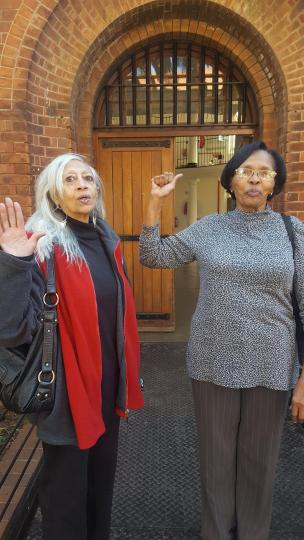
Juby Mayet and Cecilie Palmer standing in front of Constitution Hill Women's Prison

Zubeida ‘Juby’ Mayet (1937 – 2019) was a journalist who dedicated her life to fighting for a free press in South Africa, gender justice and an end to the Apartheid regime. She began writing for the Golden City Post in 1957 and worked for Drum magazine. In 1977 she joined The Voice, in Lenasia, Johannesburg, where she was appointed Deputy Chief Sub-Editor, a first for black women journalists. She was a founding member of the Union of Black Journalists (UBJ), serving as its assistant secretary-treasurer, a member of the Writer’s Association of South Africa, and contributed a great deal to the Media Workers’ Association of South Africa (MWASA). Juby also wrote for UBJ Bulletin Asizothula and The Worker. She was detained in 1979 and upon her release, served with a five-year banning order under the Internal Security Act. She and her family suffered continued police harassment and surveillance

Cecilie Palmer (1944 – 2019) was a stateswoman, active in the struggle against the South African Apartheid regime and in fighting for the emancipation of women. She served in many organisations including, the United Democratic Front, the Federation of Transvaal Women, the Legal Resource Centre and Sizoya Sibuye, a platform for raise public awareness of women’s experiences of torture and jail during the struggle and counselling ex-prisoners. Before her arrest in 1976, she was active in the National Union of South African Students on the University of the Witwatersrand campus. Cecilie was also one of the founders of  the Women’s Institute for Leadership, Development and Democracy (WILDD). She and her family experienced continued police harassment and surveillance after her release from prison.

Gaele Sobott: We have just visited the Constitution Hill Women’s Prison, where you were both detained in the 70s. You’ve described the torture of women in the prison and the mental scars that have plagued you and the other women who were detained from the time of their release onward. Cecilie, you had two children and you were pregnant when you were detained and your mother, Vesta Smith, was also detained in the same prison. Juby you relied on friends to look after your children while you were detained. You were both involved in your different ways in the struggle against Apartheid and to bring about a more just society in South Africa.

In the years leading up to 1994, I am wondering how you balanced or negotiated the need for a hierarchical leadership to overthrow the old Apartheid regime and establish a new regime with the need to broaden and deepen the education of the general population?

Cecilie Palmer: I remember the time, years ago, I think it was 1982 or 1983, when the President’s Council presented its proposals for the reform of government structures, and we were having debates about whether to go into that Council under the new constitution or not to go in. I was sitting with Professor Mohammed and Firoz Cachalia and some others in the UDF office. We were debating and we were dead against going into the Council. Firoz and them were trying to push us to change. That was the kind of consultation that went on. We debated in the branches and the decisions were taken from there up. It’s true, education, that kind of education stopped, that kind of mix of people, it stopped when the exiles arrived back here and they said, ‘This is how it’s going to be done!’

GS: When was that?

Juby Mayet: They started coming back late eighties, early nineties. Sorry I have almost lost my voice. It’s a bit difficult for me to speak. I’ll whisper.

CP: Ja, they built a different structure and they said, ‘This is how you will fight.’ So then you had this structure where the country was really being ruled by six people sitting in Luthuli House.

GS: How did they gain the power to do that?

CP: I don’t know. What ever they did, it was very cleverly done. Remember, people used to trust each other. We were all comrades in the struggle. Some of us were mixed, right.

GS: What do you mean by mixed?

CP: In the sense that I didn’t really belong to the African National Congress (ANC). I didn’t belong to the Black Consciousness Movement (BCM).

JM: Yes.

CP: I didn’t belong to anybody. I went where it was necessary to fight a battle. That was how I operated. Then they came with the UDF and at that time, I remember we were asked very specifically,  because we had a very good women’s movement at that time, the Federation of Transvaal Women. Each province had their own women and we saw ourselves as women working towards common goals. Then we were told no, we had to choose whether we Charterists or whether we were BC. I remember one ANC woman asked me that question and I stood back and said, ‘None. I like to work where I’m needed most.’ But when the ANC was unbanned, people positioned themselves where they knew or thought the power was going to be …

JM: Where they thought their bread was going to be buttered.

CP: For instance, in Eldorado Park, which is a township just on the other side of Lens.

JM: Ja, we passed it. I pointed it out to you.

GS: Yes.

CP: We worked very hard there. We had established a really strong activist community where we had an advice centre, a women’s group, we had women against the abuse of women, we had a pre-school programme. The pre-school programme was designed by one of the women in Eldorado Park who was a pre-school specialist and that programme was designed on a non-sexist, non-racist basis. It was assessed by a professor from Rhodes University who said the programme should expand right through Africa. We replicated that programme from Eldorado Park throughout the Transvaal.

GS: By we, you mean the Eldorado Park women’s group?

CP: Yes. We had a strong movement going. We also had a civic association. Our belief and my belief was that civic associations belong to the people of the community that starts those associations, irrespective of what their political affiliations are.

JM: Yes, absolutely.

CP: Then we were asked by the ANC, because they had regrouped, to spearhead the formation of the South African National Civic Association (SANCO) and that was affiliated directly to the ANC. We said, ‘No, we’re not going to do that.’ Our pre-school programme had established pre-schools in the Transvaal and those pre-schools each had parent bodies. We taught the women in those parent bodies politics, not party politics but  community activism, so they knew about political, social and economic injustice and they were figuring out ways to build alternatives in their communities. This all grew from the strong community activism in Eldorado Park, so we brought those Eldorado women and the women from the pre-school parent groups into the Federation of Transvaal Women. We didn’t realise the ANC and those leaders who decided to identify with them, were positioning themselves for future power. The ANC started choosing people for their executive committees in Eldorado Park. They were lobbying.

JM: Manipulating.

CP: Ja, so, none of the activists, the youth groups, the women’s group, none of those activists were chosen for the executive committees. Anyone who wasn’t ANC was kicked out of those groups. We were very innocent then. Not skilled in that kind of politicking.

GS: Do you think the ANC saw those people, those activists on the ground who did not want to join them, as a threat and if so why?

CP: I really don’t know why they saw them as a threat but they did.  I think they were scared of people who had experience in the struggle but were refusing to join the ANC, probably because they were a stumbling block to those who were opportunists, those people who joined the ANC to climb. Those activists were wise and they expected the organisations to be run on same lines as they had been run on before. I think that’s probably what it was. I don’t know. One needs to think very deeply about this time and what happened.

JM: It was the ANC state capture. They rode roughshod over all these people and groups, like they were the only ones who fought to liberate us. The Pan African Congress (PAC), Azanian People’s Organisation (AZAPO), all the rest, were just thrown to the wayside. I’ve never been a card carrying member of any political party. I was labelled a sickly humanist. I worked for the human rights committee which had ANC members and Liberal Party members, then after I covered the  South African Student Organisation (SASO) trial in Pretoria, Sathasivan Cooper, Sivalingam Moodley, Audrey Mokoape, I became kind of involved with, not involved but enamoured of the Black Consciousness Movement and of course when I met people like Sobukwe, he was such a lovely man, and  Joe Tlholoe who was so young when he was sent to jail for so-called PAC activities, so I never really had a particular inclination towards any political party, I just felt I had to do a typical sickly humanist’s job.

GS: As an individual do you resent being dominated in a job or within a community?

JM: Not really. If I am dominated by anybody who thinks they are better than me, yes. I think I am as good as the next person.

CP: In other words, you refuse to be bullied.

GS: There is bullying and there is sometimes the need for hierarchical leadership. Do you think it is possible for South Africa to change existing social and economic conditions without hierarchical leadership?

JM: It has got to come from the younger generation.

CP: Exactly.

JM: I don’t know if they are better educated. They go to varsity and vandalise the school structures, the very place of learning. I don’t understand that mentality.

CP: I think our education system doesn’t teach people to think. It teaches them to regurgitate stuff without thinking.

JM: I went on protest marches but I never threw a stone through anybody’s window or set fire to any buildings. We marched with our banners and we sang our freedom songs without vandalising or damaging people’s cars or property. I cannot understand that mentality, especially when they go and burn down schools.

CP: Twenty eight schools burnt just a few months ago.

GS: Why? What caused that anger?

CP: Municipal demarcation. Dividing the wards up. The local government structures are divided in to wards. It affects voting. That’s why they keep changing it. They changed the boundaries and the community didn’t want it. Like Vuwani, where the community withdrew their children from school as a form of protest. Then they burnt the schools. The schools become the targets.

JM: That is why I say it is because of a lack of education. Those parents obviously did understand that this is not the right way to protest and make change. We need those schools. We are depriving our children of education.

CP: If you look at the age group of those people, it’s the age group that went to school after 1994. They are keeping their children out of school. They are the ones who are throwing stones. The ones who were born in the mid-eighties. That’s my view. Yes, we had Bantu education, Coloured education, Indian education but I swear that was one-hundred-and-ten-times better than the education we have today.

GS: During that period of change, how do you think it could have been done differently in terms of education?

JM: It would help if we had a president who was actually literate. Our education system is terrible. They keep saying how young people must be educated to become future leaders but it has become empty rhetoric, just words, no substance.

CP: It was during his time, that education started deteriorating. With every step, the education system seems to deteriorate further with every change they make. The very last change was the curriculum assessment policy called CAPS, a system that came in 2013. Plus the mentality of the new teachers is not good. We need better teacher training.

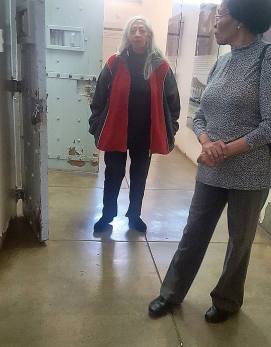
Juby Mayet and Cecilie Palmer standing in front of cells in Constitution Hill women's prison

GS: What happened to AZAPO, PAC leaders?

CP: They were just pushed out and ignored.

JM: I meet up with those guys and we talk. There was a group of students from SOWETO and they were quite surprised by the way I spoke. I make it quite clear that the ANC sucks! They irritate the hell out of me. I don’t have anything to do with them. I tell them that. I don’t vote for the ANC. Sometimes I say why don’t you guys form a coalition. Can you imagine if AZAPO and the BC people came together then the ANC would be seriously challenged, voted out in elections.

CP: They pushed out a lot of leaders, extremely well educated people, some died, like Percy Qoboza,   but none of them are anywhere in government structures. Brilliant people were pushed aside.

GS: What do you think can be done to stop the party that is about to take power in a situation like that from isolating or silencing intellectuals?

CP: They didn’t just sideline intellectuals they also preached that the older people who stayed in the country, that we were stupid and didn’t know what we were doing. Some children are extremely angry because their parents have been treated so badly.  We’ve got this inter-generational dialogue and it’s all about talking with the younger people and not at them. Some of them are extremely angry at Nelson Mandela.

GS: Why?

CP: Because he sold out. I sit there and I think, yes, it is true what you say but I cannot say that. So, I go the other way and say, ‘Look, he had to do what he did otherwise violence would have consumed the country.’  That’s true. There was Eugene Terre Blanche and Inkatha and all that but if you go further back they had been negotiating with Mandela a very long time before his release without the other prisoners being involved. They actually moved him from Robben Island and took him to Pollsmoor and Pollsmoor wasn’t private enough so they took him to Victor Verster where he was living in a house. So that is the truth of the matter and that is where a lot of the anger comes from. That is why they are saying, “We are struggling today because our parents are not living any differently than before apartheid, look at my mother living in a little pondotjie somewhere and so on. All those things are boiling. We can’t pay bills. Even when people study where are they going to get jobs.

JM: We should suggest to them that the next time they want to go on a burning spree, they should start with Luthuli House.

GS: How were the big corporations positioned during the transition from Apartheid?

JM: Big business just kept going like a steam roller.

CP: The same white bosses and even though black Joe might be the CEO, he still doesn’t really control the business. They are definitely not going to change our society for the better. I told you the story of Eldorado Park, now also in Eldorado Park we were working with UNISA against violence and that kind of thing and then they came and told us that they had been funded by the police. Imagine, funded by the police during the time of Apartheid! We said, ‘Oh oh, no thank you. Within a week, I was summoned to Luthuli House, Ralph phoned me and said, come in to see us because we want to talk to you about the UNISA program. I said, ‘No, I will not come to Luthuli House. You come to the township!’ I mean that was where the group started. He could talk to the board there were we all operated. Then they also asked us to spearhead the formation of the ANC women’s league in Eldorado Park. We said no to that too. Like I said, our belief about the women’s group was that we were all working together, no matter what party women supported. We were combining our strengths to make change happen. But from then on we were totally isolated by the ANC. We founded the Women’s Institute for Leadership, Development and Democracy (WILDD) in 1994 and we were being funded by the Swedes so what  the ANC did about the second or third year after they came into power, they ruled on bilateral funding so it then had to be government to government funding. So any foreign funding had to go through the government. That is how they destroyed a lot of the NGOs. So they were quite clever. They managed to destroy independent community organisations and thinkers. Through the WILDD, we used to help women’s groups in townships. Let’s say a group was working against gender violence, we would write a proposal that might include establishing shelters for women, things like that and that was one of the ways we increased the consciousness, the awareness and the education of women and men. We had a women’s cooperative that was a successful community enterprise. So, we would write the proposals and the women would get money. Then we would teach them to draw up progress reports and insist that they prepared and submitted regular reports to us. We needed those reports to get more funding and train more women. Very, very soon, the women began to say that the government was giving them funding because of this new government to government funding I spoke about. So the ANC was the one giving them the funding not foreign sources and the women did not need to report to us anymore. They could not be expected to bite the hand that feeds them. We as community leaders were isolated that way too. The original structures we had all built were destroyed. The government gave the groups money once, they gave twice, then they deserted the women and other civic groups.

So now we work very quietly.

GS: How do you think that kind of scenario can be prevented before it gets to that point?

CP: I don’t know. It is a very hard question to answer. But I think also what happens in people’s minds is that they saw the ANC as their liberators and they were told that they were their liberators.

JM: If the propaganda, the lie, is told often enough, people believe it.

CP: It’s like starting again right from the beginning which means starting in the house, starting in the street, in the factory, in the mines. It’s important to work within the community.

JM: I think we need a true revolution. It won’t be difficult to build up to a proper revolution because people have not settled into this so-called solution. They do not accept this life of entitlement that ANC officials and black CEOs and the like are living. The top guys are treating the country’s assets as if everything is there for the taking. That becomes the attitude. If they are doing, what is wrong with me doing it too.

CP: And the jargon is there all the time, you know, I can tell you now, let’s say I was going to a Women’s Day celebration, and the speaker gets on the stage. Before she opens her mouth, I know exactly what she is going to say. It will be the same thing that is repeated all the time, the same jargon, the propaganda repeated over and over again. Empty rhetoric. No real analysis. No encouragement of independent thinking. It’s also more difficult because before with Apartheid, the enemy was clearer. If you criticise the ANC, they say that you want to bring the white oppressor back.

JM: That’s another thing. We had Apartheid but there wasn’t the same yackety yack that there is now about racism. It’s used now for small things, almost like a diversion from the bigger picture, the economic problems, the economic system.

CP: The economic oppression is still very much there. We have a lot of black people in charge now of administration and the running of government but they treat other black people badly.

JM: You see it in the shops and the cafes and the post office. People are not there to serve. They are there to fill their pockets and stuff you Jack. I remember going to Ackermans with my late mother. She was struggling because my daddy left us and we were ten children. She somehow made friends with an Afrikaner lady working there. That woman used to assist my mother by putting extra items into the bag when she was buying school shirts or trousers for the boys. Sometimes my mother used to send me to Ackermans to buy items. I can’t remember that woman’s name now but I can see her face, a stylish woman and she would treat me in such a friendly way. She’d ask me how my mother was. Whatever I was buying, underwear or socks for the boys, she would always manage to sneak extra into the bag.

CP: Strangely, Juby, some of the Afrikaner people were very human, very genuine. An Afrikaner either liked you or hated you. It was clear cut. Where with the English you never knew. And Afrikaner children even up to today will respect an older person. They will say Tannie to me. That is how they are brought up. But if they don’t like you, they don’t like you and they make no bones about it. You knew exactly what your place was with them.

But going back to your question about what could be done differently, I don’t know but many people change. I cannot understand how they can change like that because it must be very uncomfortable.

JM: The day I landed in Number Four (Constitution Hill Prison), Debs wasn’t there at that time. Thenjiwe and Joyce and other women were. A white warden was taking me through to my cell, my new living quarters, and she was stunned when those other women prisoners broke into cheers and yelling Amandla and hey Juby what took you so long? The warden took me to my cell and she asked, ‘How do you know those women?’ I knew some of them personally, most of them knew me because I was a journalist but she couldn’t figure it out, ‘Die Coolie met dai Kaffir.’ When we were in there we had political discussions, we celebrated June 16. So then Thenji and all of them were released and I was left there with Gladys Manzi from Kwazulu and then they brought Debs from Maritzburg. She was in a bad way.

CP: Oh God.

JM: She’d been tortured. Her hair was falling out. Eventually I was released. We were all released. Some of us kept in touch. Some of us wrote to each other. Some moved on with their lives. The next time I saw one of the woman I had got close to in prison was  at some journalism awards event at one of the conference rooms at the South African Broadcasting Commission but you know, she didn’t acknowledge me. We were so close in Number Four but by then she had become ambassador or something like that. I looked directly at her and she looked directly at me. No smile. Nothing. I thought, God, what have I done? She just refused to acknowledge me. I was going  to go up to her and ask her how she was but then I thought okay I won’t. You give me a cold shoulder like that, I will ignore you. But I couldn’t believe it and I was hurt. From the person I knew in Number Four to this. She’s now up there and I am just the same old Juby.

CP: So why should she associate with you?

JM: Exactly. So, I thought, well stuff you, buddy boy!

CP: Yes, you can walk away and feel good about it. I must say, I feel free. I don’t owe anyone anything. I live on my one thousand five hundred Rand pension and I’m comfortable with it. I don’t owe anybody. I feel free but those people we are talking about have no vision. That is the sad part. They go into these positions. In 1994, nobody knew how to govern and we accept that. They employed consultants and what have you. They chased the Boer out who were in those positions. They didn’t want to learn from them. I think they should have first learnt from those people. Taken advantage of their knowledge and experience and then made them move over. They could have said, ‘Okay, we will make you consultant in this department for five years.’ They decided to chase those people out and employ consultants but up to today, they haven’t learned. About four years ago I spoke to one of the ANC women and told her what I saw happening in our communities. They don’t go to their constituents. They don’t know what’s really going on. I told her that communities are fragmenting more and more along lines of race, religion, political party and all that. We need to get these people back together. She agreed and suggested we involve other people in government and she did that. She got them in and I presented a proposal which we discussed. I emphasised that this drive to get people back together has to start by the ANC admitting their mistakes. The next thing, they were talking about fragmentation of communities and that the SACC was going to do this and that. They didn’t involve me nonetheless, I was happy it seemed to be going ahead. But it fell apart because they didn’t have the same vision. If you don’t have the vision for going forward, it is just not going to work. They stole people’s projects. A group would write a proposal to them with what they wanted. Then they would call those people in and ask for more detail. The group would give them all their ideas. Four weeks later they’d see someone from government announcing those very ideas on TV as a government initiative.

Juby, you know the saga about registering children on-line for school?

JM: Yes.

CP:  The education department has announced the idea of registering children on-line from grade one to grade eight. It’s an idea that they have stolen. Somebody presented this proposal to them around 2008. They dismissed her saying it was nonsense. Thank heaven she is taking it up with them. She’s not letting them get away with it. NGOs don’t stand a chance with the government stealing ideas like that. That lack of vision is terrible. They took over our women’s groups and now the gender violence is getting worse not better. Another peculiar thing that is happening most of our experts are whites and people who do not live in the townships. They are on TV telling us what we need.  So we are asking, why is it always about us but we are not leading. We know what is happening in the township. We know what is happening in our communities because we still live here. We don’t live in a big house in the white suburbs with high fences and security guards. But no, those experts have all the answers.

JM: The statisticians.

CP: We must sound like bitter people.

GS: You sound like people with many years of experience.

CP: When I do a tour or give talks, people sometimes ask me, ‘But don’t you hate the people who have done these things?’ No I don’t.

JM: Hatred is a waste of energy.

CP: Hatred to me is a wasted emotion, a waste of energy. I don’t hate but I also haven’t forgotten and I’m not going to forget because it did happen. Actually, I’m  not sure at this moment that I don’t hate the people who are sitting in Luthuli House. I’m not sure I don’t hate them for what they are doing to this country.

JM: My remedy is laugh it off and say stuff you lot!

CP: Like there is Kenny Motsamai who they have only just released from jail. Nearly twenty eight years in jail. Yet, they let Eugene de Kock out who tortured and murdered so many people who fought against Apartheid. There are still other PAC cadre sitting in jail.

JM: Now we have black on black Apartheid. That’s what it has come down to. Economic.

CP: They spent over a billion rand on the ANC campaign for the local government elections. Where did they get that money from?

JM: Exactly and why not use it on something more constructive? Building houses, schools, medical facilities. Prioritising the education of teachers. They did away with teacher training.

CP: They closed nursing colleges. They are trained at university with no practical experience. They come into the wards and will not take advice from the older nurses who did the proper training including the practical internships and the like. They are starting to privatise the services.

JM: Like the prisons are semi-privatised now.

CP: And the bureaucracy is getting bigger and bigger. It’s messed up. There’s no getting away from it.

JM: We need to teach that the ANC were not the only liberators of the country. Campaign to change voting patterns.

CP: I think we really need to get back to thorough and committed community activism, community responsibility and confidence. I work with the women from the inner city. They are eager to jump when the ANC Women’s League says jump, the rent a crowd kind of thing. Their responses and their problems are different to our problems in the townships. You know another thing we don’t have is an alternative media. We were lucky because we used to have the Vrye Weekblad, an Afrikaans newspaper which was really helpful, one of the best newspapers.

JM: Ja, Max du Preez.

CP:  It was run by Max du Preez. We need that kind of newspaper back. The Weekly Mail was also there. Those newspapers tried but they were never free to do what they wanted. The Post used to have ugly stories that didn’t educate anybody.

JM: Like the Sun today.

CP: Like the Daily Sun. Now that’s the only newspaper that people can afford. The Daily Sun will tell you that the rat ate the cat. Like the TV. Keep the masses uneducated and you can do whatever you want.

JM: That is why I read books. Our young people need to read more.

CP: Reading is very important. Education for our young people has to improve. Over half of our children cannot read fluently. We should be working on basic literacy and numeracy. We are condemning a huge majority of young people to unemployment and  poverty. You know, we are a depressed country at the moment. You don’t see people smiling and laughing. We used to laugh and talk and scream and sing even during the time of Apartheid. We’ve stopped. I definitely don’t think we would be  better off under Apartheid. We still need to rid ourselves of the legacy of Apartheid. We really need to sit and talk and analyse what has not worked in the struggle. The ANC has to admit its mistakes. Maybe then we will begin to smile again.

Gaele Cecilie JubyInterview conducted with Juby Mayet and Cecilie Palmer in Lenasia, 2016 – May you rest in peace and power my friends.
Links:

Black Wednesday, the day the Apartheid government banned 18 Black Consciousness Movement organisations and three newspapers (featuring Juby Mayet)

Interview with Cecilie Palmer  in the Constitution Hill Women’s Jail

“I Think of Dance as My Most Honest and Purest Form of Expression . . .” An interview with Christelle Dreyer

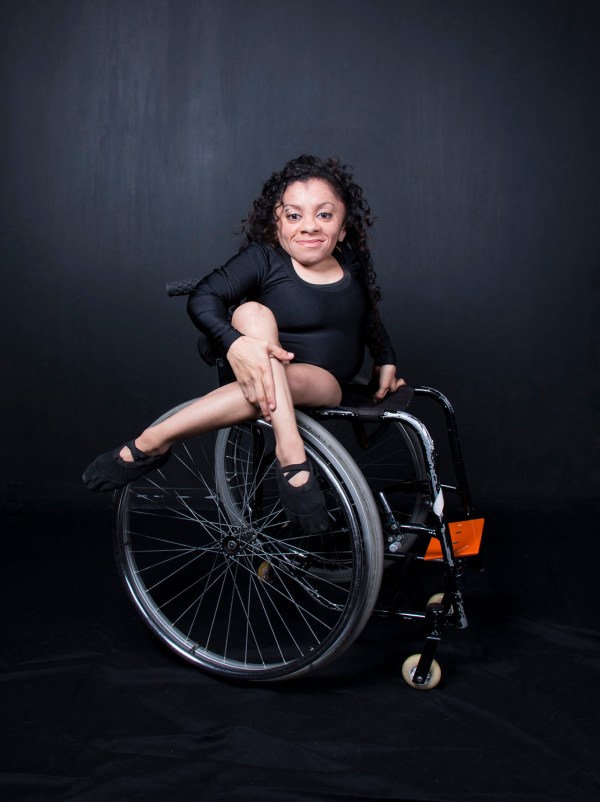
Christelle Dreyer1

Credit: Marike Van Wyk

Christelle Dreyer is a freelance graphic designer and dancer who lives in Brackenfell, Cape Town.  She took up competitive ballroom and Latin dancing in 2004, then moved onto contemporary dance in 2010, performing in Dance Joint produced by Jazzart Dance Theatre and choreographed by Jackie Manyaapelo,  Infecting the City, choreographed by Tebogo Munyai, and Unmute Project, choreographed by Andile Vellum. She has worked on projects with various dance companies, including Jazzart Dance Theatre, Remix and Unmute. She recently performed in No Fun ction alL anguage, at South Africa’s National Arts Festival 2016 in Grahamstown.

Gaele Sobott: How did your passion for ballroom and Latin dancing initially develop?

Christelle Dreyer: As a child I loved listening to all kinds of music and watching people dance. I can`t really recall exact dates, but Jazzart Dance Theatre came to my school and I was lucky enough to be chosen as one of the kids to be part of a performance. It opened me up to realising that I actually could move and not just be on the side admiring people as they danced. After that I started Ballroom and Latin dancing.

GS: What then led you to contemporary dance?

CD: I started taking open dance classes as a way to keep fit and do something different. I enjoyed it so much I never stopped.

GS: How did you become involved in No Fun ction al Language?

CD: I received a phone call from Danieyella Rodin who works at The Chaeli Campaign, the organisation that produced No Fun ction al Language. She asked me if I’d like to audition for the show and then emailed me all the relevant information. I contacted Jayne Batzofin, the director, who was conducting the auditioning process over a two week period. So I auditioned and got a part in the show.

GS: Who are the other performers in the show?

CD: Andile Vellem Daniel Mpilo Richards, and Iman Isaacs are the other dancers. Dave Knowles is the musician.

GS: Tell me about your experience of working on the show.

CD: No Fun ction alL anguage has been an exceptional experience and an amazing opportunity. From the start of the creation process to the final production and the moments in between it’s been an incredible process of growth and discovery.

Jayne Batzofin and the cast, everyone involved, have been so open-hearted and open-minded. Some of them, before meeting me, hadn’t had any interaction with a disabled person but the way they approached the idea of disability is no less than amazing. I would like to think that we have become a little No Fun ction alL anguage family. I feel blessed to be part of the team. Together we created a work that has stimulated discussion around what happens if we don’t have the right words or any words to share our thoughts, discussion about our desperate search for meaning and about inclusivity for all members of our society. Each chapter of No Fun ction alL anguage encouraged different thought processes and emotional dialog within me. It was great being in a position to explore these things through performance. The response from audiences has been more than overwhelming.

GS: How did you contribute to the choreography of the piece?

CD:  When Jayne choreographs she uses a theme then allows us to improvise our body movements in relation to the theme. So we generated new movements and material. These were then incorporated into duets or into the larger choreography.  In chapter five of No Fun ction alL anguage, for example, that entire solo was created by me, and Jayne refined and detailed some moments.

GS: Please describe what Chapter Five is about.

CD: Chapter Five was about deception. How you experience deception, what it means to us. I looked at the emotions we feel when we are deceived and when we deceive and worked on translating that into movement. So Daniel explored the act of deceiving someone. His character was saying, “I love you” but not meaning it. Andile and Iman looked at how you can deceive yourself, and I worked on how sometimes you want to believe the deception. You know you are being deceived but you want to go ahead, for example, you believe that person loves you. So the choreography I developed was communicating that process of trying to hold on to what you know is not true but what somehow is pleasurable. Well it would be pleasurable if it was true. You try to hold onto that pleasurable non-reality for as long as you can. So my choreography was very quiet.

GS: How did you translate quiet into movement?

CD: Slow and controlled, under the radar.

GS: I think it was Silence, the chapter where you were on your back and moved your leg up very, very slowly.  That was a powerful moment.

CD: Yes that took extreme concentration, and the right breathing.

GS: Do you have control over your safety during the creative process?

CD: Complete control. If my body doesn’t want to do something, I don’t. But I try new moves. If that doesn’t suit me, I say so. I know what my body is capable of. Anyone who works with a disabled dancer knows that there are certain traditional ways of dancing that may be impossible. It’s a fine line between a director knowing when to push and when not to push you. At the same time you don’t want a director to be patronising and not get you to push boundaries.

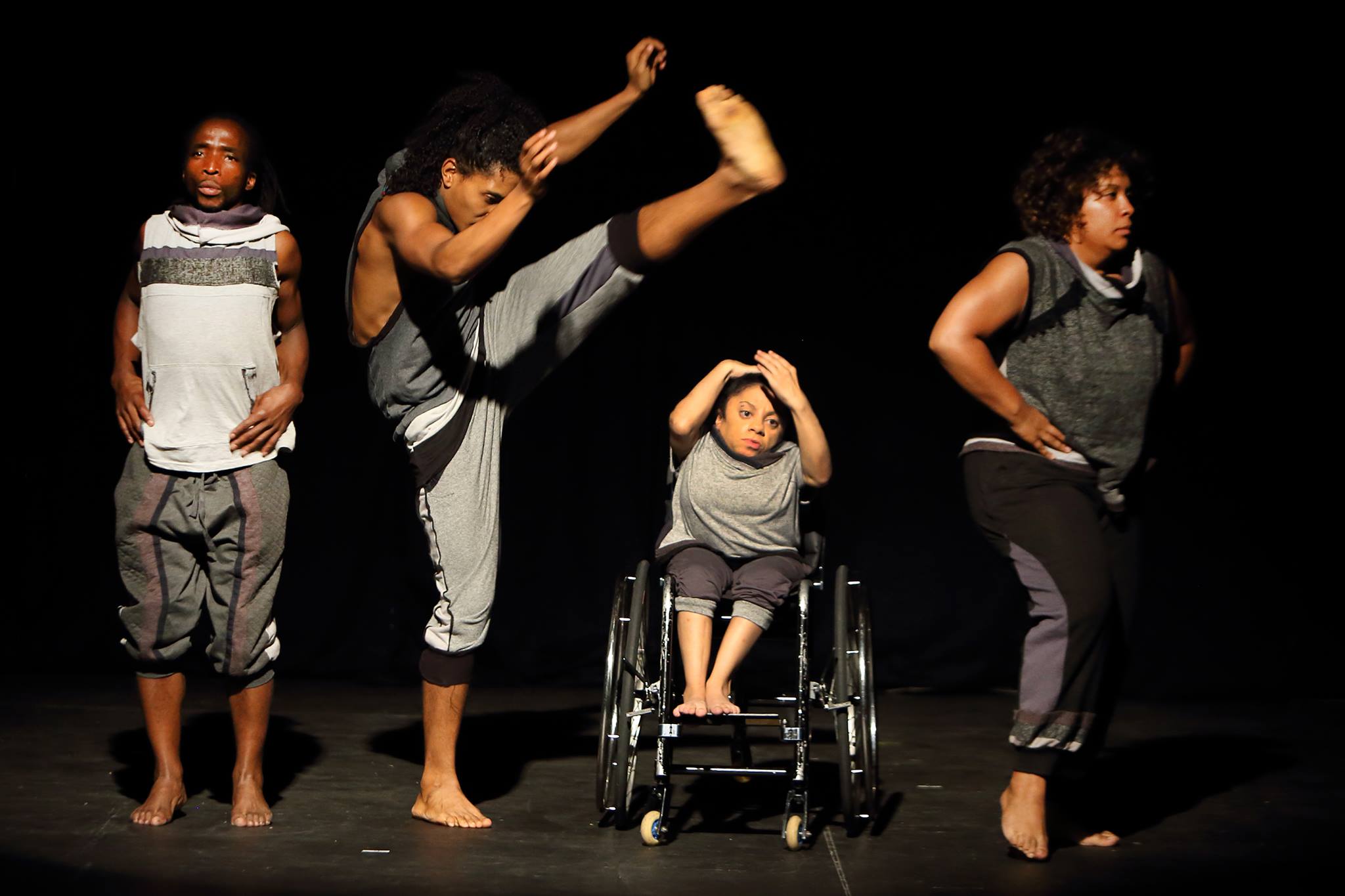
From left to right, two male dancers, one standing facing audience, the second lifting his arms and one leg high over the third dancer who is seated in a wheelchair. She leans away from him and holds her hands on her head. The last dancer, a woman, stands facing the away from the other dancers. They are all dressed in casual pants and tee shirts in various shades of grey.


GS: How do the themes of language and communication addressed in No Fun ction al Language relate to you personally?

CD: For me communication takes on many different forms. I think of dance as my most honest and purest form of expression and communication. In those moments of dance, the movement and the spaces between movement, I find what I really want to say to the world. I also communicate as a graphic designer. My work tends to be minimalist, which I feel expresses my easy-going personality.

I think the way I communicate with others is largely determined by the circumstances I’m presented with. For example, the way I communicate with Andile Vellem, who is Deaf, is different to how I communicate with the rest of the cast. My sign language is very bad, but somehow it’s often easier to convey information to him than to someone who can hear, other times we have big gaps in communication. I really need to work on my SASL (South African Sign Language). As far as spoken language goes I am fluent in English and Afrikaans. Not really sure about fluent as my vocabulary is not that large, in my mind at least. I find it difficult to learn new languages. But also I realise the value of discovering new forms of communication and maybe just maybe, I will be putting pen to paper more often.

GS: Afrikaans and English. How do these languages figure in your life? Do you consider either of these languages as your first language or mother tongue?

CD: Both languages are equally as strong as each other in my life. My parents raised me speaking English and I went to an English-speaking school but my family, my parents, aunts and uncles, also speak Afrikaans, and my community.

 GS: Afrikaans has historical significance in the context of the ant-Apartheid struggles and the 1976 student uprisings against the Afrikaans Medium Decree. Do you think the language still represents an oppressive force for some people? Tell me more about what the language means to you.

CD: I was a bit too young to fully understand what it was like during Apartheid. I don’t really have the experience. My parents are the ones who know about what happened then. But from what I observe now Afrikaans is becoming a more general language in Cape Town. There are a lot of Coloured people who speak Afrikaans but it’s a bit different to the way White people speak the language, not pure like in the text books.  Coloured people have their own slang, and it’s more musical. Also the humour in the way Coloureds speak the language is different. I enjoy that humour.

GS: What are the elements of your identity that have remained steadfast over the years, what has changed?

CD: Well my identity is not something I really think about in great depth. Apart from the more obvious things like the fact that I am a Coloured disabled artist. I think I have always been open to experiencing different things. Perseverance and persistence is something I’ve always had and I have a feeling that will not change anytime soon.

I never understood myself as unique. That was partly to do with me being a twin. I am a twin but actually my sister and I are completely different.  My immersion in creative processes demanded that I explore my sense of self. So that definitely helped me realise and embrace my uniqueness.

GS: I was recently at an event where the writer and journalist, Sylvia Vollenhoven was talking about her book, The Keeper of the Kumm. She said, you can be Zulu or Xhosa and it defines to some extent your history but Coloured is a more general term. She feels that people who identify as Coloured are largely excluded from the narratives of nationhood that South Africa is now constructing. What does this part of your identity mean to you?

CD: There are lots of divisions and classes in the Coloured community. The way you live as a Coloured person, where you live, the way you identify, the way you’re brought up. Generally yes, a Black person has a very strong sense of identity. The backstory of being Black or the backstory of being White is usually solid where they know their granny’s granny’s granny.  Many Coloured people haven’t answered the questions, Who am I? What is my history? Where do I belong? Like what exactly is a Coloured person? Yeah, it’s complex. I don’t think Coloureds really know how to define themselves. They don’t have resources to draw on. Like me, I don’t know the history of my grandparents or beyond them.

GS: Why do you think that is? The reasons why you don’t know?

CD: Maybe because the past has been painful and people haven’t wanted to talk about it. But I’m lucky at least I knew all my grandparents. I only have my grandfather left. He has dementia now so I can’t really ask him about our family history. My father’s parents died many years ago. My mother’s mother, Ma Yvonne Lopes, played a big role in encouraging me to be confident and proud of who I am. She was an amazing grandmother. My mother too, she instilled certain values in me and I don’t give her enough credit for all my successes. I am content with who I am and where I am in my life. My friends and family keep me grounded.

GS: Elaborate a little on your identity as a disabled artist?

CD: I was diagnosed with OI (Osteogenesis Imperfecta) when I was a baby. My sister also has OI, I mention this because I always get asked since we’re twins. Because of my OI I spent many of my childhood years with broken bones or in hospital. My mother has lost count of the number of operations I’ve had, at least twenty.  The amount of times I’ve broken my bones seems endless. My tolerance to pain has become so high that most of the time I don’t realise I have a broken bone and in some cases more than one.  I was born and grew up in Cape Town with my parents. I’ve always been surrounded by family and friends so apart from OI issues I’ve had a very normal childhood.  OI is one of the many layers that shapes who I am. I Matriculated in 2004 and started studying Graphic Design at Cape Peninsula University of Technology in 2006. I graduated with a Baccalaureus Technologie in 2011. During my years as a university student I never stopped working on my dance goals and dreams.

GS: Can you describe any barriers you have encountered as an artist with OI?

CD: The strangest thing to me is that artists are generally more open to individuality and people expressing their uniqueness. But somehow when people see disabled artists they have this preset idea that disabled people cannot produce the same high quality as them. I am not saying it is all arts practitioners and audiences but that bias is there. Yet in many cases the standard of work produced is of equal quality or even better.

I have experiences where I would go for graphic designer interview and I’d be told they could not hire me because I was not what they expected but I have a very good CV and portfolio. I don’t put the fact that I am disabled in my CV as that should not be the measure as to whether I get the job or not. Of course they know they can`t say to my face it is because I am disabled that they will not hire me, so they come up with polite and creative ways to tell me. It really is not fair.

It’s very satisfying when I get to prove people wrong and exceed their expectations of me as an artist. Like after performances of No Fun ction al Language when audiences are left not only in awe but with different perspectives of disability.

GS:  How did you find disability access at Grahamstown National Arts Festival 2016? What changes would you like to see?

CD: I feel that disability access was not taken into consideration at the Festival. This is really disappointing as there where disabled artists on the festival program. There is so much said in South Africa about human rights and treating people as equals, yet the basic needs of people using wheelchairs, deaf people, blind people are not being considered. I’m blessed to be able to walk for short periods of time, but what about disabled people who can`t walk at all and need their wheelchairs to get around? Access is not just needed for artists but also people attending the festival, audience members. It’s a national festival, disabled artists and audiences should be welcomed, not excluded.

I think disabled people are standing up for themselves more than in the past and that they are being integrated as part of their communities so much better. There is still however a long way to go.

Grahamstown National Arts Festival 2016 – No Fun ction alL anguage Trailer

This interview was conducted 21st July 2016

Creative Commons License
“I Think of Dance as My Most Honest and Purest Form of Expression . . .” An interview with Christelle Dreyer by Gaele Sobott is licensed under a Creative Commons Attribution-NoDerivatives 4.0 International License.