Grandmother by Gaele Sobott

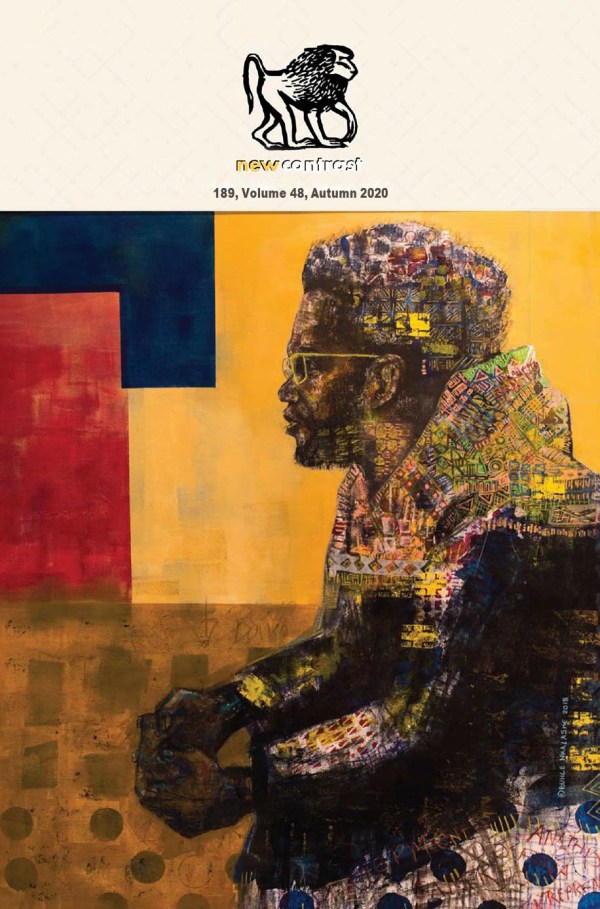
A Profile portrait of an African man, pensive, sitting with his arms resting on his lap and his hands clasped in front of him. He is wearing colourful print clothing and head gear. Blocks of yellow, navy and red make up the background wall.

Front cover art by Buhle Nkalashe

This story appears in New Contrast, one of the first South African literary journals. New Contrast is devoted to publishing the best of poetry and prose, art, reviews and interviews from both local and international authors. I am thrilled to be keeping company with such outstanding poets, prose writers, artists and photographers in this Autumn 2020 edition. Please go the New Contrast website and support this journal which relies on sales of hard-copy print editions. 

Grandmother

I smell meat cooking on the barbeque, innocuous in a typical suburban yard in Blacktown. The warmth of the winter sun penetrates my skin, the grass is cut, the deck needs oil, a scrawny rose bush winds its way too high, clinging to the asbestos wall, clambering up and over into the guttering. My granddaughter, Yasmina, throws a red ball into the blueness of the sky. The smoke twists up through my hair. I close my eyes, listening to the spitting fat.

*

Insignificant popping sounds, spitting, getting louder. A vehicle speeding so late in the winter dark pulls up, brakes screaming. Tyres graze the gravel outside. It seems my feet are walking the icy tiles before my torso leaves the bed. My hands feel for jeans, one leg in and then the other, I pull the denim up over my thighs, scrunching folds  of floral nightdress between the waistband and my skin. The zip bites down hard on the cotton fabric. Beating, clattering, chattering. Giant insects flying frantic against glass, wings flapping.

Running now down the passage into their room. I lift baby warm from her cot curled in blankets and stride skin silent on the floor across to her sister’s bed.

“Boni, Boni, I want you to lie here under the bed. Hold Moratiwa. Don’t let her go. Don’t talk. Whatever happens stay quiet.”

“Yes Mama,” she whispers.

I’m pushing the quilt and a pillow and Boni and Moratiwa under the bed.

Bre-bre-bre-bre-bre … not insects flapping wings  …  bre-bre-bre- bre … no they are not insects. Ghost men with rounded backs, bent men swarm from a white combi van. They run into our neighbours’ yard, the old colonial house is dark behind the trees, its wide veranda grimacing. The servants’ quarters, submissive and small in front of the house near the road.

Bre-bre-bra-bra, lines of yellow light burst from stumpy machine guns into the blackness, into the brick quarters where two young women live.

Peering from the side of the lounge-room window, through the crack where the curtain doesn’t quite cover the night, the grass  quivers, long and colourless under moonlight. The men throw grenades. White light flares up the lounge-room wall. The numbers on the clock flash bright. Short thuds of sound. I drop down, moving on hands and knees across the rug. The sofa and baby’s teddy in the hallway gleam iridescent razor-blade blue, every atom of my body is noise, intense loud limpet, cracking, reverberating circles, flattening my belly to the floor, shuddering walls, shattering windows, pieces of glass falling into my hair.

I crawl up the hallway, into the bedroom, crunch my hipbone cold into the white tiles, clinging to my children, not moving. They  are quiet. The dead night is quiet. There are no sirens, no dogs bark. Gaborone is acrid silence.

*

My son-in-law turns the steaks. The sausages spatter fat at his big-pony Ralph Lauren shirt and he jumps back, his body curves like a letter C. His sneakers are never-been-worn white.

I say, “I like your hair cut Walid. Really smart.”

“Thanks Lena. Got it cut this morning.”

Boni yells from across the yard, “He’s so particular about his hair! He’s been going to the same barber for fifteen years. Won’t let anyone else but Joe cut it.”

“Baby, he’s an expert blender. Not many guys know how to blend.”

“I think he’s got a bit of a bromance going with Joe,” Boni says. She’s wearing a light denim dress that criss-crosses over her back and sticks out like a tent over her pregnant belly, my second grandchild. We already know a boy is on his way.

Walid leaves the meat, comes over and bends his head down in front of me.

“Look here, he cuts with a zero, then a half, then a one, faded high like navy cut with no lines. You know what I mean?”

I nod, “Yeah, I can see.”

“The fade’s the most important part, very difficult to blend from zero to half into one without showing lines. It has to look smooth and crisp. Other hairdressers stop halfway up the back of the head because it’s too hard. Not Joe, he brings the fade right up to the top of the head, seamless. Then he scissor-cuts the top. Strictly scissors. No blade.”

Walid strolls back to the barbeque and starts putting the steaks onto a plate.

“Yeah, he thins out the top so it doesn’t look so thick and the hair sits edgy not flat. That’s the beauty of this cut. I can wear it gelled up like now or I can wear it flattened down to either side, neat like, for work.”

“It’s a smart cut,” I add.

Yasmina runs towards Walid, her arms flailing above her head like a windmill,

“I wanna help Baba,” she says grabbing hold of a steak with her plump little fingers, quickly dropping it in the dirt, looking stunned, about to cry.

“It’s hot Yasmina. Don’t touch anything. Go to Nanna.” He holds their two little white dogs back with his foot as if he’s playing soccer and guides his daughter away from the barbeque.

I call, “Come here Yasmina.”

She walks over, nonchalantly, slightly bow-legged, curly hair dancing in the breeze. Her body is solid in pink and green leggings, a green mouse dances on her tee shirt. Yasmina climbs onto my lap. I hug her, tender skin warm against mine. Boni drags a chair over to where we’re sitting. She’s puffing and as if her tiredness is contagious, I feel deep fatigue, a dark uneasiness.

“Mum, will you come to the delivery again?” “Yes, sure I’d love to.”

“Good, Walid and Moratiwa and you, just like Yasmina’s birth hey?”

“Will they do a caesarean straight away this time?” I ask.

“No, I want to try for a natural birth first. Prefer to avoid caesarean. It’s a pretty major operation.”

My granddaughter sits moist against my body, listening.

“Ok, come and help yourselves to the food,” Walid yells.

Yasmina jumps off my lap and sprints towards him. I half-expect her to fall but she doesn’t.

*

Going home, Homebush Bay Drive exit, diesel fumes slip through the vents. A mammoth truck next to me, another in front. My car, dark- green, 1998, shabby, gets me from A to B, and I fantasise, if I had money, which car would I buy? Not the Mercedes C200, maybe the black Mazda 3 in front, or the orange Toyota Camry with black mag wheels that roars when it takes off from the traffic lights. Roberts Road. Bunnings looms like a military bunker on my left, a red and yellow Maccas flag flies next to the Australian union jack and stars, my country of exile, the bright lights of a petrol station, Oporto chicken. Cruising through the green light across Juno, right up to Punchbowl Road.

I park, trying not to scrape the fence. The outside lights at Koh I Noor Court stopped working last time it rained. We want to pay to get the electrics sorted but strata fees don’t keep up with all the burst pipes and broken windows. A patchy lawn in front of the apartment block. The geraniums flower orange-pink next to the bay tree. The leaves on the dwarf mandarin curl, white with some kind of fungus. I pass my neighbour’s door, climb the stairs, to the same children’s songs I hear every day and every night… and if one green bottle should accidentally fall, there’d be five green bottles hanging on the wall…

Two and a half years since I first became a grandmother, now another grandchild is about to be, being, humans being. Strip off, shower, let the warm water flow down my arms, my legs. Curled up on the bed, comforted by the towelling of my robe, textured against moist skin. Sleep comes easily but briefly, I drift in the space behind closed eyes assailed by gruesome images, flickering faces, distorted, ugly. Unclench my hands one finger at a time, stretch out my arms, try to relax the muscles in my neck.

My  grandchildren  will  never  know  their  maternal  grandfather.  I conjure up the face of RraBoni. He rolls a joint, relaxed, laughing, listening to his favourite fusion. Tilting his head back, he blows wispy, white circles of smoke that hover, gently falling apart over the trumpet lines, the congas, the guitar snaking through Miles Davis, Bitches Brew, the bluesy keyboard on Weather Report’s Birdland. My children’s baby faces — Boni, her brown skin, freckled by the sun, a smiling dimple on her left cheek. These images relieve my nightmares. Moratiwa, more petite, darker skin, darker hair that falls in spirals over her shoulders. The one who is loved. My granddaughter, her brown, gold-tipped curls that spring in all directions, her alert eyes observing me. My yet-to-be- born grandson, another gift from the ancestors.

*

The reflection of my body moves ethereal in the sliding mirror doors of the wardrobe. My existence is enmeshed in history, some parts fluid, some parts rotting, torpid beneath my living. After almost thirty years, I feel an urgent need to tear away the scabs, dig down to the core, the agony. I begin searching, frantic, closed up in my flat. I claw at the skin of apartheid, searching for details of what happened that night. I want to know about the men who planned the killing, the men who murdered, those who justified and covered up the crimes. I trawl the Internet, South African Truth and Reconciliation Commission documents, reports, SABC  videos. There are so many submissions, so much brutality, over 20,000 statements from victims, nearly 8,000 applications for amnesty from perpetrators of crimes against humanity, a small but somehow representative taste of apartheid from the 1st March 1960 to the 10th May 1994.

Still and stiffened into a monstrously crooked position, I read like an addict craving horror, ripping open and exposing the cruel core of a desperate regime. Under the heading, ‘cross-border military operations’, I find testimonies. On 14 June 1985, twelve people were killed in Operation Plecksy … in Gaborone, Botswana. Eight of the dead were South Africans. The others were a Somali citizen, a Basotho child and two citizens of Botswana. Some of the Security Branch operatives who identified the targets and planned the raid applied for amnesty. I read their names. Their words avoid the truth. Their words are small truths, just enough to get amnesty, no more. Some are obvious lies.

A rooster crows next door, another rooster answers from the darkness across the road. I unbend my body, stand and stretch my arms in the air. I can see the tree in our neighbour’s yard. The half-moon has fallen, pale, from the sky and lies trapped in the tree’s branches. I move from one room to another without purpose, walking in the gloom.

Mrs Hilda Phahle addresses the Human Rights Violations Hearing in Alexandra. Our children fled this oppression of this country … the land of their birth, the land of their forefathers. They were tortured beyond reason and fled. The enemy followed them and brutally massacred them … the SADF arrived swearing and behaving like people well-drugged and drunk, ordering George to open the door. The door was blown open … the piano fell against Levi’s bed under which he was hiding. God spared him to tell the story. He watched from under the bed as they pumped bullets into his brother and his wife, bullets penetrating them simultaneously. They turned them over face upwards and one asked, “Is hulle dood?” (“Are they dead?”). “Morsdood” (“stone dead”) was their reply.

My eyes are scratchy in their sockets, my limbs creak like heavy machinery in need of oil. My head, an abandoned factory, echoing the vicious cruelty. Someone walks around the flat below, a door closes, a toilet flushes.

Mrs Phahle wears large, metallic pink-rimmed glasses. A woollen green and red scarf protects her neck from the winter cold. She wraps a Basotho blanket around her shoulders. Her voice has the timbre of mother love, woven loosely with threads of grief and anger. I hear her weariness. Her face is light-skinned, gentle. She says to a television camera,

As Christians we’ve got to accept what has come our way, more so that we cannot repair the damage. The only thing is for us to accept and we pray that such a thing never happens again. That’s all.

I lay on mounds of blanket twisted in sheet. Sleep rises up in the blackness and falls like a small boat on large waves. So many of the living are suffering. I’m fearful the waves will break, and the boat will smash into many pieces.

An insistent electronic pulse draws me from sleep. My fingers fumble with my phone, sliding across the small screen. Turn the alarm off. There is wind blowing outside. A branch of the bay tree scrapes against my bedroom window. I call work. My voice deliberately weak,

“Hi Maureen, I’m so sorry I won’t be coming in today. I’ve got a really bad migraine.”

*

The broken windows allow the frosty morning to creep into the lounge room, over the shattered glass, up the hallway into the bedroom. A bird dares to twitter. I hear the front door open. RraBoni has come home with two friends. They’re holding multi-pronged, metal spikes.

“Look what they threw on the roads. Eeesh, everyone has flat tyres.” My husband is a big man, wide shoulders hunched now. He puts his arm around me and I lean further into the balminess of his body, alcohol and sweat. His face is red from a night of drinking.

“Are the girls alright?”

“They’re fine. Sleeping in our bed.”

“Anyone like a coffee?” I ask.

“I’d love one thanks Lena,” the smaller man says. He is hunched over, shivering.

I turn on the kettle, go to the bedroom and lift the quilt from Boni’s bed.

“Here Motusi.” He wraps it around his shoulders, pastel green, pink, brown squares, elephant, crocodile, monkey and lion.

“Danke Mma.”

“Still no sign of the police,” says RraBoni

I’m careful not to cut myself, fingers like tweezers, picking up the bigger pieces of glass and putting them in a bucket. Sweep the kitchen floor and the hallway.

A BDF army jeep pulls up. We file outside. The grass sways yellow in winter. Everything is sepia, the trees, the gravel, the rusting wire fence. A tabby cat follows us, mewing. Confusing, smoky-meat odour clings to my skin, sweet like almonds. Pieces of the young women’s bodies grasp the fence, the grass, hang from the syringa trees. People come slowly from the flats, from the surrounding houses. Two soldiers throw a long metal box on the ground. We collect a shoe, a bloodied bra, a hand. We collect burnt chunks of flesh. No one speaks. No one cries. We gather the remains of our neighbours into the metal box.

*

It is suburban quiet. Children with shiny skin and bright white socks pass my window on their way to school. My kitchen, fake marble benches, white cupboards, is small but filled with light. I chop apple and banana into a bowl, drink green tea. I will not go to work. Bare feet, hair unbrushed, hunching over the laptop, four days and nights melt into a blistered mass of knobbled ash and grit. Friday, Saturday, Sunday, Monday, searching for detail. Gentle people murdered  in their beds, intellectuals, artists and writers, musicians and teachers. Seven of the twelve associated with the ANC. The killers shot open the front door of Tami Mnyele’s home and machine-gunned the artist as he ran across the backyard. They joked, kicked his corpse and took trophy photographs. Blasted his artwork, splintering his easels and paintbrushes, splattering paint.

Swallow painkillers, stretch my neck, bend my back, my hands dangling at my feet. I fall onto my bed again and stare at the ceiling. The Scottish woman who lives in number nine is talking to our neighbour about his fruit trees. I close my bedroom window and pull the blind.

At two o’clock Tuesday morning, I sit crunched  over  the  laptop. The men in combi vans murdered Duke Mashobane. His six-year-old nephew, Peter Mofoka, fled screaming from the bedroom, wearing flannel pyjamas. They pumped bullets into his small body, continuing at close range long after the boy was dead. Dick Mtsweni, ‘Mkhulu’, was shot and his house set alight. His body burnt to nothing. Michael Hamlyn was executed as he knelt on the floor at the end of his bed, looking up at the attackers, his red hair tousled from sleeping. He was a conscientious objector, who refused to serve in the South African Defence Force. They murdered Somali refugee and Dutch national, Ahmed Geer. His wife, Roeli, eight months pregnant, escaped with bullet wounds to her legs.

Most of those who took responsibility for planning the attack were granted amnesty from human rights abuses. The names of the 5 Recce SADF commandos and the Barnacle operatives from Special Forces are not listed. Those men who drove across the border to take the lives of twelve people didn’t apply for amnesty. I can’t find anything to say they were ever charged for their crimes. One working as a mercenary in Iraq was killed in Al Kut in 2004. His mutilated body was hung up for public display.

My phone rings. “Hi Lena.”

“Walid, what’s happening?”

“Everything is fine. We are at Westmead. Boni’s waters broke about an hour ago. Can you come?”

“I’m on my way. See you soon.”

“Great.”

Travelling through the early morning is like watching a film on the plane without headphones, everything is hushed, just the sound of my car’s engine as I drive the M4 to Westmead.

I’m at the hospital, walking into the birthing room. The lights are dull and Boni is moaning. She’s hooked up to monitors.

Walid smiles, “She’s doing well Lena.”

The nurse says, “Yes, she’s doing very well. She’s dilated to seven centimetres. The cervix has softened. I think it will be a vaginal birth this time.”

I place my hand on Boni’s forehead. Her hair sticks to her skin. She’s groaning and her lips are dry. I offer her some lip moisturiser. She digs some out of the small pot, her finger shakes. Smears it greasy over her mouth.

“Is Yasmina with your sister?” I ask Walid.

“Yes, she’s sleeping. Anisa’s at home with her.”

Boni moans and yells, “I can’t stand this pain.” She breathes out, grabs the gas and sucks on it.

“I’ll just be waiting outside.” I stroke Boni’s arm, then leave the room, walking across the shiny floor into the corridor. Sitting on a hospital chair, dread filters through my pores like grimy smog.

The passageway is empty, no sound other than the groans and she-wolf howls of women giving birth. I take a pen from my bag, bend down and scratch hard into the vinyl floor. Gladys Kelope Kesupile and Eugenia Kakale Kobole. A man pads around the corner wearing  a surgical gown. I pretend I’m picking up the pen from the ground.  He doesn’t look at me. Bending again I write, We have not forgotten. I scratch the words over and over, so they are etched deep and black into the beige vinyl. Gladys and Eugenia came to Gaborone for work, one  a typist, the other a domestic worker, not even twenty years old. That night they walked home from a prayer meeting. The killers came as they lay sleeping in their beds.

In the corridor under neon lights, I unlatch my consciousness, trying hard not to sink into pools of unarticulated fear. I sit waiting for my second grandchild, waiting for everything to be all right.

J.D. Salinger’s daughter quotes her father as saying he never really got the smell of burning flesh out of his nose entirely. No matter how long you live, that smell remains. I remember our neighbours, the two young women blown apart that indignant night. The fragrance of their lives is as fluid and volatile as the corpuscles in my blood.


In this issue of New Contrast:

Interviews:

  • An Interview with Buhle Nkalashe by David Griessel

Poetry

  • Kobus Moolman, Henry and June / The Earth is Flat / I Am Made
  • Juanita Louw, Homogeen / Love Machine
  • Rizwan Akhtar, Last Year / Now We Will Say “Happy New Year”
  • Steve Lambert, Unbecoming / Ars Poetica
  • Fiona Zerbst, Closer to Light / On the Edge of Darkness / Portrait of Three Lions
  • Bibhu Padhi, Another Need / The Address
  • Warren Jeremy Rourke, Washing Up / Double Rainbow
  • Johann Lodewyk Marais, Die stasiewa / Die eerste wens
  • Stuart Payne, The Planet
  • Justin Fox, Building Wall
  • Stephanie Williams, Mother / Let’s Talk
  • Alessio Zanelli, Hiker and Lines / Dear Old Beloved Padan Fog
  • Sarah Frost, Gold
  • Ian Salvaña, This Town We Left To Miss, You Said, Is Home / The Birthing of a Poem
  • Tom Paine, Seeds / Kamikaze Bees / That’s All

Prose

  • Gaele Sobott, Grandmother
  • Melissa Gow, One of Us Is Bleeding
  • Jonathan Tager, Guidestar
  • Rémy Ngamije, Black, Coloured And Blue (or, The Gangster’s Girlfriend)

Artworks

  • Jono Dry, In My Silence / Restrained I Unravel / Wrapped in Tradition / Separation


To purchase this issue (R120) email the business manager at business@newcontrast.net

My freedom is writing. My freedom is my peace of mind. My freedom is building a good relationship – An Interview with Ken Canning

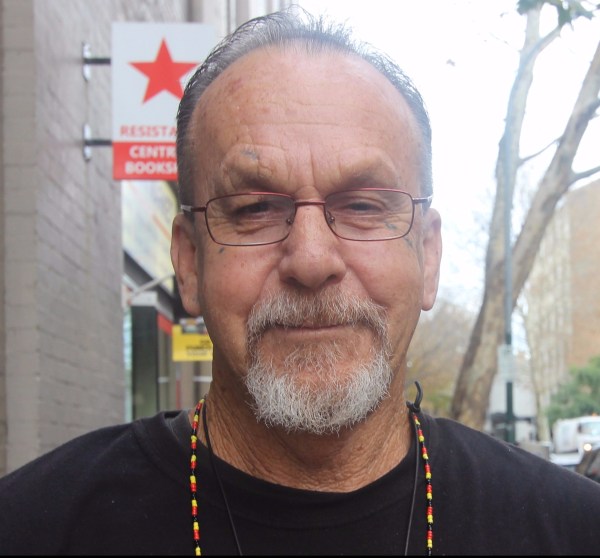
Head shot of Ken Canning. He is wearing glasses, and a long necklace of small, red, gold and black beads (Aboriginal colours). He has a greying mustache and beard, and he is smiling.

Credit: Socialist Alliance

Ken Canning is a Murri activist, writer and poet. His people are from the Kunja Clan of the Bidjara Nation in south west Queensland, Australia. His Bidjara name is Burraga Gutya. Ken has lived in Sydney for over 30 years. He worked as an academic and cultural adviser at the University of Technology Sydney and is currently a support worker at the Judge Rainbow Memorial Fund, where he assists people who have experienced the criminal justice system.

Ken’s poetry has been translated into several languages. His publications include Ngali Ngalga, Breakout Press,1990 and Yimbama, Vagabond Press, 2015. His first major play, 49 Days a Week, was showcased at the Yellamundie National First Peoples Playwriting Festival 2017. He has also written a half-hour film script called Cocky on a Biscuit Tin.

Gaele Sobott: Let’s start with your birth. There’s information on the Internet stating you were born on Bribie Island, Queensland.

Ken Canning: I spent some time on Bribie Island as a kid but I wasn’t born there. I was born in Frankston, Victoria. My mother’s family come from Charleville in Queensland.  Dad was stationed in Victoria when Mum was pregnant with me.

GS: Where was your father from?

KC: He was from Toowoomba. My Dad was a whitefella. The family was Irish from County Cork. They were very rich and very powerful. My grandfather’s name was Bob Canning.

GS: Where did you parents meet?

KC: Granddad worked out at Charleville. My father was in the navy and when he got leave, he went out to see his father. That’s where he met my mother. When they decided to marry, the Canning family didn’t want anything to do with us because they were against inter-racial marriage.

My grandfather said, ‘My son can marry who he wants.’

So, the family disowned both my father and Granddad. Any wealth, any land my father and grandfather were entitled to was stripped from them. They were outcasts. Granddad was disappointed with his family. He said they were traitor Irish. They took part in some of the massacres of Aboriginal people. I researched it years later with Dr Carroll Graham at University of Technology Sydney (UTS). They didn’t come here like your average Irishman who didn’t like authority. One of granddad’s uncles even became a policeman.

The reason I was born in Frankston was a bit random because while Mum was pregnant with me, she accidentally trod on a Red-Belly Black snake and got bitten on the foot. An old fella reacted quickly, got a sharp knife, cut her foot open and sucked the poison out. She was lucky, she was only a bit crook but after that she wanted to be with my father so she went and stayed in Frankston. About six months after I was born, we headed to Narrabeen in Sydney and then we took off to Queensland.

GS: So, you may have a bit of Red-belly Black venom in you?

KC: Well I might. I was fascinated by snakes growing up. There were snakes everywhere on Bribie Island. One time I was hiding from my cousins behind a tree, waiting to scare them and a snake crawled across my foot. I froze. I knew if I kept still it would leave me alone and it did. It took off when my cousins came running up the road. I admire snakes but I don’t really want them crawling on me!

I used to stalk kangaroos as a kid. I knew I couldn’t catch them. They were too clever for me. I’d chase goannas too then one evening a goanna turned on me. Jeez, I tell you what, I reckon if it had been an Olympic trial, I would’ve won. I ran home and slammed the door. My brother and I were looking through the front window and it was sitting there waiting for me to come out. It was much bigger than what I’d initially thought. They can give you a nice bite. The funny thing about a goanna bite is that every year to the day the bite mark will come back.

GS: Can you talk a little about your mother’s family?

KC: I don’t know the traditional names but my great, great granny was called Jane Boyd by the whites who invaded the area. I read a police document on her – ‘Jane Boyd, Aboriginal woman, associate of Chinese gardeners. Likes opium, is armed and will shoot at police.’ The Chinese came to the area because they were being persecuted. They lived with our people.

My great, great grandfather walked down from Tenant Creek right into the middle of the wars, the Forty-Year war. He married Jane Boyd. He was given the name Edward Prince. There are still Princes out West but he originally came from the Northern Territory, Carpet Snake Dreaming. My mother’s side are Magpie Dreamers. My great granny looked after me. She used to tell me stories about how her mother would stand up to the police. They were very strong people. Granny got kicked in the hip by a horse out West and the doctors wouldn’t come to see her. The family mended the hip bone as best they could but she had trouble with it all her life. So, a lot of the time she was bedridden. She was addicted to morphine. She passed when I was about fifty-six.

It was confusing growing up because Mum had me when she was young and when I was little, I thought she was my sister and called her Joan. I thought my grandmother was my mother. I used to call her Mum, and I thought my great grandmother was my grandmother. That still sticks in my mind today. Often when I talk about my gran, I’m actually talking about my great grandmother.

GS: Tell me more about the Forty-Year war.

KC: The Forty-Year War was one of the longest wars in Australian history. Not the whole Bidjara people but our clan group, the Kunja clan, fought for forty years. That war went from the 1860s right up to the 1900s when they allegedly defeated our people. Men, women and children were fighting against the British. After that a lot of my great uncles went off with the bushrangers to continue fighting for another twenty years.

My great, great grandmother was carrying a gun around everywhere she went, shooting at police. We were a people who travelled on foot then. We didn’t take to horses until the cattle stations started using us as labour. Some of people rode horses but basically our guerrilla warfare was on foot. We only have oral history records of that war. My cousin, Sam Watson, found some information in the archives in Brisbane. There was a box just sitting there collecting dust and he started reading through some fascinating documents, but the archive staff told him the material wasn’t for public viewing and he should come back. When he went back the whole box was gone.

There is no official acknowledgement that the Kunja clan of the Bidjara people fought for forty years. That’s two generations and no recognition. When you look at our society today, we’re coming up to Anzac Day where people beat their chests and say, ‘My grandfather fought to save this country.’ I don’t have that right. It’s a denial of history. Like the very first boys’ home I was put into, does not exist. It’s been wiped from history.

GS: Where was the boys’ home?

KC:  It was in Scarborough, run by the Catholics behind a boarding school for white kids. The building was full of Aboriginal kids who had allegedly committed crimes. They were totally brutalised. There is no record of that place ever existing. The Catholic Church denies it ever existed. It does not exist but I was there. I know other people who were there too. I knew people who committed suicide in there. It’s as though I fabricated eighteen months of my life. Our history is denied.

GS: How old were you when you went to Scarborough?

KC: I was ten, almost eleven. It was just after my great gran died. There were a lot of kids my age there and kids up to sixteen, seventeen-years. The place was run by brothers who were mad brutal rapists. They did some terrible things. They didn’t care what damage they caused. When they tried to take me, I’d jump up on the bed and scream, bite, kick. I was too much trouble for them. But they did bed checks every day so they set me up by putting two cigarettes under my pillow. I was flogged, every single day for the two cigarettes they’d find.

I was christened a Catholic. My parents were Catholic. Then I remembered Granddad talking about a cousin of his, called Archbishop Duhig, the archbishop of Brisbane at that time. I told one of the brothers. They must have checked it out and then there was a big change in attitude towards me.

GS: Why were you put in the boys’ home?

KC: I was living on Bribie Island and there was a shop I wasn’t allowed into because I was Aboriginal. The place was all bush back then. It was beautiful. Not like now. It’s disgusting. All built up. Multi-million dollar homes.  I was waiting on the road up from the shop for my cousin. Some white boys came out of the shop. I knew them. They were older than me.

They said, ‘Do you want a bag of lollies Johnny?’

That’s my middle name. Anyway, I said, ‘Yeah, thanks.’

So, I was standing there with the bag of lollies when the shopkeeper came out and accused me of stealing them. He knew I wasn’t allowed in the shop.

I said, “I’m not allowed in the shop. How could I have stolen them?’

He took me to the policeman who put me in the cells. Twice a week a priest came to Bribie from the mainland. He was there too. The shopkeeper, the policeman and the priest made the decision without any consultation with my family, to send me to Scarborough. My family didn’t know where I was. They assumed I’d been taken to Brisbane. Everyone was looking for me in Brisbane. Some of my relatives went to the boys’ home in Scarborough but there were only records for orphans. The people in the office didn’t know who was in the home. Most of us kids were taken there illegally.

When stories started circulating about the place, and blokes in jail started talking about the treatment they’d received at the home, the Catholics closed it down. No record of anything ever happening there.

GS: You came from Frankston in Victoria, stayed for a while in Sydney and then came back to Queensland. Where did you live? Was it Bribie Island?

KC: We came from Sydney back to Charleville.

GS: What are your memories of that time?

KC: I was a funny little kid. I was fair. The old people in the family who lived inland, didn’t have any contact with white people, they’d come and visit, and every time they left, I’d follow them back out to the desert. Those men and women laughed at me and gave me the nick name, Myal. In our region that means an Aboriginal person who doesn’t want anything to do with white ways. The whites changed the meaning to a wild Blackfella. I later heard that all the family were killed by white people.

West Queensland in those days was lawless. It was brutal towards Aboriginal people but we had some good fighters in our family. We had some victories. My uncle Bill Bailey was a big, powerful man, huge. Any time we’d work for the white man, he wouldn’t pay us. It didn’t stop Blackfellas from working to try and make a living. My Uncle didn’t accept it.

He said, ‘I don’t care if I go to jail. You pay me or you’ll be in your grave.’

They paid him. We weren’t allowed to have bank accounts so he saved his money in an old Sunshine Milk tin that he buried in different places. No one ever knew where. Aboriginal people weren’t allowed in Charleville. He’d walk up the main street. Blackfellas weren’t allowed in the pub. He’d go in and demand to be served and they served him. The local police couldn’t get him into the jail. He was too powerful.

He saved enough money to buy a block of land just out of Charleville. We weren’t allowed to own land but they sold him the land. It’s still in the family. He made history. I loved Uncle Bill.

GS: When did you move to Bribie Island?

KC: We were hounded out of West Queensland. My old gran, my mother’s mum, wanted us to go. The government didn’t let blackfellas go to school and because of my complexion, I would have been taken by Welfare. We moved around South-West Queensland for a while then we stayed in Brisbane. We lived at a hotel under the Story Bridge. Unfortunately, by then, Mum had become an alcoholic. I was about five years old and I wandered off and nearly fell into the Brisbane River. The authorities put me in an orphanage. Two years later Dad came out of the navy. Because he was white, he was allowed to take me from the orphanage. He was a violent man.

One time, I was sitting on the beach with my granddad when he was dying of leukemia in the 80s and I asked him, ‘Have you got any regrets?’

The old fella said, ‘Yes, one regret, your father!

I got on well with Granddad. We lived in Redcliff for a while. I was seven or eight when Grandad got me into a Catholic school but they kicked me out because I was disruptive. I stood on the desk and hit people on the head with a ruler so they gave me a warning. Not long after that I got up on the roof of the boys’ toilets, jumped down onto a group of people and got stuck into them. I had a lot of rage by then. After that we moved to Bribie Island.

GS:  Where did that rage come from?

KC:  The rage came from a whole lot of things. There was a lot of violence in the home and alcoholism had taken my Mum. I found my grandfather on my mother’s side dead at the kitchen table. That shocked me. I was starting to understand the attitudes of white people towards my mother, towards Aboriginal people, racism. The police, and white people in general would call my mother names like whore, slut. Those things affect you as a little kid.

 GS: You’ve said you chased kangaroos and goannas, how else did you like to spend your time as a kid?

KC: Yeah, I played in the bush but I’d also take time and go and sit with my Gran. She’d tell me stories about what was happening in her day and her mother’s day. She talk about which family groups were related to other family groups and where they went to when they were hunted out. She told me a whole lot of things. She told me stories about the black servicemen from the States stationed in Charleville during the Second World War. She didn’t like them. Stories of rape and violence towards our women. She experienced it personally.

In our land before white people came we were very much matriarchal. Gran and my old Granny Boyd, they had several husbands. They were open about their views that if a man started playing up, getting silly after he’d done his job, given them kids, they’d show them the door. Our lands were matriarchal. That didn’t mean that men were demeaned or exploited.

Another thing I liked doing was listening to the wireless. I used to listen to radio plays, the news, BBC programs.

GS: So, you were taken to the boys’ home in Scarborough from Bribie Island. How long were you in that home?

KC: I was in there for about one year or so. When I got out, the authorities took me back to Bribie Island and dumped me in the middle of the road outside an abandoned house. I was twelve going on thirteen-years-old. I went around to my old boxing trainer. He told me the family had gone to Brisbane looking for me. He drove me to Brisbane and I asked him to drop me at Musgrave Park. I sat with all the Blackfellas there and people took me in. They looked around and found Mum living at Wilston.

I was only in Brisbane for a little while and the local police grabbed me and took me to Windsor police station. They were screaming at me about a heap of break and enter crimes. Mum came in and tried to set the record straight. They called her every filthy name under the sun and threatened to lock her up. She got Granddad and he demanded to see the charge sheets.

He said, “My grandson was in the boy’s home in Scarborough for most of these.’ The coppers weren’t about to argue with Granddad and they let me go.

After the boys’ home in Scarborough, I made a habit of being alone. I didn’t want any ties for a long time. I got into a lot of trouble in Brisbane and ended up in Westbrook, another boy’s home. I ran away from there and stole a car. Police cars surrounded me down near Roma street and ran me off the road. They were shooting at me, bullets flying everywhere. One went through the door straight into my leg near the knee. I jumped out of the car and collapsed.

They put straight into the men’s prison, Boggo Road, Two Division. That was illegal because I was only sixteen. When Two Division was eventually closed in 1989, the Australasian Post, described it as the most notorious division in Australia. It was a hell hole. They had a young offenders’ yard but they put me in the men’s yard. I came in on crutches. My Uncle Vic was in there. He said, ‘You’ll be right. Settle down.’

Everyone knew Vic. Because I was his nephew, they left me alone. I only did a couple of months and I was let out. I told Mum I was going bush for a while. I had a bit of money because I was working hot so I caught the train to Sydney. Then went to Melbourne, across to Adelaide and on to Perth. I got knocked over there with a mini minor full of stolen property. How stupid was I then? You’d think I would’ve got a bigger truck.

The authorities contacted the Queensland authorities about me. They told them that they’d put me in Boggo Road because the boys’ homes couldn’t handle me. So, Western Australia put me straight into Freemantle adult prison. I was alright there because all the Blackfellas knew me. Again, I wasn’t there long. When I got out, the police put me on the train handcuffed. Just before it pulled out they took the cuffs off and said, ‘If you come back to WA we’ll put a bullet in you.’

None of the passengers would talk to me on the trip across the Nullarbor. It was a very spooky little trip.

I got to Sydney and found out that a member of our family had been shot to death by the police in Melbourne. Cuz and I went mental. We were already working hot but after that we made sure we were armed with sawn-off shot guns coxnd pistols wherever we went.

GS: I’d like to talk about your play 49 Days a Week.  I saw the reading at Yellamundie 2017. The story is very powerful, moving, thought-provoking.  Could you tell me a bit about the creative development process?

KC: I started writing that play years ago when I was at uni. I wrote a piece for a prisoner radio program. It was stream of consciousness, the thoughts of a bloke walking up and down his cell and I added some sound effects. That was the genesis but I changed it for Yellamundie reading. I set it in the cages at Bogo Road jail not the cells. That was the focus of the story, what the cage does to your mind. I had a lot of bad experiences in Long Bay jail too but I couldn’t set the Yellamundie play in two environments so I just kept it to the Boggo Road cages.

I wore myself down to the ground doing the writing. I was working, arranging the Invasion Day march at the same time and sitting up every night doing re-writes. I really wore myself out and I got ill. That sort of shut everything down. I’ve had a break now and I’m ready to write again.

Yesterday I was at the bus stop and along comes Fred Copperwaite, the director. He told me they are interested in developing the play further. He liked it because his father and his uncle had been in jail.  I was scared that audiences wouldn’t like it, that they wouldn’t get it, they wouldn’t get why it had to be so intense.  But the reception it got at Yellamundie was really good. The play means a lot to me because my friend was actually executed by the police in 1984. He was thirty-five.

GS: He was of Irish origin?

KC:  Yes.

GS: Can you tell me more about him?

KC: Well, he was a professional armed robber. We met when we were kids. He had a great sense of humour. Me and Cuz were up and coming and the older robbers took to us. Our friend was one of the people from that era who got in with the old guard of armed robbers.

GS: 1970s?

KC: Yeah, the late 60s going into the 70s. I started doing stick-ups in Brisbane when I was very young and got mixed up with older fellas. When I escaped, I did jobs in Sydney, then I’d head off to Adelaide to live quietly. That was a little recipe I had. Come back and do some more. I got to know some good people. They were good at their trade. They liked me and Cuz because we were naturals. We started when we were sixteen. We got knocked when we were eighteen but in those couple of years we did some big jobs. When we escaped, people saw exactly how willing and how good we were at the work.

GS: What makes a good armed robber?

KC: I used to talk to my best mates who were armed robbers about this subject. One of them is a whitefella with a long surname. I don’t know if it’s German or what. He was the most infamous escapee we had in this country and the most proficient armed robber we’ve ever seen. The authorities described him as a modern-day Ned Kelly, only better. I liked him. So, we’d spend hours discussing these sorts of things. Once you escape, the authorities always say, ‘He’s armed and dangerous and will shoot at police. Do not approach.’

So, the public gets the idea that you’re a raving lunatic and a killer. The consensus is that we’re low in intellect but my mates were all deep thinkers.

We talked about our early lives and how those experiences influenced what we did for a living. Whatever happened to one man must have been traumatic. He had no memory of anything before he was eight. He couldn’t remember what his parents or aunties or uncles looked like. Not one memory from his childhood. Completely blank. Another came from a poor Irish family. His father refused to assimilate, refused to obey authority. From the start, my friend was targeted because he was the son of a mad Irishman who hated the authorities and liked blackfellas. When he was about seventeen, he moved in with an Aboriginal woman. They had a baby together. He told me he had thought his life was hard but once he started living with a Murri woman, the police were breaking down the door, putting a gun to his head, calling her all sorts of filthy names, even putting guns at the baby’s head. It was like a horror story.

When you have those kinds of experiences, you can go two ways. You can take the anti-social path where you are reckless or the anti-social path where you want to beat them. We were driven by the desire to beat them. We were all thorough planners. We all had a mad survival instinct and a sixth-sense for trouble. Every one of us were experts at counter surveillance. If we were under surveillance, we knew it.

When one mate escaped from Katingal, he was out for eleven years. That’s a phenomenal amount of time to be on the run. He was the smartest of us all. In all aspects of criminality, he was an absolute genius. The other commonality we had was, we didn’t think we were doing anything wrong.

To be a good armed robber you need to be able to plan. A well-thought-out escape route is the most important aspect of the planning. you’ve got to be able to think on your feet. Something might go wrong. Someone in the crowd might try to rush you. It’s best to work by yourself or as a pair. Three people gets too complicated. We were a close circle of friends. We trusted and knew each other. Fitness was another requirement. We all worked-out very hard. Even in jail. Exercise was illegal in Boggo Road but I worked out in my cell all night. Fitness for when I escaped. We didn’t like drugs and alcohol.

GS: Can you briefly describe a typical job?

KC: We re-enacted one in the play. You run through the front door. You’re wearing overalls, gloves and balaclavas. One puts everyone on the ground, the other jumps the bank counter and takes the money. That’s easy to do.

We were the first groups to hit armoured trucks in the seventies. We’d wait for then to come out with the money. Then we’d come from behind, put them on the ground, take their weapons, take the money and get out. You’ve got to do your homework. I’d watch a place for five or six weeks. During the seventies and eighties and into the nineties vans were being done over left, right and centre. The insurance premiums were going through the roof. You can’t do it now. They’ve tightened up now, invested in better security in the banks, back-up people and back-up cars for the vans. Those cassettes they put in the ATMs hold A$200,000. I know that because even after I’ve done my time and retired, I still observe these things. If I see a van pull up I look at the time and note the location. I automatically go ding, ding, ding and start figuring out how to do the job. It’s a habit. I’m not remotely interested in robbing a place but I can’t help observing.

One of the smartest robberies was done by the late Jack Wilson and Don Flanders in the mid-seventies. They ran a postal van off the road, coming from the Sunshine Coast to the Reserve Bank. It was full of old bank notes but still legal tender. They got over a quarter of a million. In those days, it was a lot of money. Jackie Wilson was as smooth as a cucumber. We used to call him Hungry Jack because he’d be sitting on a fortune but he was as tight as they come. He’d open his wallet and moths would fly out. A cunning old bugger. He wouldn’t give away a thing but Donny got knocked and the coppers verballed Jackie.

GS: What does verballed mean?

KC:  It’s when an unsigned record of interview was used to convict suspects. I got convicted on unsigned records of interview. I never got convicted on evidence, neither did Cuz, or our mates. Brett Collins was one of my old colleagues. He started up the Prisoners Action Group and they worked hard to get verbals outlawed. You’d say nothing but the coppers would just type up a confession. They’d present it in court saying this man confessed then refused to sign the confession. It was accepted as evidence.

Before I first got verballed, we were in Sydney working, I was only young, and the armed robbery squad got hold of us and told us that if we gave them twenty-five percent of our earnings, we could do what we liked. Our answer was, ‘What earnings?’

They’d say, ‘We know you’re running hot.’

We’d say, ‘The only thing we’ve got going is a hot shower.’

No way we’d work with them. There were people that did work with them and they got free range but we hated them. They also gave up other criminals. Part of the deal was dropping other crooks in. They were dogs, informers. Barking to the coppers. I had so much contempt for people like that. All of us who refused to work with the police, when we got shopped, we were in for a very long time, but at least we had our honour. We chose a certain life and we stuck by what we thought were the rules.

We used to talk about all kinds of things in the cages. When I first tried to read Foucault, I wasn’t used to the language and it didn’t make much sense but once I did get the language, I sat down in the class at UTS and said, ‘You know, this is very ordinary.’

They said, ‘What?’

I told them I was sitting in a cage for years and we used to talk about this stuff. We were uneducated men talking about prison structures. Two Division was a circular design. You could see everybody at once. At any given time, you could be observed.

We didn’t call it the Panopticon but we did talk about how the prison meant you were under constant surveillance and that you ended up surveilling yourself and everyone else. You became your own jailer. We worked that out and we were one step ahead of the system because we deliberately allowed ourselves to fuck up. It was as simple as that. I was considered a very violent inmate. But all my life I have acted intentionally. I was violent intentionally. I don’t deny that sometimes I’d blow up. I’d lose my temper but most of the time it was planned and there was purpose to it. I saw what I was doing as part of the war against the invaders. My mate saw it as the continuing war against the British. We were aware that the surveillance was happening but we were not going to let them control us.

I’ve always felt that defiance, that wilfulness. I think that goes back to my old gran. Granny was strong willed too. Well before the Black Panthers came on the scene, she gave me my first taste of Black Power. It was on Queens Street in Brisbane. She wanted to go to a shop across the road. My cousins told her she had to walk down to the lights to cross.

She said, ‘Why would I want to go all the way down there and back when the place I want to go is just opposite?’

My cousins said, ‘That’s what it’s like in the city Gran,’ and they all ran off to the lights.

I was stuck with my grandmother. So, she just crossed the road there and then with me following behind. A car beeped its horn and she smashed the walking stick straight into the bonnet of the car.

She yelled, ‘I’m walking on my land. You don’t do that!’

It was in the middle of Brisbane where black people were locked up and shot at the drop of a hat. To use a biblical analogy, it was like Moses parting the Red Sea. The traffic stopped. She walked across her walking stick in the air, yelling, ‘I’ll go where I want to go.’

She didn’t speak very good English. I was in a sort of daze. I felt like I was floating a foot off the ground. It was an amazing thing for me after seeing so much oppression, then here was this black woman standing up to a city. She was my hero. The feeling that surged through me at that point was pure strength.

When I was in Sydney’s Long Bay we had some very bad things happen to us. We had an attempted breakout. It backfired and we took over the amenities block. The screws grabbed us, stripped us naked and flogged us. It got that bad some of the screws dropped their batons and went to get the senior to stop the others belting us. We were taken to the cells and dumped naked. The ones who stopped the beating insisted the prison doctor should come. He said we were alright. We weren’t alright. The sweepers could hear our groans. Other prisons knew we were not alright. They threatened to burn the jail down unless an independent doctor came in. There was an inquiry and that independent doctor gave evidence saying the four men he examined nine days after the beatings resembled four lumps of raw meat in a butcher shop. Heaven knows how we survived.

I was in and out of consciousness.  I couldn’t move and the only way I could breathe was taking lots of short breaths through my mouth. Later the pain of taking a drink of water was unbearable. One guy was found dead in his cell months later. We got sent back to Queensland and put in the cages. Cuz was put in the intractable section in Parramatta. They had him in a cage for five years. It was a horrific period of time but it taught me a lot.

GS: What did it teach you?
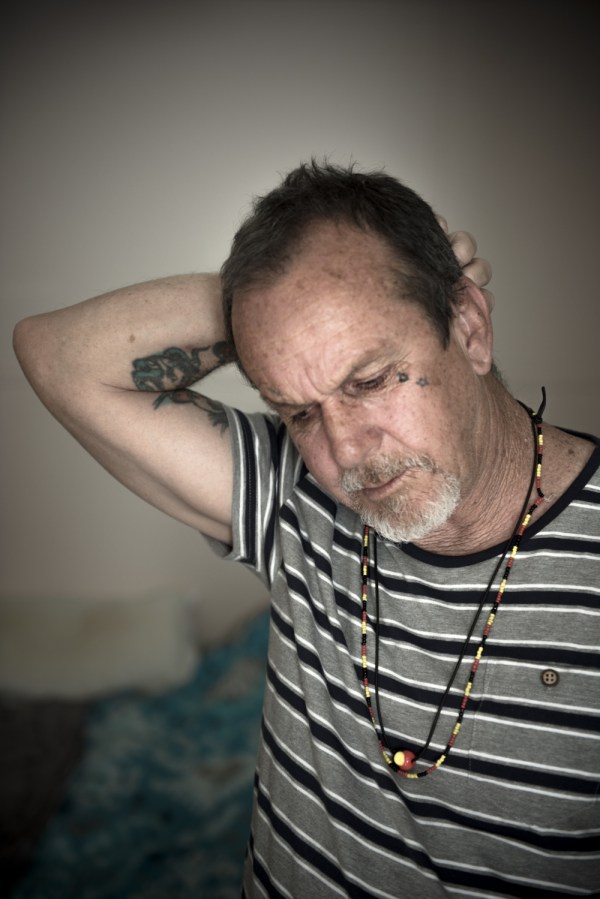
Colour photograph, interior, mid shot of Ken Canning standing in his apartment. Right hand clasped around the back of his head. He wears a striped grey, white and black T-shirt and two necklaces in the colours of the Aboriginal flag.

Credit: John Janson-Moore

KC: I know more about the world by being in there than I probably would if I was out. I know how peoples’ minds work. When you’re in there you’re seeing the most brutal aspects of mankind and you must work out how to survive. How to come out with your sanity intact? I developed some mental health issues but I learnt how to survive. When you get out, it’s worse. We didn’t do medium security or minimum security, it was all maximum. When you get out, you’re a lunatic. How do you survive that? The first few years I was completely off my head. Mad!

GS: When did you get out?

KC: In 1979. My parole was transferred to NSW. I was hallucinating, seeing things, screaming. By 1982 I was starting to calm down.

GS: Did the hallucinating start after you got out?

KC: No, I started hallucinating in jail. When I came out of the cages, I was in the mess hall getting my food, walking with my plate looking at one of the other prisoners and he turned into a creature. That was alarming.

GS: Can you describe the cages?

KC: They built six cages onto the walls in one corner of the yard where it narrowed into a point. Metal bars in front, to the sides and across the top. Small barred, rectangles joining each other.  A rough concrete floor and a seat built out of the same iron bars.  We’d get escorted down from the cells. We were in the cells at night. In the morning at about seven-thirty, the screws would drop the flap on the cell door, we’d put our hands out to get handcuffed. The screws would not enter the cell unless we were handcuffed and facing the back wall. Four small paces square. Because we were classified as intractables, they had to have a minimum of four prison officers to take one of us out.

GS: What are intractables?

KC: We didn’t accept the prison discipline and kept on escaping.  I was classified as an intractable not long after I first went to prison. That classification doesn’t exist anymore. Once your papers were stamped, intractable, they could isolate and brutalise you, put you in the cages for as long as they wanted.

GS: You were saying a minimum of four prison officers were required to take you out of the cell.

KC: Yes, the first thing they did when they entered was smash our head so our face would hit the wall. That was how every day started. Then they’d turn the cell upside down, go away and leave you to clean up the mess. They’d come back in ten minutes and escort the prisoner out of the wing, down a passage way and through the yard. The blokes in the yard were not allowed to talk to us.

Some refused to obey and would say, ‘How you goin’ Bra?’

We’d be carrying our toilet tub. When we got to the cages yard, there were three security doors to go through. The detail would grab the toilet tub and it’d be back outside the cell when we returned. Once in the cages, we’d put our hands out a little square in the door and they take the cuffs off. That was our outside time. They’d take us back about three o’clock. There was a cold shower at the front of the cages but for a while they wouldn’t let me shower. That’s why I’m fanatical about showering now.

GS: What was the worst thing about being in the cells?

KC: No space. As much as we got on together, sometimes we really got on each other nerves, wanting to kill each other. Most blokes were put in the cages for a couple of months, we were in there for years. For extra punishment, we’d be taken to the underground cells.

GS: You kept escaping?

KC: Yes, I liked to escape.

GS: Why did you like it?

KC:  It was like doing stick-ups, there was an adrenaline rush and it was defiance. There were cruel, despicable, white people in control in the jail. A hardened, inhuman bunch of people. I was not going to accept their authority over me.  I was always in maximum security. Escaping from maximum meant I only got three months on top of my sentence. Medium was twelve months and minimum was eighteen months. Every minute of every day, I’d be planning my escape. I was obsessed.

I talked to a criminologist, Dr Tony Vincent, about this. He believed that my obsession with getting out, stopped me becoming institutionalised mentally. If you go along with the daily routine and the surveillance, your mind becomes part of the system. Bodily I was pretending to go along with it most of the time but not in my mind. It was continual defiance on my part.

My initial sentence was thirty-two years. I’d just turned nineteen and I was given thirty-two years for four armed robberies. That’s unheard of. Every morning I’d come out of my cell and look at my cell card, my name, crime and sentence – thirty-two years. I was going to get out when I was fifty-one. When you’re nineteen, that’s like a death sentence. I appealed and got one of the sentences reduced to eight years so I ended up doing seventeen years, but when I was on appeal, I escaped from the courthouse. I’ve got a photo of me when I was on the run. It’s in a nightclub. I look like an office worker.

The next time I escaped, I faked a broken ankle, dropped my crutches and ran from the hospital. The time after that I turned a big garden sprinkler into a grappling hook, plaited sheets for a rope, jumped out of the yard and over the wall at Boggo Road. I escaped from maximum security three times.

Before that I escaped from police cells, and police cars, and I escaped from boys’ homes. There were a couple of attempted escapes too. One from Long Bay and one in Brisbane. I was working in the bake house in Boggo Road and watching their security when they send the bread out to the hospitals. They were slack. I got the blokes to pack me in the back of the truck with the loafs of bread. But the screws  did a random check in between gates and found me. I was laughing. If you’re busted, you’re busted.

Another time, it cost me a couple of grand but I got a little, diamond-tipped, flexible hacksaw smuggled in. I’d almost sawed through the top hinge of my door and was half way through the bottom hinge. I had no idea what I would do once I got out of my cell. Maybe I’d get out of the wing but then what? Hide somewhere until I figured out how to get out of the prison. But the guards came to do their usual check and one of them dragged his baton across the door. I was lying in bed and the door started wobbling. All hell broke loose. This was about two or three in the morning. They left me in the cell and cleared the rest of the wing out, tear-gassed it. Everyone was in the yards and it was cold. Then they came in armed, wearing their gas masks, the whole rigmarole.

I was put in the underground cells for that. They can only keep you underground for four days at a time because it’s brutally inhumane. They unscrew a big metal flap and lift it up then walk you down the stairs. There’s no light and hardly any air. Every day they give you a piece of bread and a jug of water but mix up the time so you are disoriented. Men go mad in those cells after two days and just start talking gibberish. They never came back from that. I knew some of those men. It broke them, I was afraid I might be next.

There was no bed in there just a toilet tub. I didn’t want to lay down because they don’t clean those places. People don’t always get the tub when they go to the toilet. I’d sleep sitting on top of the tub with my head against the wall. It stank and it was pitch black. If they wanted to keep me in longer than the four days, they’d wait until the middle of the day, run down, drag me up into the bright sunlight and order me to stand to attention and salute the Australian flag. I couldn’t. It was impossible. I was so disoriented and couldn’t handle the glare. So, then they picked me up, ran me over to the superintendent’s office, charge me with disobedience and took me for another four days down the hole. One time I was down there for almost twenty days.

GS: You’ve spoken about mental illness. How did you cope?

KC: I say to people, I went mad one hundred times but I came back ninety-nine times.

GS: One bit of madness is still hanging in there. When did you learn to read and write?

KC: Before I was in the cages, a whitefella, called Keith, who was in for fraud, taught me. He was a white-collar criminal but he gave the superintendent lip. One of the blokes who worked in the office told us. So, the super chucked him in our yard, Two Division, where all the ratbags were. The first day he walked in he had his hands behind his back. His hair was slicked down and he had an upper-class accent and he appeared arrogant. Normally, a bloke like that would get slaughtered. It didn’t happen. There was something about the guy and people just left him alone.

One day he sat down and asked, ‘Anybody have trouble reading or writing?

A couple of blackfellas said, ’Yeah.’

He asked, ‘You want to learn?’

It ended up he was a good teacher. He taught Aboriginal prisoners because only white prisoners could go to the education courses. We were in the middle of a campaign to change that.  So, this old bloke put the word out that we need equipment. The whitefellas who were going to the courses started knocking stuff off. Bringing back stencils and rulers and pencils. But in max the prisoners are not the only ones with instincts. The screws have instincts too. When something is going on, they know it. They were running around checking the cells then they did a big bust on Keith Edwards’ cell. It was the biggest bust they’d done for a long time. They were upending everything looking for contraband. We laughed because all they found was educational material. He went to solitary for seven days because of that.

It took a lot of years before Aboriginal prisoners were allowed education in prison. I was writing poetry by then and short stories.

The screws came to my cell and said, “Poetry’s considered a hobby and to do a hobby you’ve got to have permission. You don’t have a permission slip. This is an illegal hobby.’

They gathered up all my writing, handcuffed me, took me down to the incinerator and burnt all my work. That hurt far more than the floggings they gave me. I retaliated that night. Some of the poems were in my memory. I had a spoon in the cell and the concrete walls were old and a bit damp and soft, so I engraved a poem on the wall.

GS: Sometime after you were released, you went to UTS. What did you study?

KC: Yes, I went to UTS and studied Communications and then Oral History. Oral history became a battle in the politics of history. I was fighting to do my master’s thesis orally. I wanted to carry on the traditions of oral history in my work. They didn’t recognise oral history as history unless whatever was said, was proven to be true by someone else. After that Social Sciences developed a new master’s degree that allowed students to incorporate their cultural and socio-economic experiences.

GS: You were one of the founding members of Jumbunna Indigenous House of Learning at UTS. Tell me about that.

KC: Franny Peters-Little, Uncle Norm Newlin and I were the founders. It was called the Aboriginal Education Centre then. We did a lot of other things at UTS. The appointment of Debbie Stoddard as the first overseas students’ officer was because of a campaign we initiated. She became human rights coordinator for the ALTSEAN, the regional human rights group. We campaigned hard for more people from Non-English Speaking Backgrounds to study at UTS as well as Aboriginal students. We were responsible for the first anti-racism policy at UTS. The first policy aimed at hiring Aboriginal staff was drawn up by me and a non-Aboriginal man called Michael Refshauge.

GS: Were you one of the first Aboriginal students to enroll at UTS?

KC: There were other Aboriginal students before us but they didn’t sit it out. I finished in 1987 and I was the first Aboriginal student to graduate. Francis Peters-Little was the second. She was the first Aboriginal woman to graduate.  I graduated in 1988 and I pulled out the Aboriginal flag, wrapped myself in it, ran up and gave the black power salute. There was shock horror. Everyone was disgusted in what I did. At the reception. It was like I had spiders all over me. People just kept away. Twenty years later the University has used footage they have of that graduation to celebrate diversity at UTS. I didn’t realise they had filmed it.

GS: You published your first collection of poems in 1990, Ngali Ngalga: Let’s Talk.

KC: Yes, it was published by Breakout Press. The first poem I ever wrote is in that book. I eventually got permission to write and I wrote down the poems I remembered, the ones the screws destroyed, and I wrote other poems. A lot of those poems were rubbish some were so romantic, they were sick but writing was important to me. It was my survival. One bloke told me I had to have rhythm and rhyming schemes and all that and I was doing it but driving myself a bit mad. Then I thought oh bugger this. I was looking for words at the expense of feeling and emotion so I decided to just write what I think. I started writing my own patterns. Long lines then bang, one word. I liked that style. Sometimes it’s a bit disjointed. I like that too. Visually my poems are not square or rectangular.

GS: What is your favourite poem in Ngali Ngalga?

KC: ‘Black Baby’ is my favourite in that collection.  ‘Small soft baby, thrust from the womb . . . ‘

GS: Your second collection, Yimbanna, was published by Vagabond Press in 2015.

KC: Yes, Yimbanna means to understand. So, we’ve already talked in the first collection and now it’s time to understand. One of my favourite poems in the collection is ‘We Said.’ It’s about listening and understanding, about relationships. It’s a simple poem but deeper than what I originally thought when I wrote it. If everyone lived by this poem, we’d have world peace. You’ve got to listen to each other.

. . . LISTEN – To what
You said, I said, you said.
We both said instead,
I did, you did, I did – you.
Neither of us did,
Understand –
A word.
A sentence.
A thought.
A feeling.
A rejection.
A misperception
Of
each other.
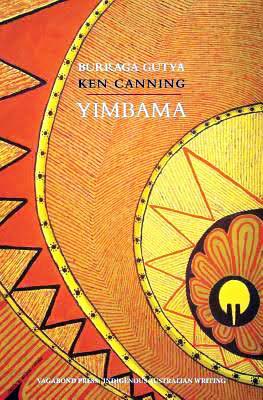
YimbamaIt’s not about blaming anyone. There’s a degree of fault all around. It’s about solving disagreements. You’ve got to sit back and look at each other, listen to each other. All parties need to engage. I’ve learnt to develop that skill of listening and talking with Cheryl, my wife. We have definite commonalities but we don’t always think alike. At times we are opposites. Our politics can be different but we have learnt how to co-exist. We have respect for each other.

I learnt about valuing other people’s opinions from my gran. She was really against putting people down because of their beliefs. She made that very clear to me. Once my cousin, Peter, called someone, I still can’t say the word, a W.O.G, she flogged him.

She said, ‘You don’t like people calling us bad names, you don’t call anybody bad names!’

GS: How would you describe the focus of your writing?

KC: I write about a diverse range of topics. I’m an Aboriginal man in my 60s who has seen a lot of oppression, my personal experiences and the experiences of my people. I write about the horror of these experiences, our strength and our survival, about the love of our culture and I write about our respect for mother earth.

GS: There are poems in Yimbama about mental distress. One is called ‘Psychotic Serenade.’ Why did you write that poem? What was going on in your life?

KC: I was living in Merrylands when I realised I had a serious mental health issue going on. It wasn’t just episodes where I was a bit off. The doctors had diagnosed PTSD, I wasn’t sleeping and I was a bit of a nervous wreck but I hadn’t been diagnosed with anything else. I was sitting on the veranda and I went straight inside and wrote that poem to describe what I was feeling.

Sing – high sing loud
the songs of the silent
musical mayhem,
suicidal symphonies.
Sprinkle sprinkle cyanide star
now I know how disturbed you are.

That’s the last stanza.

Realising I was experiencing some kind of mental distress was one thing but getting something done about it was another thing. I was picked up a lot in the Parramatta area. The police would take me in, give me the knuckle then let me go. It escalated and I got really disorientated.

One time the police took me in and where giving me a hiding in the cells. One copper came in and told them to stop. He realised I need help not a flogging. He had joined the police force in his thirties and worked as a plumber before that so he had a different perspective to the kid who came straight out of Goulburn Police Academy.

I was in hospital for a long time and I went in and out a few times after that. One of those times I was picked up by the police again and sitting in the back of the paddy van, handcuffed and one copper said, ‘You’ll have to wait a while, these other nut-jobs are getting booked in.”

I didn’t like that. That same copper who used to be a plumber heard him and saw my reaction. He intervened and told off the other copper.

The fact that someone who I saw as the enemy was understanding was a big part of my healing. Sometimes it just takes that one person.

I was diagnosed with Schizo-affective Disorder.  But if I allow the mental health diagnosis to define who I am, I’m allowing my life experiences of oppression and brutality to define me. I have always had very strong self-awareness. The psychiatrist who treated me was a wonderful woman. She said one of the saving graces was my awareness of my illness and where it came from. She believed I wouldn’t need to be on medication for the rest of my life.

At first the doctors at Rozelle told me I’d never be able to work again. When they let me out, I agreed to come back as an outpatient but made it clear that I fully intended going back into the workforce. I got my job back at UTS. I’m not saying it was easy but I got through it.

GS: You just said, ‘Sometimes it just takes that one person.’ Can you talk a bit more about that?

KC: Every other policeman was giving it to me, but that one policeman understood. In my journey since day one, there have been a lot of strange, undesirable people but I’ve also been fortunate enough to meet some of the most amazing people you’d ever want to know. Like the late Uncle Jimmy Little.  In his life time, he was called a Living National Treasure. He was Mr Smooth in his nice suits up on the stage but at home he’d be dressed in old ragged shorts and an old singlet, eating damper and because he couldn’t find a cup big enough to drink his tea. He was a big influence on me. Jimmy wasn’t as calm as everyone thought. He was radical in his way of thinking.

He said to me, ‘If you’re going to take a hard line, don’t take a backward step. Keep to that line. It’s your path.

GS: Do you see yourself as unflinching once you take a stand?

KC: Yes, and at the same time, I’m good at identifying the enemy. The enemy is not the woman next door, not the bloke who lives up the road, the enemy is bad government. The enemy is oppressive government and people who buy into racism like the United Patriots Front and groups like that. I don’t want to focus on the bloke who’s doing his job to earn a wage. I focus on the leadership, the heads of power. Even individual coppers, I’m not going to hate them. I don’t like coppers but I focus on the system that creates and uses them. There are some coppers out there saving people, running into house fires, things like that. I forged my political beliefs and direction in prison. I learnt a hard edge but a rational edge. I also developed a softness for people victimised by the system. In prison, we witnessed people being beaten to death. In my play, Mick hears Ray being beaten to death. I heard a very close friend of mine being beaten to death in the cell next to me. That experience has never left me. In those days when a prisoner was beaten to death, it didn’t require a coronial inquiry. All that was required was a doctor’s signature on the death certificate. Like I said before, the prison doctors were alcoholics who did whatever the jail wanted. The screws told the doctor the prisoner had a heart attack and that’s what the doctor signed. So, I was hardened by those experiences but sometimes I’d sit and cry. The authorities never succeeded in crushing my humanity. But jail does snuff out the humanity of some inmates. That’s sad too.

My saving grace was writing. I was so confused when I got out. Writing saved me.

GS: How do you define freedom?

KC: When they turn that key to let you out of prison, that’s not freedom. Cuz and I found the key to freedom. After we were brutalised and kept in institutions, from a young age, where within those mechanisms you had to be violent to survive, we didn’t continue to be violent. We didn’t go out of our way to hurt anyone. The very fact that I am not a violent person means I am free.

The authorities, the state, the society failed to turn me into a monster. I am a human being. That is freedom. If they turn me into a monster, I belong to them.

When Cuz and I got out, we talked about it a lot.

He said, ‘Now we’re out, we can’t afford to inflict our anger on those around us. I know there are times you feel like just giving it to everyone in the street.’

I said, ‘Yeah, I do.’

He said, ‘Well, we can’t cross that line. If we do, the authorities, the screws, own our minds, our hearts and our souls.’

There are good white people. There are also a lot of white people who have a history of despicable behaviour against our people. For me, freedom is not allowing that to cloud my thinking, not to be pre-judgmental towards all white people. If I say to myself, every problem we have as Aboriginal people in this country has come at the hands of white invasion, so therefore every white person is the enemy, then I’m still in prison. Racism wants us to think that way. But once we think that way, we cannot have conversations. Once we cannot converse, we can’t learn what happened, how it happened, how it continues.

Freedom for me is my old gran telling me, ‘Think what you want.’

My freedom is writing. My freedom is my peace of mind. My freedom is building a good relationship.

Ken Canning was interviewed by Gaele Sobott in Glebe, Sydney, 22 April, 2017

Creative Commons License
My freedom is writing. My freedom is my peace of mind. My freedom is building a good relationship – An Interview with Ken Canning by Gaele Sobott is licensed under a Creative Commons Attribution-NoDerivatives 4.0 International License.
Dignity is essential. It means we are viewed by the other as a human being : an interview with Alice Cherki

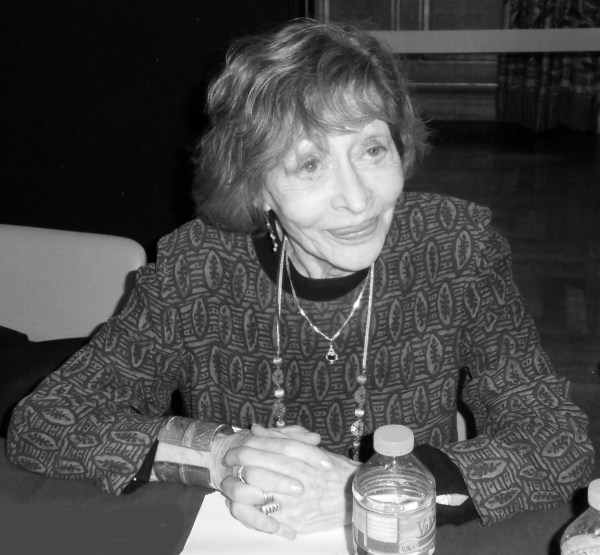
A recent black and white photograph of Alice Cherki, sitting at a table, smiling.

Alice Cherki

ALICE CHERKI is a psychiatrist, psychoanalyst and author. Born in Algiers, 1936. She knew Frantz Fanon well, working by his side in Algeria and Tunisia as a psychiatrist, and sharing his political commitment during the war of independence in Algeria.

Alice Cherki has lived in France since 1965. She is co-author of the books, Retour à Lacan (Fayard, 1981) and Les Juifs d’Algérie (Editions du Scribe, 1987), and author of La frontière invisible (Editions des Crépuscules, 2009) Frantz Fanon, portrait (Seuil, 2000) translated into English by Nadia Benabid and published as Frantz Fanon: A Portrait (Cornell University Press, 2006) and Mémoire anachronique (Editions De L’aube, 2016).

Gaele Sobott: Can you talk a little about the history of your family, your place of birth and your childhood?

Alice Cherki: I was born in a family of Jewish Algerians who were in Algeria since the Romans or before the Romans. My parents were born in the small towns of Medea and Ksar Bukhari but they met in Algiers. I was born and I lived in Algiers. I am Algerian, voilà!

Some of my family are Jewish Berbers.

GS: Were there Jewish people in Algeria before the Arabs?

AC: Yes, the majority were there well before. Some came later in 1492 from Spain through Morocco, others from Italy, and then Alsatian Jews, but at that point it was already colonial Algeria.  Many of those left again and went elsewhere. But most of the Jews of Algeria had been there for a very, very, very long. Some of them were Berbers who converted to Judaism. I belong to that history.

GS: Did you speak Arabic?

AC: Very little. I’m not very good at languages. I come from the same environment as Derrida. at school, we learnt Latin and Greek.

GS: Did you know Derrida?

AC: I knew Derrida very well. He was eight or nine years older than me and that represents a big difference but yes I knew Derrida well.

Like Hélène Cixous and Derrida, my childhood was marked by the Vichy anti-Jewish legislation which excluded Jews born in Algeria, denied us French nationality, the right to go to school, the right for Jews to work in government administration. This was hugely traumatic for me as a child.

One Christmas, I was 4 or 5 years old, my teacher said, “Tell your mother that after the break you must not come to school anymore.”

When I asked her the reason, the only answer I got was, “It’s because you’re Jewish.”

I didn’t know what that meant.  So, I gathered my courage and asked, “What’s Jewish?”

She replied, “It’s you with your big eyes, big mouth and big ears.”

Each of us, as Derrida also relates, was excluded from school, our parents could no longer work.

GS: How has this experience affected your adult life?

AC: It opened my eyes to the injustices of the world in which we live; a world marked by colonial ideology.  In Algiers in the 1950s, there was no intersection between Europeans, the Jews and Arabs –  the so-called natives. I didn’t experience it at home but we were caught up in all that. I talk about it a little in my book, Mémoire anachronique.  Everyone lived in their own sphere. Some of us would meet each other outside these spheres.

During my early years at primary school there was no mixing at all. In Grade 6, there were some girls; Rachida, Malika.  For the whole of my secondary schooling I only knew of one Algerian woman student even though my school was not the most snobbish high school in Algiers.

GS: It was the same principle as Apartheid?

AC: The same principle except that it was more camouflaged. Algerians were contained in their own neighbourhoods. Even the bourgeois had their areas. The Algerians passed like shadows in the European neighbourhoods

GS: What area of Algiers did you live in?

AC: I first lived on the border of a working-class suburb, near the boys’ school, known then as Lycée Bugeaud, now it’s called Lycée Abdel Kader. Later, at the age of 17, we moved to Central Boulevard in Hydra. Our house was on a piece of land owned by my uncle –  my father’s brother, my father’s sister, and my father. After some years, they managed to build a three-storey house there for the three families.

GS: What did your father do for a living?

AC: My father traded in cereal. He carried out transactions with farmers for the export and import of chickpeas and lentils.

GS: How did your interest in psychiatry come about?

AC: Firstly, it was a struggle for me as a woman to study. After I passed my baccalaureate, even though I was from the middle-class, it was not usual for women to continue their education. Women were expected to marry and so on. I had an older brother and a younger brother and was the only girl. Neither of my parents continued their studies. My father, a brilliant student, was pulled out of school at age 16 by his father. He was the eldest of ten children There were two or three girls before him so he had to work. I believe my mother chose to leave school to get married. When she met my father, she dropped out.

My parents were both very intelligent and relatively progressive. My father spoke Arabic, but they did not have a higher education.

I already had a certain outlook on society and I was more inclined towards literature. I wasn’t a good student and had never received any awards for excellence. I was impertinent and people always told me I would make an excellent actress. With no one to advise me, in those days, if I had decided I wanted to be an actress, it would have been worse than deciding to be a prostitute. Having said that, I did later have the luck to meet many people who became involved in theatre.

So, I found myself first in hypokhâgne and then khâgne. You know what they are?

GS: No.

AC: Preparatory literary classes for the grandes écoles. The equivalent also exists in the scientific field. I was interested in studying philosophy but decided that would mean cutting myself off from the real world. I made up my mind that I wanted to be useful so I chose to study medicine. But very soon I realized medicine didn’t meet my needs. It was all about identifying symptoms and responding with treatments. I remember a teacher saying, “But Mademoiselle, you ask too many questions.”

We never say, “Why” in medicine. Instead we talk about, “How to fix it.”

So, I was part of two cultures; one of interest for human beings and their psyche, and the other a group culture which stemmed from my medical studies.

GS: Were there other women you knew of who were studying medicine then?

AC: There were a few, but they were a definite minority.

There was a saying that summarized the situation quite well. It relates to sitting the intern examination:

If you are white, European and male, you have an 80% chance of sitting the exam. If you are female and European, you have a 60% chance. If you are Jewish and male, you have a 50% chance. If you are female and Jewish, you have a 25% chance. If you are Muslim and male, you have a 10% chance. As for being Muslim and a woman, you are not even mentioned because you just don’t get the opportunity.

Some managed to study medicine or become trainees but none got to sit the intern examination, voilà!

GS: When did you meet Fanon for the first time?

AC: I was part of a youth movement called AJASS (Association of Algerian Youth for Social Action) and Fanon was invited to give a lecture by a friend of mine, Pierre Chaulet, who died recently. It was a lecture on fear and anxiety in 1955. I must have been 19 or 20 at the time and had to leave my parents’ home where I’d been living. Most of the interns at the hospital were French-Algerian and because of my opinions I faced all kinds of problems. My car tyres were punctured, my white doctor’s coat soiled, my files stolen. So, when Fanon found out I wanted to do psychiatry, he told Pierre Chaulet I should come and intern under him at Blida psychiatric hospital.

GS: So you lived at the hospital in Blida?

AC: Yes, as an intern. That’s where I met my husband, Charles Géronimi. He shared my ideas, but having Corsican parents, teachers but Corsicans, they had trouble accepting a little Jew in their family, especially my mother-in-law.

GS: What were your first impressions of Fanon?

AC: My first impressions, at 20, I found everything he had to say very interesting and didn’t think of him as black. He analysed the subjectivity of racism which was very different from the discourse of the time. On the one hand, we had Existentialism and on the other, Marxist materialism which didn’t include questions of subjectivity. It was the first time I’d met someone who was only 10 years older than me but had immense experience, and a developed understanding of these two worlds, of the two ‘ideologies’.  He was neither on one side nor the other which met my expectations, answered my questions.

GS: He had practical ideas?

AC: Yes, he was a hands-on kind of man.

GS: That’s to say, the development of his thought was founded not only on the theoretical but also on his lived-experience?

AC: On his experience, yes. And that also pleased me. It was from his lived-experience that he elaborated his ideas. But he also had very advanced psychiatric training.

GS: What were some of the work experiences during your time with Fanon in Blida that influenced your practice of psychiatry?

AC: Everything he brought to psychiatry, especially his critique of the School of Algiers’ theory of primitivism. He also introduced social therapy, institutional psychotherapy.

GS: How do you define institutional psychotherapy?

AC: Institutional psychotherapy, as developed by Tosquelles, took off in France with the support of Oury and Bonnafé. It encourages the residents of psychiatric institutions to share things with their caregivers. Through humanising the functions of these institutions, it allows understanding not only of patient symptoms but also the roots of these symptoms. There are still two or three people in France who are struggling to create places that foster institutional psychotherapy, but it is becoming more and more difficult.

GS: Why is it becoming more difficult?

AC: Because of the prevailing ideology. Now we have DCM 3, DCM 4, DCM 5. It is a performative ideology that absolutely bypasses all subjective aspects of alienation.

GS: Did you have any significant experiences in the hospital setting as a female doctor caring for patients in that historical and social context?

AC: What do you mean by significant experiences?

GS: For example, when you worked at Joinville-Blida Hospital, were there certain events that affected you?

AC: Yes, of course.

GS: What were they?

AC: So many things. For example, I saw women hospitalised after childbirth for postpartum, transitory delirium. Some doctors didn’t understand and sometimes even people in the women’s families said, “It’s the djnoun who came to inhabit her.”

It affected me deeply because  I wanted to ascertain their experience of the delivery because it influences their relationship to the newborn baby.  It’s a complicated relationship.

GS: Did you have your own children at that time?

AC: No, I had no children at the time. I now have a son who is 40 years old. He studied political science and then he got involved in theatre.

GS: So, he is fortunate?

AC: Well there you have it.

Black and white photograph of Alice Cherki as a young women. She has short, dark hair, is wearing a white, V-neck dress and a necklace, and she is smiling.

GS: As a female doctor, what were your professional relationships like with your colleagues at the hospital?

AC: Amongst us interns at the psychiatric hospital of Blida, I was considered an equal.

I married an intern from the hospital. No, I can’t say I had any problems. On the other hand, before that when I was at the Mustapha Hospital in Algiers, I was very young, I did my hair in a bun and put on big glasses to make myself look older so I’d be left in peace.

GS: Was your husband originally from Blida?

AC: No, he was also from Algiers but he was an intern with Fanon in Blida. They wrote a paper together on Algerian women and the cultural specificity of TATs (Thematic Apperception Tests).

GS: In your book, Fanon, Portrait, you mention a meeting between Fanon and Jeanson. (1)

AC: Yes.

GS: In that meeting Fanon expressed his wish to go beyond certain ideas so that readers can experience aspects of life that they could never know firsthand.  You talk about Fanon exploring the sensory dimension of language. Do you think that this approach to writing could enable us to communicate experiences around difference, to understand our differences from an egalitarian point of view – not superior or even inferior?

AC: Yes, I think this type of writing is essential. In my experience, sensory writing starts from perceptions, sensations to try to improve communication with the other, I think it is very, very necessary.

GS: Do you know any writers today who write like that?

AC: I’m not qualified to say. I don’t know today’s writers that well. But Kateb Yacine wrote like that.

GS: Do you see difference as a dialectical space that can trigger creativity and imagination?

AC: Yes, that’s what I call the relationship to the other, the recognition of the outside, the stranger. It is important. I wrote another book called La frontière invisible, in which I insist on the relationship to the other. This allows you to accept the outsider in yourself.

GS: In your book, La frontière invisible, you link psychoanalysis and politics. I understand colonial violence, violence of displacement, violence against the subject in the social context, the context of specific historical and political circumstances, for example, those of Algeria and France. But when I try to analyse this violence from a psychoanalytic point of view, I find it difficult to understand.

AC: It is complicated. But you have sought out strangers?

GS: Always, yes.

AC: Perhaps it’s not by chance.

GS: Perhaps not.

Did you know Fanon outside his work, in his family life? What kind of man was he as husband and father?

AC: Yes, of course I had the opportunity to know Fanon outside his work. I knew his wife well and I know his son very well. As a dedicated husband and father. At the same time, he was a very busy man. But he was very dedicated to his family. When his father left for Africa, Olivier didn’t see him that often only from time to time when Fanon came back from working there.  Olivier was only five when his father died.

Fanon loved life. He liked to go out to dinner, go dancing, things like that.

GS: What type of dancing did he like?

AC: All the dances of that time, le slow, the rhumba . . .

GS: Did you like to dance?

AC: It has been a long time since I really danced but yes at the time I loved it.

GS: At friends’ places?

AC: Yes.

GS: What type of music did Fanon like?

AC: He especially loved Caribbean music.

GS: And you?

AC: Back then my tastes were very eclectic. I liked the Arab-Andalusian, Jewish-Andalusian music right through to Bach, Beethoven, Mozart and then Jean Ferrat, Barbara, Montand. More and more now I love Musique Concrète.

GS: Tell me more. 

AC: When I was a psychoanalyst, I was working very hard. In the evening, when I had finished working and my head was full of words, words, words, I’d play the likes of Kurtág and Blériot. The music is largely based on the sonority of the human body. It defies the normality of melody. It’s best to listen to it alone. There are not many people who love and desire that genre of music. It scares them.

GS: What kind of a sense of humour did Fanon have? What made him laugh?

AC: He had a great sense of humour, Fanon. It was humour that made him laugh.

GS: People who are very involved in revolutionary struggle often dedicate huge amounts of time and energy to the cause, and I suppose that doesn’t allow them to be very good parents.

AC: That’s true, yes. Especially at the time because the people involved in the struggle were very young.

GS: Have you met children whose parents were not only very involved but who were tortured, wounded or killed as part of the struggle?

AC: Yes, children who became orphans.

GS: Regarding the children of revolutionaries, what observations have you made?

AC: It was very variable. For example, Fatma Oussedic, her father was a great militant and she has good memories of her relationship with him. In addition, many families did not only consist of the father and mother, there were, aunts, uncles, cousins etc. They weren’t nuclear families. If we’re talking about orphans this helps a little. But when you see your parents killed before your eyes, that’s not the same thing. As for the children of the surviving revolutionaries following independence, the notion that their fathers are heroes has weighed heavily on many of them.

GS: Would you mind giving me a brief definition of your concept of alienation and the ways it may be experienced in countries marked by colonisation.

AC: That’s a big question. Both the coloniser and countries who achieved their independence, like Algeria, deny in various ways the colonial wars that have taken place. Algeria swept a large part of the past away by claiming the national story begins at the time of Independence. Generations have been taught that they have one history, one language, one origin. This kind of discourse has done a lot of damage. There are many young people who now don’t know who they are.

GS: How does that manifest psychologically?

AC: It varies considerably and is different in Algeria and in France. Here in France these young people are excluded from participating in the inner circle, In Algeria they are divided. There is group of social conformists who represent the youth, and another group of which no one ever speaks but which gnaws away at the heart and soul of the country.  Young people are suffering a great deal, even those who are socially successful. Many young people ask, “What was Algeria like before 1962?” Many are Berbers. The heterogeneity of their roots has been hidden from them. It is as if these roots don’t exist but they are longing for what I call multiple identification … not to be cast in a single mould.

In France there are many young people who describe their lives very well and write novels. Some are very interesting, written in the language of the suburbs. For example, Sabri Louatah, Les Sauvages.

GS: What is your definition of dignity, especially the dignity of colonised people, people considered mentally ill or disabled?

AC: Dignity is essential. Dignity means we are viewed by the other as a human being.

GS: In revolutionary situations, when a group of people can no longer withstand massive pressure and extreme violence, they react violently to create a change in the power structure. This changeover is often quick, lasts for a moment, the objective is specific: to get rid of the immediate cause of the violence that oppresses them. Beyond this moment of revolutionary violence, what measures do you think people can use to get rid of the everyday violence that continues?

AC: Firstly, to speak.

GS: To whom?

AC: Speak, tell, write. . . I think there are many forms of expression, of creation. Because we must get by. We must get out of the stupor. The essential thing is to get out of it, including through collective struggle.

GS: What for you is the most urgent task required to change human relations in the future? What needs to be done to update and develop new definitions of power?

AC: We need to do work in many areas if we are going to change human relations and bring about new definitions of power. Each person should focus on their own domain, the place where they live. It’s true, like many people, I feel I am very active and committed. At the same time, I denounce all modes of liberalism and things like that.

GS: How do you define liberalism?

AC: It is being governed by financial capitalism which transforms the subject into an object.

GS: Is it enough to denounce? Sometimes I get the impression that it is useless.

AC: I know it well. Organisations are important. There are organisations, people who are militant. I am fortunate to have a son, and nephews who are politically engaged in their fields. Me, everyone knows my positions, my writings. My son works in theatre. They go to schools, to high schools. I am not against the revolution.

GS: Do you think that as individuals, we are afraid of revolutionary violence, afraid of revolutionary confrontation?

AC: It depends. There are many people who are afraid of violence. In my case, I’m not afraid. Many French people want to stay in their little cocoons. In Europe, the French are very much like that, withdrawn on their plots of land, and yet they made a revolution.

But I believe violence is . . . for example, what happened in 2005 in the housing estates, with Sarkozy insulting everyone. People called them riots but I called them revolts. Those young people were not afraid.

GS: It is temporary, a moment?

AC: Revolution is always like that. It’s a moment. But moments that produce difference. Every revolutionary moment must be seen as the introduction of change.

GS: Even if it takes a long time to get to that point.

AC: Yes, like psychoanalysis.

GS: Why did you choose to become a psychoanalyst?

AC: Because I found it was the best way to understand the psyche and help people. It’s exciting, I love it, yes, I like it very much.

GS: You must undergo psychoanalysis for several years to be a psychoanalyst?

AC: Yes, you do. It’s experience. You see, even you talk to an 80-year-old woman who is a psychoanalyst and it’s fine.

GS: Yes, it’s been good.

AC: I have lots of stories to tell. I am attentive to other human beings.

GS: Ah yes, but not all psychoanalysts are like you.

AC: That’s true.

GS: Did you have any conversations with Fanon about the ‘Jewish question’ or the events that led to the establishment of the State of Israel?

AC: Of course, Algerian Jews, like myself and Jacques Azoulay, worked with Fanon in Blida. Fanon had very close Jewish friends in Tunis. The subject of the establishment of the State of Israel was far from our concerns. Fanon was profoundly atheist. I, too, am an atheist. We were part of the struggle for Algerian independence, there was never any conversation about the existence of God for example. Those questions and discussions were not on our radar.

GS: But religious discourse was there nonetheless with Messali . . .

AC: Oh, yes. Those discussions took place within the independence movement. It was very heterogeneous. There were plenty of different poles of thought, different ideas. For example, Fanon, returning from sub-Saharan Africa, jokingly said to his colleagues, to the revolutionary friends of the mujahidin, that they should follow the example of Islamic Africans, their wives can walk topless. He said that jokingly. I mean the issue of Islam as a fundamental direction was probably underestimated, but religion was not ubiquitous in our workplace. I think, even Messali, he was for independence from France, he was married to a French woman, he wasn’t a religious Iman.

GS: When and why did you leave Algeria? Do you consider yourself a woman in exile?

AC: I did not really leave Algeria. I settled in Paris but with frequent trips to Algeria and back. I’m not in national exile and I think exile of the psyche is the hallmark of any successful human life.

Notes:

1. Alice Cherki refers to a meeting  between Fanon and Jeanson in her book, Fanon, portrait (Seuil, 2000), however the English translation, Fanon: A Portrait, (Cornell University Press, 2006) refers to a letter.

Alice Cherki was interviewed by Gaele Sobott in Paris, 26 September 2015 and by email between 18 and 20 November 2016.

Translated from French by Gaele Sobott

Creative Commons License
“Dignity is essential. Dignity means we are viewed by the other as a human being”: an interview with Alice Cherki by Gaele Sobott is licensed under a Creative Commons Attribution-NoDerivatives 4.0 International License.
La dignité est essentielle. C’est être regardé par l’autre comme un être humain : un entretien avec Alice Cherki

SAMSUNG DIGITAL CAMERAALICE CHERKI est psychiatre, psychanalyste et auteure.  Née à Alger, 1936.  Elle a bien connu Frantz Fanon, en travaillant à ses côtés, en Algérie et en Tunisie dans son service psychiatrique, et elle a partagé son engagement politique durant la guerre de l’Independence d’Algérie. Elle vit en France depuis 1965.  Elle est coauteur des livres, Retour à Lacan (Fayard, 1981) et Les juifs d’Algérie (Éditions du Scribe, 1987), et auteur de La frontière invisible, (Editions des crépuscules, 2009) Fanon, portrait (Seuil, 2011), et Mémoire anachronique (Editions De L’aube, 2016)

Gaele Sobott: Pouvez-vous m’en dire un peu sur l’histoire de votre famille, votre lieu de naissance et votre enfance ?

Alice Cherki : Je suis née dans une famille de juifs d’Algérie qui était installée là depuis les Romains ou avant les Romains. Mes parents sont nés dans les petites villes de Médéa et Ksar Boukhari. Mais ils se sont rencontres à Alger. Je suis née et j’ai vécu à Alger. Je suis Algéroise, voilà ! Une partie de cette famille est juive berbère.

GS : Y avait-il  des Juifs en Algérie  avant les Arabes ?

AC : Oui bien avant, majoritairement.  Quelques uns sont arrivés d’Espagne en 1492 par le Maroc, d’autres d’Italie, et ensuite des Juif alsaciens, mais c’était déjà l’Algérie coloniale, beaucoup d’entre eux sont repartis d’ailleurs. Mais la plupart des Juifs d’Algérie étaient là depuis très, très, très longtemps. Certains d’entre eux étaient des Berbères judaïsés. Moi j’appartiens à cette histoire-là.

GS : Est-ce que vous avez parlé l’arabe ?

AC : Très peu. Je ne suis pas très douée pour les langues. Et en plus, je suis un peu comme Derrida. On a vécu certainement dans le même milieu et puis à l’école, on apprenait le latin et le grec.

GS : Vous avez connu Derrida ?

AC : J’ai très bien connu Derrida. Il avait huit ou neuf ans de plus que moi et ce qui représente une grande différence mais oui j’ai bien connu Derrida.

Mon enfance a été marquée tout comme Hélène Cixous et  Derrida par les lois de Vichy qui excluaient les Juifs nés en Algérie, les destituaient de la nationalité française, du droit à fréquenter les écoles et à exercer dans les administrations. Vous voyez, cela a été un grand traumatisme d’enfance.

A 4 ou 5 ans, à Noël mon institutrice m’a dit,  « Tu diras à ta mère qu’à la rentrée, tu ne viens plus à l’école. » 

Lorsque je lui ai demandé la raison, j’obtiens pour seule réponse, «  C’est parce que tu es juive. » 

Moi, je ne savais même pas ce que ça voulait dire. J’ai pris mon courage à trois mains et je lui ai demandé, « Etre juive c’est quoi ? » 

Elle m’a répondu, « C’est être comme toi avec des grands yeux, une grande bouche et des grandes oreilles. »

Chacun d’entre nous, comme le raconte Derrida, a été exclu de l’école, nos parents ne pouvaient plus travailler.

GS : Comment est-ce que cela a marqué votre vie d’adulte ?

AC : Cela m’a ouvert les yeux sur l’injustice, sur le monde dans lequel on vivait, un monde marqué par l’idéologie coloniale, pas chez mes parents, mais on était pris dans ce mouvement-là. A Alger dans les années 50, il n’y avait pas d’intersection entre les différentes sphères. Il y avait les Européens, les Juifs et ceux qu’on appelait les Arabes, les indigènes. Il n’y avait pas d’interpénétration. J’en parle un peu dans mon livre, Mémoire anachronique. Chacun vivait dans sa sphère. Les rencontres se faisaient à l’extérieur.

Quand j’étais dans les petites classes où la mixité n’existait pas à l’époque, il y avait quelque filles qui s’appelaient Rachida ou Malika, mais dès que je suis rentrée en 6e, dans ma classe il n’y avait qu’une seule Algérienne pendant toute ma scolarité secondaire et pourtant j’étais dans un lycée qui n’était pas le lycée le plus snob d’Alger.

GS : C’était le même principe que l’Apartheid ?

AC : Le même principe sauf que c’était plus camouflé. Les Algériens étaient contenus dans certains quartiers. Même les bourgeois avaient leurs quartiers. Les Algériens passaient comme des ombres dans les quartiers Européens.

GS : Vous habitiez quel quartier d’Alger ?

AC : J’ai d’abord vécu près du lycée de garçons, le lycée Bugeaud, devenu maintenant le lycée Abdel Kader, à la frontière du quartier populaire. Plus tard, à l’âge de 17 ans, nous avons emménagé sur le boulevard central, à Hydra, dans une maison sur un terrain qui était une copropriété appartenant à mon oncle, le frère de mon père, la sœur de mon père, et mon père. Ce n’est qu’au bout d’un grand nombre d’années qu’ils sont parvenus à y construire une maison à trois étages pour y abriter les trois familles.

GS : Quel métier exerçait votre père ?

AC : Mon père était céréalier. Il faisait les transactions avec les agriculteurs pour l’exportation et l’importation de pois chiches et de lentilles.

GS : A quand remonte votre intérêt pour la psychiatrie ?

AC : J’ai d’abord beaucoup lutté pour faire des études. Quand J’ai passé mon bac, même si je venais de la moyenne bourgeoisie, ce n’était pas classique que les femmes continuent leurs études. Pour eux, c’était le mariage et cetera. J’étais la seule fille. J’avais un frère ainé et un frère cadet mais mes parents n’avaient pas fait d’études. Ils avaient été tous les deux retirés de l’école.

Mon père, un brillant élève, a été retiré du lycée à 16 ans par son propre père parce que c’était une famille de dix enfants et qu’il était l’aîné. Il y avait deux ou trois filles avant lui et il fallait qu’il travaille. Ma mère a choisi de quitter sa classe de première, je crois, au lycée pour se marier. Quand elle a rencontré mon père elle a abandonné ses études.

Mes parents étaient tous les deux étaient très intelligents et plutôt progressistes. Mon père parlait l’arabe, mais ils n’avaient pas fait des études supérieures comme on dit à l’époque.

J’avais déjà un regard sur la société. J’étais plutôt littéraire. Je n’ai jamais eu de prix d’excellence parce que je n’étais pas une bonne élève. J’étais plutôt impertinente. On me disait toujours que j’aurais pu être une excellente comédienne. Il n’y avait personne pour  vous conseiller. Si j’avais dit je voulais être comédienne, cela aurait été pire que prostituée à l’époque. Mais J’ai eu la chance de rencontrer beaucoup de gens qui sont devenus des gens du théâtre ensuite.

Je me suis retrouvée d’abord en hypokhâgne et khâgne. Vous savez ce que c’est ?

GS : Non.

AC : Ce sont des classes préparatoires littéraires pour intégrer les grandes écoles. Elles ont leur équivalent dans le domaine scientifique. Mais je me suis mise en tête que je voulais être utile et que si je me mettais à faire de la philosophie je me couperais de la vraie vie si vous voulez. J’ai donc obliqué vers la médecine. Mais très vite en médecine, je me suis rendue compte que ça ne répondait pas du tout à mon interrogation. C’était une médecine des symptômes auxquels on répondait par des traitements. Je me souviens d’un prof qui me disait,  « Mais Mademoiselle vous posez trop de questions. »   On ne dit jamais,  « Pourquoi  » en médecine. On dit toujours,  « Comment faire. » 

 Donc j’avais cette double culture de l’intérêt pour l’humain et son psychisme et puis une culture de groupe seulement parce que j’ai fait mes études de médecine.

GS : Est-ce qu’il y avait d’autres femmes qui faisaient des études de médecine ?

AC : Il y en avait quelques unes mais elles étaient très minoritaires.

Il y avait un dicton qui résumait assez bien la situation pour passer le concours d’internat qui était assez prestigieux :

Quand on est blanc et européen et garçon on a 80% de chance d’avoir le concours, quand on est fille et européenne on a 60% de chance, quand on est juif et garçon on a 50% de chance, quand on est fille et juive on a 25% de chance, quand on est musulman et garçon 10% de chance et quant aux filles musulmanes le dicton ne mentionnait rien parce que il n’y en avait pas.

Certaines parvenaient à devenir externes ou stagiaires mais aucune n’obtenait le concours d’internat, voilà.

GS : Quand avez-vous rencontré Frantz Fanon pour la première fois ?

AC : Je faisais partie d’un mouvement de jeunes qui s’appelait AJASS (Association de la Jeunesse Algérienne pour l’Action Sociale) et Fanon était venu faire une conférence par l’intermédiaire d’un ami à moi, Pierre Chaulet, décédé récemment. C’était une conférence sur la peur et l’angoisse en 1955. A cette période-là,  j’ai dû quitter mes parents chez qui je vivais encore à l’époque. Je devais avoir dix-neuf, vingt ans. A l’hôpital, compte tenu de mes opinions, comme la majorité des étudiants et des internes en médecine qui étaient plutôt Algérie-Française, j’y avais beaucoup d’ennuis.  On nous crevait des pneus de voiture, on me salissait mes blouses, on volait mes dossiers et quand Fanon avait su que je voulais faire de la psychiatrie, il a dit à Pierre Chaulet et bien qu’elle vienne comme interne chez moi à l’hôpital psychiatrique de Blida.

GS : Alors, vous avez habité à l’hôpital de Blida ?

AC : Oui comme interne. C’est là où j’ai rencontré d’ailleurs mon mari, Charles Géronimi. Il partageait mes idées, mais ayant des parents Corses, instituteurs mais Corses, ils ont eu du mal à accepter une petite juive dans leur famille, plus particulièrement ma belle-mère.

GS : Quelles ont été vos premières impressions de Fanon ?

AC : Mes premières impressions, à vingt ans, j’ai trouvé ses propos très intéressants et je ne me suis pas rendue compte qu’il était noir. Il analysait la subjectivité du racisme ce qui était très différent du discours de l’époque. Il y avait d’un côté l’existentialisme et de l’autre le matérialisme marxiste pour qui les questions de subjectivité n’étaient pas à l’ordre du jour.

C’était la première fois que je rencontrais quelqu’un qui avait 10 ans de plus que moi avec un immense vécu et une grande expérience de la rencontre de ces deux mondes, des deux idéologies entre guillemets. Il  n’était pas d’un côté ou de l’autre et cela a répondu à mes attentes et mon interrogation.

 GS : Il avait des idées pratiques ?

AC : Oui, c’était un homme de terrain.

GS : C’est-à-dire que le développement de sa pensée était fondé non seulement sur le théorique mais aussi sur le vécu ?

AC : Sur le vécu, oui.  Et cela aussi me plaisait. C’était à partir de l’expérience vécue qu’il a élaboré une pensée. Mais il avait une formation psychiatrique très poussée.

GS : Quels événements vécus lors de votre travail avec Fanon à Blida ont influencé votre pratique de la psychiatrie?

 AC : C’est tout ce qu’il a apporté par rapport à la psychiatrie et la théorie du primitivisme de l’école d’Alger, et il a introduit la thérapie sociale, la psychothérapie institutionnelle.

GS : Qu’est-ce que c’est la psychothérapie institutionnelle ?

AC : Voilà, dans la psychothérapie institutionnelle, que Tosquelles a développée, et qui a trouvé d’ailleurs un grand essor en France avec Oury et Bonnafé, il s’agit de permettre aux pensionnaires des institutions psychiatriques de partager des choses avec leurs soignants, d’humaniser le fonctionnement de ces établissements, et que de là puisse émerger si vous voulez non seulement une compréhension des symptômes mais aussi des racines. Il y a encore deux ou trois personnes en France qui se battent pour créer les lieux de psychothérapie institutionnelle mais c’est de plus en plus difficile.

GS : Pourquoi plus difficile ?

 AC : A cause de l’idéologie ambiante. Maintenant on en est au DCM 3, DCM 4, DCM 5. C’est l’idéologie performative qui court-circuite absolument tous les aspects subjectifs de l’aliénation.

GS : Avez-vous eu des expériences significatives dans le milieu hospitalier en tant que femme médecin soignant des patientes dans ce contexte historique et social ?

AC : Qu’est que vous entendez des expériences significatives ?

GS : Par exemple, quand vous avez travaillé à l’hôpital Joinville-Blida, est-ce que certains événements vous ont affectée ?

AC : Bien sûr que oui

GS : Lesquels ?

AC : Tellement des choses. J’ai vu par exemple, des femmes hospitalisées pour des post-partum, après l’accouchement, avec un délire transitoire. Certains médecins ne comprenaient pas et parfois même des gens de sa famille disaient,  «C’est les djnouns qui sont venus l’habiter.»

Cela m’affectait beaucoup parce que ce qui m’intéressait vraiment était tout ce qui concernait la manière dont elles avaient vécu cet accouchement, ce qui avait infiltré leur rapport à ce nouveau-né qui est toujours un rapport compliqué.

GS : Est-ce que vous aviez des enfants vous-même à cette époque ?

AC : Non, je n’avais pas d’enfant à l’époque. J’ai actuellement un fils qui a 40 ans. Il a fait des études de sciences politiques et est ensuite devenu un homme de théâtre.

GS : Alors il y a de la chance ?

AC : Bon ben . . . voilà.

alicecherki

GS : Quelles étaient vos relations professionnelles en tant que femme médecins avec vos collègues à l’hôpital ?

AC : Dans le milieu de l’internat de l’hôpital psychiatrique de Blida, j’étais considérée comme leur égale.

Je me suis mariée avec un interne de l’hôpital. Non, là je ne peux pas dire que j’avais des problèmes. En revanche dans un milieu Algérois de l’hôpital de Mustapha quand j’étais très jeune, je me faisais un chignon et mettais des grosses lunettes pour paraître plus vielle, pour qu’on me fiche la paix.

GS : Votre mari était originaire de Blida ?

AC : Non il était d’Alger aussi mais il était interne en psychiatrie à Blida avec Fanon. Ils ont écrit un article ensemble sur les femmes Algériennes et la spécificité culturelle de T.A.T.
(Thematic Apperception Tests)

GS : Dans votre livre, Fanon, Portrait, vous évoquez la rencontre de Fanon avec Jeanson.

AC: Oui

GS : Il y exprime le fait qu’il aimerait dépasser certaines idées afin que le lecteur puisse expérimenter des aspects de la vie qu’il ne pourrait pas capter dans un premier temps. Vous parlez aussi de la dimension sensorielle du langage. Pensez-vous qu’une telle conception de l’écriture peut nous permettre de communiquer des expériences autour de la différence,  de comprendre nos différences d’un point de vue égalitaire  –  non supérieur voire inférieur ?

AC : Oui je pense que ce type d’écriture est essentielle. Mon expérience avec l’écriture sensorielle qui part des perceptions, des sensations pour essayer d’améliorer la communication avec l’autre, moi je pense que c’est très, très nécessaire.

GS : Vous connaissez des écrivains d’aujourd’hui qui écrivent comme ça ?

AC : Je ne suis pas qualifiée pour en parler. Je ne connais pas aussi intimement les écrivains d’aujourd’hui mais je sais que Kateb Yacine écrivait comme ça.

GS : Envisagez-vous la différence comme un espace dialectique déclencheur de créativité et d’imagination?

AC : Oui c’est ce que j’appelle le rapport à l’autre, le fait de reconnaitre l’étranger. C’est important. J’ai écrit un autre livre qui s’appelait,  La Frontière Invisible, dans lequel j’insiste sur le rapport à l’autre et qui vous permet d’accepter l’étranger en soi.

GS : Dans ce livre La Frontière Invisible il y a un lien entre la psychanalyse et la politique.

Moi, je comprends la violence coloniale, la violence de déplacement, la violence faite au sujet dans le contexte social, le contexte des circonstances historiques et politiques précises, par exemple, ceux de l’Algérie et la France. Mais quand j’essaye d’analyser cette violence d’un point de vue psychanalytique, je trouve que c’est difficile à comprendre à mon niveau.

AC : C’est compliqué. Pourtant vous avez été cherché des étrangers ?

GS : Toujours, oui.

AC : Ce n’est peut-être pas par hasard.

GS : Peut-être pas.

Avez-vous eu l’occasion de connaître Fanon en dehors de son travail, dans sa vie familiale ?

Quel genre d’homme était-il en tant que mari et père?

AC : Oui, bien sûr j’ai eu l’occasion de connaître Fanon en dehors de son travail. J’ai bien connu sa femme et je connais très bien son fils. En tant que mari et père, il était très présent. En même temps il avait beaucoup à faire. Mais il était très présent. Bon, Olivier, quand son père est parti en Afrique, il ne l’a plus beaucoup vu à ce moment-là sauf si Fanon venait de temps en temps. Olivier n’avait que cinq ans quand son père est mort.

Il aimait bien vivre Fanon. Il aimait aller dîner, aller danser, les choses comme ça.

GS : Il aimait quelles danses ?

AC : Toutes les danses de l’époque, le slow, la rumba . . .

GS : Et vous aimiez la danse ?

AC : Ça fait longtemps que je ne danse plus vraiment mais oui à l’époque je l’aimais.

GS : C’était chez des amis ?

AC : Oui.

GS : Fanon aimait quel genre de musique?

AC : Il aimait surtout la musique antillaise.

GS : Et vous ?

AC : A l’époque j’étais très éclectique. J’aimais la musique arabo andalouse, judéo andalouse jusqu’à Bach, Beethoven, Mozart et puis Jean Ferrat, Barbara, Montand. J’aime de plus en plus la musique concrète.

GS : Dites-m’en plus.

 AC : Quand j’étais psychanalyste, je travaillais beaucoup. Le soir, lorsque j’avais fini de travailler et j’avais la tête remplie de mots, de mots, de mots, je mettais des choses comme Kurtág et Blériot, et c’est uniquement la sonorité qui vient du corps et qui s’échappe de la normalité de la mélodie. Il faut écouter seul parce qu’il y a peu de gens qui aiment et envient cela.  Cela leur fait peur.

GS : Quelle sorte d’humour avait Fanon ? Qu’est ce qui le faisait rire ?

AC : Il avait beaucoup d’humour, Fanon. C’était l’humour qui le faisait rire.

GS : Les personnes très impliquées dans la lutte y consacrent souvent beaucoup de temps et j’imagine que cela ne leur permet pas d’être de très bons parents.

AC : C’est vrai, oui. Surtout à l’époque car les personnes impliquées dans la lutte étaient très jeunes.

GS : Avez-vous rencontré des enfants ayant eu de tels parents, non seulement très impliqués mais qui ont pu aussi être torturés, blessés ou tués dans le cadre de leur combat?

AC : Mais oui les enfants qui devenaient orphelins.

GS : Concernant les enfants de révolutionnaires, quelles observations avez-vous pu faire ?

AC : C’était très variable. Pour Fatma Oussedic, son père était un grand militant et elle garde un bon souvenir de sa relation avec lui. En plus et dans beaucoup de familles il n’y avait pas que le père et la mère à l’époque, il y avait tout un environnement, les tantes, les oncles, les cousins, les cousines, etcetera, pas de famille nucléaire. Si on parle des orphelins ça aide un peu. Mais quand on voit leurs parents tués sous leurs yeux, ce n’est pas la même chose. Quant aux enfants des révolutionnaires survivants après l’indépendance, le caractère de héros de leur père a pesé lourdement chez beaucoup d’entre eux.

GS : J’aimerais que vous me donniez une brève définition de votre conception de l’aliénation sous toutes les formes où elle peut être vécue dans les pays marqués par la colonisation.

AC : C’est une grande question. Il y a eu  les dénis qui ont porté sur les guerres coloniales d’un côté et puis sur les pays nouvellement indépendants, notamment l’Algérie. On a fait table rase de ce qu’ils  avaient avant en disant que l’histoire commençait au moment de l’Independence. On a enseigné aux générations ce type d’histoire en leur disant vous avez une histoire unique, une langue unique, une origine unique. Ca a fait beaucoup de dégâts. Il y a beaucoup de jeunes qui savent plus  où ils en sont.

GS : Comment est-ce que ça se manifeste psychiquement ?

AC : C’est très variable. Ce n’est pas pareil en Algérie et en France. Ici, ils sont exclus de l’intérieur si vous voulez. En Algérie ils sont clivés.  Il y a une partie sociale conformée et puis une partie intérieure dont ils ne parlent jamais mais qui les rongent. Les jeunes vivent une grande souffrance, même ceux qui ont réussi socialement. Et puis beaucoup d’entre eux demandent, « Avant 62 c’était comment l’Algérie ? »   Beaucoup sont des berbères. Il y a tout une hétérogénéité de racines qu’on leur a cachée. On leur a dit que ça n’existait pas. Eux ils ont envie d’avoir ce que j’appelle des identification multiples… ne pas d’être assignés à un moule.

En France il y’a beaucoup de jeunes qui racontent très bien leur vie. Ils écrivent des romans, et quelques-uns sont écrits dans le langage des banlieues et sont très intéressants. Par exemple, Sabri Louatah, Les Sauvages.

GS : Quelle est votre définition de la dignité et plus particulièrement la dignité des personnes colonisées, des personnes considérées malades mentales ou handicapées ?

AC : La dignité est essentielle. C’est être regardé par l’autre comme un être humain.

GS : Dans les situations révolutionnaires, lorsqu’un groupe de personnes ne peut plus supporter la pression massive et l’extrême violence, sa réaction est violente afin de créer un changement dans la structure du pouvoir. Cela est rapide, dure un moment, l’objectif est spécifique : se débarrasser de la cause immédiate de la violence qui les opprime. Au-delà de ce moment de violence révolutionnaire, quelles mesures pensez-vous que les gens peuvent utiliser pour se débarrasser de la violence quotidienne qui continue ?

AC : D’abord parler.

 GS : A qui ?

 AC : Parler, dire, écrire . . . voilà je pense qu’il y a beaucoup de formes d’expression, de création. Parce qu’il faut s’en sortir. Il faut sortir de la sidération. L’essentiel est d’en sortir y compris par la lutte collective.

GS : Qu’est ce qui reste le plus urgent pour vous aujourd’hui à comprendre afin de changer les relations humaines dans le futur ? Que devons faire pour mettre à jour et développer de nouvelles définitions du pouvoir ?

AC : C’est dans beaucoup de domaines, changer les relations humaines dans le futur pour mettre à jour les nouvelles définitions du pouvoir, chacun dans son domaine, chacun dans le lieu où il vit. Moi, c’est vrai comme beaucoup de gens, je me sens très engagée. En même temps je dénonce tous les modes du libéralisme et les trucs comme ça.

GS : C’est quoi pour vous le libéralisme ?

AC : C’est être régi par le capitalisme financier qui transforme le sujet en objet.

GS : Est-ce qu’on se contente de dénoncer ? Quelque fois j’ai l’impression que cela ne sert à rien.

AC : Je sais bien. Les organisations sont importantes, il y a des organisations, des gens qui militent. J’ai la chance d’avoir un fils, et des neveux qui sont engagés politiquement dans leurs domaines. Moi, tout le monde connait mes positions, mes écrits, mon fils dans le domaine du théâtre, il fait  justement du théâtre vivant. Ils vont dans les écoles, dans les lycées. Moi je ne suis pas contre la révolution.

GS : Pensez-vous que nous, en tant qu’individus, avons peur de la violence révolutionnaire, peur de la confrontation révolutionnaire ?

AC : Ça dépend. Il y a beaucoup de gens qui ont peur de la violence. Ce n’est pas mon cas. Beaucoup de Français veulent rester dans leurs petits cocons. En Europe, les Français sont très comme ça, très repliés sur leurs lopins de terre et pourtant c’est eux qui ont fait une révolution.

Mais, moi, je crois que la violence elle est . . ., par exemple, ce qui s’est passe en 2005 dans les cités, avec quelqu’un comme Sarkozy qui avait été insultant et tout, les gens appellent ça les émeutes, moi, j’appelle ça des révoltes et ces jeunes-là n’avaient pas peur.

GS : C’est temporaire, un moment ?

AC : La révolution est toujours comme ça. C’est un moment. Mais les moments qui produisent les différences. Chaque moment révolutionnaire doit être vu comme l’introduction d’une différence.

GS : Même si ça prend beaucoup de temps.

AC : Oui, comme en psychanalyse.

GS : Pourquoi avez-vous choisi de devenir une psychanalyste ?

AC : Parce que j’ai trouvé que c’était la meilleure façon de comprendre le psychisme et d’aider les gens et c’est passionnant, j’adore, oui, j’aime beaucoup.

GS : On doit faire une psychanalyse de plusieurs années pour être une psychanalyste ?

AC : Oui. Il faut en faire une. C’est une expérience. Même vous, voyez, vous parlez à une femme de 80 ans qui est psychanalyste et ça va.

GS : Ça va.

AC : Je raconte beaucoup de choses. Je suis attentive aux autres d’êtres humains.

GS : Ah oui, mais tous les psychanalystes ne sont pas comme vous.

AC : Ça c’est vrai.

GS : Avez-vous eu des conversations avec Fanon au sujet de « la question juive » et des événements qui ont conduit à l’établissement de l’Etat d’Israël?

AC : Bien sur des juifs Algériens, comme moi et Jacques Azoulay, ont travaillé avec Fanon à Blida. Fanon avait des amis juifs très proches à Tunis. Le sujet de l’établissement de l’Etat d’Israël, c’était loin de nos préoccupations.  Fanon était profondément athée. Moi aussi je suis athée. Nous étions dans le combat de l’Indépendance de l’Algérie, on n’avait jamais de conversation sur l’existence de Dieu par exemple. Ce n’était pas du tout dans les champs de nos interrogations, de nos conversations.

GS : Mais le discours religieux était là quand même avec Messali . . .

AC : Ah oui. Il y avait ce discours dans le mouvement indépendantiste. C’était très hétérogène.  Il y avait plein de gens qui étaient dans des pôles différents, des idées différentes. Par exemple, Fanon, qui en revenant de l’Afrique noire, disait en plaisantant aux collègues, aux amis révolutionnaires de moudjahid, qu’ils devraient prendre l’exemple de l’Islam des Africains, leurs femmes elles peuvent se balader les seins nus. Il leur disait ça en plaisantant. Je veux dire que la question de l’Islam comme direction fondamentale était probablement sous-estimée mais la religion n’était pas omniprésente dans le milieu de travail dans lequel on se trouvait. Je crois que même Messali, était un indépendantiste, il était marié avec une française, Il n’était pas un iman religieux.

GS : Quand et pourquoi avez-vous quitté l’Algérie ? Considérez-vous comme une femme en exil ?

AC : Je n’ai pas vraiment quitté l’Algérie. Je me suis installée à Paris mais avec de fréquents allers-retours. Vous savez, je ne suis pas dans l’exil territorial et je pense que l’exil psychique est le propre de toute vie d’humain réussie.

Alice Cherki a été interviewée en direct par Gaele Sobott à Paris le 26 septembre 2015 et par courriel entre le 18 et le 20 novembre 2016.

Remerciements à Martine Cassagne et Karima Mezoughem pour leur assistance dans la transcription de cet entretien.

Creative Commons License
La dignité est essentielle. C’est être regardé par l’autre comme un être humain : un entretien avec Alice  by Gaele Sobott is licensed under a Creative Commons Attribution-NoDerivatives 4.0 International License.
AN INTERVIEW WITH JENNY MUNRO

Jenny Munro is a proud Wiradjuri woman from Erambie Mission, Cowra. She has been involved with Aboriginal organisations since she first came to Sydney in 1973. In 1978 she began working at the Aboriginal Children’s Service. She was a member of the Secretariat of National Aboriginal and Islander Child Care (SNAICC) in its early days, and one of its first chairpersons. She is one of the founding grandmothers of the Redfern Aboriginal Tent Embassy and an authorised delegate of the 2014 Freedom Summit.

<strong>Image Description:</strong> Colour-photo portrait of Jenny Munro sitting on a chair. It's her 60th birthday celebration at the Abbotts Hotel, Waterloo. She's wearing a bright pink dress. There are yellow, red and black balloons floating in the background.

Gaele Sobott: You’ve just celebrated your sixtieth birthday so let’s go back to the beginning. Would you talk about where you were born and describe the family you were born into.

Jenny Munro: I was born in a little town in central NSW called Cowra. I grew up on Erambie Mission, West Cowra, thirty-two acres. We still live there on the mission, our family, all of our mob. I was privileged to be born the daughter of Les and Agnes Coe, who are probably the most important teachers I’ve had in my life.

Teaching us about who we are, where we come from, about our mob. Our father was very good at it. He was a drover by profession so as the children of a drover we had the advantage of being able to travel and move across a lot of our Country. So he taught us a lot about our Country, the rivers, the mountains. I’ve swum in just about every river or creek in the Country of my birth.

GS: What is the Country of your birth?

JM: Wiradjuri. We’re proud and staunch Wiradjuri people. I have a history in my family of political advocates who go back generations, grandparents, great grandparents.

GS: Could you give me a few examples?

JM: My great grandfather, Harry Murray, had to fight the powers that be in the little town of Cowra when he was a young man. In the early 1900s they tried to move us from the Reserve, one of the prime pieces of land in the town that overlooks the river. He stood up and fought them to stop the move. They wanted to move us further out because the town of Cowra was growing and encroaching on the Mission.

GS: Which side of the family was Harry Murray on?

JM: My father’s side. His mother, my grandmother, was a Murray, Edie Murray. Harry Murray was her father. So he was my great grandfather. He fought them in the early 1900s. My grandmother was know by the authorities as a trouble maker because she continuously stood up to the manager of the Mission. She was involved in the Day of Mourning meeting in 1938 here in Sydney and was punished by the manager for her political advocacy for our people. In 1938 for example, within a four-month period she lost her father, her sister and her child. The manager of the mission controlled everything, whether you could marry, whether you could work or travel. So the manager wouldn’t give her rail passes to attend her sister’s funeral in Griffith. Her father was sent from the hospital in Cowra to a hospital in Sydney where he died. She had to deal with the various departments to organise his burial and faced all kinds of problems. Then the doctor in Cowra misdiagnosed her child’s illness and the welfare authorities wouldn’t approve Edie’s rail travel to take the child to Sydney for medical treatment. She finally got the money herself and travelled to Sydney but it was too late and the child died here. So she had problems with the authorities the whole way through that process. When she was at her most vulnerable they attacked like vultures. She maintained her stance and her dignity as a black woman and fought them all the way through. I like to think I have a lot of her fighting spirit in me. My grandmother.

GS: Do you have brothers and sisters?

JM: Yes, I have two sisters and two brothers. I’ve lost both my sisters so it’s just my two brothers and myself left now. We just recently lost our mother. Dad’s been gone for over thirty years but is still very much part of our lives. Teachers like that you never forget.

GS: Your brothers and sisters were fighters in the political struggle as well.

JM: Yes they were all fighters, involved in the political movement here in Sydney. The Aboriginal Legal Service, the Medical Service, the Children’s Service, any community-based organisation that you want to talk about here in Sydney, including this one up the road, the Aboriginal Housing Company. They were involved in establishing and making sure those organisations survived and thrived during that era of the seventies and eighties. My brother Paul was involved very heavily, as was my sister Isabel. It was through them that I got the opportunity to go to Canberra to the first Tent Embassy in 1972. They came through Cowra. We’re just two hours from Canberra, so they came through on the way to Canberra and told my parents to let me go with them. They let me go but the deal was that we all went, my parents, me and my younger siblings too. We all went to Canberra.

GS: How old were you?

JM: Seventeen. I was in my final year of high school. That Tent Embassy experience was a very steep learning curve for me.

GS: What prompted the first Tent Embassy Protest?

JM: Remember that any gains we have won, we fought for. We got out on the streets, on the land and marched and protested for those gains. Land Rights had been discussed, argued, protested for generations but the 1971 court decision gave extra impetus to the Land Rights campaign.

1971 was the first time Aboriginal people took the issue of ownership of land to the courts. The Milirrpum people in the Northern Territory were resisting a bauxite mine opening up on their territory at Gove, the Milirrpum versus Nabalco case. The Supreme Court judge, Blackburn, found that we Aboriginal people didn’t have any rights of ownership of our land under common law, particularly in relation to mining claims. Then on the 25th January 1972, the liberal prime minister at the time, Billy McMahon issued a press statement saying that land rights for our people would never exist. All that we would ever get from any government was a system of perpetual leases on land we already owned and occupied. That court decision and the government’s reaction was the impetus behind the Black Caucus deciding to send the four men to Canberra to set up the first Aboriginal Tent Embassy on the 26th January 1972. They were messengers for the group here in Sydney. The Northern Territory Land Rights Act was introduced in October 1975 and became law in 1976.

GS: So you were seventeen when you went to Canberra. What path did your life take after that event?

JM: I finished my Higher School Certificate and came to Sydney because there were no jobs in country towns for Aboriginal people. It didn’t matter how well you did in the Higher School Certificate there weren’t any jobs. So I came to Sydney and started my employment in the Aboriginal community-based organisations. The Aboriginal Medical Service, I worked with the Aboriginal Children’s Service from the beginning, establishing that organisation and the national bodies that flowed on from that like the National Childcare Body. I worked with the Aboriginal Legal Service so I’ve been very much a part of the process here in Sydney of asserting our rights, our rights as Aboriginal people being the best providers of services to Aboriginal people. You have to remember that back in that era in Sydney, all of the institutions were very, very overtly racist. You couldn’t walk into a real estate agency here or anywhere else in the country and rent premises for example if you were Aboriginal. They’d just tell you that there was nothing to rent. White people would walk in behind you and they’d offer them something.

GS: Are you talking about the seventies?

JM: Yes and that’s one of the reasons the Aboriginal Housing Company was established because of the racism in the real estate industry.

GS: Did you take part in setting up the Aboriginal Housing Company?

JM: Yes I was one of the original members of the organisation and Lyall (Munro jnr.) was an original board member. The organisation was established, then they actually went to Canberra in ’73 and were successful in getting the money off the Whitlam government. They got the money to purchase this land outright.

GS: So the Aboriginal Housing Company owns this land?

JM: Yes. It’s a charitable organisation and is supposed to be not for profit so as far as I’m concerned a lot of the things that are happening currently are breaches of the constitution. There are a lot of issues of conflict of interest and I am against them employing people who are not Aboriginal. We’re not fighting Aboriginal people currently in our battle for the Block, we’re fighting Housing Company employees who are Tongan. They think they have the right to interfere with Aboriginal political processes. They wouldn’t accept it if we went to Tonga and did that. The same should apply to the people here working for the Housing Company. They’re not Aboriginal people. They should not be allowed to be involved in any of our political discussions or decisions. The Housing Company through the ignorance of Micky Mundine, the CEO, and the lack of political knowledge have let those people think they have the right to do this. They don’t have the right!

GS: When did you start this tent embassy on the Block?

JM: We started on the 26th of May 2014, last year. We chose that date after deliberating over twelve months amongst the women of our community because that was the day that the so-called Apology was given for stealing our children. It was a hypocritical announcement because they are still taking our children and the numbers taken since the Apology have increased. They’ve taken more children from their families over the last fifteen to twenty years than they did during the 100 years of the Protection Act era. When is this attempt at assimilation and genocide going to end? We don’t want to be white. We have no wish to be white. All that has been forced upon our people for 227 years. We are resisting as much today as they did then. We have a culture that we are deeply immersed in, that we are very much proud of. The government will promote our dance and culture for the purposes of tourism but they will not acknowledge that our culture is a deeply imbedded part of this country.

If Aboriginal people in this country think we got justice from Native Title they are fooled because it is just another way for the white system to affirm illegitimate control of our land through their laws. They are legally extinguishing our title to the land, giving precedence to white title that has only existed for a blink of an eye compared to our culture and our law over the land. They have no respect for our law and expect us to follow their law. I will not be teaching any of my children or any Aboriginal people who talk to me any respect for their law.

GS: What do you want to achieve by setting up the Aboriginal Tent Embassy here on the Block in Redfern?

JM: Well I think the Aboriginal Housing Company has got its plans the wrong way round. They should first be building affordable housing for our people here. It should not be deals done with developers like Deicorp where they get the majority of the benefit. They shouldn’t be building shops here where the shopkeepers will not want a black community across the road from them. You walk up Redfern Street and you don’t see black people working in any of the shops or buying in there. There’s no reason to believe that we would get any employment from the planned shops. This land was bought for a black community, not for white shops and not for student accommodation for Sydney University. Student housing needs should not be imposed on an Aboriginal community that is in crisis as far as housing is concerned. The current management has a very bad management record. It was in the original constitution that the membership be capped at 100 and they have a closed board. The people on the board don’t even come from this community. The Housing Company does not represent the people it is supposedly serving. It doesn’t have our interests at heart. This community has not had a say in the plans for a very long time. We fought them over twenty years ago and that was when they moved to get rid of many members and replace us with people who only support them. They do not allow any alternative points of view. So we are not moving from here until affordable housing for this community is in place. We will stand in front of the bulldozers and do our utmost to stop any building taking place here that is not housing for our people.

Unfortunately many of the members of the Aboriginal community have already been moved out of here, purged and spread all over the place all the way out to Campbelltown. The area is being gentrified with all these new, expensive flats for white people and lots of trendy bars popping up everywhere. The difference in policing is very noticeable at Waterloo. Young people at the new bars can drink, fall over, fight and the police just ignore it all. They go down the bottom there and harass black people. Twenty years ago they wouldn’t have dared.

GS: There is the word sovereignty standing in big letters in front of the Embassy. What do you mean by the word?

JM: It means we have right to this land. It is our land. We never ceded the right to the land, the sea and the air. We have never given that right away. We never told white people in any way that we had given them this country. There are no contracts of any sort, no treaties. It is still our land. White people keep perpetuating nationhood on a lie. They said the country was terra nullius and Mabo was supposed to have knocked that on the head but in every school they still talk about Captain Cook, and explorers discovering country. This year for example, they will celebrate the two- hundred year so-called discovery of the path across the Blue Mountains. They didn’t discover anything. They followed a Blackfella up the path. That was our trading track with the Sydney people, the Eora and Wiradjuri trading track. Blaxland, Lawson and Wentworth were not the first people to cross the Blue Mountains. Stop insulting us with these lies. White people didn’t discover anything. From one end of this country to the other, they didn’t discover a thing. We didn’t lose anything and we knew exactly where everything was and what it was used for. We’ve been here for so long occupying and living off this land, for thousands if not millions of years. Science doesn’t even know how long we’ve been here. Yet we have white people driving past the tent embassy here yelling out, “Go home!” They are the first boat people. They have the absolute arrogance to dehumanise and demonise genuine refugees, people fleeing from countries where Australia has sent soldiers to fight. It’s unbelievable. They do not have the right to say those people cannot come here. Look what they’re doing to the refugees on Manus Island. They’re really demonstrating how cold and cruel and callous this country is.

GS: Can you tell me what it is for you that characterises whiteness?

JM: It’s a way of behaving, a way of living, a way of thinking that is very barbaric and depraved. They pretend they are better than everyone else, nobler, but they’re not. Like why do you think I have white blood in me? It’s not because we were willingly part of their culture but because it was forced upon us. They don’t accept that our culture has been here for such a long time. They impose their psychosis on us in terms of their description and understanding of weather patterns and the relation of our animals to the land. They’ve ruined the rivers in our country by damming them. They don’t understand the processes of flooding coming through and washing and cleansing the water systems. Wetlands have become dry because of their dams. They’ve changed the face of the continent with the hard-hoofed animals they brought here and contributed to soil erosion. All our animals have soft paws and don’t do the same damage.

You see whiteness when you walk into a room as an Aboriginal person and white people look around for their bags or physically grab their bags as if we are going to steal them. That’s the mentality of a thief. Thieves will always make sure their stash is safe. Nobody’s going to steal from them what they stole off someone else. Racism, paranoia, psychosis is an entrenched part of whiteness. Whiteness is about justifying theft of the land, rape of the land, murder, massacres, stealing Aboriginal children. It’s a sickness they really need to deal with themselves. We can’t help them with it. They have to identify what is wrong and start treating themselves and other people right. They’ve exported that mentality, that racism around the world for hundreds of years, the slave trade, Apartheid in South Africa, colonisation of indigenous peoples, the police murder of unarmed Black men, women and children in the USA. They consider our people as subhuman, or not quite human, I think they’re the ones who have the problem with dealing with their own humanity.

GS: I’d like to go back to the original Day of Mourning protest your grandmother attended. Could you tell me more about the history and meaning of the day in relation to Australia Day?

JM: The decision to make what white people call ‘Australia Day’, the Day of Mourning was taken by our leaders on the 26th January Sesquicentenary Celebrations in 1938. They stated that the day represented ‘the 150th Anniversary of the Whitemen’s seizure of our country.’ Our people stood in silence at the Town Hall and waited for the parade to pass. Then they marched in silence from the Town Hall to the Australia Hall in Elizabeth Street. That’s where they held a conference and declared the 26th of January the Day of Mourning. They endorsed a manifesto of black rights, which was a ten-point plan drawn up to stop the continuing racism and oppression that generation was experiencing. The Day of Mourning has continued since then but within the last ten or fifteen years it has been diluted by what I consider to be conservative Aboriginal people. Yabun for example, I think is very much a cultural insult to Aboriginal people. The date has always been acknowledged as a day of mourning and not a day of selling trinkets to tourists or making white people feel good about the crimes they’ve committed against our people. I want them to feel guilty every day and every night about the gross breeches of human rights that have been the norm in this country over the last 227 years. The arrogance of people coming here, trying to wipe us out then pretending we didn’t exist is unacceptable. They continue to lie to the world, whitewashing the very violent genesis of this country they now call Australia. Our people have paid a very heavy price with the massacres, the stealing of our children, the suppression of our languages and culture. These are all classic techniques of eugenics.

We are the oldest people on the planet and prior to white people coming here we lived an idyllic life. Why would I give that up to be part of a depraved and barbaric society brought here by the British who sailed around wreaking their violence and havoc on indigenous peoples the world over. They operate on the premise that might is always right, that they can perpetrate violence on which ever peoples they wish and there have been no repercussions for them. They have to be brought to account for the crimes they have committed on a world scale and here in this country.

GS: Public grieving of communities facing deaths caused by severe social, economic and political inequality, and the violence of prison and law enforcement systems, is a very political statement. We can see this by what is taking place in the United States with the Black Lives Matter movement. Could you talk about the place of public grieving in the Aboriginal struggle?

JM: We are suffering from so many and continuing deaths brought about by injustice – deaths in custody, youth suicide, inequality in healthcare provision and the like, and each death compounds with another one and another one so we don’t have a chance to grieve each loss individually. You get to a point where you can’t take any more and many of our people withdraw from interacting with other members of their community because it’s too heartbreaking to watch the deaths that are happening now in such large numbers. The deaths are a result of the oppression we are facing under this system. In 227 years we have gone from the healthiest people on the planet to the sickest people on the planet. Our people thought the 26th of January should be a day of mourning from 1938. White Australians in their denial ignore that history. They ignore the violence that they brought to us, and pretend that it was all a good thing. I mean they have stolen our birthright and consider that to be legitimate. That is one of the most evil things you can do.

GS: Can you talk about the big meeting in Canberra that’s coming up on the 26th January?

JM: We are going to Canberra because we are fighting for our right to self-determination. We will decide who our leaders are rather than Howard and Abbot or anybody else handpicking assimilationist blacks to do the job of the white man, we are going to say who our leaders are. If they don’t want to engage in conversation with our leadership, who really speak for Aboriginal people at a community and grassroots level, then they must stop the pretence. The lackeys and assimilated blacks are well paid to sell our people out. They do it every day of the week, every time they open their mouth. They say what white people want to hear rather than what Aboriginal people need.

We have white Australia tell us everyday that we break their law. Through this system we set up in Canberra, we are going to start telling white Australia how they break Black law everyday. If that means codifying our law, writing it down in simple language so that they understand, that’s what we’ll do. They will see our law and our governments in operation. Aboriginal people are coming from all over the country. We will continue to demand and march and fight for our rights like we always have.

The Recognise Campaign is just another propaganda campaign. Putting the words “prior occupation” in the constitution, which is a racist document to start with, will not give our people any legal redress within this toxic legal system of theirs. We were never involved in the architecture of the constitution.

Our law is the law of this land, not their law. Throw the constitution and white law away because it’s a bad system that only gives justice to the white rich.

So our convergence will begin on the 25th January. On the 26th we will all walk to the Aboriginal Tent Embassy from Garema Place Civic and in the afternoon there is the Isabel Coe Memorial Sovereignty Lecture. On the 27th we will have a sit-in protest and then walk to Capital Hill Parliament House. There will be lots of other events in Canberra and in other cities. We will stay in Canberra for the Grandmothers rally against removal of children, which is on the 13th February. It was grandmothers who set up the tent embassy here on the Block. It’s a women’s camp. It has rules.

GS: With current power structures as they are now, how do you see change happening?

JM: We are committed to this struggle and we will continue. We know we can’t build a fleet of boats to send them back but we will continue to fight for a system that shares this country equally, not a system that makes us beggars in our own land.

White Australia has got nothing to be proud of in their history here. They need to recognise what they have done, the crimes they have committed. Maybe then we could have a genuine dialogue about compensation for the past crimes and it might stop them continuing to commit those crimes in the future.

GS: Do you think a process similar to the Truth and Reconciliation Commission in South Africa has a place in this struggle?

JM: Yes because we have only looked at reconciliation in this country. We need to expose the truth. Truth was a vital part of the South African process. We must expose the truth here.

GS: Do you think Australia will do that?

JM: Not willingly.

GS: What will bring Australian society to that point?

JM: The world has to provide solidarity, international action has to happen the same way it did for South Africa. We also have white people here in Australia who support our struggle. That selfless solidarity is very important.

GS: You have just turned sixty. You are a grandmother and you are an Elder. How does it feel?

JM: Well I don’t feel any different. I suppose I’m grateful to get to this age because most of our people die before they get to sixty. About being an Elder, some people think it is an automatic thing. Well it’s not. You become an Elder because you have lived your life in a particular fashion giving service to your community. Your wider group will decide that you’ve reached a milestone and that you are then an Elder. It’s not like, Oh I was a dead bastard for forty years and I thought I’d change for the last five years, no that five years doesn’t make you an Elder. It’s a lifetime of working for your community. Aunty Shirl and other Elders taught me if you don’t know your subject keep your mouth shut. So I wasn’t allowed to talk in the meetings here for ten years. I just had to listen and learn and take that back to the next meeting and listen and learn again. It took me a long time to learn how to speak publically. It was probably a twenty-year process.

So I’m proud to be a strong Aboriginal Elder. My children and their children give me the greatest pride and satisfaction. We have seven children and eighteen grandchildren, one great grandchild and one more grandchild and two more great grandchildren on the way so the clan is growing.

This interview was recorded at the Aboriginal Tent Embassy in Redfern on 20th January 2015.

Creative Commons License
Interview with Jenny Munro by Gaele Sobott is licensed under a Creative Commons Attribution-NoDerivatives 4.0 International License.