Time to Know Palestine:An Interview with Dina Turkeya


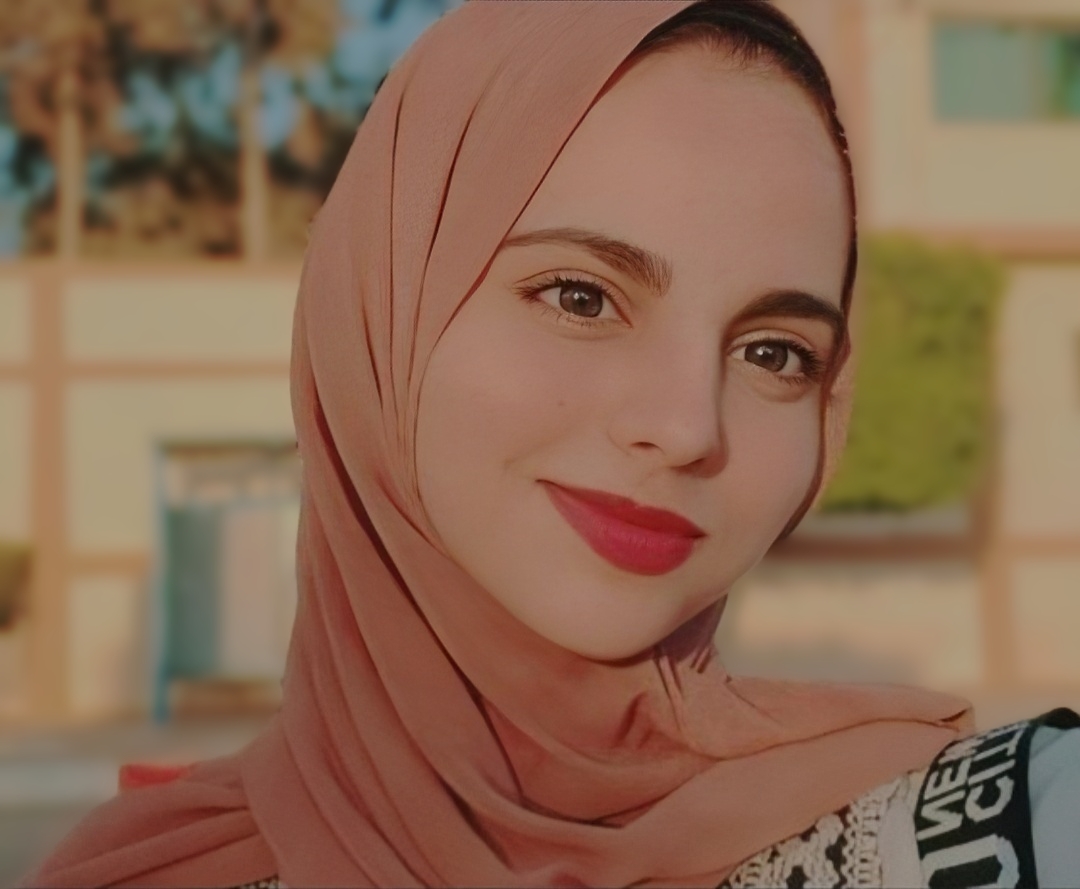
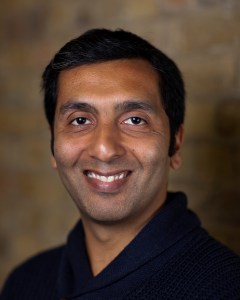
A head shot of Dina Turkeya. She is smiling and wearing a head scarf.

Dina Turkeya is a Palestinian dentist, author and translator. Her family is originally from Yaffa, but she was born and raised in Gaza. She has survived eight wars and aggressions, and still holds onto her dreams and ambitions. Dina’s love for her homeland inspired her to write her debut book, Time To Know Palestine (2024). She is interested in learning languages, writing, drawing and exploring different cultures.

Gaele Sobott: Please tell us a little about your family, including where they originate from and how their experiences have impacted your life.

Dina Turkeya: My great-grandfather was Turkish. He moved to Palestine in the early 1900s and married in Yaffa, where my grandfather was born. After the Nakba of 1948, my grandfather and his family were forcefully displaced to Gaza. He left everything they owned to start from scratch with the label ‘refugees’ on their identification cards. I still remember how my grandfather longed to return to Yaffa, their lovely house and the orange groves. He was waiting for the moment when his feet would touch his homeland after years of deprivation, but what happened was another Nakba. He was displaced from his house in Gaza to a tent in the south of Gaza in this ongoing war. His body couldn’t bear the inhuman conditions and the heartbreak of displacement again, and he died in the tent after years of suffering and yearning.

GS: Where/when were you born? Describe that place and tell us about your time growing up, including your experiences with siblings, cousins and school friends.

DT: I was born in December 2001 and lived my whole life in a very beautiful city called Al-Zahra. This coastal city is nestled in the heart of the Gaza Strip, boasting stunning natural beauty with lush trees, vibrant flowers, serene and spacious streets and kind locals. Growing up, I resided in our lovely house for about 22 years, which witnessed my earliest steps, first words, school journey and university studying nights. Every laugh, tear and whoop echoed through its walls. It was everything to me.
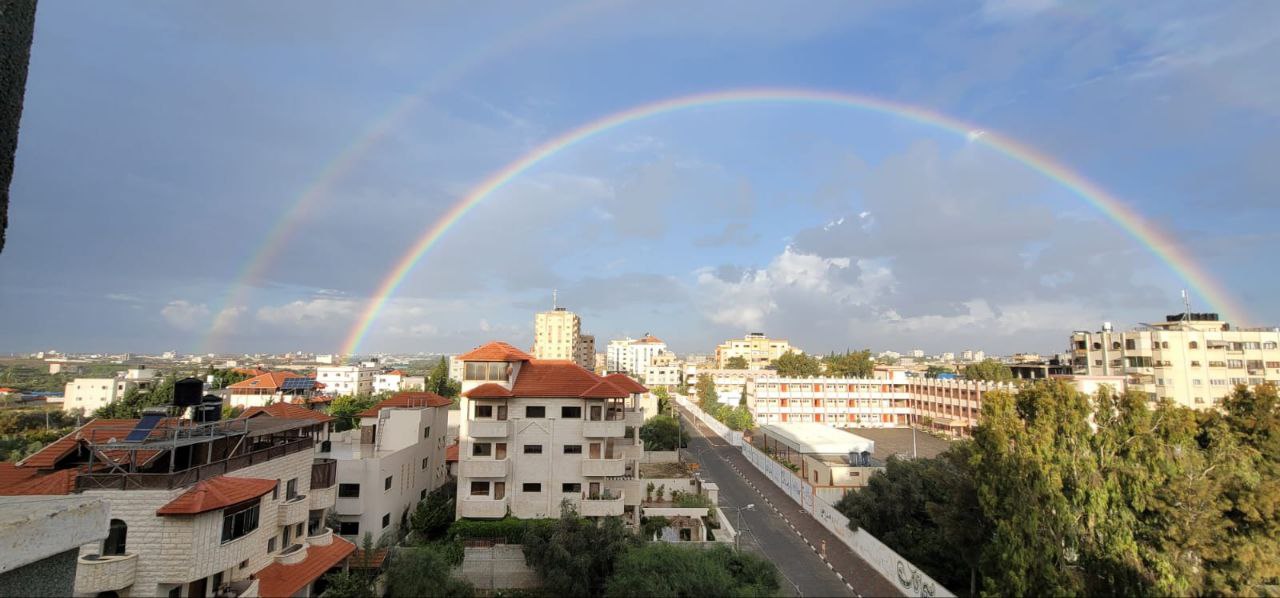
Al-Zahra showing white apartment buildings with red roofs, a blue sky and two rainbows stretching over the city
Al-Zahra

I had plenty of friends there and neighbours like a second family. I am the eldest of three siblings. We’d grown up in a family atmosphere full of love, involvement and support. My cousins were more than relatives. We gathered every Thursday, talked and shared our updates and stories, played cards and challenge games, ate delicious homemade food and desserts, watched movies and celebrated our special days. These weekly gatherings were cherished moments of respite from our bustling lives. I was fortunate to have wonderful friends I met through school, volunteer work, training programmes and even online international courses. True friends simplify life by offering guidance and support, celebrating victories and lightening the load on tough days.

GS: Apart from Arabic, what other languages do you speak? Where/how did you learn these languages?

DT: I speak English, Spanish and French. I’ve always been passionate about learning new languages. For me, language is not only a tool for communication but also a gateway to discover the world, learn new insights and open doors for new opportunities. My English proficiency was honed through school education and active participation in English clubs and programs. Similarly, I studied French for three years in primary school and continued for two years in secondary school, culminating in taking the DELF exam. Additionally, I dedicated three years to learning Spanish at Instituto Cervantes during my university years.

GS: Tell us what roles different languages play in your life and how different languages give or subtract from your view of the world.

DT: Arabic is my mother tongue; a rich, sophisticated and poetic language. The musicality and rhythm of Arabic, along with its diverse dialects adds to its charm and beauty. While I have studied many languages, none possess the deep meanings and elegant words found in Arabic.

Mastering languages has opened numerous opportunities for me, enhancing my skills in both personal and professional aspects. It helped me understand other cultures and perspectives, especially since living in Gaza has restricted my ability to travel and explore the world freely. Travelling is not a luxury when you reside in Gaza. It involves encountering various challenges along the way.

GS: Describe how the Zionist occupation of Palestine impacted your life from a young age.  If it is not too much for you, can you comment on your experiences of the current genocide in Gaza?

DT: Throughout my 22 years in Gaza, I endured eight wars and aggressions, which left me grappling with feelings of instability and the lasting effects of violence and trauma. The constraints of the siege limiting our freedom of movement, the scarcity of electricity, and the obstacles to accessing education, healthcare, and economic opportunities all contributed to a persistent sense of hardship.

I still remember every detail of that unforgettable day on the 19th of October 2023, around 6:30 in the morning. A man’s loud cry of “Get out of your homes” jolted me awake in a panic, prompting me to rouse my family. We hastily left with only essential documents and some money. Seeking refuge at our aunt’s house down the street, we were startled by a deafening explosion, followed by another. The smoke was suffocating, my heart was about to stop from the intensity of the explosion. The shock and horror of losing our home hit hard as we realised it was our building that had been destroyed. I lost the place where I felt safe, warm, grateful and happy. I lost my sweet memories. I’m the kind of person who likes to save everything. I saved my childhood photos, the old coins, gifts and letters from my friends and family, my summaries, drawings and pieces of writing. I lost everything in the blink of an eye.

During the night, when the city was enveloped in darkness, we were startled by the sound of people running and screaming in the streets. We were informed that Israel was planning to bomb more than 25 towers in Al-Zahra city. Confused and frightened, we rushed out into the streets, unsure of where to go. Moments later, as the bombings commenced, the deafening explosion knocked us to the ground, prompting us to flee as far as we could.
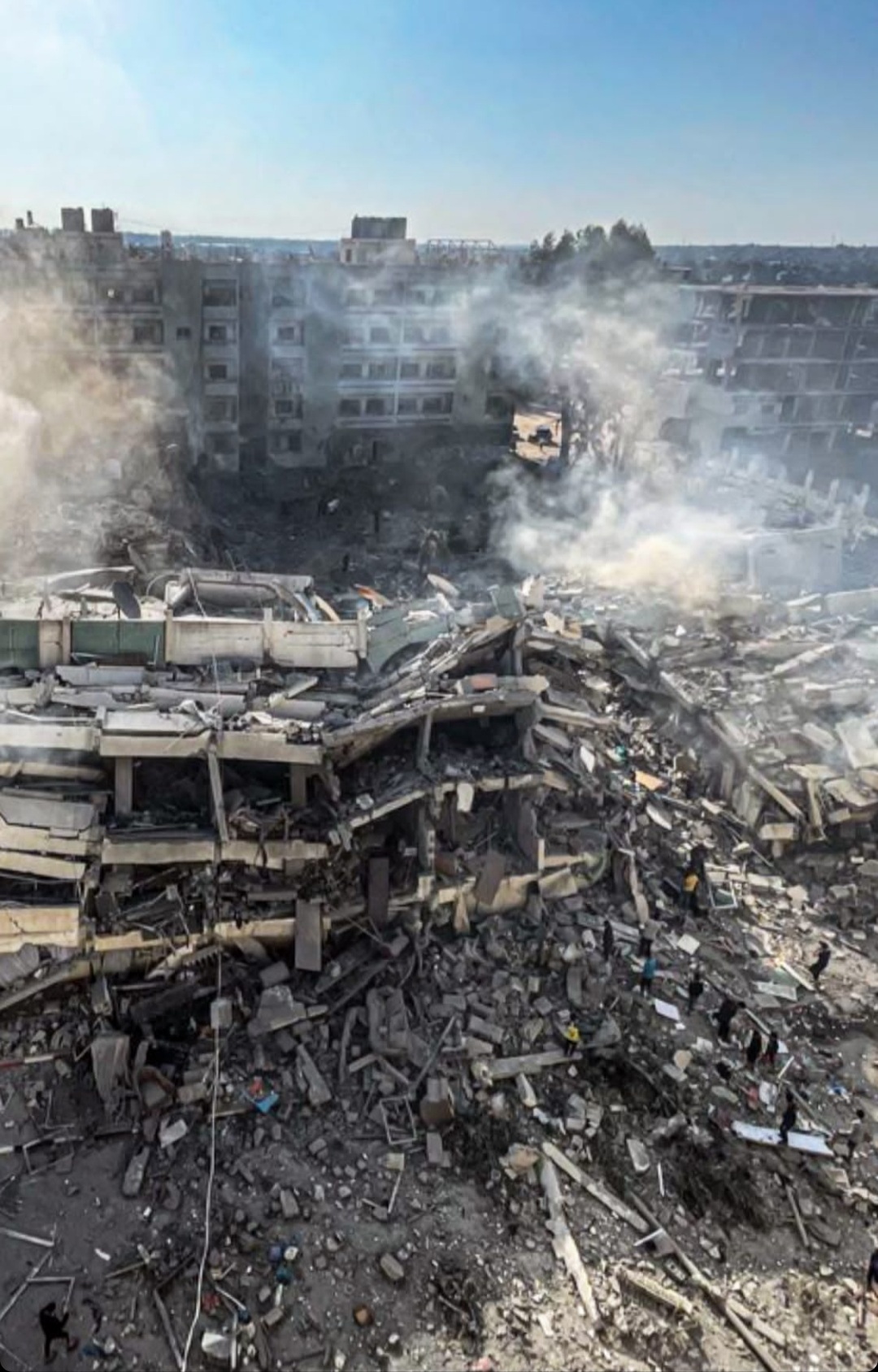
Dina's apartment building in ruins and smouldering the day after it was bombed.
Dina’s apartment block after it was bombed on 19 October 2023

More than 16,000 people found themselves on the streets. Surrounded by fire, the towers were under attack from the south, while nearby cities were being bombarded from the north. War boats approached from the west and tanks advanced from the east. Amidst this turmoil, babies were crying, the elderly were sitting in wheelchairs, women were screaming in terror and men attempted to calm down their families.  I remember that even the dogs were running in panic at the sound of explosions, seeking refuge among the people. What happened is beyond the endurance of any human being and any creature with a heart and mind.

We spent 15 hours in horror; we were afraid, exhausted, cold, hungry and heartbroken. Not only the residents of Al-Zahra city witnessed this difficult night, but also other displaced people who had sought shelter in Al-Zahra after fleeing their houses. It was the hardest night of my life. I didn’t think that we would be alive the next day. I remember waiting for the sun to rise to warm us with its rays. The devastated city was shrouded in grey smoke, evoking a sombre atmosphere. We eventually evacuated to the south of Gaza, and tears welled in our eyes. Witnessing my once-vibrant neighbourhood reduced to rubble was heart-wrenching; a place that had once bloomed with flowers and love.

Even worse,  Al Zahra city has lost all its landmarks and has been completely devastated by the continued bombing. Our city was built in 1998 to stop the expansion of Israel’s Netzarim settlement situated to the North. Netzarim was the last settlement to be evacuated and demolished by Israel when they withdrew from the Gaza Strip in 2005.  Now, history repeats itself in an even more dreadful form. After forcibly displacing all the people in the area during the first weeks of this war of genocide, Israel created the Netzeim Corridor to divide the Gaza Strip into northern and southern zones. They did this by destroying everything in their way, including our beautiful city.

The bombs killed my cousin in cold blood. She was staying with her husband’s family. I didn’t get the chance to say goodbye to her before I left. She was dead under the rubble. It is heartbreaking not to be able to visit her grave, lay flowers or properly mourn her death. The harsh reality of her non-existence brings to mind the concept of annihilation. The pain is profound when someone you shared precious moments with — chatting, laughing, watching sunsets — is gone forever, and we have even been deprived of the solace of burial and mourning rituals.

Many of my friends and colleagues were killed as well. Each of them had dreams and worked hard to create a brighter future. They were simply trying to live, yet what they received was death. It is extremely hard for me to look at their pictures and realise that I will never see them again or hear their voices. I find myself recalling every conversation and every moment spent together. However, what brings me solace is the thought that they are in a better place, away from this evil and brutality. Their souls deserve peace and purification from this harsh world.

GS: Please talk about your tertiary education. What did you choose to study and why? Where did/do you study?
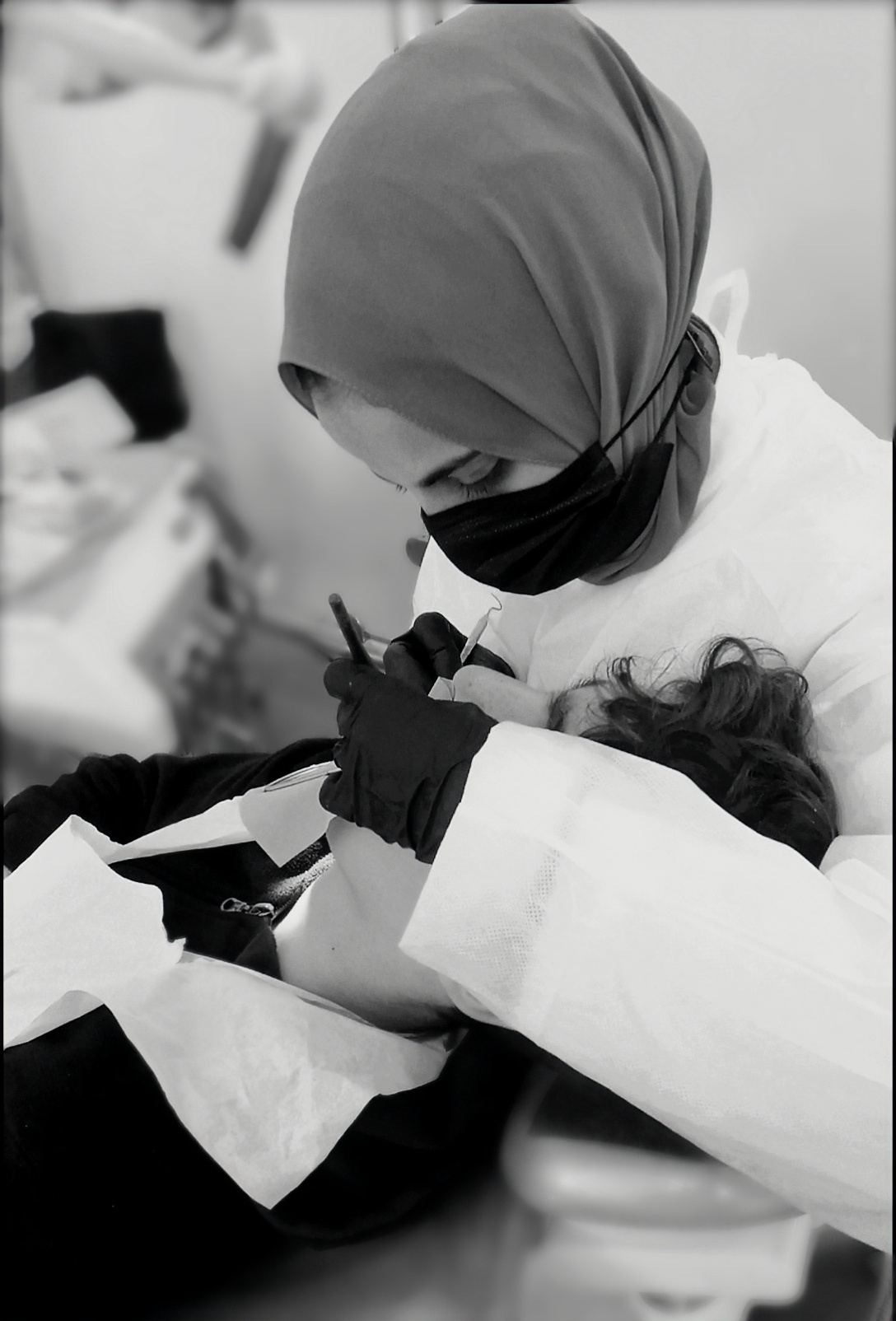
Dina doing dentistry on a young patient
Dina practising dentistry

DT: I was studying dentistry at the University of Palestine. I have chosen this speciality because I feel that relieving a patient’s pain and giving him/her the confidence to smile is out of this world. I was in my final year when the war happened. I was so excited for my graduation after five years of hard work. It was the moment to reap the fruits of my efforts. I had many plans and dreams, envisioning everything as if painting a beautiful picture. War disrupted my plans, leaving me unable to complete my studies due to the destruction of my university. This unexpected turn of events forced me to put my dreams on hold, leaving me with a sense of loss and uncertainty. It’s truly heartbreaking to see how drastically our lives have changed, knowing that things will never be the same again.

GS: Tell us about your experience of leaving Gaza.

DT: Leaving Gaza was the hardest decision we have ever taken. My parents decided to save the last thing that was left, which was “us”. We left in late January 2024 after four months of hardship and witnessing brutal atrocities. Leaving isn’t an option available to everyone. It’s costly and takes a long time. I left behind my beloved family, relatives, friends and neighbours. It felt like my soul had been taken from my body when I received the news that we were leaving. The farewell and our last hugs were so painful, with uncertainty looming over us of whether we would ever see each other again, knowing everyone was at risk of being killed at any moment. The first steps outside Gaza made me feel traumatic shock. A sky without the sound of drones, lights in the streets at night, the feeling of safety where we were staying, knowing that the building wouldn’t be bombed over our heads, charging our phone anytime, having good internet, drinking clean water and food, sleeping in a bed, washing our clothes in the washing machine not manually. These small details have been transformed into distant dreams for every Gazan.

The first months were so hard. My mind couldn’t comprehend what had happened to us, how much the profound loss weighed heavily on our hearts, and how it would be possible for us to live with such emptiness in our souls. It hurts so badly to live with those reoccurring flashbacks of our old life, stuck in the past but hoping that something will happen to bring life and hope to us again. Hearing and reading the news is much more painful, especially since we can’t reach people in Gaza due to the deliberate destruction of the internet and telephone network. We are continually anxious, waiting for a response and fearing that we will see the names of our loved ones on the list of martyrs.

All the people who survived the war share the same pain; we all tell similar stories of our suffering. Wounded people bandage each other’s wounds! I thought that after moving abroad, I could continue pursuing my dreams, only to encounter a harsh reality of exploitation and obstacles placed in our path instead of understanding our circumstances.

GS: You are about to publish your book, Time To Know Palestine. Tell us what this book is about and why you wrote it.
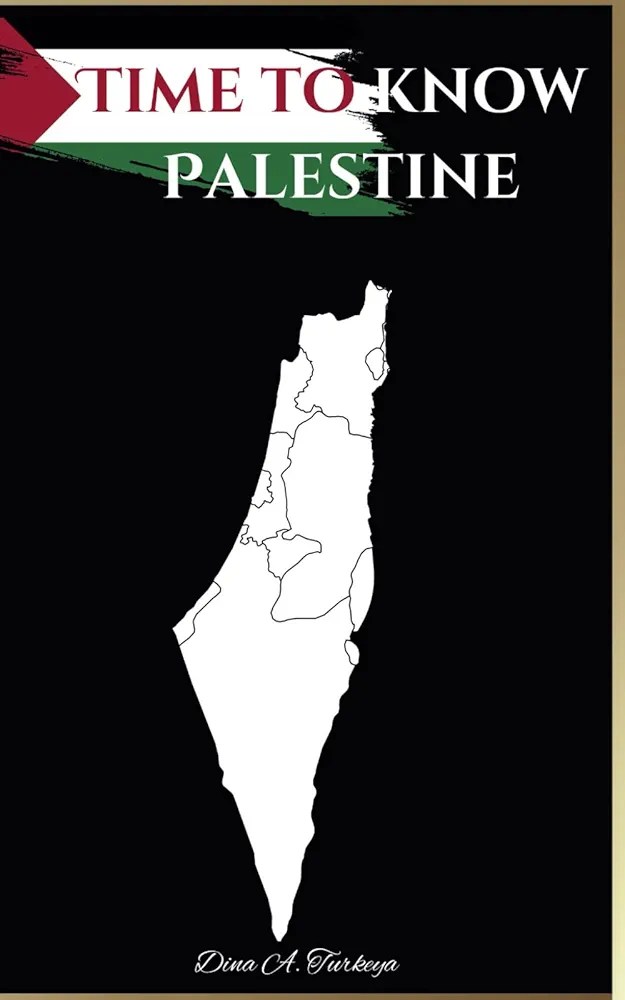
The book cover for Time to Know Palestine

DT: After surviving the war in Gaza, I was trying to recover from the trauma and writing was my way of healing. It was so difficult to turn all the indescribable emotions into words. I was initially unable to concentrate or communicate properly. My family encouraged me to start writing, and I am very grateful to my friend Ana for her unwavering support. She connected me to incredible people from Palestine (West Bank and 48 Lands). They answered all my inquiries and showed me pictures and videos of the places that brought tears to my eyes. It’s so unfair when you can’t visit your homeland while everyone else, including the occupiers, can freely explore its beauty, stroll along its streets and visit all its attractions.

Time To Know Palestine is my way of showing love, pride and respect for Palestine and Palestinians. It’s a message to humanity to see the beauty of my country and know about its long-standing history and vibrant culture. It acknowledges each voice that has been silenced.

This book is for all the lucky people who had or will have the opportunity to live the most beautiful days and memories of their lives in Palestine. And for every Palestinian who is deprived of seeing the beauty of his homeland because of the occupier’s unjust policies.

I will take you on a journey through my words, which I wrote with love and sincerity so that you receive the complete true picture of Palestine, despite all the desperate attempts of the occupier to Judaize and erase its history and geography. This book represents the voice of Palestine that will echo through the centuries, the voice of truth and the voice of the awaited freedom. Time To Know Palestine

GS: What types of international support for Palestine would you like to see happening at this point?

DT: People worldwide have shown great solidarity for Palestine and its people, starting from the Boycott, Divestment and Sanctions (BDS) movement, which proved its effectiveness. Activism and solidarity campaigns to raise international awareness about the Palestinian issue, the human rights abuses in the occupied Palestinian territories and the victims of the genocide. Grassroots campaigns and protests to support the Palestinian people’s struggle for freedom, justice and equality are growing. 

I believe that civil society and social movements play a crucial role in influencing decision-making by applying pressure on governments to implement policies that address the needs and aspirations of everyday people. Many think that providing humanitarian aid and donations to Palestine suffices. However, the real solution lies in tackling the root causes of this ongoing suffering: ending the occupation and halting the genocides.

GS: As one of the places this interview will be published is a zine that will be circulated among young people who like electronic music, I am wondering what types of music you like? What are two of your favourite songs right now?

DT: I like classical music because of its ability to evoke deep emotions and transport me to another world. There is something incredibly calming about the sound of the piano, it helps me unwind and clear my mind. My musical preferences vary depending on my mood and what I’ve been going through recently. Right now, my favourite songs are “I’m Coming Home” by Skylar Grey, and “Gonna Be Okay” by Brent Morgan. They describe the nostalgia I feel for my homeland, my efforts to overcome difficult times and the pursuit of hope.

GS: What are you currently reading?

DT: Most of what I read currently is about dentistry to ensure I don’t forget the knowledge I’ve gained over the past few years and stay updated with new advancements.

GS: What message would you like to send to your generation internationally?

DT: To my generation internationally, I would say: we hold the power to create a more just, compassionate and peaceful world, but it demands collective action, empathy and a genuine willingness to listen and understand each other. In this era of global connectivity, it’s easy to feel overwhelmed by the obstacles we face, but we must remember that we are also better equipped than ever to make a meaningful impact.

We must advocate for human rights, justice, and equality, recognising that the struggles of one community affect us all. Let’s leverage our platforms, education and resources, not only to improve our own lives but also to stand in solidarity with those enduring oppression and hardship. Let’s actively seek diverse perspectives, build connections, and act with empathy and courage.

Our generation has the potential to transform the narrative — from division to unity and from indifference to proactive compassion. The future hinges on how we engage with the world today and each of us plays a vital role in making it brighter.

GS: Describe what you most admire about Palestine.

DT: At this point in history, what I find most admirable about Palestine is the resilience of its people. Despite enduring decades of hardship, displacement and conflict, Palestinians continue to exhibit remarkable strength and determination. Our capacity to preserve our culture, traditions and sense of identity in the face of adversity is genuinely inspiring.

I am also impressed by the younger generations in Palestine who are actively embracing education, technology and activism to amplify their voices on a global platform. We demonstrate creativity, resourcefulness and a passionate commitment to shaping a brighter future, often employing art, literature, and social media to convey our hopes and challenges.

Furthermore, I have great respect for how Palestinian communities worldwide have managed to maintain their identity, fostering a strong sense of solidarity and pride in our shared heritage, even while in the diaspora. The enduring spirit of perseverance and the continual hope for justice and freedom serve as a powerful testament to the strength of the Palestinian people.

GS: What future do you envisage for Palestine?

DT: The future I wish for Palestine is one where its people enjoy freedom and independence, liberated from the oppression of occupation, living in a secure and culturally and economically prosperous state. I wish for Palestine to reclaim its status as a beacon of knowledge, creativity and peace, just as it was before the onset of occupation.

This interview was conducted in English with Dina Turkeya by Gaele Sobott in September 2024.

Purchase a Copy of Time To Know Palestine

Connect with Dina Turkeya on LinkedIn

Read this interview in Arabic

Gaele Sobott writing, culture, social & economic justice by Gaele Sobott is licensed under Creative Commons Attribution-NonCommercial-NoDerivatives 4.0 International 

GAELE SOBOTT – DISABILITY, FIRST NATIONS and CLIMATE by Leslie Tate

Headshot of Gaele Sobott

I interviewed Gaele Sobott, founder and creative director of Outlandish Arts, a disabled-led arts organisation, and author of Colour Me Blue, a collection of short stories set in Botswana, and My Longest Round, the life story of Wiradjuri man and champion boxer Wally Carr.

In the first half of her interview, Gaele introduces her upbringing and disability work, her creative methods as a cross-genre wordsmith and her reaction to the Australian bushfires and the current climate emergency.

Leslie: Could you tell the story, please, of how your interest in various forms of writing and disability arts began, grew and developed? How did your early life shape your creativity?

Gaele: I was born and grew up in regional Victoria, Australia. When I was very young, I did the rounds of all the Sunday schools; Methodist, Anglican, Presbyterian, Catholic, to collect books. I liked the stories. We moved around a fair bit but for as long as I can remember, public libraries were the centre of my world. When we lived in a small fishing town where there was no library, I looked forward to the bookmobile that drove in regularly. My parents also paid off a set of Grolier encyclopedias which provided me with hours of reading. We had an Astor radio with two shortwave bands. I discovered Radio Moscow and would listen to their English program. I received books and plastic records from them in the mail. I particularly loved traditional stories or folktales from around the world about magical and imaginary beings. So I would say that access to stories, books and reading during my early life definitely shaped my later creativity.

My interest in writing developed at school, particularly the secondary school I attended in Melbourne, where I had dedicated English Literature and History teachers who encouraged me to write. I kept a journal during that time and, as a teenager, was influenced by the politics of the Vietnam Moratorium and the growing women’s liberation movement.

I remember seeing demonstrations by disabled people on TV but knew very little about disability politics. I did not then identify as disabled. My understanding of disablement as a political concept only came about in the late 1990s when I began to experience impairment that affected my mobility and my access to buildings, transport and events. My involvement in disability arts only really started in the early 2000s when I came back from living overseas for over twenty years. I met with Amanda Tink and Josie Cavallaro at Accessible Arts NSW, who assisted me quite a lot in understanding the disability arts environment in NSW and Australia. At that time, I started writing my body into my work, the way I moved through the world, my experiences with hospitals and doctors. I was part of the first Australian cohort of Sync, a training program presented by the Australia Council for the Arts that focused on the interplay between leadership and disability. The people I met there and the course itself helped me understand that, as disabled people, we can lead through our art and arts work. I founded Outlandish Arts, a disabled-led arts company for disabled artists across all art forms.

Read More
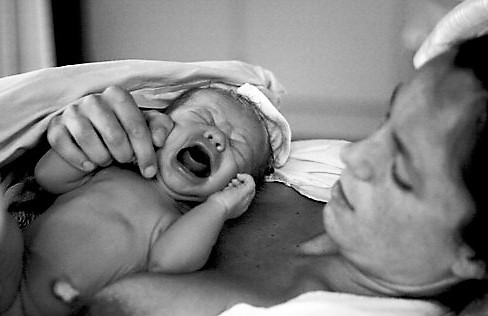
Black and white photograph of a mother holding a new born baby on her chest. The baby's mouth is wide open, crying.

The Cry Room by Gaele Sobott

Published by Verity La

What does it mean to be born outside of marriage to a mother who wonders if the bleats of a goat are your first cries?

Birth

I just slipped out she said. Like a slip of the tongue, slipshod, a slip stitch forever unknitted. I was born. Slippery, sibilant, small in the scheme of everyday lives. Nothing stopped. There were no celebrations. I was born and everyone got on with their work in the power station, the briquette factory, the mine, a gaping, brown open-cut.

She hung the nappies and sheets on the line, coal dust settling on the whiter than whites, on the window sills and mantle pieces, on the froth of the men’s beer, in our lungs. I was two-months old. Thin and pale, she shivered, her breasts bulging red and hot above her shoulders, a painful mountain range of igneous rock. Mastitis the doctor said. Milk fever, once a reason for admitting women to the insane asylum.

He laughed with a fat, purple face and said, ‘Keep breastfeeding! Let the baby suck’.

Not having a bar of it, my mother put me straight on the bottle.

She laid me down to sleep, seething ready to explode because my father’s English friend from the Woodcraft Folk was Morris-dancing in the bathroom day and night, until he got a desk job at Maryvale Paper Mills. Then he moved out.

Irene, our neighbour, would throw me around like a football and babysit when my parents went to Hamish Gardner’s house for Communist Party meetings. Dad was a proud member of the Trades and Labour Council, a deputy rep for the Transport Workers Union. He drove the bright-yellow Euclids carting overburden from the coal deposit.

The women went to Party meetings but my mother would rather have been at the picture theatre with its curved façade and big clock embedded into beige bricks. In summer, they turned on the air conditioning. In winter, she could take off her shoes, rest her feet on hot-water warmers and watch Vincent Price murder people in The House of Wax, 3D technicolour on a panoramic screen.

She took me with her once when I was a baby and sat at the back of the auditorium in the soundproofed, glass-fronted, cry room to watch East of Eden. I slept and she cried. My mother would sit in the cry room. Often without me.

In the theatre, she always refused to stand for the national anthem.

At home, she took a failed dish of bread and butter pudding from the oven, cried, splattered it against the kitchen wall.

What does it mean to be born in a town purposely planned and built, then purposely demolished for the coal that lays beneath it?

My birthplace is an ever-expanding, dark and greedy hole in the ground. With heat and oxygen, the coal spontaneously combusts. Lignite dust bursts into flame at the drop of a match, a spark, a welding torch, a yellow flash igniting in mid-air. Volatile, toxic. Giant, cylindrical cooling towers, chimneys, steel girders, high wire fences, power lines.

My birthplace is Brayakaulung land, Gunaikurnai, cleared, windswept, foothills.

What does it mean to be born to land where the ancestors are denied, where they are brutalised? Do they know my footsteps, my birth spirit?

My blood ancestors, Polish, Italian, Scottish, do they know my footsteps, my birth spirit?

Birth

I walk the short corridors of a small hospital, Bamalete Lutheran. I’m the heaviest I’ve ever been. Seventy-four kilos. Twenty-four years old like my mother when she had me.

First baby. My father drove to Melbourne to collect his friend from England.

First baby. My daughter’s father is out with friends.

The walls are green gloss, the floor concrete, painted dark red, polished, worn where I walk.

I walk because the nurses tell me I should. Read the birth records open on the counter in front of me. Stillbirth. Don’t think about it. Float.

The nurses give me an enema, warm and wet, not painful.

Cow bells ring hollow and deep. The land is dry, gold, studded with small trees and shrubs. I’m on my back on the bed. The midwife checks dilation.

‘Don’t hyperventilate. Breathe normally’, she says.

I read about the breathing in a book. Neon light.

The doctor is at the end of the bed. A tall German woman telling me to push. Round pain, rhythmic, I float. From deep within the back of my head I float. My hip bones separate like a spatchcock cut with kitchen scissors, pressed flat on the white sheet, I rip, a goat bleats at the window.

Release.

My baby cries.

Ten fingers. Ten toes. She is big.

A big baby.

Relief.

We wait as my uterus presses down. A balloon shrivelling in on itself, contracting against the placenta, the temporary organ I have harboured, accepted and must now expel. Every process orchestrated by this new child in the room.

The midwife wants to sew the tear that extends from my vagina to my anus.

The placenta is ragged maroon not flat-cake perfect circle. We wait for more contractions. My skin smells damp, of freshly-cut grass, metallic.

The needle in and in and in and in.

Is it curved this needle?

Is it huge, with a big eye?

Black thread pulls through my tenderness. Pulls me back together, hurting. No pain killers.

The nurse tells me to get up and walk to the room.

I lie on my bed. My baby next to me in a Perspex cot. Sleep.

She cries. I take her. Sleep.

A nurse holds her to my breast. She sucks. Sleep.

I wake. It feels like I’m giving birth again. Waves of pain.

I tell the nurse.

She smiles, ‘The uterus contracting back to its pre-birth size. It’s nothing to worry about’.

I can’t float. The nurse brings tablets. They dull the pain. Sleep.

The light bulb hangs from the ceiling, stark and still. I sit up to look at my baby, eyes closed, her chest rising and falling rapidly, small lungs, heart, kidneys learning how to work in this world, outside me.

A spider, light brown and black, with very long front legs speeds across the wall above her cot.

My feet feel the cold of the concrete floor. Trembling, I take her wrapped in pastel yellow, blue and pink softness, and hug her close to my chest.

Indecision and anxiety prickle my skin. The spider waits for my next move. I bend over, clutching my baby with one arm, grab my shoe and throw it. The spider falls. I’m not sure if it’s dead. Part of a spindly leg sticks to the wall.

At home with my baby. I am frightened to hold her in water, to rub her skin with soap. My breast swells, lumpy, the ducts blocked.

The doctor gives me antibiotics for mastitis. I keep feeding.

She cries. Every night she cries.

I pull my hair, fighting the temptation to throw her across the room.

So tired.

We drive dark streets and she sleeps. Drive and cry. I am very thin. Mosetsi.

What does it mean to be born outside of marriage to a mother who wonders if the bleats of a goat are your first cries? What does it mean to be born to land that your mother came to as an adult? That your father’s mother came to as an adult? Bamalete land, Bangwaketsi land where your father and his father and all the fathers going back in time are deeply rooted in the sand, deeper than the roots of the shepherd’s tree?

Who knows the vibrations of your feet on the earth?

Who knows your birth spirit?

Who do you become?

Read more of The Cry Room at Verity La 

© 2018 Verity La. All Rights Reserved.

People love stories: An interview with Amit Sharma

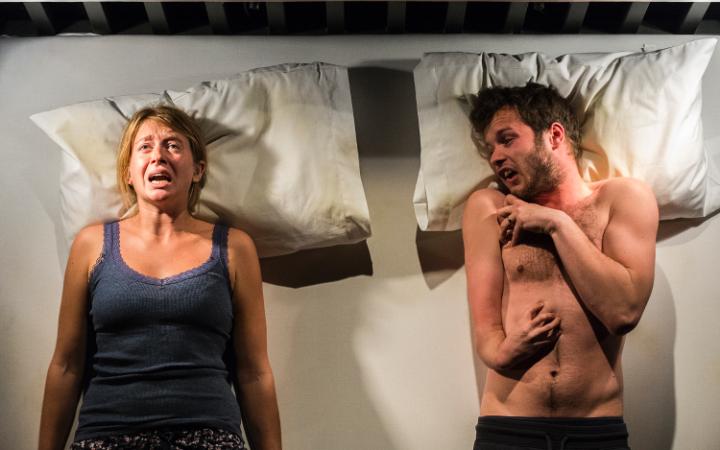
A young woman wearing a blue singlet lying on a bed with an anxious expression on her face. Next to her is a young man also lying on his back. He is only wearing black shorts.

GENEVIEVE BARR AND ARTHUR HUGHES AS ALICE AND PHIL IN THE SOLID LIFE OF SUGAR WATER BY JACK THORNE CREDIT: PATRICK BALDWIN


Amit Sharma 2Credit-Matt Cetti-RobertsAmit Sharma has been the Associate Director of Graeae Theatre Company, London, since 2011. He recently directed The Solid Life of Sugar Water, a Graeae Theatre Company and Theatre Royal Plymouth production, gaining unanimous acclaim at the 2015 Edinburgh Festival Fringe, leading to a 2016 UK tour including a run at the National Theatre.

Amit is a graduate from Graeae’s Missing Piece actor training course. In 2012, he co-directed the outdoor spectacle Prometheus Awakes (with La Fura dels Baus/co-commissioned by GDIF and SIRF), marking the first large-scale outdoor production to be artistically led by Deaf and disabled people in the UK. Also for Graeae, he directed Ted Hughes’ The Iron Man, which toured both nationally and internationally and co-directed Graeae’s Rhinestone Rollers in Sequins and Snowballs with Jenny Sealey at the Southbank Centre. As Assistant Director, he has worked on Graeae’s productions of The Threepenny Opera, The Changeling and on The Four Fridas for Greenwich and Docklands International Festival 2015. Amit currently leads on Write to Play, Graeae’s flagship new-writing programme in partnership with venues across the UK.


GaeleSobott: Can we start by talking about the set design in The Solid Life of Sugar Water. The bed is central, upstage, vertical with the actors standing against it. From the audience perspective it is as if they are looking down on the characters lying on the bed.

Amit Sharma: The thing about Sugar Water and the aspect that I was really interested in was the relationship between the two characters, Alice and Phil, how much they were or weren’t communicating. The style, as it was written by Jack Thorne, consists of two monologues essentially inter-dispersed with both the characters’ dialogue. Well it is much more intricate and clever than how I’ve just described it to you, but the nature of them not talking to each other and addressing the audience set up something which is immediately striking, irrespective of the subject matter. There is some form of subtext that is going on between the two characters, which is very exciting. When we did our original set design it was very abstract, very sparse actually. Then we did a reading of it and the designer said to me, ‘I think we’ve got this wrong. I think the audience needs to be placed in the bedroom. The bed is missing.’

She was absolutely right. The bed was like the third element of the relationship within the text. So then we needed to decide how to be artistic about it. We didn’t want the bed to be literal. The piece isn’t naturalistic. We jump from the past to the present and then back again. So we developed the idea of looking down into the couple’s bedroom.

GS: What is that perspective? What does it give to the play?

AS: I really wanted the audience to feel that they couldn’t get away from being privy to and a part of the couple’s life. I don’t know about you, but when I visit a friend’s house the bedroom is always the last place I look. It would be a bit weird to go and look in their bedroom. That’s because it’s private and you’d feel as if you were prying into someone’s very personal space, even if they’re not in the room. I wanted the audience to feel like they were able to be in that space.

GS: How does this position the audience? Are they voyeurs or perhaps fly on the wall?

AS: I think more fly on the wall. I think voyeurism has an element of choice about it. Maybe fly on the wall does too. I just wanted the audience to really feel the pressure cooker of the couple’s relationship and be a part of that. Not able to separate themselves from it. That’s what the play does. You fall into it and by the end you’re feeling all kinds of emotions because of the performances but also because of Jack’s writing. The writing and the set. That’s why I wanted the audience to be together in the bedroom with the couple. I wanted them to be with them in their private moments without feeling they were intruding. At the end I wanted the audience to feel they have been through so much with this couple. It’s actually about healing both for the couple and also for the audience.

GS: The audience are looking down on the bed but they are also being spoken to directly by the characters. It is not possible for the audience to position themselves as just observers. They have to participate. What are your thoughts on this?

AS: That’s the good thing about theatre. You can set up a convention and then just totally break it. So whenever the characters were on the floor, that was like the wall of their bedroom but it became less about the bedroom, it was the post office, the bridge, even though the bed was always present. As a creative team we wanted it to be subtle, so yes the bed was always in the background because there was always that big question of them trying to have sex.

GS: There are many disabled artists and directors who feel there is a need to explore sex and disability, for various reasons including societal attitudes, the infantilisation of disabled people. What is the importance of sex in disabled art? What is the relation of this play to the exploration of sex and disability?

AS: The most interesting thing coming out of Sugar Water is that question has not been asked. It has not been unpacked. What the play does is almost normalise that very question of sex and disability. It is such a huge topic for so many different reasons. Perhaps it is because of the performers, one performer is Deaf and one performer has a physical impairment, but not to the extent where it impacts on their sex lives. What I mean by that is that if, say, one of the characters was a wheelchair user who had 24 hour personal care then that dynamic shifts. I was reading an article today about the Independent Living Fund and this guy saying how it can be difficult to live independently for example to go out and chat up girls because you’ve got someone else there all the time. So you have to negotiate that relationship. This play doesn’t go there. People have picked up on the element of communication between the couple, but the sex element not so. I also think it is because of how Jack as a writer was playing with the idea of sex. There’s a lot of comedy with some really graphic descriptions.

GS: Well yes there is comedy and there are very serious moments, a fine line.

AS: Yes, Jack Thorne gets that fine line absolutely right. In rehearsals we spoke about how graphic we should get or if we should get graphic at all. If we were brave enough to show our naked bodies and those kinds of discussions. It quickly became apparent that it wasn’t about that. It would have become alienating, as opposed to the audiences going: ‘Come on, we’re theatre audiences. We’re pretty smart. We can go whichever way you want us to go. We don’t have to see nudity to get what you’re talking about.’

It felt like we could just tell the story. The most interesting thing is the intricacy of communication between the audience and the performers. The couple think they are talking to each other and they’re not really, and they do the direct address where there is a conceit between each character and the audience. There are many different levels of communication.

A close up of a man's head, profile looking down with streams of water flowing over his head and face.

GS: Can you talk a little about the quality of the reviews the play has received?

AS: Well I think the journey of journalism and the way this show, and other shows at the Edinburgh Fringe by Deaf and disabled artists, have been reviewed has really shifted. It’s really come a long way. The art is now being reviewed as opposed to the performers and their physical shapes and sizes and what have you. It is really refreshing to see the work being reviewed in this way.

Talking about Sugar Water the reviews spoke about the subject matter as happening to two human beings not to two disabled people. In relation to Genevieve, being a Deaf performer, the discourse was quite intelligent as opposed to talking about a Deaf person blah blah blah, it was more sophisticated in both the reviewing and the conversation around it. That hasn’t always been the case.

GS: What comments did reviewers make in relation to Genevieve being a Deaf performer and character?

AS: The discussions were linked to the idea of communication. Naturally if your partner doesn’t sign then you have to rely on lip reading and you may not catch all the communication. Phil can’t sign so he is not able to get what he feels across all the time. The scene when he’s on the bridge and he tries to sign and gets it completely wrong really resonated and got the biggest laugh every time. By that point the audience realises Alice and Phil are not communicating on a number of levels. It was about them as individuals and what they felt for each other, what they wanted and needed from each other. Phil had never had a huge number of relationships before hand. Alice had just come out of a very difficult relationship. So that makes two very vulnerable people in a position where they are wondering if the relationship can work, can they get along. Can they get married and try to have a baby. Is their relationship driven by their love and passion for each other or by their insecurities? Sometimes the best art doesn’t answer the questions it poses. It poses the questions for the audience to consider.

GS: Do you think Alice and Phil’s relationship is resolved in the end?

AS: I don’t want to say. Some people are unsure whether they continue or they don’t and I intended for that to happen. In my head they do, yeah. But I didn’t want to answer that. I spoke to Jack about it. He really wanted a happy ending and I really didn’t want a happy ending. I said, “Ok if we’re going to have a happy ending we have to hint and suggest the possibility.”

GS: I do think the play ends with them understanding and respecting each other.

AS: It’s only at the end that they actually say, ‘I love you’ to each other. Having been through the trauma of losing a baby. Jack’s a smart dude!

GS: There seems to be some relationship and similarities between The Solid Life of Sugar Water and Lungs, which also played at 2015 Edinburgh Fringe. Can you explain this?

AS: We had read the script about three or four years ago. When we got the script we were really interested. Duncan Macmillan is a great writer. We were thinking of doing a double bill but then Paines Plough went ahead with the commission so we didn’t.

GS: I found the story quite similar.

AS: Yes that’s why we had the idea that the two plays could work together.

GS: Where are you taking the play next?

AS: We’re putting a tour together. We’re going to be at the National Theatre for three weeks, which is superb. It’s the first time Graeae has been there and we’re incredibly proud. We hope the momentum builds from there.

It’s one of those plays. I remember reading it for the first time, here as a company, and the kind of silence at the end of the reading, everyone taking deep breaths. We knew it was a huge impact type of play. Audience reactions to the play have been emotional and deep. One woman stopped watching half way through. She sat there with her head down and just wouldn’t watch. There was obviously something that really connected with her. She started watching again a bit later. She was with a group of her friends and I saw her at the end. She was just in complete floods of tears. I don’t really feel bad about too many things but I did then.

GS: Why did you feel bad?

AS: I felt for her because I didn’t know her story and didn’t know what it was that she was relating to. I went over and asked her and her friends if they were alright and did as much as I could, offered her a gin and tonic. Theatre is such a powerful thing. I think people sometimes forget the impact theatre can have.

GS: Why do you think theatre powerful as opposed to other mediums of storytelling?

AS: It’s so immediate. You’re there. You can connect, relate to the work. You are immersed in the play for the length of the piece. People love stories.

GS: You can watch a series on TV and experience stories. What is it specifically about theatre?

AS: The craft of theatre is important, the putting together of the story although you can also do that with film and TV. There is something unique about theatre in showing that passage of time. I think the immediacy of you as a member of the audience and your relationship with the performers is so unique to you in an environment where there are other people as well. That is very special. You can watch television or a film in a cinema however the screen allows you to be one step removed from it. You can’t really do that with theatre. It is more interactive. It’s more immediate.

The question in theatre is – Why now? What’s important about telling the story now? With TV and film you can go back to it again and those performances won’t change but with theatre they will. You can go one night and the next night there will be subtle differences, something may have shifted – become more superficial, something may have become deeper. There’s an unknown quality. There’s that thing also where if something ‘goes wrong’ the performers just have to pick up the baton and carry on and audiences love those moments when it doesn’t all go to plan. Film and TV are created where it all goes to plan so with theatre there’s a different type of freedom and an improvisational quality.

It’s about creating the story. The performers grab the audience very quickly, in a vital and stark way, asking them to empathise with them.

GS: Did the actors contribute to Jack Thorne’s script during rehearsal. Were changes made for any reason?

AS: Well the actors didn’t really suggest changes but we did shift the script around them. We didn’t have any idea who we wanted to work with so in the beginning in Jack’s script the character, Alice, wasn’t Deaf. When we cast Genevieve as the actor for that part, Jenny Sealey, the Artistic Director of Graeae, and I had a conversation and we gave notes to Jack saying there are elements relating to Genevieve that should have some representation in the script. But in contrast, the Post Office scene about Phil not being very strong wasn’t adapted for him because of Arthur’s arm or anything. That was the original script.

GS: I didn’t take that scene as being about his arm.

AS: Well some people do you see. They think that was where his impairment was being referenced because he had this big box that he couldn’t quite carry. That was always there. But Phil signing on the bridge wasn’t there before we cast the actors. Jack did a couple of rewrites based on Jenny’s and my notes.

The stuff that happens behind the scenes may change according to the actor you cast. At the beginning we had created a soundscape and every now and then there’d be a heartbeat noise as a cue for the actors to shift position. There was also a sound cue for the actors to know the audience was seated and we’d got clearance from front of house. It was a dog bark. Genevieve has hearing aids so she could feel the vibrations of the heartbeats, the shift and the change, because there was a speaker close to her. What became slightly tricky was her trying to listen to the dog barking because of the frequency and because there were so many people in the room all making noise. So we discussed a better way of cueing and her feeling comfortable within the cueing system.

Also because there is so much direct address, I said, ‘You have permission to look at Arthur whenever you want. We’re not asking you to play hearing.’ But Genevieve got around that by learning Arthur’s script as well and picked up on his rhythms, picked up on how he delivered the text. That was her process. She wanted the same access and freedom as him and decided on her own cues. That didn’t mean Arthur had to do it exactly the same way each time. So there was that kind of negotiation going on during rehearsal.

GS: How do you cast at Graeae? How did you cast the actors for this play?

AS: For this play I got a casting director in. We work with some amazing performers and some amazing actors. I just felt this time round it would be really healthy for the Company to audition new people and add to our expanding pool of performers.

GS: Do you specifically cast disabled actors?

AS: For this play I decided the casting breakdown. Irrespective of impairment this is what I’m looking for. Just by the nature of the play we needed people who would be good at delivering text. I don’t mean in the classical sense, I mean it’s such a wordy play. There is a demand that Jack’s writing presents itself. That doesn’t mean being quick or slow or whatever. That’s what Graeae does – we say this is the play and this is what we are looking for. Let’s see who we can get through the door.

GS: I believe Graeae practises some form of affirmative action in casting performers and actors who identify as Deaf and disabled. How does this work?

AS: Yeah in our plays we’ve got at least fifty percent actors who identify as Deaf or disabled. For the two-hander I thought we had to have two performers who identify. We couldn’t have one. It just didn’t feel right. It was such a small company. But when we did the Threepenny Opera there were something like twenty performers so ten were disabled and ten were non-disabled. As it transpired, we got to the end of rehearsals and three of the people who previously didn’t identify said, Oh yeah, I’m deaf in this ear or I’ve got this impairment. So the Deaf and disabled were staring to outnumber the non-disabled. It was interesting. One of the reasons is that if people declare their impairment jobs shut down.

GS: But not here at Graeae?

AS: Yeah exactly, absolutely not at Graeae. For Sugar Water we were conscious we wanted new blood and we found it. The other thing is that we will use some of the people who auditioned but didn’t get involved in Sugar Water for other projects. So we did pull in a new pool of actors. We are good at that.

GS: What’s the next project?

AS: At the moment we’ve got the Write to Play initiative, nurturing new writing talent. We’re also developing a new adaptation of The Hunchback of Notre Dame for production in 2017. There is also a verbatim play around the Incapacity Benefit, the Employment and Support Allowance, that’s under commission.

GS: Whose voices are represented? Those who apply for or receive the benefit, or those in the bureaucracy who assess people, hand out the benefit.

AS: A bit of both but mostly people on the receiving end of decisions. We’ve got a doctor. We’ve got a legal aid person, a variety. We’re doing a taster session at the moment in aerial training building up to a project with war veterans in 2018 – an outdoor piece I think. It’s linked into the recent 1914-1918 reflections on the First World War. There’s a big artistic element to it all. We are very fortunate to be working in this profession on great projects with wonderful people. It’s a really odd time because for a lot of Deaf and disabled people at the moment they don’t know whether they’re coming or going.

GS: Are you referring to government austerity measures?

AS: Yeah but the profile of Graeae is really accelerating. The Company is being recognised for the work that we’re doing. We’ve got Ensemble starting next week. It’s an eight-month, work-based, professional-development programme for six young artists. They’re nineteen to twenty-five year olds and we’re training them as theatre makers. Jodi Alissa Bickerton is our Creative Learning Director. She’s running that programme. It’s in response to barriers faced by many Deaf and disabled artists, as well as a lack of diversity within the current theatre climate.

GS: How do you choose the participants?

AS: We get the information out there. There’s an application process. We audition, then we interview them and go from there.It’s difficult at the moment because the austerity drive is seriously impacting disabled people on a number of levels, work, living, health.

GS: Do you think disabled artists have a responsibility to reflect this in their art?

AS: I think disabled artists have a responsibility to their art. It’s a tricky one. I think it’s about choice. Some artists are deciding to reflect in their work what’s happening socially, economically in our society. Other artists feel that the art itself, no matter what it’s about, will create the shift, create the change. It’s a difficult choice but I don’t begrudge anyone for whatever the choice is that they make. I really resist the idea of hierarchical disability. Disability includes such a wide range of circumstances. It can mean so many different things to people. The wider the experience and the subject matter of our art, the better it is for changing perspectives. Graeae does a lot of advocacy work but it can be really relentless. The cuts are creating a lot of insecurity.

GS: How important do you feel disability-led writing and directing is to changing public perceptions around disability?

AS: I think everything needs to be driven by the story that the writer or the director is trying to convey. Sometimes that feeling of importance can be restricting and uncreative. Audiences are smart, open and intelligent. If you take them on a journey then they’ll go with it. If everything about a play or a show becomes agenda driven then it can fail in changing those perceptions. The story is the thing.

Further Information:

Interview with Genevieve Barr & Arthur Hughes

Information on Graeae and the tour of The Solid Life of Sugar Water  or

The interview was conducted by Gaele Sobott on 28th September 2015 at Graeae Theatre Company in London

Creative Commons License
People Love Stories – an Interview with Amit Sharma by Gaele Sobott is licensed under a Creative Commons Attribution-NoDerivatives 4.0 International License.
In Memory of Lauretta Ngcobo 1931-2015

Front cover of book. Close up photo of woman's eye, nose and mouth in orange tones. Title - And They Didn't Die Autor - Lauretta Ngcobo


Lauretta Gladys Nozizwe Duyu Ngcobo (née Gwina)  was born in the southern-most part of KwaZulu Natal in 1931. She was the first girl in a family of four. Her mother, Rosa Fisekile Cele, had a difficult time with the birth. Lauretta wrote,

On the night of the second day, my grandfather, who knew the white doctor personally, had managed to persuade him to venture into the black reserve, by night, to save the life of his elder daughter and her unborn child. And so he did.1

Lauretta was born into a family of storytellers, growing up in a rural setting where she valued her exposure to oral literary traditions. Commenting on how poetry informed all occasions she said,

It was performed to honour kings, to welcome newly born babies, and to rock them to their sleep. It is sung at weddings, at funerals and at war. It even heralds peace.2

She recalled her mother relenting in family arguments and reciting poetry at the doorway of the ‘great house’, ‘the maternal family line first, followed by the paternal line’ until the grandmother nodded her head and the argument was over.3

Lauretta’s mother would tell her African folk stories. Her great-grandmother narrated episodes of Zulu history. She composed poetry about her painful life as the least-loved wife of her husband’s four wives. She also created poetry for each child in the family including Lauretta who used to cry as a baby. ‘Apparently I had a very sharp voice . . . My poetry imitates the honey bird which is very insistent.’ 4

When Lauretta was seven years old her father, Simon Shukwana Gwina, died. Both he and Lauretta’s mother were teachers. Lauretta’s mother became the sole breadwinner in the family. Despite the difficulties, she was determined that all her children would be educated regardless of their gender.

The public openly condemned us, girls, who ‘demanded’ the same privileges as boys. In a family where mother had never made us aware of the preferences, the remarks were not only hurtful, but created a throbbing consciousness of one’s burdensome value.5

Lauretta went to primary school in Webbstown and Nokweja. In 1944 she was at a boarding school run by American missionaries in Dumisa and then in 1946 she went to Inanda Seminary. At home, she had gained a knowledge and interest in English literature and history from her mother.

My mother got me interested in her favourite writer, Montgomery, Anne of Green Gables. Her stories became my favourites too. From her I learned about Henry the Eighth. I was very fond of Thomas Hardy and his stories of rural England and I liked Charles Dickens.6

She enjoyed school but began to sense a ‘silent disapproval of the barefoot life-style and art that was part of my whole way of life’. The ‘borrowed culture of city girls’ was the dominant ethos and she found herself caught in a ‘tug of warring cultures’. She described how she felt a ‘disfigurement of outlook, a mutilation within’, a conflict that ‘persisted even against the most arduous efforts to strike a balance’.7

In 1950 Lauretta attended the University of Fort Hare and obtained a BA in Psychology, and Zulu Language and Literature. She also studied for a postgraduate University Education Diploma. Fort Hare had a ‘ratio of thirty-five women students to five hundred men in those days. In some classes the preference given to male students was disarming.’ 8

Her first job as a teacher was in Pietermaritzburg in 1954. One year later, she took up a position as a scientific research assistant for the CSIR. In 1957 she married Abednego Ngcobo and in 1960 went back to teaching in Durban. Lauretta always enjoyed writing. She wrote a number of articles and books which she discarded or burned mainly due to her assumption that nobody would be interested in reading anything she had to say, ‘not the men’ and not the ‘white people’.  She stated,

I don’t think I know why I write, I just know I must. I scribble a lot that I know will never be read by anyone, for since I was a little girl by conditioning, I never expected anyone to read anything that I wrote, outside my classroom assignments. I feel the need to communicate with myself. It is a duty to myself. Yet, by its very nature, writing is an outgoing channel of communication, no matter how private.9

She saw the Bantu Education Act of 1953 as the greatest limitation on Black writing in South Africa. 

Cut off from the mainstream of world literature which could otherwise act as a model and an inspiration. I have shared these limitations with all Black South Africans whether male or female.’10

Lauretta’s husband was imprisoned in 1960 for his political activities in the PAC and the Sharpeville uprising. In 1963 she was forced to leave South Africa.

I learned that there was a plan to have me arrested. It was the month of May. I had to escape and leave my two children with my mother. I decided to leave at once: the next day, at five in the morning, the police burst into my house to get me. I made it by the skin of my teeth.11

She spent the first six years of her exile in Swaziland and Zambia where she worked as a teacher. Her children were later able to join her in Swaziland. The family moved to England in 1969 and Lauretta began teaching in London at Tufnell Park Primary School. She then taught at Lark Hall Infant School where she became Deputy and then acting Head. She also began to write, spending ‘hours pinning my episodes together at the seams. I cannot think of a more time-consuming way to write . . . I had no time limit to my expression and no deadlines to meet.’ 12

In 1987, her novel, Cross of Gold, was published and time became very important her. She was invited to talk and write essays on a wide range of subjects,

I had to read a lot more widely. This factual diet does little for my creativity – especially considering how limited time is between my teaching job, my ‘factual’ reading and speechifying and creativity. What I need as a writer, more than anything, is time.13

Cross of Gold is told from the perspective of a young, male activist, Mandla. The women characters are silent and isolated. The only active, strong woman, Sindisiwe, dies in the first chapter of the book. She is shot by the South African border police while trying to flee apartheid South Africa into Botswana. Reflecting on the many questions that came from women readers, Lauretta realised that although she was actively occupied with gender issues in her life, ‘it hadn’t occurred to me that the book was not about me, was not about Sindisiwe, it was about a man!’14 She felt that this was a product of her socialisation and began to think of her construction as a rural, black South African woman growing up with the migrant labour system and the absence of men. ‘I was brought up by women. They were strong, independent and silent . . . it was inescapable that I should turn out very much like them: fertile and rich from within but silent or barren from without.’15

Lauretta edited a collection of essays, stories and poems, Let It Be Told: Black Women Writers in Britain, published in 1987.  The book aims to ’embody a largeness and a continuity’ extending beyond conventional race and gender stereotypes.16 She included a detailed introduction, an essay on her life and writing and an extract from Cross of Gold. In 1990, she published her second novel, And They Didn’t Die. Lauretta said,

I hadn’t written about women successfully, but at the same time I knew all about women. As I had shared so much of their pain, it could be that that was one of the reasons why I could write a different story in And They Didn’t Die.17

She presents active women characters and portrays the solidarity and strength that binds rural Black South African women. It is through the life of Jezile, a young rural woman, that we are made aware of women’s experiences under apartheid and the migrant labour system. Traditional Zulu power structures, especially that of the mother-in-law, and patriarchy are also problematised in what is a tragic yet tender tale of deep love, human strength and resilience. Her children’s story, Fiki Learns to Like Other People, published in 1993, is based in Southern Africa and aimed primarily at children learning English as a second language.

Lauretta taught Black Women’s Literature on a part-time basis in the Department of Extra-Mural Studies at the University of London. She lectured in Britain, the United States, Italy, Holland, Sweden, South Africa, Botswana and in Zimbabwe where she spoke on the problems of women in publishing at the International Book Fair. She published various essays under the name of Nomzamo. Her article, ‘Four Women Writers in Africa’, was published in South African Outlook in 1984. ‘Black African Women Writers’ was published in Cambridge Journal of Education in the same year. She wrote,

In our modern world, when women assert their right to self-determination and self-definition, it has become urgent for the African woman to write, to reverse the long-established opinions and beliefs that are prevalent today. It has become imperative for our schools to approach African women with enlightened curiosity. It is in the classrooms of our changing world that people must learn about the African women from the authentic voices of the African women themselves.18

In 1985 Kunapipi published ‘The African Woman Writer’, a speech given by Lauretta at the African Writers’ Conference in London in 1984, and an essay entitled ‘My Life and Writing’. ‘The Plight of Exiles’ appeared in African Concord and in 1990 ‘Black, Female, British and Free’ was published in For a Change. For many years Lauretta was president of ATCAL, the Association for the Teaching of Caribbean, African and Associated Asian Literatures.  She said, ‘We sought to persuade the Department of Education and Science through the inspectorate, to introduce into the various syllabi some text books from these rich literature sources.’19 She was also a founding member of the African women’s organisation, Akina Mama Wa Afrika which produced the journal, African Woman.

Lauretta felt strongly that ‘African writing should draw more from the African traditions of oral culture. I have not done much myself in this way but I feel it ought to be the way my writing goes’.20  She would like to write fictional works based on the lives of some of Southern Africa’s women leaders and spiritualists. After thirty years in exile, she returned to South Africa. She worked in education, and served on the KwaZulu-Natal provincial legislature until 2008.  It was in this year that she was awarded the Order of Ikhamanga by the South African government in recognition of her literary achievements. She edited an anthology of exiled South African women writers, Prodigal Daughters published in 2012. Lauretta Ngcobo died in Johannesburg on the 3rd November 2015. She is one of South Africa’s literary pioneers. A writer who fought tirelessly to give voice to her people, to Africans, to people of the African diaspora, to Black women. She specifically represented the experiences, resistance and power of Black, South African women. 

Hamba Kahle Mme Lauretta Ngcobo

Notes

1 ‘My Life and My Writing’. Kunapipi, Special Double Issue Colonial and Post-Colonial Women’s Writing, 7, 2 &3, 1985, p.83 Lauretta Ngcobo has published two articles entitled ‘My Life and My Writing’. One published in Kunapipi and republished in A Double Colonization: Colonial and Post-Colonial Women’s Writing, eds. K. Petersen and A. Rutherford. Oxford: Dangaroo Press. 1986 and another published in Let It Be Told, ed. Lauretta Ngcobo, London: Virago. 1988. The two articles are different.
2 ibid p.84
3 ibid
4 Interview with Lauretta Ngcobo’ by Anissa Talahite, Journal of Gender Studies, 1,3 1992, p.317
5 ‘My Life and My Writing’, Kunapipi, p.85
6 Letter from Lauretta Ngcobo to Gaele Sobott, June, 1993
7 ‘My Life and Writing’, Kunapipi, p.85
8 ibid
9 ‘My Life and Writing’. Let It Be Told. ed. Lauretta Ngcobo. London:Virago, 1988, p.134
10 ibidp.135
11 Interview with Lauretta Ngcobo by ltala Vivan, August, 1980, Between The Lines II. eds. Eva Hunter and Craig Mackenzie, Grahamstown: NELM, 1993, p.99
12 ‘My Life and Writing’, Let It Be Told, p.139
13 ibid
14 ‘Interview with Lauretta Ngcobo’ by Anissa Talahite, p.317
15 ibid. p.317
16 lntroduction to Let It Be Told, p.l
17 ‘Interview with Lauretta Ngcobo’ by Anissa Talahite, p.318
18 ‘Black African Women Writers’, Cambridge Journal of Education, 14, 3, 1984, p.17
19 Letter, June 1993
20 ibid

Bibliography

Books

Cross of Gold, London: Longman, 1981

Let it Be Told: Black Women Writers in Britain, ed. Lauretta Ngcobo, London: Pluto, 1987

And They Didn’t Die, London:Virago, 1990; Johannesburg: Skotaville, 1991; New York:

George Braziller Publishers, 1991

Fiki Learns to Like Other People, London: Macmillan, 1993

Prodigal Daughters, University of KwaZulu-Natal Press,  2012

Essays/Articles

‘Four Women Writers in Africa’, South African Outlook, May, 1984, p.16

‘Black African Women Writers’, Cambridge Journal of Education, 14,3 1984, p.17

‘The Plight of Exiles’, African Concord, May, 1987, p.32

‘The African Woman Writer’ and ‘My Life and Writing’, Kunapipi, Special Double Issue

Colonial and Post-Colonial Women’s Writing, 7, 2 & 3 1985 pp.83-86; A Double Colonization: Colonial and Post-Colonial Women’s Writing, eds. Petersen & Rutherford, Oxford: Dangaroo, 1986

‘Impressions and Thoughts on the Options of South African Women’, Kunapipi, Double Issue New Art and Literature From South Africa, 13, 1&2 1991, pp.165-169

Introduction to Like A House On Fire: Contemporary Women’s Writing, Art and Photography, Johannesburg: COSAW, 1994


This is an edited version of an entry written in 1994 for Wozanazo : A Bio-bibliographical Survey of Twentieth-Century Black South African Women Writers (University of Hull)

Creative Commons License
In Memory of Lauretta Ngcobo by Gaele Sobott is licensed under a Creative Commons Attribution-NoDerivatives 4.0 International License.


IF YOU DIDN’T LAUGH, YOU’D CRY : AN INTERVIEW WITH GAYLE KENNEDY

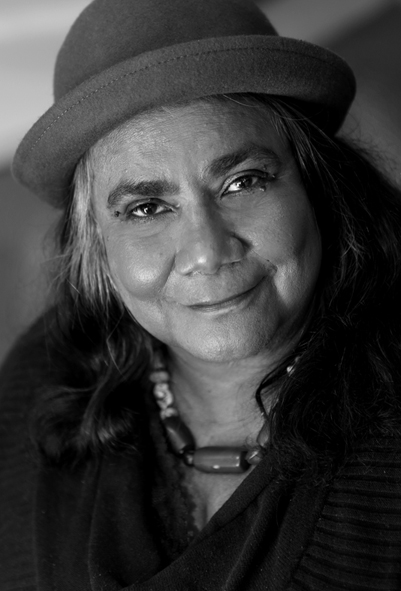
Black & white portrait of Gayle Kennedy smiling and wearing a hat and a necklace with large beads

Photograph taken by Belinda Mason

Gayle Kennedy is a proud member of the Wongaibon Clan of the Ngiayampaa speaking nation of South West NSW. She is an award-winning writer and has published work in newspapers, magazines, literature journals, and for radio. She was the Indigenous issues writer and researcher for Streetwize comics from 1995-1998. Her book of poetry, Koori Girl Goes Shoppin’, was shortlisted for the David Unaipon Award in 2005 and her prose work, Me, Antman & Fleabag[1] was the winning entry in 2006. She wrote eleven books for the Yarning Strong series. The Series won the 2011 Australian Publishers Association award for Excellence in Educational publishing. Gayle is a disability advocate and has spoken widely in Australia and overseas on disability and the arts.

Gaele Sobott: Can you tell me about your background? Where you were born, where you grew up, a little bit about your family?

Gayle Kennedy: I was born in Ivanhoe NSW and we moved to Hay when I was seven. In between, from the age of two to five, I was in the children’s hospital in Camperdown and then a rehab hospital in Wahroonga, then the Royal Far West in Manly recovering from Polio

My mother and father were both born in Condoblin but Dad’s family is from around Cobar. Mum’s family comes from the Euabalong area. Mum and Dad met when they were seventeen, working out at Wilcania. They’re both eighty-three now and they’ve been married sixty years this year. They had six children, four girls and two boys. One of my brothers was killed in a car accident at the age of eighteen in 1976. Dad worked for what was then the Department of Main Roads in the Central Darling Shire. Mum worked for a long while cleaning in hotels but gave that up about thirty years ago. They’re both retired now. I grew up with their stories. My parents’ story is in the national library. Francis Rush did that. She did an interview with me too about my experiences of polio for the Social History of Polio Oral History Project.[2]

GS: What are some of the memories you have of your childhood?

GK: I have vague memories of being in an iron lung and learning to walk again. My memories are mainly of me going backwards and forwards between home and the Far West. I remember loving rehab. It was the only home I knew at that stage. I was surprised to find out that I wasn’t from there when my parents came to pick me up. The first part of Me Antman & Fleabag where I write about the hospital is pretty much based on that time. The rest of it is fiction.

GS: Talk a little about your school experiences.

GK: When I was at the Far West I went to school there and it was okay. Because of the polio treatment I didn’t start school until I was seven. I went to the Convent school in Hay and the nuns were very good teachers. It was a great place because there was absolute zero tolerance of bullying or racism. Then I did one year at Hay Public School, which was awful. There were a couple of kids that bullied me and the headmaster was very racist and treated me like an idiot. Fortunately the teachers realised I was bright and totally ignored his directions to put me in the lower classes. So I got to work at the level I was used to which was the advanced level.

Then I won a two-year scholarship to go to Queenwood here in Sydney, at Mosman, right on Balmoral Beach. Violet Medway was one of the principals then. They were into providing a high standard of education for girls. No domestic science or any of those subjects that used to be taught to women. I loved English and History. I was a bit of a daydreamer – never really concentrated. I was always off in another world when they tried to tell me stuff. I generally crammed for exams. I was at Queenwood from age seventeen to nineteen. I made great friends there.

GS: Describe your early adulthood. What were you doing in your late teens, early twenties? What were your interests?

GK: After I finished at Queenwood I went to the Commonwealth Employment Service in North Sydney to look for work. That’s what you did in those days. They found me a position at the Australia Council as a clerk, Grade one. I went for an interview and got the job. I had a ball. It was fun meeting lots of fabulous people like Gillian Armstrong, Jane Campion, Gary Foley, Brian Syron, George Miller. They were just starting out in those days.

I was living in Cremorne, sharing a place with four guys. It was great fun. I’d go to the beach, go to the theatre. I liked Shakespeare and Ibsen. Reg Livermore was big then. I loved the Rocky Horror Show. There were a lot of new Australian plays happening. I’d go out to listen to bands. Live music was popular then in the pubs – blues, jazz and rock. We’d listen to bands like The Sports, Mondo Rock, the Divinyls. Cold Chisel was starting out. It’s changed now. People moved to the inner city areas from the North Shore, places like that, and started complaining about noise. Gentrification changed the live music scene and also poker machines took over in the pubs as the main entertainment.

I did my share of partying too. Everybody danced, played records, got stoned, got laid. I had lots of relationships – a couple long term. One of them lasted for ten years and one for about four years. I ended up being bored. I didn’t find them exciting or interesting anymore. They were good men but I never really took to being tangled up with anybody.

GS: Music seems to play a big part in your life.

GK: I’ve always been obsessed with music every since I was little. I like melodic music. If I like a piece of music, I want to know all about it. Who wrote it and why – the whole history. My tastes range over a lot of genres from Joni Mitchell to Hank Williams, Bob Dylan, Nancy Wilson, Sarah Vaughan. I listen to music all the time. It lifts my spirit and takes me to another place. If I’ve got a religion, it’s music.

I can remember singing when I was very young, maybe two, the old country songs like Don’t sell Daddy any more whiskey. Both my parents played and sang socially, at celebrations, weddings, funerals. Mum sings and plays guitar, piano accordion and piano. Dad sings, writes songs, plays guitar and performed around the traps.

GS: Tell me more about your work life and career.

GK: I stayed in the public service for years. I worked for a while with People with Disability and various community centres. From 1995 to 1998 I was a writer and researcher for StreetWize comics. I worked at the Aboriginal Medical Service and the Aboriginal Legal Service doing clerical work, research work, report writing. Then I started at the Attorney General’s Department as a policy officer around Aboriginal justice. I got sick of that and left in 2008. I’ve been a writer ever since.

GS: Why did you get sick of working at the Attorney General’s Department?

GK: Every time something good was happening the government would pull the pin. There was too much double speak, too many weasel words. I didn’t like the attitude of a lot of the young people I was working with who’d grown up not really knowing about hardship or what was really going on with Aboriginal people in the justice system. There’s no fire in their belly. They pay lip service to the struggle that went on but I don’t think they really acknowledge that struggle or give a damn. I just wanted to be out.

GS: How did you start your writing career?

GK: I had a plan before I left the public service. I started entering writing competitions. Irena Dunn initiated the Inner City Life writing competition in the mid 1990s when she was director of the NSW Writers’ Centre. I submitted a poem for that which was highly commended. The following year I won the competition with a prose piece called ‘Life’s Good When Ya Know How’. I liked the piece so much I expanded it into a book and entered it for the 2006 David Unaipon award. I won and everything grew from there.

I was commissioned to write a graphic novel as part of the OUP Yarning Strong series. One by one the other writers who had been commissioned dropped out so I ended up writing those stories. I published eleven books with the series. The illustrator was Ross Carnsew. I’d worked with him before on StreetWize.

GS: How do you find writing to a brief for children?

GK: It was challenging writing for a particular age group but I managed to make the stories interesting. I wrote the kind of books that kids want to read. You just think back to when you were a kid and put yourself in their shoes. I don’t use big words when I write for adults. I like clean, simple, lean writing. So writing for children is not difficult for me. With Yarning Strong I was given a word, family, land, lore, culture. I wrote whatever I liked around the subject.

The books went into the schools. Apparently they are much loved and are still selling very well. They were the overall winner of the 2011 Australian Publishers Association Awards for Excellence in Educational Publishing. The series was also awarded Best Student Learning Literacy resource for 2011.

GS: Your work at StreetWize was specifically for low-level literacy readers, Indigenous and non-Indigenous. Do you think there is a need for more of this kind of writing?

GK: Well there is no real organisation doing that kind of publishing anymore. Yes there is a definite need for more. It was a great way of providing for kids and adults with low-level literacy. StreetWize publications were very mobile, very accessible. You’d find their comics in waiting rooms, classrooms, wherever. It relied on government grants and was closed because of lack of money. Howard got in to government. Need I say more?

GS: What was your experience with writers’ festivals and the media directly after winning the David Unaipon award? How were you received as a writer with disability?

GK: I was only invited to three writers festivals – Sydney, Darwin and Brisbane. The festivals didn’t want to have me because it meant paying the extra fare for my personal assistant. The organisers didn’t check that accommodation and venues were wheelchair accessible which made it difficult. There were no radio interviews, no press. The other David Unaipon award winners got a lot more attention. I think that was to do with me being an older writer and one with disability. Writers’ festivals like the young writers.

But Me, Antman & Fleabag is still selling after all these years and now it’s starting to sell overseas. That’s mainly due to social media and word of mouth.

I think writers today are expected to have the kind of face that looks good on magazine covers, to be celebrities, attractive in that way. They have to be highly visible, good with sound bites.

GS: You’ve written about people with disability as being ‘the shadow people’. What do you mean by this?

GK: People with disability are often in the background, in the shadows. Everyone else gets up to talk for us, which I find very frustrating. We’ve got voices!

GS: How does being Aboriginal, Disabled and Woman play out in your life experience?

GK: I’ve never experienced any major problems with being a woman or being Aboriginal. I’m very proud of being Aboriginal. In terms of my writing, I don’t like the way the literary scene ghettoises books. For example, if you walk into a bookstore you’ll find my book lumped into the Indigenous section when it should be in the humour section. Indigenous writing should be categorised as part of the mainstream.

I’ve always done everything I wanted as a woman. Disability is the lowest on the pole in my experience. I think leadership is the key to changing that. Too often it is the hands of people who don’t have disability. I never took much notice of it when I was young. It was later in my life when post-polio kicked in and I realised the physical barriers and obstacles, discrimination, people talking over you or to whoever is accompanying you rather than to you.

I think there is some change happening, more and more people are coming out but they don’t get the opportunities to voice their concerns. They’re not given the stage. People without disability write about people with disability and they’re given the glory and the money. You see that at the writers’ festivals and in the media.

GS: What other changes would you like to see happening in the Australian arts and cultural sector?

GK: I’d like to see a broader and more representative spectrum of writers and actors. I mean Australia is so white. You turn on the television and you’re lucky to see a black face or an Asian face or Arab face. I don’t know whose reality it’s supposed to be. I’m so tired of watching those programs about young, hip and happening people in their shorts doing up a house. Until the public starts demanding more substantial entertainment it’s not going to change. Why would production houses and TV executives spend a couple of million dollars creating a drama or a comedy when all they have to do is put some want-to-be in a house or in a kitchen. Cheap as chips.

We need to get in the door. If I got my foot in that door, I would change what goes on inside!

GS: Iva Polack from the University of Zagreb writes that Me, Antman & Fleabag  ‘ . . . is an observational comedy and a dark satire of Aboriginal contemporaneity asking the reader to get into the circle of laughter by simultaneously laughing with, at and back.’[2] What role does humour play in your work?

GK: Humour is very much part of what I write. Even in the most serious sections, I like to have a laugh and to make people laugh out aloud. Humour is very important. Sharing laughter makes you feel good. That’s what it’s meant to do. The old saying goes, if you didn’t laugh you’d cry. Laughter is up there with music in life.

GS: Do you think there is something distinctive about Aboriginal humour?

GK: Yes, Aboriginal humour is pretty much at the expense of other people, taking the piss out of yourself and people around you. It’s often anecdotal and based on love and trust. You’re comfortable enough to laugh with each other. It’s clever. You’ve got to be very quick, nothing gets missed, and it’s very much observational. It’s a humour that engages deeply with what’s going on around us.

GS: What are you working on at the moment?

GK: I’m doing a lot of talks on disability, on writing, whatever pays the bills. I would like to be writing my own book. I want to do a three-part story looking at my life and experiences with polio, intertwined with my parents’ lives.

GS: How have you changed over the last forty years from the time you first lived in Sydney to present day?

GK: I took every advantage of being young, good looking, carefree. Now I don’t need to be going out all the time. I’m happy with my own company. I wasn’t for a long time. I’m glad I made it to sixty. I’m a lot more tolerant of people. I think a lot more deeply about things.

I don’t miss living in Hay. I haven’t been back there for a couple of years but I’ll be there in October for my parents’ sixtieth wedding anniversary. I do miss the people. Sydney is my home, my friends are here and I’m comfortable. I’ve lived here longer than I’ve lived anywhere else. I started out on the north side, Neutral Bay, Cremorne, Manly then moved to Balmain 1977. I’ve been here ever since apart form a two-year stint in Newtown. That was too hip for me.

I write now. I never would have back then. I was too busy going out having fun.

GS: In your keynote speech at the 2014 Scribbler Forum you said, you have not been a political person. It seems to me that you are a very political person determined to bring about change in a number of areas including for artists with disability.

GK: I guess I am but that’s only emerged in the last few years because I realised you can’t effect change by staying silent.

Notes:

[1] Me, Antman & Fleabag,Paperback, 130 pages. Published September 1st 2008 by University of Queensland Press
[2] Gayle Kennedy interviewed by Frances Rush in the Social history of Polio oral history project [sound recording] http://catalogue.nla.gov.au/Record/6184496
[3] Iva Polak, ‘To Laugh, or Not to Laugh – That is the Lesson: Gayle Kennedy’s Me, Antman & Fleabag’ presented at Australasian Humour Studies Network Annual Conference, hosted by Flinders Institute of Research in the Humanities at the State Library South Australia, 4-6 February 2015

This interview was conducted in Balmain, Sydney, 12th June 2015

Creative Commons License
If You Didn’t Laugh, You’d Cry: An interview with Gayle Kennedy by Gaele Sobott is licensed under a Creative Commons Attribution-NoDerivatives 4.0 International License.

Video

Georgia Cranko Presentation at Sweatshop WS Artists with Disability Seminar

Highlights from the November 2013 Sweatshop WS Artists with Disability Seminar held at Writing and Society Research Centre, University of Western Sydney, Bankstown Campus, facilitated by Dr Gaele Sobott. The seminar was a chance for artists to discuss their stories and experiences, and the politics of disability.