Time to Know Palestine:An Interview with Dina Turkeya


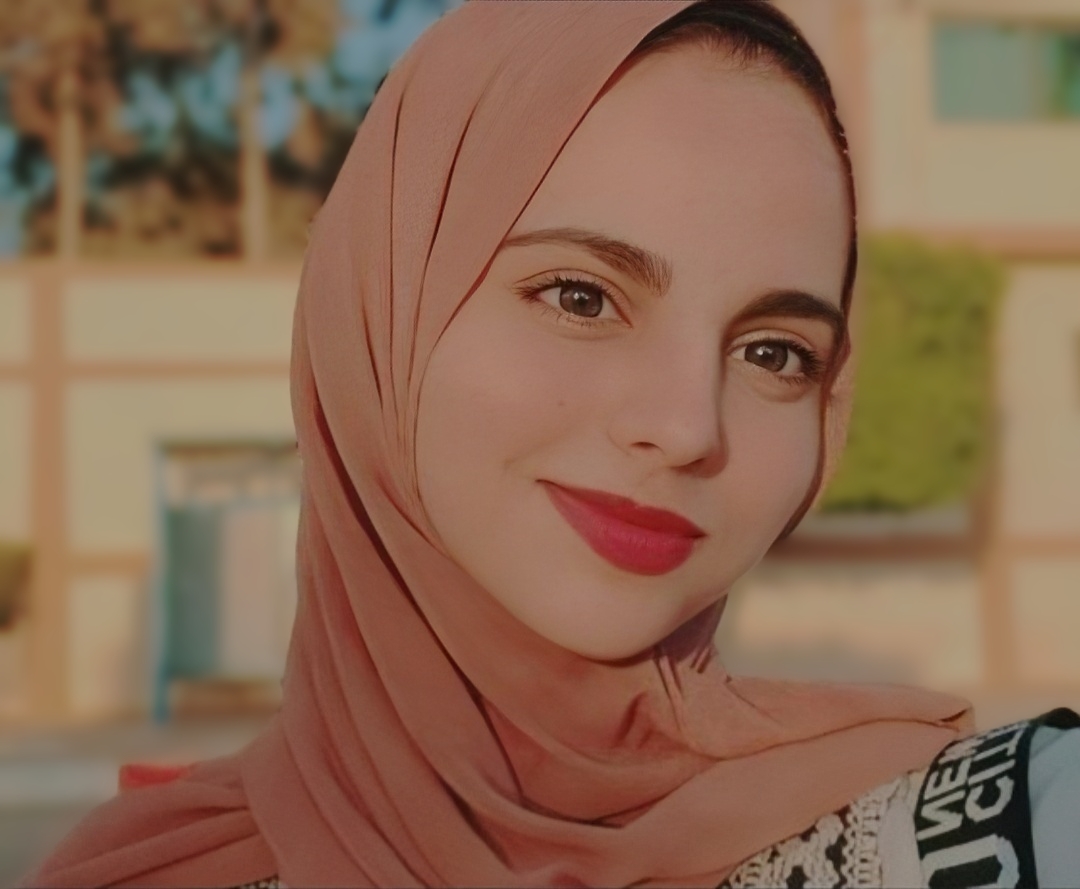
A head shot of Dina Turkeya. She is smiling and wearing a head scarf.

Dina Turkeya is a Palestinian dentist, author and translator. Her family is originally from Yaffa, but she was born and raised in Gaza. She has survived eight wars and aggressions, and still holds onto her dreams and ambitions. Dina’s love for her homeland inspired her to write her debut book, Time To Know Palestine (2024). She is interested in learning languages, writing, drawing and exploring different cultures.

Gaele Sobott: Please tell us a little about your family, including where they originate from and how their experiences have impacted your life.

Dina Turkeya: My great-grandfather was Turkish. He moved to Palestine in the early 1900s and married in Yaffa, where my grandfather was born. After the Nakba of 1948, my grandfather and his family were forcefully displaced to Gaza. He left everything they owned to start from scratch with the label ‘refugees’ on their identification cards. I still remember how my grandfather longed to return to Yaffa, their lovely house and the orange groves. He was waiting for the moment when his feet would touch his homeland after years of deprivation, but what happened was another Nakba. He was displaced from his house in Gaza to a tent in the south of Gaza in this ongoing war. His body couldn’t bear the inhuman conditions and the heartbreak of displacement again, and he died in the tent after years of suffering and yearning.

GS: Where/when were you born? Describe that place and tell us about your time growing up, including your experiences with siblings, cousins and school friends.

DT: I was born in December 2001 and lived my whole life in a very beautiful city called Al-Zahra. This coastal city is nestled in the heart of the Gaza Strip, boasting stunning natural beauty with lush trees, vibrant flowers, serene and spacious streets and kind locals. Growing up, I resided in our lovely house for about 22 years, which witnessed my earliest steps, first words, school journey and university studying nights. Every laugh, tear and whoop echoed through its walls. It was everything to me.
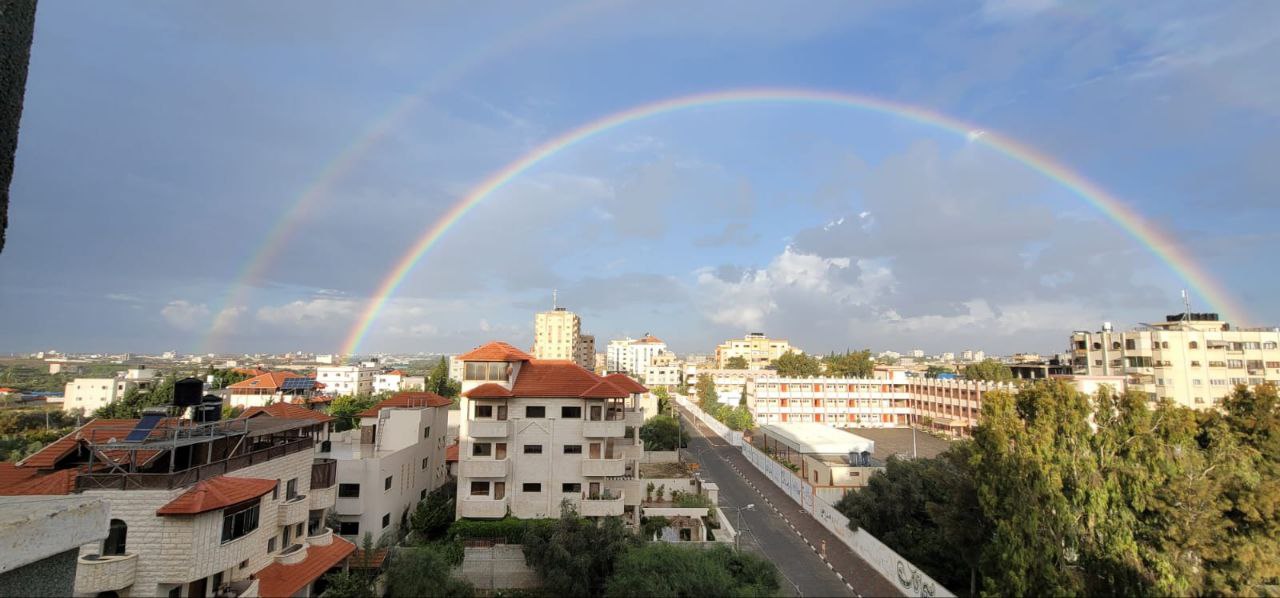
Al-Zahra showing white apartment buildings with red roofs, a blue sky and two rainbows stretching over the city
Al-Zahra

I had plenty of friends there and neighbours like a second family. I am the eldest of three siblings. We’d grown up in a family atmosphere full of love, involvement and support. My cousins were more than relatives. We gathered every Thursday, talked and shared our updates and stories, played cards and challenge games, ate delicious homemade food and desserts, watched movies and celebrated our special days. These weekly gatherings were cherished moments of respite from our bustling lives. I was fortunate to have wonderful friends I met through school, volunteer work, training programmes and even online international courses. True friends simplify life by offering guidance and support, celebrating victories and lightening the load on tough days.

GS: Apart from Arabic, what other languages do you speak? Where/how did you learn these languages?

DT: I speak English, Spanish and French. I’ve always been passionate about learning new languages. For me, language is not only a tool for communication but also a gateway to discover the world, learn new insights and open doors for new opportunities. My English proficiency was honed through school education and active participation in English clubs and programs. Similarly, I studied French for three years in primary school and continued for two years in secondary school, culminating in taking the DELF exam. Additionally, I dedicated three years to learning Spanish at Instituto Cervantes during my university years.

GS: Tell us what roles different languages play in your life and how different languages give or subtract from your view of the world.

DT: Arabic is my mother tongue; a rich, sophisticated and poetic language. The musicality and rhythm of Arabic, along with its diverse dialects adds to its charm and beauty. While I have studied many languages, none possess the deep meanings and elegant words found in Arabic.

Mastering languages has opened numerous opportunities for me, enhancing my skills in both personal and professional aspects. It helped me understand other cultures and perspectives, especially since living in Gaza has restricted my ability to travel and explore the world freely. Travelling is not a luxury when you reside in Gaza. It involves encountering various challenges along the way.

GS: Describe how the Zionist occupation of Palestine impacted your life from a young age.  If it is not too much for you, can you comment on your experiences of the current genocide in Gaza?

DT: Throughout my 22 years in Gaza, I endured eight wars and aggressions, which left me grappling with feelings of instability and the lasting effects of violence and trauma. The constraints of the siege limiting our freedom of movement, the scarcity of electricity, and the obstacles to accessing education, healthcare, and economic opportunities all contributed to a persistent sense of hardship.

I still remember every detail of that unforgettable day on the 19th of October 2023, around 6:30 in the morning. A man’s loud cry of “Get out of your homes” jolted me awake in a panic, prompting me to rouse my family. We hastily left with only essential documents and some money. Seeking refuge at our aunt’s house down the street, we were startled by a deafening explosion, followed by another. The smoke was suffocating, my heart was about to stop from the intensity of the explosion. The shock and horror of losing our home hit hard as we realised it was our building that had been destroyed. I lost the place where I felt safe, warm, grateful and happy. I lost my sweet memories. I’m the kind of person who likes to save everything. I saved my childhood photos, the old coins, gifts and letters from my friends and family, my summaries, drawings and pieces of writing. I lost everything in the blink of an eye.

During the night, when the city was enveloped in darkness, we were startled by the sound of people running and screaming in the streets. We were informed that Israel was planning to bomb more than 25 towers in Al-Zahra city. Confused and frightened, we rushed out into the streets, unsure of where to go. Moments later, as the bombings commenced, the deafening explosion knocked us to the ground, prompting us to flee as far as we could.
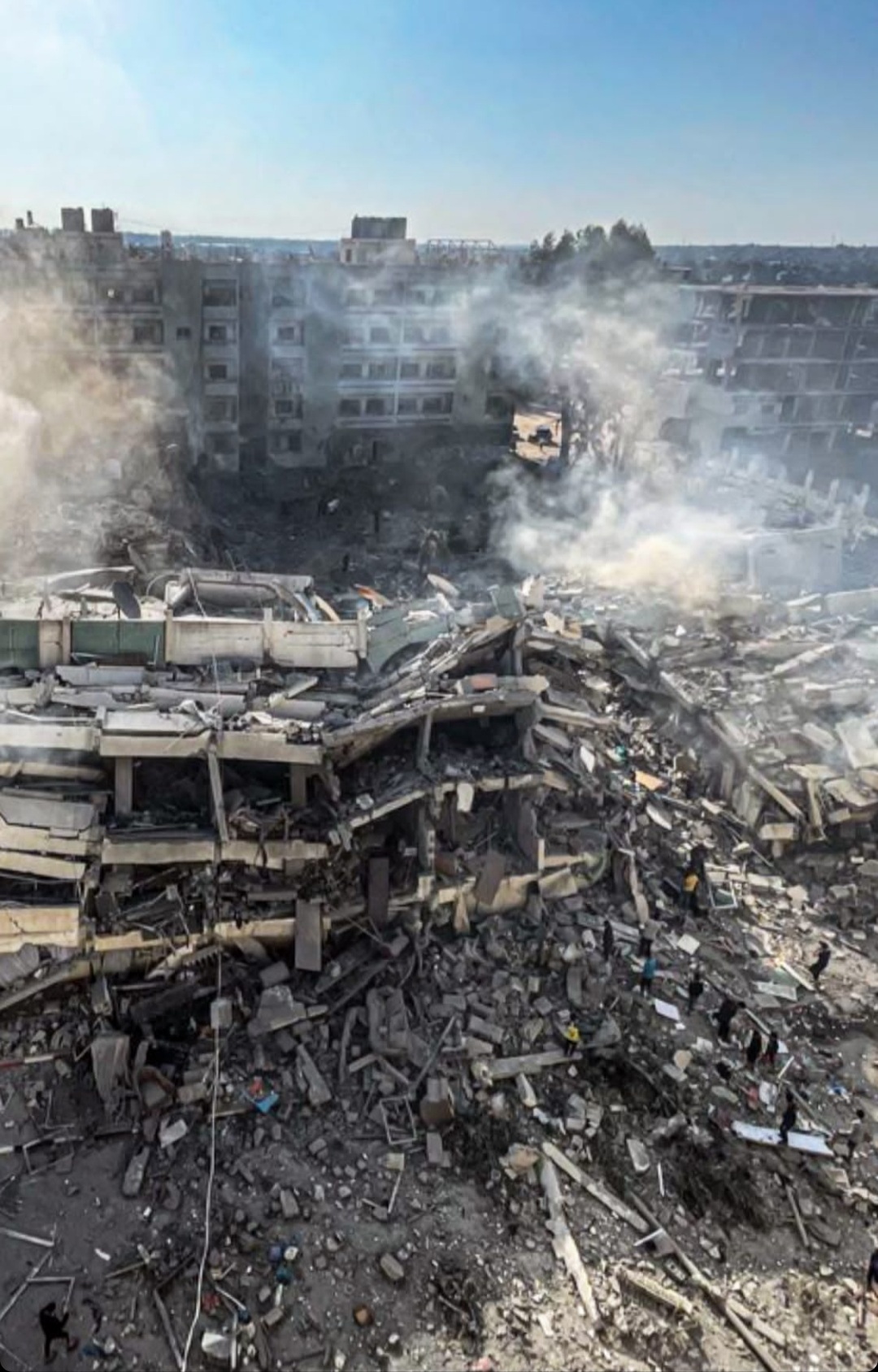
Dina's apartment building in ruins and smouldering the day after it was bombed.
Dina’s apartment block after it was bombed on 19 October 2023

More than 16,000 people found themselves on the streets. Surrounded by fire, the towers were under attack from the south, while nearby cities were being bombarded from the north. War boats approached from the west and tanks advanced from the east. Amidst this turmoil, babies were crying, the elderly were sitting in wheelchairs, women were screaming in terror and men attempted to calm down their families.  I remember that even the dogs were running in panic at the sound of explosions, seeking refuge among the people. What happened is beyond the endurance of any human being and any creature with a heart and mind.

We spent 15 hours in horror; we were afraid, exhausted, cold, hungry and heartbroken. Not only the residents of Al-Zahra city witnessed this difficult night, but also other displaced people who had sought shelter in Al-Zahra after fleeing their houses. It was the hardest night of my life. I didn’t think that we would be alive the next day. I remember waiting for the sun to rise to warm us with its rays. The devastated city was shrouded in grey smoke, evoking a sombre atmosphere. We eventually evacuated to the south of Gaza, and tears welled in our eyes. Witnessing my once-vibrant neighbourhood reduced to rubble was heart-wrenching; a place that had once bloomed with flowers and love.

Even worse,  Al Zahra city has lost all its landmarks and has been completely devastated by the continued bombing. Our city was built in 1998 to stop the expansion of Israel’s Netzarim settlement situated to the North. Netzarim was the last settlement to be evacuated and demolished by Israel when they withdrew from the Gaza Strip in 2005.  Now, history repeats itself in an even more dreadful form. After forcibly displacing all the people in the area during the first weeks of this war of genocide, Israel created the Netzeim Corridor to divide the Gaza Strip into northern and southern zones. They did this by destroying everything in their way, including our beautiful city.

The bombs killed my cousin in cold blood. She was staying with her husband’s family. I didn’t get the chance to say goodbye to her before I left. She was dead under the rubble. It is heartbreaking not to be able to visit her grave, lay flowers or properly mourn her death. The harsh reality of her non-existence brings to mind the concept of annihilation. The pain is profound when someone you shared precious moments with — chatting, laughing, watching sunsets — is gone forever, and we have even been deprived of the solace of burial and mourning rituals.

Many of my friends and colleagues were killed as well. Each of them had dreams and worked hard to create a brighter future. They were simply trying to live, yet what they received was death. It is extremely hard for me to look at their pictures and realise that I will never see them again or hear their voices. I find myself recalling every conversation and every moment spent together. However, what brings me solace is the thought that they are in a better place, away from this evil and brutality. Their souls deserve peace and purification from this harsh world.

GS: Please talk about your tertiary education. What did you choose to study and why? Where did/do you study?
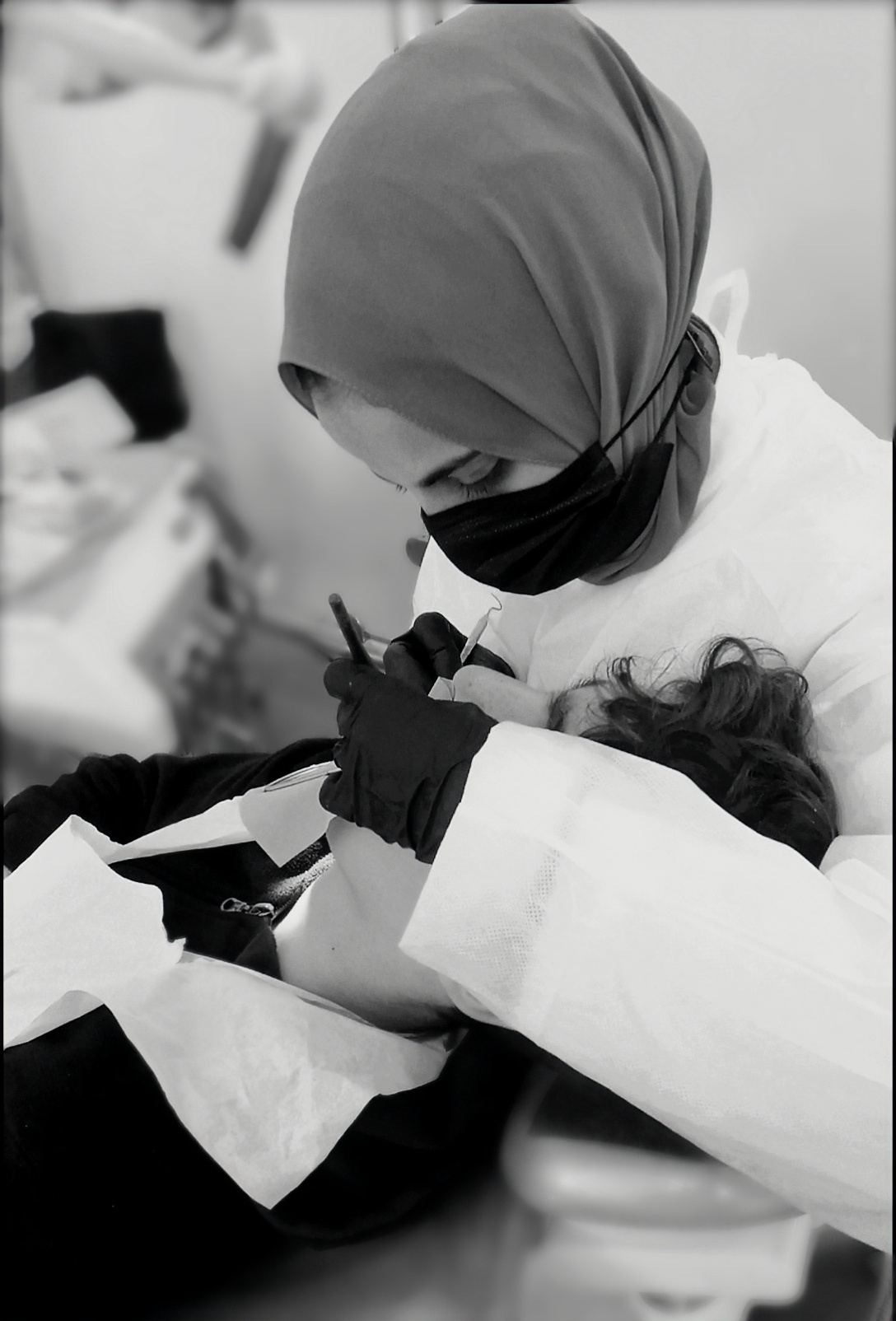
Dina doing dentistry on a young patient
Dina practising dentistry

DT: I was studying dentistry at the University of Palestine. I have chosen this speciality because I feel that relieving a patient’s pain and giving him/her the confidence to smile is out of this world. I was in my final year when the war happened. I was so excited for my graduation after five years of hard work. It was the moment to reap the fruits of my efforts. I had many plans and dreams, envisioning everything as if painting a beautiful picture. War disrupted my plans, leaving me unable to complete my studies due to the destruction of my university. This unexpected turn of events forced me to put my dreams on hold, leaving me with a sense of loss and uncertainty. It’s truly heartbreaking to see how drastically our lives have changed, knowing that things will never be the same again.

GS: Tell us about your experience of leaving Gaza.

DT: Leaving Gaza was the hardest decision we have ever taken. My parents decided to save the last thing that was left, which was “us”. We left in late January 2024 after four months of hardship and witnessing brutal atrocities. Leaving isn’t an option available to everyone. It’s costly and takes a long time. I left behind my beloved family, relatives, friends and neighbours. It felt like my soul had been taken from my body when I received the news that we were leaving. The farewell and our last hugs were so painful, with uncertainty looming over us of whether we would ever see each other again, knowing everyone was at risk of being killed at any moment. The first steps outside Gaza made me feel traumatic shock. A sky without the sound of drones, lights in the streets at night, the feeling of safety where we were staying, knowing that the building wouldn’t be bombed over our heads, charging our phone anytime, having good internet, drinking clean water and food, sleeping in a bed, washing our clothes in the washing machine not manually. These small details have been transformed into distant dreams for every Gazan.

The first months were so hard. My mind couldn’t comprehend what had happened to us, how much the profound loss weighed heavily on our hearts, and how it would be possible for us to live with such emptiness in our souls. It hurts so badly to live with those reoccurring flashbacks of our old life, stuck in the past but hoping that something will happen to bring life and hope to us again. Hearing and reading the news is much more painful, especially since we can’t reach people in Gaza due to the deliberate destruction of the internet and telephone network. We are continually anxious, waiting for a response and fearing that we will see the names of our loved ones on the list of martyrs.

All the people who survived the war share the same pain; we all tell similar stories of our suffering. Wounded people bandage each other’s wounds! I thought that after moving abroad, I could continue pursuing my dreams, only to encounter a harsh reality of exploitation and obstacles placed in our path instead of understanding our circumstances.

GS: You are about to publish your book, Time To Know Palestine. Tell us what this book is about and why you wrote it.
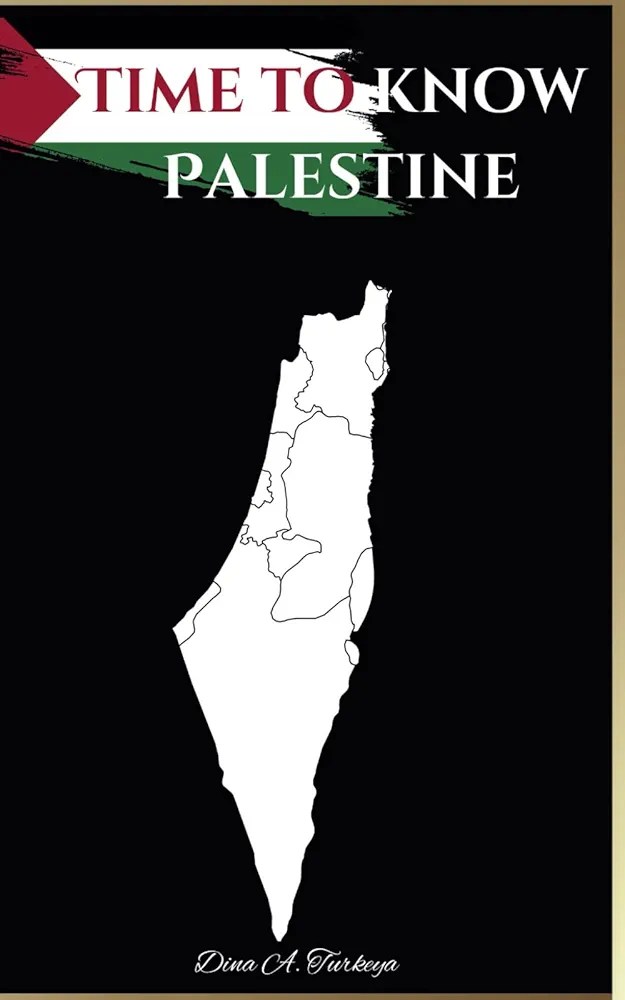
The book cover for Time to Know Palestine

DT: After surviving the war in Gaza, I was trying to recover from the trauma and writing was my way of healing. It was so difficult to turn all the indescribable emotions into words. I was initially unable to concentrate or communicate properly. My family encouraged me to start writing, and I am very grateful to my friend Ana for her unwavering support. She connected me to incredible people from Palestine (West Bank and 48 Lands). They answered all my inquiries and showed me pictures and videos of the places that brought tears to my eyes. It’s so unfair when you can’t visit your homeland while everyone else, including the occupiers, can freely explore its beauty, stroll along its streets and visit all its attractions.

Time To Know Palestine is my way of showing love, pride and respect for Palestine and Palestinians. It’s a message to humanity to see the beauty of my country and know about its long-standing history and vibrant culture. It acknowledges each voice that has been silenced.

This book is for all the lucky people who had or will have the opportunity to live the most beautiful days and memories of their lives in Palestine. And for every Palestinian who is deprived of seeing the beauty of his homeland because of the occupier’s unjust policies.

I will take you on a journey through my words, which I wrote with love and sincerity so that you receive the complete true picture of Palestine, despite all the desperate attempts of the occupier to Judaize and erase its history and geography. This book represents the voice of Palestine that will echo through the centuries, the voice of truth and the voice of the awaited freedom. Time To Know Palestine

GS: What types of international support for Palestine would you like to see happening at this point?

DT: People worldwide have shown great solidarity for Palestine and its people, starting from the Boycott, Divestment and Sanctions (BDS) movement, which proved its effectiveness. Activism and solidarity campaigns to raise international awareness about the Palestinian issue, the human rights abuses in the occupied Palestinian territories and the victims of the genocide. Grassroots campaigns and protests to support the Palestinian people’s struggle for freedom, justice and equality are growing. 

I believe that civil society and social movements play a crucial role in influencing decision-making by applying pressure on governments to implement policies that address the needs and aspirations of everyday people. Many think that providing humanitarian aid and donations to Palestine suffices. However, the real solution lies in tackling the root causes of this ongoing suffering: ending the occupation and halting the genocides.

GS: As one of the places this interview will be published is a zine that will be circulated among young people who like electronic music, I am wondering what types of music you like? What are two of your favourite songs right now?

DT: I like classical music because of its ability to evoke deep emotions and transport me to another world. There is something incredibly calming about the sound of the piano, it helps me unwind and clear my mind. My musical preferences vary depending on my mood and what I’ve been going through recently. Right now, my favourite songs are “I’m Coming Home” by Skylar Grey, and “Gonna Be Okay” by Brent Morgan. They describe the nostalgia I feel for my homeland, my efforts to overcome difficult times and the pursuit of hope.

GS: What are you currently reading?

DT: Most of what I read currently is about dentistry to ensure I don’t forget the knowledge I’ve gained over the past few years and stay updated with new advancements.

GS: What message would you like to send to your generation internationally?

DT: To my generation internationally, I would say: we hold the power to create a more just, compassionate and peaceful world, but it demands collective action, empathy and a genuine willingness to listen and understand each other. In this era of global connectivity, it’s easy to feel overwhelmed by the obstacles we face, but we must remember that we are also better equipped than ever to make a meaningful impact.

We must advocate for human rights, justice, and equality, recognising that the struggles of one community affect us all. Let’s leverage our platforms, education and resources, not only to improve our own lives but also to stand in solidarity with those enduring oppression and hardship. Let’s actively seek diverse perspectives, build connections, and act with empathy and courage.

Our generation has the potential to transform the narrative — from division to unity and from indifference to proactive compassion. The future hinges on how we engage with the world today and each of us plays a vital role in making it brighter.

GS: Describe what you most admire about Palestine.

DT: At this point in history, what I find most admirable about Palestine is the resilience of its people. Despite enduring decades of hardship, displacement and conflict, Palestinians continue to exhibit remarkable strength and determination. Our capacity to preserve our culture, traditions and sense of identity in the face of adversity is genuinely inspiring.

I am also impressed by the younger generations in Palestine who are actively embracing education, technology and activism to amplify their voices on a global platform. We demonstrate creativity, resourcefulness and a passionate commitment to shaping a brighter future, often employing art, literature, and social media to convey our hopes and challenges.

Furthermore, I have great respect for how Palestinian communities worldwide have managed to maintain their identity, fostering a strong sense of solidarity and pride in our shared heritage, even while in the diaspora. The enduring spirit of perseverance and the continual hope for justice and freedom serve as a powerful testament to the strength of the Palestinian people.

GS: What future do you envisage for Palestine?

DT: The future I wish for Palestine is one where its people enjoy freedom and independence, liberated from the oppression of occupation, living in a secure and culturally and economically prosperous state. I wish for Palestine to reclaim its status as a beacon of knowledge, creativity and peace, just as it was before the onset of occupation.

This interview was conducted in English with Dina Turkeya by Gaele Sobott in September 2024.

Purchase a Copy of Time To Know Palestine

Connect with Dina Turkeya on LinkedIn

Read this interview in Arabic

Gaele Sobott writing, culture, social & economic justice by Gaele Sobott is licensed under Creative Commons Attribution-NonCommercial-NoDerivatives 4.0 International 

commutare

I dance. I fly – dog paddle upwards, a vertical take-off like a helicopter (great for escaping danger), and breaststroke through the sky or glide on updrafts. There is joy in the journey. But back down on earth, leaving the reverie, my physical and attitudinal surroundings are not so conducive to travel. I use a mobility scooter or wheelchair to get around and commuting on public transport from Blacktown to Wynyard Station is closer to a nightmare.

To travel to Sydney’s CBD by train, I load my wheelchair into the back of the car using a hoist. It only takes me about ten minutes to drive to the station, then the search for parking begins. There are notoriously few public car parks near Blacktown Station, let alone disability spaces. At Boys Ave there are 130 spots, and eight of those are for disabled commuters. Say I’m lucky enough to find parking. Then I unload my chair, negotiate holes in the footpath, humps, bumps, and kerbs to get to the station. Wait my turn in front of the lift. The doors open and close. It’s overflowing with impatient commuters. I wait a while before the doors open finally to reveal a space for me. I wait for an attendant to let me through the ticket gate. Wait again for rail staff, who are often stressed and grumpy, to organise the ramp to get me over the gap between the platform and onto the train. Over 6000 commuters pass through the Blacktown station turnstiles on a typical workday during morning peak time, 15,800 people during an average 24-hour day.

In a 2019 9News report, Blacktown residents interviewed said they hardly ever get a seat on the train going to or from work. Standing room only, they’re packed like battery hens on the way to the slaughterhouse. Often the train is too crowded for me to board. When I can get on, I need to manoeuvre my way through the crush of bodies and find a place to hold onto a handrail so my chair doesn’t slide when the train brakes. At Wynyard, there’s another wait. The station attendant needs to put a ramp down and help me off the train. Even if a support worker accompanies me, I’m exhausted by the time I get to work and have a raging headache. My joints and muscles scream in pain.

Generally, I avoid public transport, choosing instead to load my scooter into my car and drive calmly through Blacktown’s asbestos jungle. With lockdown, I rarely travelled to the city and now I’m self-isolating, I work from home as much as I can. Today, however, I need to meet with other creatives in person at the start-up hub where our small arts organisation has a desk. The haunting voice of Karen Chilton reverberates through my car. She narrates the story of Sorrowland by Rivers Solomon, the latest book to satisfy my craving for Afrofuturism and Black speculative fiction. Suburban homes flick by, some just starting their gentrification journeys, moving away from the perceived stigma of working-class existence, to maybe one day, achieve the affluent, leafy, suburban bliss of Castle Hill. I glide past Kings Park Industrial Estate, a car and truck rental, and left onto Sunnyholt Road. Turn right, gathering speed, 100 kilometres per hour to merge onto the M7.

Read More

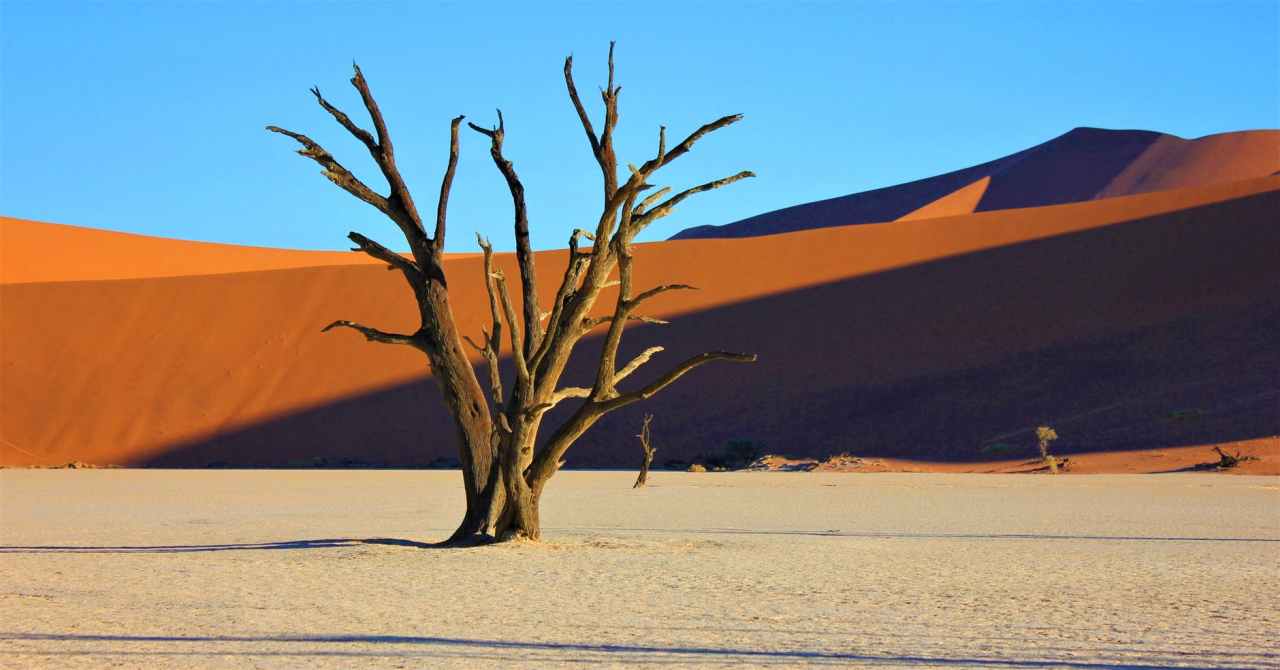
Dead tree emerging from white sand with red sand hills in the background against a blue sky

Astro Turf

by Gaele Sobott

deserts stalk the earth

at ever-increasing kilometers per year

                    annihilate soil that nurtures new growth

              fill the girlchild’s eyes with grit

         at ever-increasing kilometers per year

                 the Gobi the Sahara the Kalahari

                               fill the girlchild’s eyes with grit

                 propelled forward like dehydrated race walkers

              the Gobi the Sahara the Kalahari

                         whip up disease-laden dust storms

                                     propelled forward like dehydrated race walkers

                         valley fever whooping cough meningitis Kawasaki disease …

Read More

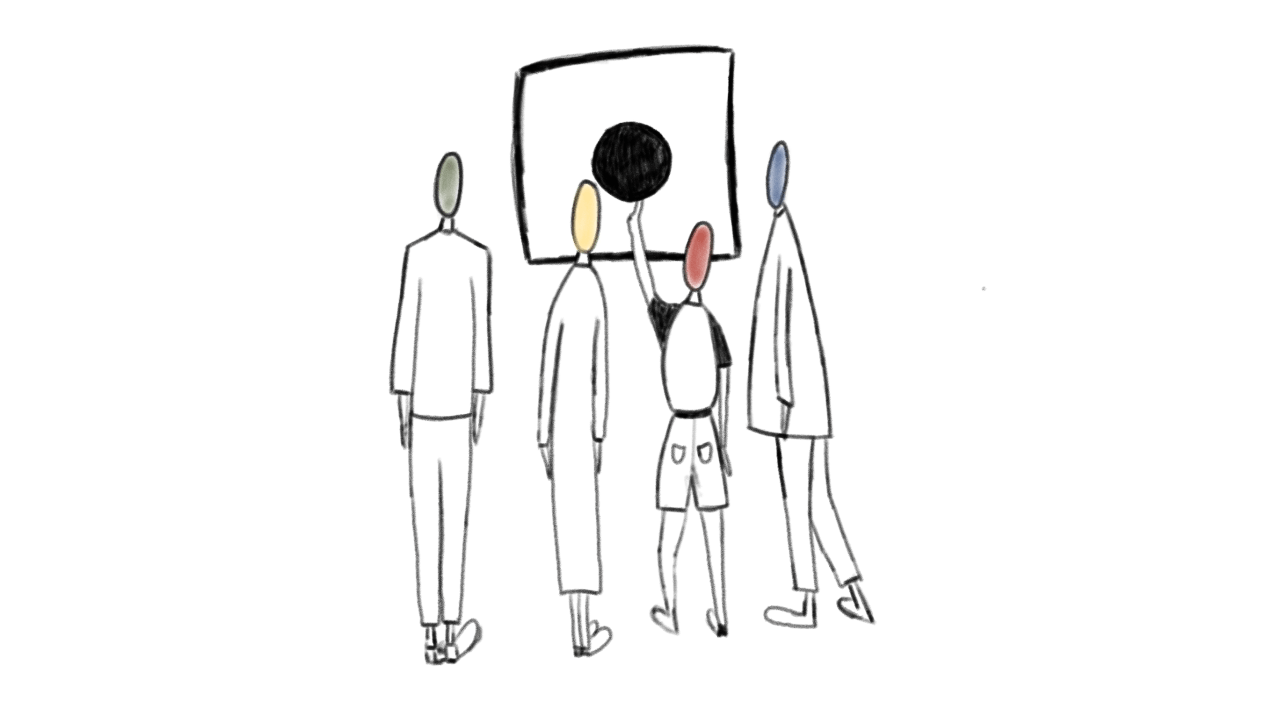
A still from the animation I was born (Misfit).Four people facing a circle of solid black in a square. They have different coloured heads (green, yellow, red and blue). The smallest person is reaching up to touch the circle. Drawn by Daria Lytvynenko.

Earthly: poems by Gaele Sobott

I allow unarticulated feelings, thoughts and knowing to direct the course of my poems. Floating, allowing the parts of my brain that daydream, intuit, engage in parallel-interactive logic to take over. Maybe, in the end, poetry is a process of interpreting the knowing that exists within bodily experiences, around the body and between one body and other bodies. Surprises and dilemmas emerge along the way and when I work out which direction to take, I spend time crafting a poem.

Some describe elements of my writing as magical. I see these elements as reflections of cultural realities; myth, turns of phrase, musicality of spoken language, the way imagination can be part of the everyday and accepted by a community as such.

I believe my writing is informed by a combination of the joy of imagining, anger, grief, love and disdain. Growing up working class, losing memory, I demand the right to get grammar and other bits and pieces technically wrong, but seek to be subjectively and poetically authentic.

Full article and poems published in Disability Arts Online Showcase

Disability Arts Online is an organisation led by disabled people, set up to advance disability arts and culture through the pages of our journal. Their raison d’être is to support disabled artists, as much as anything by getting the word out about the fantastic art being produced by artists within the sector.

Disability Arts Online give disabled artists a platform to blog and share thoughts and images describing artistic practice, projects and just the daily stuff of finding inspiration to be creative.

Grandmother by Gaele Sobott

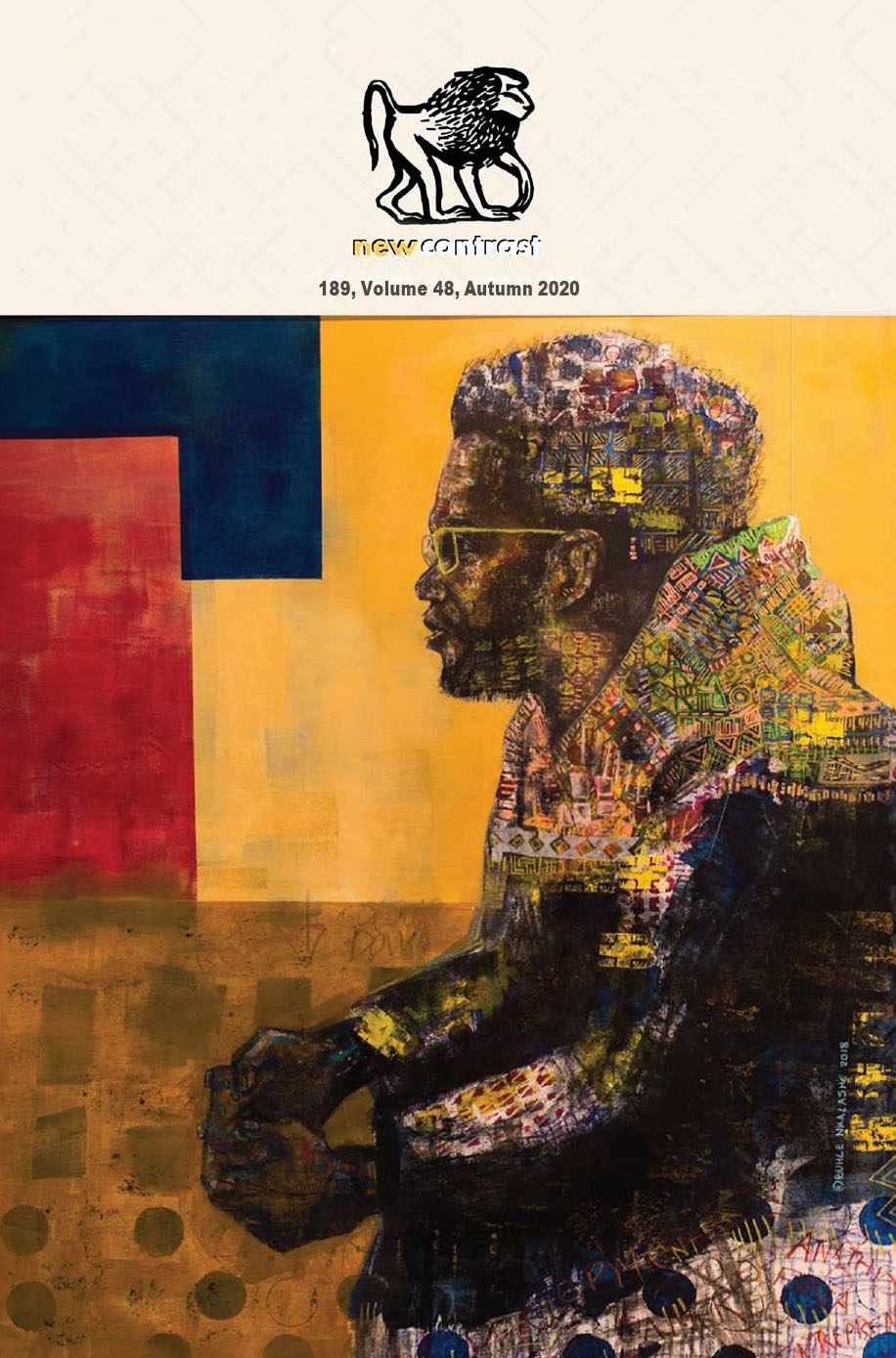
A Profile portrait of an African man, pensive, sitting with his arms resting on his lap and his hands clasped in front of him. He is wearing colourful print clothing and head gear. Blocks of yellow, navy and red make up the background wall.

Front cover art by Buhle Nkalashe

This story appears in New Contrast, one of the first South African literary journals. New Contrast is devoted to publishing the best of poetry and prose, art, reviews and interviews from both local and international authors. I am thrilled to be keeping company with such outstanding poets, prose writers, artists and photographers in this Autumn 2020 edition. Please go the New Contrast website and support this journal which relies on sales of hard-copy print editions. 

Grandmother

I smell meat cooking on the barbeque, innocuous in a typical suburban yard in Blacktown. The warmth of the winter sun penetrates my skin, the grass is cut, the deck needs oil, a scrawny rose bush winds its way too high, clinging to the asbestos wall, clambering up and over into the guttering. My granddaughter, Yasmina, throws a red ball into the blueness of the sky. The smoke twists up through my hair. I close my eyes, listening to the spitting fat.

*

Insignificant popping sounds, spitting, getting louder. A vehicle speeding so late in the winter dark pulls up, brakes screaming. Tyres graze the gravel outside. It seems my feet are walking the icy tiles before my torso leaves the bed. My hands feel for jeans, one leg in and then the other, I pull the denim up over my thighs, scrunching folds  of floral nightdress between the waistband and my skin. The zip bites down hard on the cotton fabric. Beating, clattering, chattering. Giant insects flying frantic against glass, wings flapping.

Running now down the passage into their room. I lift baby warm from her cot curled in blankets and stride skin silent on the floor across to her sister’s bed.

“Boni, Boni, I want you to lie here under the bed. Hold Moratiwa. Don’t let her go. Don’t talk. Whatever happens stay quiet.”

“Yes Mama,” she whispers.

I’m pushing the quilt and a pillow and Boni and Moratiwa under the bed.

Bre-bre-bre-bre-bre … not insects flapping wings  …  bre-bre-bre- bre … no they are not insects. Ghost men with rounded backs, bent men swarm from a white combi van. They run into our neighbours’ yard, the old colonial house is dark behind the trees, its wide veranda grimacing. The servants’ quarters, submissive and small in front of the house near the road.

Bre-bre-bra-bra, lines of yellow light burst from stumpy machine guns into the blackness, into the brick quarters where two young women live.

Peering from the side of the lounge-room window, through the crack where the curtain doesn’t quite cover the night, the grass  quivers, long and colourless under moonlight. The men throw grenades. White light flares up the lounge-room wall. The numbers on the clock flash bright. Short thuds of sound. I drop down, moving on hands and knees across the rug. The sofa and baby’s teddy in the hallway gleam iridescent razor-blade blue, every atom of my body is noise, intense loud limpet, cracking, reverberating circles, flattening my belly to the floor, shuddering walls, shattering windows, pieces of glass falling into my hair.

I crawl up the hallway, into the bedroom, crunch my hipbone cold into the white tiles, clinging to my children, not moving. They  are quiet. The dead night is quiet. There are no sirens, no dogs bark. Gaborone is acrid silence.

*

My son-in-law turns the steaks. The sausages spatter fat at his big-pony Ralph Lauren shirt and he jumps back, his body curves like a letter C. His sneakers are never-been-worn white.

I say, “I like your hair cut Walid. Really smart.”

“Thanks Lena. Got it cut this morning.”

Boni yells from across the yard, “He’s so particular about his hair! He’s been going to the same barber for fifteen years. Won’t let anyone else but Joe cut it.”

“Baby, he’s an expert blender. Not many guys know how to blend.”

“I think he’s got a bit of a bromance going with Joe,” Boni says. She’s wearing a light denim dress that criss-crosses over her back and sticks out like a tent over her pregnant belly, my second grandchild. We already know a boy is on his way.

Walid leaves the meat, comes over and bends his head down in front of me.

“Look here, he cuts with a zero, then a half, then a one, faded high like navy cut with no lines. You know what I mean?”

I nod, “Yeah, I can see.”

“The fade’s the most important part, very difficult to blend from zero to half into one without showing lines. It has to look smooth and crisp. Other hairdressers stop halfway up the back of the head because it’s too hard. Not Joe, he brings the fade right up to the top of the head, seamless. Then he scissor-cuts the top. Strictly scissors. No blade.”

Walid strolls back to the barbeque and starts putting the steaks onto a plate.

“Yeah, he thins out the top so it doesn’t look so thick and the hair sits edgy not flat. That’s the beauty of this cut. I can wear it gelled up like now or I can wear it flattened down to either side, neat like, for work.”

“It’s a smart cut,” I add.

Yasmina runs towards Walid, her arms flailing above her head like a windmill,

“I wanna help Baba,” she says grabbing hold of a steak with her plump little fingers, quickly dropping it in the dirt, looking stunned, about to cry.

“It’s hot Yasmina. Don’t touch anything. Go to Nanna.” He holds their two little white dogs back with his foot as if he’s playing soccer and guides his daughter away from the barbeque.

I call, “Come here Yasmina.”

She walks over, nonchalantly, slightly bow-legged, curly hair dancing in the breeze. Her body is solid in pink and green leggings, a green mouse dances on her tee shirt. Yasmina climbs onto my lap. I hug her, tender skin warm against mine. Boni drags a chair over to where we’re sitting. She’s puffing and as if her tiredness is contagious, I feel deep fatigue, a dark uneasiness.

“Mum, will you come to the delivery again?” “Yes, sure I’d love to.”

“Good, Walid and Moratiwa and you, just like Yasmina’s birth hey?”

“Will they do a caesarean straight away this time?” I ask.

“No, I want to try for a natural birth first. Prefer to avoid caesarean. It’s a pretty major operation.”

My granddaughter sits moist against my body, listening.

“Ok, come and help yourselves to the food,” Walid yells.

Yasmina jumps off my lap and sprints towards him. I half-expect her to fall but she doesn’t.

*

Going home, Homebush Bay Drive exit, diesel fumes slip through the vents. A mammoth truck next to me, another in front. My car, dark- green, 1998, shabby, gets me from A to B, and I fantasise, if I had money, which car would I buy? Not the Mercedes C200, maybe the black Mazda 3 in front, or the orange Toyota Camry with black mag wheels that roars when it takes off from the traffic lights. Roberts Road. Bunnings looms like a military bunker on my left, a red and yellow Maccas flag flies next to the Australian union jack and stars, my country of exile, the bright lights of a petrol station, Oporto chicken. Cruising through the green light across Juno, right up to Punchbowl Road.

I park, trying not to scrape the fence. The outside lights at Koh I Noor Court stopped working last time it rained. We want to pay to get the electrics sorted but strata fees don’t keep up with all the burst pipes and broken windows. A patchy lawn in front of the apartment block. The geraniums flower orange-pink next to the bay tree. The leaves on the dwarf mandarin curl, white with some kind of fungus. I pass my neighbour’s door, climb the stairs, to the same children’s songs I hear every day and every night… and if one green bottle should accidentally fall, there’d be five green bottles hanging on the wall…

Two and a half years since I first became a grandmother, now another grandchild is about to be, being, humans being. Strip off, shower, let the warm water flow down my arms, my legs. Curled up on the bed, comforted by the towelling of my robe, textured against moist skin. Sleep comes easily but briefly, I drift in the space behind closed eyes assailed by gruesome images, flickering faces, distorted, ugly. Unclench my hands one finger at a time, stretch out my arms, try to relax the muscles in my neck.

My  grandchildren  will  never  know  their  maternal  grandfather.  I conjure up the face of RraBoni. He rolls a joint, relaxed, laughing, listening to his favourite fusion. Tilting his head back, he blows wispy, white circles of smoke that hover, gently falling apart over the trumpet lines, the congas, the guitar snaking through Miles Davis, Bitches Brew, the bluesy keyboard on Weather Report’s Birdland. My children’s baby faces — Boni, her brown skin, freckled by the sun, a smiling dimple on her left cheek. These images relieve my nightmares. Moratiwa, more petite, darker skin, darker hair that falls in spirals over her shoulders. The one who is loved. My granddaughter, her brown, gold-tipped curls that spring in all directions, her alert eyes observing me. My yet-to-be- born grandson, another gift from the ancestors.

*

The reflection of my body moves ethereal in the sliding mirror doors of the wardrobe. My existence is enmeshed in history, some parts fluid, some parts rotting, torpid beneath my living. After almost thirty years, I feel an urgent need to tear away the scabs, dig down to the core, the agony. I begin searching, frantic, closed up in my flat. I claw at the skin of apartheid, searching for details of what happened that night. I want to know about the men who planned the killing, the men who murdered, those who justified and covered up the crimes. I trawl the Internet, South African Truth and Reconciliation Commission documents, reports, SABC  videos. There are so many submissions, so much brutality, over 20,000 statements from victims, nearly 8,000 applications for amnesty from perpetrators of crimes against humanity, a small but somehow representative taste of apartheid from the 1st March 1960 to the 10th May 1994.

Still and stiffened into a monstrously crooked position, I read like an addict craving horror, ripping open and exposing the cruel core of a desperate regime. Under the heading, ‘cross-border military operations’, I find testimonies. On 14 June 1985, twelve people were killed in Operation Plecksy … in Gaborone, Botswana. Eight of the dead were South Africans. The others were a Somali citizen, a Basotho child and two citizens of Botswana. Some of the Security Branch operatives who identified the targets and planned the raid applied for amnesty. I read their names. Their words avoid the truth. Their words are small truths, just enough to get amnesty, no more. Some are obvious lies.

A rooster crows next door, another rooster answers from the darkness across the road. I unbend my body, stand and stretch my arms in the air. I can see the tree in our neighbour’s yard. The half-moon has fallen, pale, from the sky and lies trapped in the tree’s branches. I move from one room to another without purpose, walking in the gloom.

Mrs Hilda Phahle addresses the Human Rights Violations Hearing in Alexandra. Our children fled this oppression of this country … the land of their birth, the land of their forefathers. They were tortured beyond reason and fled. The enemy followed them and brutally massacred them … the SADF arrived swearing and behaving like people well-drugged and drunk, ordering George to open the door. The door was blown open … the piano fell against Levi’s bed under which he was hiding. God spared him to tell the story. He watched from under the bed as they pumped bullets into his brother and his wife, bullets penetrating them simultaneously. They turned them over face upwards and one asked, “Is hulle dood?” (“Are they dead?”). “Morsdood” (“stone dead”) was their reply.

My eyes are scratchy in their sockets, my limbs creak like heavy machinery in need of oil. My head, an abandoned factory, echoing the vicious cruelty. Someone walks around the flat below, a door closes, a toilet flushes.

Mrs Phahle wears large, metallic pink-rimmed glasses. A woollen green and red scarf protects her neck from the winter cold. She wraps a Basotho blanket around her shoulders. Her voice has the timbre of mother love, woven loosely with threads of grief and anger. I hear her weariness. Her face is light-skinned, gentle. She says to a television camera,

As Christians we’ve got to accept what has come our way, more so that we cannot repair the damage. The only thing is for us to accept and we pray that such a thing never happens again. That’s all.

I lay on mounds of blanket twisted in sheet. Sleep rises up in the blackness and falls like a small boat on large waves. So many of the living are suffering. I’m fearful the waves will break, and the boat will smash into many pieces.

An insistent electronic pulse draws me from sleep. My fingers fumble with my phone, sliding across the small screen. Turn the alarm off. There is wind blowing outside. A branch of the bay tree scrapes against my bedroom window. I call work. My voice deliberately weak,

“Hi Maureen, I’m so sorry I won’t be coming in today. I’ve got a really bad migraine.”

*

The broken windows allow the frosty morning to creep into the lounge room, over the shattered glass, up the hallway into the bedroom. A bird dares to twitter. I hear the front door open. RraBoni has come home with two friends. They’re holding multi-pronged, metal spikes.

“Look what they threw on the roads. Eeesh, everyone has flat tyres.” My husband is a big man, wide shoulders hunched now. He puts his arm around me and I lean further into the balminess of his body, alcohol and sweat. His face is red from a night of drinking.

“Are the girls alright?”

“They’re fine. Sleeping in our bed.”

“Anyone like a coffee?” I ask.

“I’d love one thanks Lena,” the smaller man says. He is hunched over, shivering.

I turn on the kettle, go to the bedroom and lift the quilt from Boni’s bed.

“Here Motusi.” He wraps it around his shoulders, pastel green, pink, brown squares, elephant, crocodile, monkey and lion.

“Danke Mma.”

“Still no sign of the police,” says RraBoni

I’m careful not to cut myself, fingers like tweezers, picking up the bigger pieces of glass and putting them in a bucket. Sweep the kitchen floor and the hallway.

A BDF army jeep pulls up. We file outside. The grass sways yellow in winter. Everything is sepia, the trees, the gravel, the rusting wire fence. A tabby cat follows us, mewing. Confusing, smoky-meat odour clings to my skin, sweet like almonds. Pieces of the young women’s bodies grasp the fence, the grass, hang from the syringa trees. People come slowly from the flats, from the surrounding houses. Two soldiers throw a long metal box on the ground. We collect a shoe, a bloodied bra, a hand. We collect burnt chunks of flesh. No one speaks. No one cries. We gather the remains of our neighbours into the metal box.

*

It is suburban quiet. Children with shiny skin and bright white socks pass my window on their way to school. My kitchen, fake marble benches, white cupboards, is small but filled with light. I chop apple and banana into a bowl, drink green tea. I will not go to work. Bare feet, hair unbrushed, hunching over the laptop, four days and nights melt into a blistered mass of knobbled ash and grit. Friday, Saturday, Sunday, Monday, searching for detail. Gentle people murdered  in their beds, intellectuals, artists and writers, musicians and teachers. Seven of the twelve associated with the ANC. The killers shot open the front door of Tami Mnyele’s home and machine-gunned the artist as he ran across the backyard. They joked, kicked his corpse and took trophy photographs. Blasted his artwork, splintering his easels and paintbrushes, splattering paint.

Swallow painkillers, stretch my neck, bend my back, my hands dangling at my feet. I fall onto my bed again and stare at the ceiling. The Scottish woman who lives in number nine is talking to our neighbour about his fruit trees. I close my bedroom window and pull the blind.

At two o’clock Tuesday morning, I sit crunched  over  the  laptop. The men in combi vans murdered Duke Mashobane. His six-year-old nephew, Peter Mofoka, fled screaming from the bedroom, wearing flannel pyjamas. They pumped bullets into his small body, continuing at close range long after the boy was dead. Dick Mtsweni, ‘Mkhulu’, was shot and his house set alight. His body burnt to nothing. Michael Hamlyn was executed as he knelt on the floor at the end of his bed, looking up at the attackers, his red hair tousled from sleeping. He was a conscientious objector, who refused to serve in the South African Defence Force. They murdered Somali refugee and Dutch national, Ahmed Geer. His wife, Roeli, eight months pregnant, escaped with bullet wounds to her legs.

Most of those who took responsibility for planning the attack were granted amnesty from human rights abuses. The names of the 5 Recce SADF commandos and the Barnacle operatives from Special Forces are not listed. Those men who drove across the border to take the lives of twelve people didn’t apply for amnesty. I can’t find anything to say they were ever charged for their crimes. One working as a mercenary in Iraq was killed in Al Kut in 2004. His mutilated body was hung up for public display.

My phone rings. “Hi Lena.”

“Walid, what’s happening?”

“Everything is fine. We are at Westmead. Boni’s waters broke about an hour ago. Can you come?”

“I’m on my way. See you soon.”

“Great.”

Travelling through the early morning is like watching a film on the plane without headphones, everything is hushed, just the sound of my car’s engine as I drive the M4 to Westmead.

I’m at the hospital, walking into the birthing room. The lights are dull and Boni is moaning. She’s hooked up to monitors.

Walid smiles, “She’s doing well Lena.”

The nurse says, “Yes, she’s doing very well. She’s dilated to seven centimetres. The cervix has softened. I think it will be a vaginal birth this time.”

I place my hand on Boni’s forehead. Her hair sticks to her skin. She’s groaning and her lips are dry. I offer her some lip moisturiser. She digs some out of the small pot, her finger shakes. Smears it greasy over her mouth.

“Is Yasmina with your sister?” I ask Walid.

“Yes, she’s sleeping. Anisa’s at home with her.”

Boni moans and yells, “I can’t stand this pain.” She breathes out, grabs the gas and sucks on it.

“I’ll just be waiting outside.” I stroke Boni’s arm, then leave the room, walking across the shiny floor into the corridor. Sitting on a hospital chair, dread filters through my pores like grimy smog.

The passageway is empty, no sound other than the groans and she-wolf howls of women giving birth. I take a pen from my bag, bend down and scratch hard into the vinyl floor. Gladys Kelope Kesupile and Eugenia Kakale Kobole. A man pads around the corner wearing  a surgical gown. I pretend I’m picking up the pen from the ground.  He doesn’t look at me. Bending again I write, We have not forgotten. I scratch the words over and over, so they are etched deep and black into the beige vinyl. Gladys and Eugenia came to Gaborone for work, one  a typist, the other a domestic worker, not even twenty years old. That night they walked home from a prayer meeting. The killers came as they lay sleeping in their beds.

In the corridor under neon lights, I unlatch my consciousness, trying hard not to sink into pools of unarticulated fear. I sit waiting for my second grandchild, waiting for everything to be all right.

J.D. Salinger’s daughter quotes her father as saying he never really got the smell of burning flesh out of his nose entirely. No matter how long you live, that smell remains. I remember our neighbours, the two young women blown apart that indignant night. The fragrance of their lives is as fluid and volatile as the corpuscles in my blood.


In this issue of New Contrast:

Interviews:

  • An Interview with Buhle Nkalashe by David Griessel

Poetry

  • Kobus Moolman, Henry and June / The Earth is Flat / I Am Made
  • Juanita Louw, Homogeen / Love Machine
  • Rizwan Akhtar, Last Year / Now We Will Say “Happy New Year”
  • Steve Lambert, Unbecoming / Ars Poetica
  • Fiona Zerbst, Closer to Light / On the Edge of Darkness / Portrait of Three Lions
  • Bibhu Padhi, Another Need / The Address
  • Warren Jeremy Rourke, Washing Up / Double Rainbow
  • Johann Lodewyk Marais, Die stasiewa / Die eerste wens
  • Stuart Payne, The Planet
  • Justin Fox, Building Wall
  • Stephanie Williams, Mother / Let’s Talk
  • Alessio Zanelli, Hiker and Lines / Dear Old Beloved Padan Fog
  • Sarah Frost, Gold
  • Ian Salvaña, This Town We Left To Miss, You Said, Is Home / The Birthing of a Poem
  • Tom Paine, Seeds / Kamikaze Bees / That’s All

Prose

  • Gaele Sobott, Grandmother
  • Melissa Gow, One of Us Is Bleeding
  • Jonathan Tager, Guidestar
  • Rémy Ngamije, Black, Coloured And Blue (or, The Gangster’s Girlfriend)

Artworks

  • Jono Dry, In My Silence / Restrained I Unravel / Wrapped in Tradition / Separation


To purchase this issue (R120) email the business manager at business@newcontrast.net